


What Exactly is Financial Toxicity?
The term was coined back in 2013 by researchers at Duke University. While most people think of 'toxicity' as a physical reaction to a drug-like nausea or hair loss-financial toxicity is the economic version of that. It includes the cold, hard numbers, like Out-of-pocket costs (deductibles, copayments, and coinsurance), but it also covers the psychological toll. It's the stress of choosing between a pharmacy trip and paying rent. The National Cancer Institute (NCI) formally recognizes this as a systemic problem where the cost of care threatens a patient's ability to actually finish their treatment.
It's not just the medical bills, either. There are indirect costs that bleed a budget dry: travel to specialists, parking fees at the hospital, and the loss of income because you or a caregiver can't work. For some, especially low-income women facing breast cancer, these costs can devour up to 98% of their annual income. When the numbers get that high, the financial strain becomes a barrier to survival.
Who is Most at Risk?
Not everyone experiences this burden the same way. While cancer is expensive for everyone, certain groups are hit much harder. Younger patients (under 65) often struggle more than retirees because they have fewer savings and less stable employment. If you're underinsured-meaning you have a high-deductible plan that doesn't cover the bulk of your oncology meds-you're in a high-risk zone.
The type of cancer and the treatment also play a huge role. Patients with Metastatic Disease often face costs that last for years, as their treatment is ongoing rather than a fixed course. Additionally, newer "miracle drugs" like Immunotherapy and targeted therapies are significantly more expensive than traditional chemotherapy, often pushing patients toward financial breaking points.
| Risk Factor | Impact Level | Primary Reason |
|---|---|---|
| Underinsured Status | Critical | High deductibles and limited specialty drug coverage |
| Younger Age (<65) | High | Lack of retirement savings and employment instability |
| Metastatic Cancer | High | Extended treatment duration and chronic medication needs |
| Immunotherapy Use | Very High | High cost of novel biological agents |
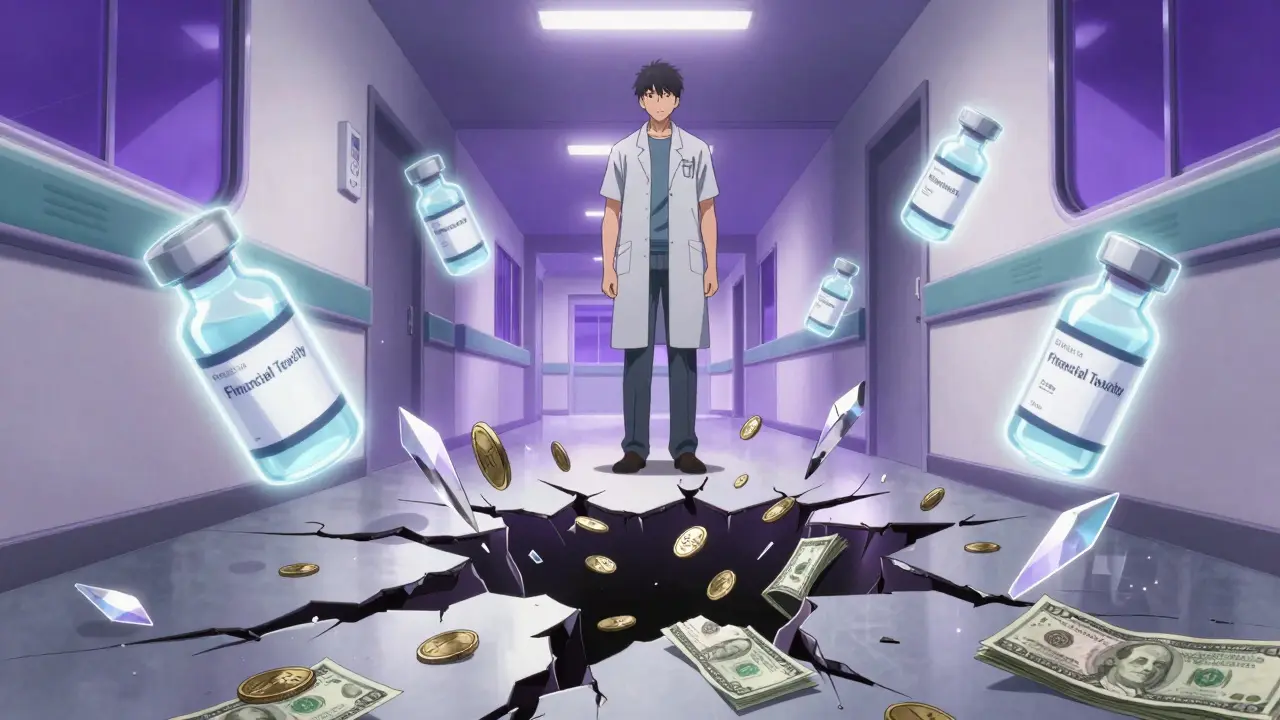
How Financial Stress Impacts Your Health
This isn't just about money; it's about medicine. When a patient is stressed about money, their physical recovery slows down. Research shows that people experiencing high financial toxicity report more pain, more severe symptoms, and a significantly lower quality of life. In some cases, the mental anguish of debt is reported as being more severe than the physical pain of the cancer itself.
The most dangerous outcome is treatment non-adherence. When the pharmacy bill is too high, some patients start skipping doses or splitting pills to make them last longer. According to a survey by the American Society of Clinical Oncology (ASCO), nearly 78% of oncologists have seen patients alter their treatment or skip doses because of costs. This directly compromises the success of the treatment and increases the risk of cancer recurrence.
Practical Steps to Manage Treatment Costs
If you're feeling the squeeze, the first thing to do is stop trying to handle it in secret. Many patients feel ashamed of their financial struggles, but your medical team needs to know. Here is a roadmap to finding relief:
- Ask for a Financial Navigator: Many large cancer centers now have staff specifically trained to find grants and actually apply for them on your behalf. These programs can reduce treatment abandonment by up to 50%.
- Explore Patient Assistance Programs (PAPs): Pharmaceutical companies often provide drugs for free or at a deep discount to eligible patients. In 2021, these programs provided billions in support, though you usually have to apply and prove your income.
- Look into Co-Pay Relief: Organizations like the Patient Advocate Foundation help cover the gap between what insurance pays and what you owe.
- Request a Cost Review: Ask your doctor if there is a biosimilar or a generic version of your medication that is just as effective but costs less.
- Screen for Eligibility: Use tools like the Comprehensive Score for Financial Toxicity (COST) to help your doctor understand your situation so they can adjust your care plan to fit your budget.

The Future of Affordable Care
The medical community is finally treating financial toxicity as a clinical side effect. We're seeing a shift toward "value-based care," where the goal isn't just to give the most expensive drug, but the one that provides the most benefit for the lowest cost. There are even AI-powered models being developed that can predict which patients are at risk of financial collapse with 82% accuracy, allowing hospitals to step in before the patient misses a dose.
On the legal side, there are pushes for drug parity. For example, the Cancer Drug Parity Act aims to ensure that oral cancer medications cost the same as intravenous ones, stopping the "sticker shock" that happens when patients transition from a hospital infusion to a home-pill regimen.
What is the difference between medical debt and financial toxicity?
Medical debt is the actual amount of money you owe. Financial toxicity is broader-it includes that debt, plus the emotional distress, the anxiety over future costs, and the behavioral changes (like skipping meals or meds) that result from those costs.
Does insurance always protect me from financial toxicity?
No. Many people are "underinsured," meaning they have a plan but the deductibles are so high or the co-insurance percentages are so steep that they still face thousands of dollars in out-of-pocket costs per month.
Can financial toxicity affect my cancer prognosis?
Yes. When costs lead to skipped doses, delayed treatments, or chronic stress-induced depression, it can lead to worse health outcomes and a lower chance of successful remission.
Where can I find immediate financial help for cancer drugs?
Start with your hospital's social worker or financial navigator. You can also look into the Patient Advocate Foundation or the pharmaceutical manufacturer's own Patient Assistance Program (PAP) for the specific drug you are taking.
Are there legal protections against high drug costs?
Some regions are implementing laws like California's Cancer Drug Affordability Act to force price transparency. While not a direct payment, these laws help doctors and patients negotiate better prices and find cheaper alternatives.
Next Steps for Patients and Caregivers
If you are currently in treatment, don't wait for the bills to pile up before acting. Schedule a meeting with your oncology social worker this week. Create a folder for every single medical invoice and insurance "Explanation of Benefits" (EOB) you receive. If you find yourself choosing between a prescription and a basic necessity, tell your nurse immediately; there are often emergency funds and bridge grants available that hospitals don't advertise unless you ask.







Comments (11)
Beth LeCours
April 4, 2026 AT 17:27 PMThis is just sad.
Divine Manna
April 4, 2026 AT 20:53 PMThe terminology of "financial toxicity" is an apt, albeit clinical, euphemism for the systemic failure of our healthcare architecture. One must realize that the intersection of capitalism and oncology is inherently paradoxical; the pursuit of profit is fundamentally at odds with the preservation of human life. It is a tragedy of our own making that we prioritize the intellectual property of pharmaceutical conglomerates over the basic biological right to survival. If one examines the trajectory of drug pricing, it becomes evident that we are not treating patients, but rather managing assets. The socio-economic stratification of healthcare creates a caste system where survival is a luxury item rather than a standard of care. This is the inevitable result of a society that values efficiency over empathy and dividends over dignity. Only through a complete paradigm shift in how we perceive medical necessity can we hope to mitigate this catastrophe.
Rachelle Z
April 5, 2026 AT 14:08 PMOh, great!!! Just great!!! 🙄 We live in a wonderland where you have to be a professional negotiator just to not go bankrupt while fighting for your life!!! 💖✨ Truly a peak human experience!!!! 🌈💊
Goodwin Colangelo
April 6, 2026 AT 20:52 PMI've seen this a lot in my practice. One thing that really helps is actually calling the billing department and asking for a "prompt pay discount" or a settlement. Hospitals often have a lot of wiggle room if you're willing to pay a lump sum that's lower than the total. Also, don't be afraid to ask for the itemized bill. It's crazy how many charges disappear once you ask for the breakdown of every single cotton swab used.
Joseph Rutakangwa
April 6, 2026 AT 21:14 PMcheck your eobs carefully errors happen often
Ace Kalagui
April 8, 2026 AT 01:19 AMI really want everyone to know that there are so many community-based organizations and local religious groups that might not be listed in the big national databases, but they have small emergency funds that can help with things like gas cards or groceries while you're focusing on the big medical bills, so please don't be afraid to reach out to your neighbors and local community leaders because people generally want to help when they know someone is struggling with something as heavy as a cancer diagnosis.
Joey Petelle
April 9, 2026 AT 18:41 PMWelcome to the land of the free, where the only thing free is the stress of watching your bank account evaporate into the pockets of Big Pharma. It's just typical American excellence, isn't it? We lead the world in innovation and then make sure only the top 1% can actually afford to use it. Absolutely brilliant strategy if your goal is to turn a hospital into a high-stakes casino where the house always wins and the patient is the chip. Just a gorgeous example of our glorious system in action!
Branden Prunica
April 11, 2026 AT 03:09 AMMy heart is literally shattering reading this. I can't even imagine the sheer terror of choosing between a roof over your head and the medicine that keeps you alive! It's an absolute nightmare! A total catastrophe! How can we even sleep at night knowing this is happening right now!
Will Baker
April 12, 2026 AT 10:42 AMSure, let's just "talk to a social worker" and magically all the bills vanish. Please, tell me more about how these corporate-run hospitals actually care about your wallet. It's adorable that people think a "financial navigator" is anything other than a way to ensure the hospital gets paid the minimum amount needed to keep you from suing them.
Dee McDonald
April 13, 2026 AT 00:06 AMStop waiting for the system to fix itself! You have to be your own biggest advocate and scream until they listen! If the pharmaceutical company says no to a PAP, call them back and ask for a supervisor! Don't take the first no! Fight for every single cent because that's your life on the line!
angel sharma
April 14, 2026 AT 16:47 PMThis is exactly why we need to push for more global collaboration in medicine because when we share the research and the production of these drugs across borders the costs will naturally plummet and no one will have to suffer in silence while their savings disappear! Keep fighting and keep pushing for transparency because the power of a collective voice is stronger than any corporate wall and we can absolutely transform this landscape into one where health is a right and not a privilege for the wealthy few!