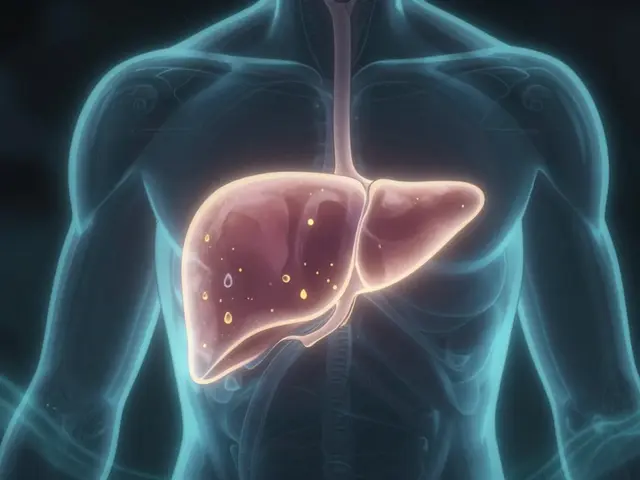

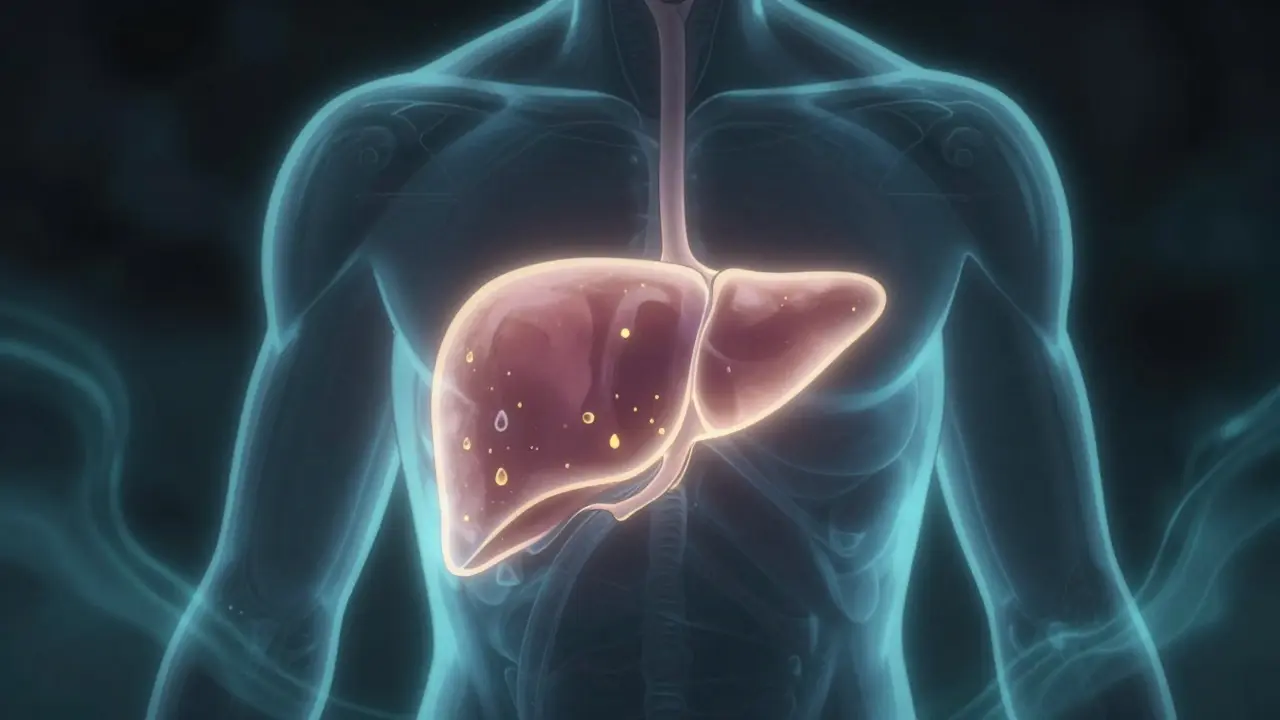
Your liver is working harder than you think. If you have been told you have Metabolic Dysfunction-Associated Steatotic Liver Disease, also known as MASLD, it means your liver has stored too much fat. This is not just about looking good; it is a serious health issue that affects nearly one in four people globally. The old name, NAFLD, is being replaced because this condition is directly linked to metabolic issues like obesity, type 2 diabetes, and high blood pressure. You might be wondering if losing weight is enough to fix it, or if new medications are the answer.
The short answer is yes, weight loss is the most powerful tool you have. But for many of us, willpower alone isn't enough. This is where GLP-1 receptor agonists, such as semaglutide (Wegovy) and liraglutide (Saxenda), come into play. These drugs are changing the landscape of liver treatment by helping you lose weight and directly reducing liver inflammation. Let’s look at how they work, what the science says, and what you can expect if you decide to try them.
Understanding MASLD: More Than Just Fat
To treat the problem, we first need to understand what is happening inside your body. MASLD occurs when your liver cells fill with fat. Specifically, more than 5% of your liver cells contain fat droplets. This happens because your body is struggling to process energy correctly. It is often called a "multi-hit" disease. The first hit is insulin resistance. When your body doesn’t respond well to insulin, your fat cells release free fatty acids into your bloodstream. Your liver acts as a filter, catching these fats and storing them.
About 59% of the fat in your liver comes from these circulating free fatty acids. Another 26% is created by your liver itself from carbohydrates through a process called de novo lipogenesis. Only 14% comes directly from the food you eat. So, even if you eat healthy, your body’s internal chemistry can still drive fat storage. Over time, this simple fat accumulation (steatosis) can turn into inflammation and scarring, known as MASH (Metabolic Dysfunction-Associated Steatohepatitis). About 20% of people with MASLD develop MASH, which can lead to cirrhosis or liver cancer if left untreated.
Weight Loss: The Gold Standard Treatment
Before considering medication, it is crucial to understand the power of weight loss. Clinical studies show that losing just 5-7% of your total body weight can significantly reduce liver fat. If you weigh 200 pounds, that is only 10 to 14 pounds. This amount of loss improves the histological appearance of your liver, meaning less fat is visible under a microscope.
However, to heal deeper damage, you need more. Losing 10% of your body weight is required to reduce lobular inflammation and reverse fibrosis (scarring). In fact, studies show that 45% of patients who achieve this 10% milestone see their MASH resolve completely. The Look AHEAD trial confirmed this, showing that intensive lifestyle changes led to a 90% reduction in new cases of MASH compared to those who did not lose weight.
The mechanism is straightforward. When you lose weight, your adipose tissue becomes more sensitive to insulin. This stops the flood of free fatty acids heading to your liver. Research using stable isotope tracers shows that weight loss reduces this fatty acid flux by 30-40%. It also boosts your liver’s ability to burn fat through beta-oxidation. The European Association for the Study of the Liver recommends aiming for 7-10% weight loss over 6-12 months, combined with 150-300 minutes of moderate exercise per week.

The Role of GLP-1 Receptor Agonists
We know weight loss helps, but sticking to a strict diet and exercise routine is incredibly difficult. This is why GLP-1 receptor agonists have become a game-changer. These medications mimic a natural hormone called glucagon-like peptide-1. They do three things: they slow down stomach emptying so you feel full longer, they tell your brain you are satisfied after eating less, and they help regulate blood sugar.
But their benefit for the liver goes beyond just weight loss. GLP-1s improve insulin sensitivity in fat tissue, reducing the release of fatty acids by 25-30%. They also activate an enzyme called AMPK in the liver, which suppresses the creation of new fat (de novo lipogenesis) by 20-25%. Furthermore, they directly reduce inflammation by blocking NF-κB signaling pathways. This means they attack the problem from multiple angles.
| Medication | Average Weight Loss | MASH Resolution Rate | Key Trial |
|---|---|---|---|
| Semaglutide (2.4 mg) | 15.1% | 52% (vs 22% placebo) | STEP-1 / REGENERATE |
| Liraglutide (3.0 mg) | 7.2% | 39% (vs 17% placebo) | SCALE Obesity |
| Tirzepatide | 15.7% (in SURMOUNT-2) | Data pending for liver-specific outcomes | SURMOUNT-2 |
Semaglutide, particularly at the higher dose of 2.4 mg per week, has shown the most promise. In post-hoc analyses, patients saw a 55% reduction in liver fat content measured by MRI. The REGENERATE trial substudy found that 52% of patients on semaglutide achieved MASH resolution, compared to only 22% on placebo. Liraglutide is also effective, though the weight loss is generally lower. Tirzepatide, a newer dual agonist, shows superior weight loss in general trials, but specific liver data is still emerging.
Real-World Challenges: Side Effects and Adherence
While the clinical data is impressive, real life is messier. Many people struggle with the side effects of GLP-1 medications. Nausea is the most common complaint. In community forums, 76% of users reported some level of nausea. For most, it is mild, but for others, it is severe enough to stop taking the medication. About 32% of patients discontinue therapy within six months due to gastrointestinal intolerance.
Another major hurdle is maintaining weight loss after stopping the drug. Data from patient registries shows that 42% of people regain more than half of their lost weight within two years of stopping GLP-1s. This suggests that these medications may need to be used long-term, similar to treatments for hypertension or diabetes. Adherence is better when combined with structured dietary counseling. One study showed 65% adherence at 12 months with counseling, compared to only 42% with medication alone.
Cost is also a significant barrier. Semaglutide can cost over $1,300 per month without insurance coverage for obesity indications. While Medicare Part D covers it for some beneficiaries, access varies widely. Rural areas are particularly underserved, with only 28% of counties having fewer than 50,000 people having access to MASLD specialists.

Who Should Consider GLP-1 Therapy?
Not everyone with MASLD needs medication. If you can achieve a 7-10% weight loss through diet and exercise alone, that is often sufficient. However, GLP-1 agonists are recommended as first-line pharmacotherapy if lifestyle modifications fail, especially if you also have type 2 diabetes. Dr. Rohit Loomba, a leading researcher in this field, notes that these drugs are particularly beneficial for patients who struggle with concurrent metabolic disorders.
If you have advanced fibrosis (stage F3-F4), GLP-1s may not be enough on their own. In these cases, doctors might consider combination therapies with other agents like FXR agonists (e.g., resmetirom). Before starting any treatment, a comprehensive assessment is needed. This usually includes a FibroScan to measure liver stiffness and fat content, blood tests to calculate the FIB-4 score, and an evaluation of your overall metabolic health.
Practical Steps for Management
If you and your doctor decide to pursue GLP-1 therapy, here is how to maximize your success:
- Start Low and Go Slow: Titrate your dose gradually over 16-20 weeks to minimize nausea. Taking vitamin B6 (pyridoxine) may help manage side effects.
- Pair with Nutrition: Focus on a Mediterranean-style diet with low fructose intake (<25g/day). Avoid sugary drinks and processed carbs.
- Monitor Regularly: Use tools like MRI-PDFF or FibroScan every 6-12 months to track liver fat and stiffness. Blood tests alone are not enough to monitor liver healing.
- Plan for Long-Term Use: Understand that this may be a chronic management strategy. Work with your doctor on a plan for maintenance if you ever need to taper off.
- Stay Active: Aim for 150 minutes of moderate exercise weekly. Muscle mass helps improve insulin sensitivity and supports weight maintenance.
The market for MASLD treatments is growing rapidly, with new options emerging every year. By 2030, MASLD is expected to be the leading cause of liver transplants in the U.S., surpassing hepatitis C. This highlights the urgency of effective management. Whether through lifestyle changes, GLP-1 medications, or a combination of both, taking action now can prevent irreversible liver damage.
Is MASLD the same as NAFLD?
Yes, essentially. MASLD is the new name for Non-Alcoholic Fatty Liver Disease (NAFLD). The change was made in 2023 to emphasize that the disease is caused by metabolic dysfunction, rather than just the absence of alcohol use. The diagnostic criteria now require the presence of at least one metabolic risk factor, such as obesity or type 2 diabetes.
How much weight do I need to lose to cure fatty liver?
Losing 5-7% of your body weight reduces liver fat. To resolve inflammation and reverse scarring (fibrosis), you typically need to lose 10% or more of your total body weight. For example, a 200-pound person would need to lose 20 pounds to see significant healing.
Can GLP-1 medications permanently cure MASLD?
GLP-1 medications can significantly improve or resolve MASLD while you are taking them. However, they are not always a permanent cure if you stop taking them. Many patients regain weight and liver fat returns if the underlying metabolic issues are not addressed through sustained lifestyle changes.
What are the most common side effects of semaglutide?
The most common side effects are gastrointestinal, including nausea, vomiting, diarrhea, and constipation. Nausea affects up to 76% of users, though it is often mild. Starting with a low dose and increasing slowly helps mitigate these symptoms.
Do I need a biopsy to diagnose MASLD?
Not necessarily. Many doctors use non-invasive tests like FibroScan (transient elastography) and MRI-PDFF to measure liver fat and stiffness. Blood tests, such as the FIB-4 score, are also used. Biopsies are reserved for cases where the diagnosis is unclear or to assess the severity of fibrosis.
Is tirzepatide approved for fatty liver disease?
As of 2026, tirzepatide is primarily approved for type 2 diabetes and weight management. While early trials show excellent weight loss results, specific approval for treating MASLD is still under investigation. Semaglutide currently has the strongest evidence base for liver benefits.