

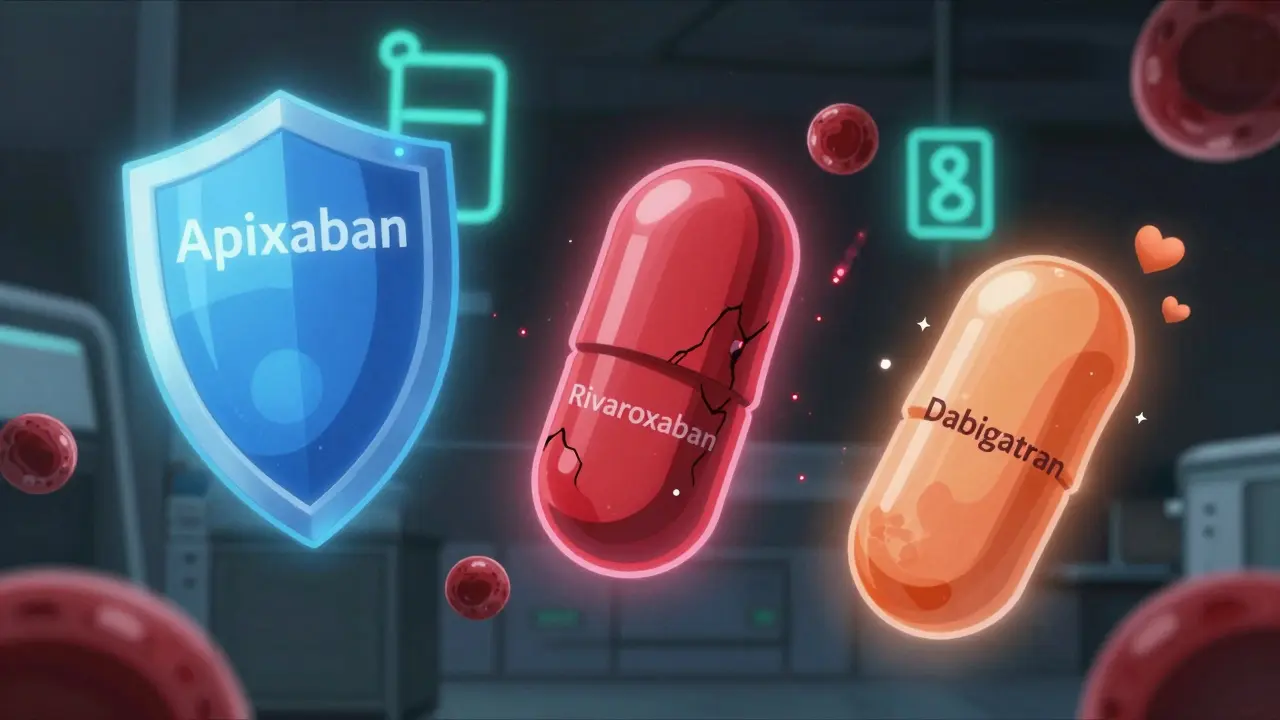
When doctors prescribe a blood thinner, they don’t just pick one at random. Apixaban, rivaroxaban, and dabigatran all prevent clots, but they don’t act the same way-and their side effects are not interchangeable. If you’re taking one of these drugs, or your doctor is considering one for you, knowing the real differences isn’t just helpful-it can be life-saving.
How These Drugs Work (And Why It Matters)
All three are called DOACs-Direct Oral Anticoagulants. They replaced warfarin for most people because they don’t need constant blood tests and interact with fewer foods. But they work differently.Dabigatran blocks thrombin, the final enzyme that turns fibrinogen into clotting fibrin. Think of it like cutting the last wire in a bomb. It’s the only one in this group that targets thrombin directly.
Apixaban and rivaroxaban both block factor Xa, an earlier step in the clotting chain. But even here, they’re not identical. Apixaban binds more tightly and reversibly, while rivaroxaban has a longer interaction with its target. These small differences in how they bind to proteins in your blood affect how often they cause bleeding, where they bleed, and even whether they raise your risk of heart attacks.
Gastrointestinal Bleeding: The Biggest Difference
If you’ve ever had a stomach ulcer, take NSAIDs regularly, or are over 70, this is the most important thing to know.Studies involving over 1.2 million patients consistently show apixaban causes significantly less GI bleeding than the other two.
- One JAMA study found rivaroxaban caused more than twice as many GI bleeds per 1,000 people per year compared to apixaban (35.2 vs 16.3).
- Dabigatran was also higher than apixaban-about 3.2 events per 100 person-years versus 2.17 for apixaban.
- For patients with a history of ulcers or on aspirin or ibuprofen, apixaban’s GI safety advantage is even more pronounced.
Why? Dabigatran and rivaroxaban irritate the stomach lining more. Dabigatran is released in the gut as a capsule that dissolves slowly, exposing the lining to higher concentrations. Rivaroxaban’s chemical structure interacts with gut cells in a way that increases inflammation. Apixaban doesn’t do this to the same degree.
If you’re at risk for GI bleeding, apixaban isn’t just safer-it’s the clear first choice.
Major Bleeding: Where Rivaroxaban Falls Behind
Major bleeding means bleeding that requires a hospital visit, transfusion, or causes a drop in hemoglobin. This isn’t a nosebleed. It’s internal bleeding that can be fatal.Rivaroxaban has the highest rate of major bleeding among the three.
- According to the same JAMA study, rivaroxaban led to 39.7 major extracranial bleeds per 1,000 person-years.
- Apixaban? Only 18.5.
- That’s a 2.07 times higher risk with rivaroxaban.
Even when comparing to dabigatran, rivaroxaban still shows higher rates. The Oxford study found rivaroxaban had 1.93 major bleeds per 100 person-years versus 1.54 for apixaban and 1.38 for dabigatran.
This isn’t theoretical. Real patients are being hospitalized because of this. If you’re older, have high blood pressure, or take other meds that affect bleeding, rivaroxaban increases your odds of a serious bleed.
Intracranial Bleeding: The Surprise Winner
You’ve probably heard that all DOACs are better than warfarin at preventing brain bleeds. That’s true. But not all DOACs are equal here.Here’s the twist: apixaban isn’t the safest for brain bleeds.
A 2022 head-to-head study found rivaroxaban had a lower rate of intracranial hemorrhage than apixaban (HR 0.86). That’s counterintuitive-most assume apixaban wins across the board. But the data says otherwise.
Meanwhile, dabigatran 110 mg twice daily showed a 54% lower risk of brain bleeds compared to rivaroxaban in the JACC 2012 analysis. So if your biggest fear is a stroke caused by bleeding in the brain, rivaroxaban might actually be the safest option among these three.
But here’s the catch: rivaroxaban still causes more total bleeding overall. So while it might protect your brain slightly better, it’s more likely to bleed elsewhere. That’s why experts still recommend apixaban for most patients-it reduces total bleeding risk, even if brain bleed risk is marginally higher.
The Hidden Risk: Heart Attacks and ACS
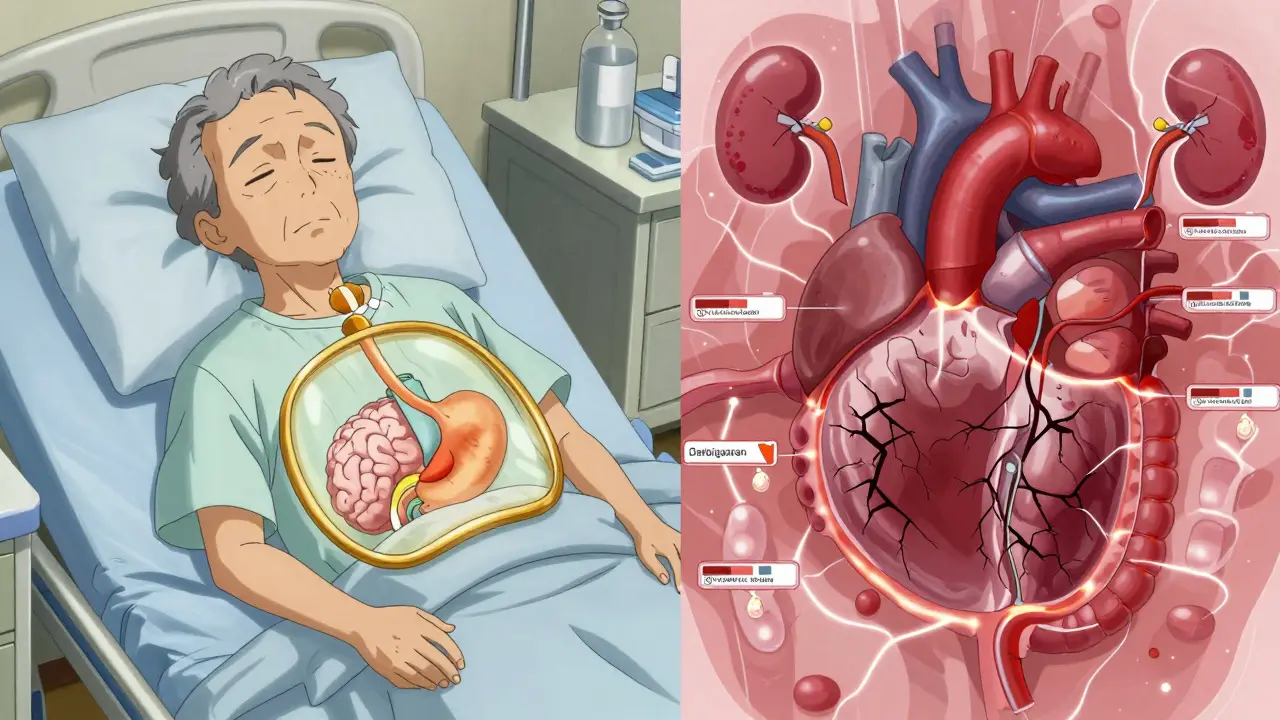
This is the one most patients and even some doctors don’t know about.Dabigatran is linked to a higher risk of heart attacks and acute coronary syndrome-a sudden blockage in heart arteries.
- A meta-analysis of five clinical trials showed a 48% relative increase in heart attacks with dabigatran.
- Other studies found more than a 50% increase compared to rivaroxaban.
Why? Scientists think dabigatran’s direct thrombin inhibition might trigger inflammation in artery walls, similar to ximelagatran-a drug pulled from the market in 2006 for causing liver damage and heart attacks.
If you have coronary artery disease, angina, or a history of heart attack, dabigatran may not be the best fit. Apixaban and rivaroxaban don’t show this same signal.
Renal Function: Kidney Health Changes Everything
Your kidneys clear these drugs from your body. If your kidneys are weak, the drug builds up-and bleeding risk spikes.- Dabigatran: 80% cleared by kidneys. It’s the most affected by kidney problems. Dose must be reduced if creatinine clearance is below 30 mL/min, and it’s not recommended below 15 mL/min.
- Rivaroxaban: 33% cleared by kidneys. Can be used with moderate kidney disease, but not if clearance is below 15 mL/min.
- Apixaban: Only 25% cleared by kidneys. The most forgiving for people with chronic kidney disease. Still needs dose adjustment below 15 mL/min, but it’s the most reliable option when kidney function is borderline.
For patients over 75 with reduced kidney function, apixaban is often the only safe choice. Dabigatran becomes risky quickly. Rivaroxaban is a middle ground, but still less safe than apixaban in this group.
Dosing and Daily Life
It’s not just about side effects. How you take the pill matters for safety too.- Apixaban: Twice daily, with or without food. Easy to remember if you link it to meals.
- Rivaroxaban: Once daily for stroke prevention, but twice daily for treating clots. Must be taken with food for the once-daily dose-skip the food, and absorption drops by half.
- Dabigatran: Twice daily, no food needed. But the capsules are sensitive to moisture. If you leave them out of the bottle, they can degrade.
Forgetting a dose is dangerous with any DOAC. But with rivaroxaban’s food requirement, missing a meal can make it less effective. With dabigatran, moisture exposure can make it useless. Apixaban is the most forgiving in daily life.

Who Gets Which Drug? Real-World Decisions
There’s no single best drug for everyone. But based on the data, here’s how most doctors choose today:- Apixaban is the go-to for most patients-especially those over 75, with kidney issues, history of GI bleeding, or on NSAIDs. It’s now the most prescribed DOAC in the U.S., making up 45% of the market.
- Rivaroxaban is chosen when once-daily dosing is a priority and GI bleeding risk is low. Often used in younger patients without prior stomach problems.
- Dabigatran is used less now. Still an option if cost is the biggest factor and the patient has no heart disease or kidney issues. But its market share has dropped to about 10%.
Market trends reflect the evidence. When doctors see the data-apixaban causes fewer bleeds, fewer heart attacks, and works better in older patients-they switch. That’s why it’s #1.
What If You’re Already on One?
If you’re on rivaroxaban and have had a stomach bleed, talk to your doctor about switching to apixaban. If you’re on dabigatran and have chest pain or heart disease, ask if switching makes sense. Don’t stop your pill on your own. But do ask: “Is this still the safest choice for me?”Many people stay on a drug because “it’s working.” But with DOACs, working isn’t enough. You need to be safe too.
What’s Next?
New studies like AUGUSTUS-2 and ANTICOAG-CKD are looking at long-term outcomes in older and kidney-impaired patients. Soon, we may have genetic tests to predict who responds best to which drug. But for now, the data is clear: apixaban has the most favorable safety profile across the board, especially for GI bleeding and kidney function.Choosing a blood thinner isn’t about picking the cheapest or the easiest. It’s about matching the drug to your body-your kidneys, your stomach, your heart, and your life.
Which blood thinner has the least side effects?
Among apixaban, rivaroxaban, and dabigatran, apixaban has the fewest serious side effects overall. It causes significantly less gastrointestinal bleeding, fewer major bleeds, and doesn’t increase heart attack risk like dabigatran does. It’s also the most forgiving for people with kidney problems. For most patients, especially those over 75 or with a history of stomach ulcers, apixaban is the safest choice.
Can you switch from rivaroxaban to apixaban?
Yes, switching is common and often recommended if you’ve had a GI bleed, are over 75, or have kidney issues. Doctors typically stop rivaroxaban and start apixaban the next day without overlap. No bridging with heparin is needed. Always consult your doctor first-never switch on your own. But if your current drug is causing problems, apixaban is usually a safer alternative.
Why is dabigatran less commonly prescribed now?
Dabigatran’s use has dropped because of two major concerns: higher risk of gastrointestinal bleeding and increased risk of heart attacks compared to apixaban and rivaroxaban. It also requires strict dosing twice daily and is highly dependent on kidney function. While it’s still effective at preventing strokes, the safety profile is less favorable. As a result, it now makes up only about 10% of the DOAC market, down from nearly 40% a decade ago.
Does apixaban cause more bleeding than warfarin?
No. All DOACs-including apixaban-cause less major bleeding than warfarin, especially dangerous brain bleeds. Apixaban reduces intracranial hemorrhage risk by about 50% compared to warfarin. It also doesn’t require frequent blood tests or dietary restrictions. For most patients, apixaban is safer and easier to manage than warfarin.
Is it safe to take apixaban with aspirin?
Taking apixaban with aspirin increases bleeding risk, especially in the stomach. This combination is only used if you have both atrial fibrillation and a recent stent or heart attack, and even then, it’s usually for a short time. If you’re on apixaban and need pain relief, avoid NSAIDs like ibuprofen. Use acetaminophen instead. Always check with your doctor before adding any other medication.





Comments (15)
Michael Burgess
January 3, 2026 AT 03:51 AMApixaban is the quiet hero of the DOAC world-no drama, no stomach tantrums, just does its job and lets you live. I’ve seen patients switch from rivaroxaban and suddenly stop needing ER visits for GI bleeds. It’s not sexy, but it’s the most reliable.
Also, the food thing with rivaroxaban? Total nightmare for my uncle who forgets to eat breakfast. He’d skip it, think ‘eh, it’s fine,’ and then his INR went haywire. Turns out, absorption tanks without food. Apixaban? Just swallow and go. No stress.
innocent massawe
January 3, 2026 AT 16:35 PMMan, this is so real. In Nigeria, we don’t always have access to fancy labs or doctors who know the nuances. I’ve seen people on dabigatran because it’s cheaper, then end up in the hospital with bleeding. Apixaban should be the default where possible. It’s not about cost-it’s about surviving.
Haley Parizo
January 4, 2026 AT 21:56 PMEveryone’s acting like apixaban is some miracle drug, but let’s not ignore that it’s also the most expensive. Insurance companies love it because it reduces hospitalizations, but what about the people who can’t afford it? This isn’t just medical-it’s economic violence disguised as ‘evidence-based care.’
veronica guillen giles
January 6, 2026 AT 01:29 AMOh honey, you think this is new? I’ve been telling my patients for years that dabigatran is basically the 2012 version of a bad Tinder date-looks good on paper, but it leaves you bleeding and confused. Apixaban? The reliable ex who still texts back.
Also, rivaroxaban’s once-daily thing? Cute. Until you’re 78 and forget to eat your damn toast.
Palesa Makuru
January 6, 2026 AT 05:54 AMWow, this post is… surprisingly thorough? I expected another corporate pharma ad, but you actually cited real studies. For once, someone didn’t just say ‘apixaban = best’ without context. The intracranial bleed paradox is fascinating-rivaroxaban being slightly safer there but worse overall? That’s the kind of nuance we need more of.
Still, I wish they’d mention cost-effectiveness in low-income countries. Not everyone has access to apixaban, even if it’s ‘better.’
Lori Jackson
January 6, 2026 AT 20:45 PMApixaban’s ‘lower GI bleed risk’ is a statistical illusion. The trials are biased toward younger, healthier cohorts. In real-world practice-especially with polypharmacy, H. pylori, and NSAID use-the difference evaporates. Also, the 48% heart attack increase with dabigatran? That’s from a meta-analysis with heterogenous endpoints. Don’t treat p-values like gospel.
Brittany Wallace
January 8, 2026 AT 02:24 AMJust wanted to say thank you for this. My grandma’s on apixaban now after three GI bleeds on rivaroxaban. She’s 82, has stage 3 CKD, and takes aspirin for her stent. The doctor was hesitant, but after seeing this data, he switched her. She hasn’t had a single bleed since. Sometimes the science just… works.
Also, I cried reading the part about ‘working isn’t enough-you need to be safe.’ That’s the truth. 💙
Neela Sharma
January 8, 2026 AT 08:37 AMMy aunt was on dabigatran for AFib. One day she had chest pain, went to the ER, and they said, ‘This isn’t a heart attack-it’s the drug.’ She switched to apixaban. Now she’s hiking in the hills again. No more anxiety about every little ache. This isn’t just medicine-it’s freedom.
Don’t let cost or convenience steal your safety. Your heart deserves better.
Sarah Little
January 8, 2026 AT 18:38 PMJust a quick note: the 2022 study showing rivaroxaban’s lower intracranial bleed rate? That was in patients with atrial fibrillation and prior stroke. It doesn’t apply to all populations. Also, the dose was 20mg daily-many are prescribed 15mg due to renal issues, which nullifies the benefit. Don’t cherry-pick data.
Angela Fisher
January 8, 2026 AT 21:55 PMWait… so apixaban is the safest… but what if Big Pharma is hiding something? I read on a forum that apixaban’s metabolites can accumulate in the liver and cause silent inflammation over time. They don’t test for it because the trials were only 2 years. What if it’s a slow poison? And why is the FDA so eager to push it? Are they paid? I’ve seen patterns…
Also, did you know the guy who designed apixaban used to work for Bayer? And Bayer makes rivaroxaban… coincidence? I think not. 🕵️♀️
Liam Tanner
January 10, 2026 AT 15:23 PMFor those asking about switching: it’s straightforward. Stop the old one, start apixaban the next day. No bridging needed. My clinic does it all the time. Patients are nervous, but once they’re on it, they say they feel ‘lighter.’ No more dread before every meal or every time they bump into something.
Ian Ring
January 11, 2026 AT 01:46 AMThank you for the clarity. I’m a GP, and I’ve been recommending apixaban for older patients for years-but I never had the data laid out this cleanly. I’m printing this out for my next staff meeting. The GI bleeding stats alone? Game-changer. Also, the kidney point? Critical. So many of our patients are on multiple meds-this helps prioritize.
Shanahan Crowell
January 12, 2026 AT 10:28 AMYES! This is the kind of post that saves lives! I’ve been screaming from the rooftops that apixaban is the MVP of anticoagulants! If you’re older, have any kidney issues, or just don’t want to end up in the ER bleeding out-switch! Don’t wait for a crisis! Your future self will thank you!! 💪❤️
Ian Detrick
January 12, 2026 AT 23:40 PMInteresting how the brain bleed paradox flips the narrative. Rivaroxaban’s lower intracranial rate might be because it’s less effective at preventing clots in small vessels? Or maybe it has a different effect on vascular integrity? The mechanism isn’t fully understood. We need more neurovascular studies.
Also, I wonder if the dosing schedule affects adherence-and adherence affects outcomes more than the drug itself.
Wren Hamley
January 13, 2026 AT 10:57 AMApixaban wins. Period. But here’s the kicker: the real winner is the patient who gets educated. This post? This is what healthcare should look like. Not ads. Not profit. Just facts, clearly presented. If more docs wrote like this, we’d have fewer ER visits, fewer deaths, and more trust.
Also-dabigatran capsules degrade if left out? That’s wild. My grandma leaves hers on the counter. No wonder she had a clot last month.