


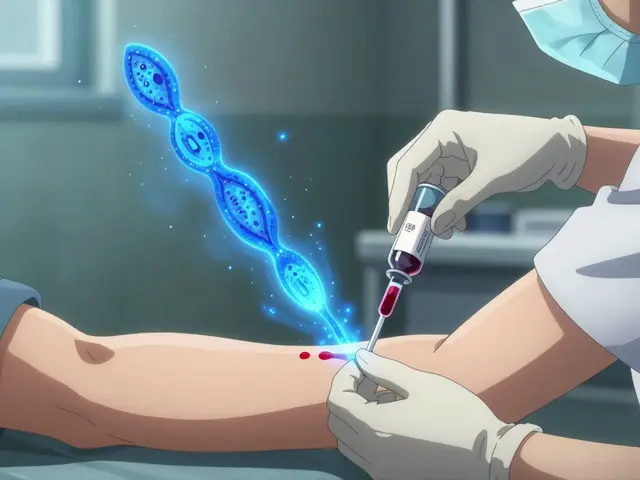
Imagine getting a complete update on your cancer treatment progress without needing another painful needle stick or surgery. That is exactly what liquid biopsy is becoming for thousands of patients. Instead of cutting into tissue to find out if a tumor is shrinking or mutating, doctors can now analyze a simple blood sample. The key player here is circulating tumor DNA, often called ctDNA. It is tiny fragments of genetic material shed by dying cancer cells into the bloodstream. By tracking these fragments, oncologists can see what the tumor is doing in real-time, often months before it shows up on a CT scan.
This shift from traditional tissue biopsies to liquid analysis is not just about convenience. It addresses a major flaw in how we have treated cancer for decades: tumors are not uniform. A single piece of tissue removed from one spot might miss the aggressive mutations happening elsewhere in the body. Liquid biopsy captures the whole picture. If you are navigating a cancer diagnosis or supporting someone who is, understanding this technology helps you ask better questions and make more informed decisions about care.
What Is ctDNA and Why Does It Matter?
To understand why this test is so powerful, you first need to know what it is looking for. When cancer cells die, they break apart and release their DNA into the blood. This is circulating tumor DNA (ctDNA). Think of it as a digital footprint left behind by the tumor. Unlike healthy cell DNA, which is also in the blood but looks different, ctDNA carries specific mutations unique to the cancer.
Traditional biopsies give you a snapshot of one moment in time at one specific location. But cancer evolves. As treatments kill off sensitive cells, resistant ones may survive and multiply. A tissue biopsy taken six months ago might show a mutation that is no longer relevant today. ctDNA provides a dynamic view. It reflects the current state of all tumor sites in the body, including metastases that are too small to be seen on imaging. This comprehensive overview allows doctors to tailor treatments more precisely, targeting the active threats rather than historical data.
Liquid Biopsy vs. Traditional Tissue Biopsy
The debate between liquid and tissue biopsy isn't about which one is "better" in every scenario, but rather where each shines. Here is how they compare in practical terms:
| Feature | Liquid Biopsy (ctDNA) | Tissue Biopsy |
|---|---|---|
| Invasiveness | Minimally invasive (blood draw) | Invasive (surgical procedure) |
| Tumor Heterogeneity | Captures multiple tumor sites | Limited to sampled area |
| Frequency | Can be repeated regularly | Rarely repeated due to risk |
| Early Detection Sensitivity | Lower for Stage I (50-70%) | High if tumor is accessible |
| Risk of Complications | Negligible | 1-5% depending on location |
One of the biggest advantages of liquid biopsy is safety. Invasive procedures carry risks like bleeding, infection, or organ damage, affecting 1-5% of patients depending on where the tumor is located. For hard-to-reach tumors in the brain or lungs, the risk is even higher. With a blood draw, those risks vanish. Furthermore, because you can repeat the test easily, doctors can monitor response to therapy continuously. This is crucial for detecting resistance early. Studies show ctDNA can identify resistance mutations 3 to 6 months before radiographic evidence appears on scans.
However, tissue biopsy remains the gold standard for initial diagnosis in many cases. It provides the actual cellular architecture needed to confirm cancer type and grade. Liquid biopsy is currently best used as a complementary tool-especially when tissue is insufficient, unavailable, or when frequent monitoring is needed during treatment.
How Accurate Is ctDNA Testing?
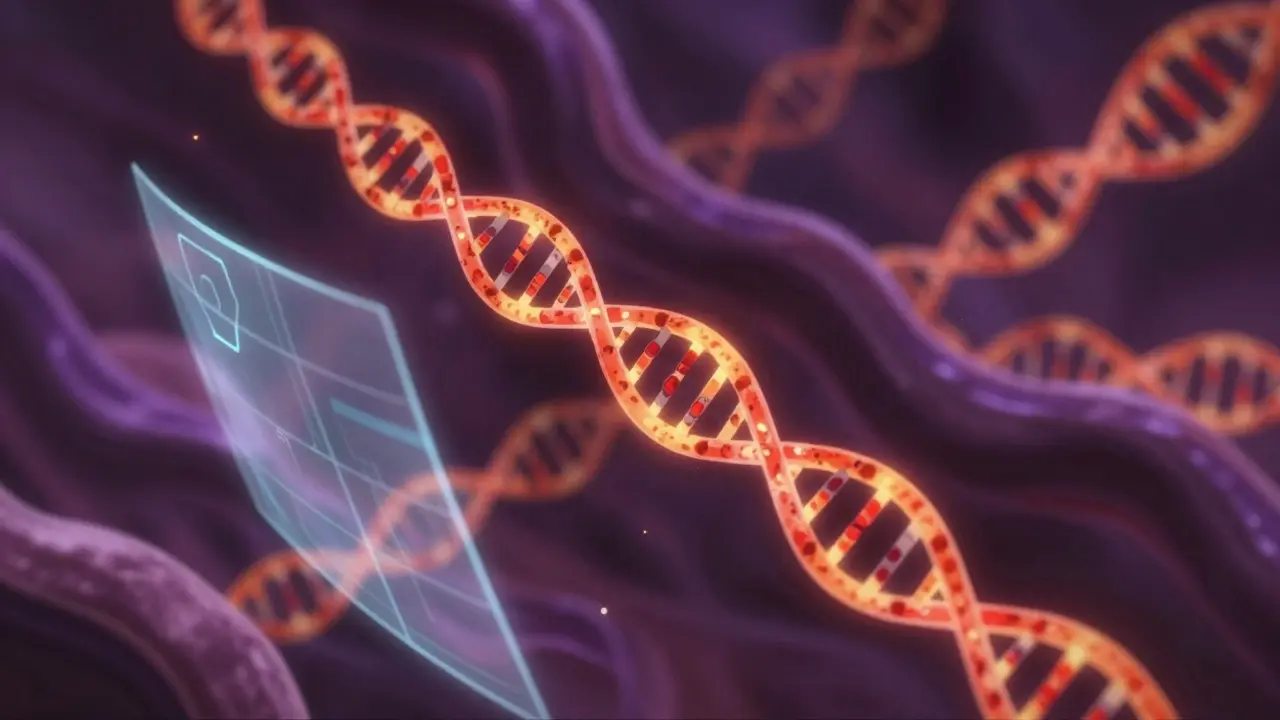
Accuracy depends heavily on the stage of cancer and the technology used. In advanced stages (Stage IV), where tumors shed large amounts of DNA, detection rates are high, often between 80-90%. However, in early-stage cancers (Stage I), only 50-70% of patients have detectable levels of ctDNA. This doesn't mean the test failed; it means the tumor is simply shedding less material.
Technology plays a huge role here. Older methods like Sanger sequencing missed rare mutations. Today, labs use digital droplet PCR (ddPCR) and next-generation sequencing (NGS). ddPCR can detect one mutant molecule among 10,000 wild-type molecules. NGS panels can scan hundreds of genes simultaneously. Advanced techniques like methylation profiling add another layer of precision, improving detection sensitivity by 20-30% compared to analyzing sequence changes alone.
Despite these advances, challenges remain. Variants of unknown significance appear in 15-20% of reports, leaving doctors unsure if a mutation matters. Additionally, age-related blood cell mutations, known as clonal hematopoiesis, affect 10-15% of people over 65. These can mimic cancer signals, leading to false positives. Expert interpretation is essential to distinguish true tumor signals from biological noise.
Clinical Applications: More Than Just Detection
Liquid biopsy has moved beyond research labs into real-world clinical practice. Its primary uses fall into three categories:
- Monitoring Treatment Response: If ctDNA levels drop after starting therapy, it’s a strong sign the treatment is working. If levels rise, the tumor may be resisting, prompting a switch in drugs before visible progression occurs.
- Detecting Minimal Residual Disease (MRD): After surgery or chemotherapy, microscopic cancer cells may remain. ctDNA tests can detect MRD with 85-90% sensitivity, predicting recurrence 6-11 months earlier than standard imaging. This allows for adjuvant therapy adjustments while the disease burden is still low.
- Identifying Targetable Mutations: In lung cancer, for example, ctDNA analysis identified targetable EGFR mutations in 92% of cases where tissue was insufficient. This ensures patients get personalized targeted therapies instead of generic chemotherapy.
At major centers like MD Anderson, about 35-40% of phase I clinical trials now incorporate ctDNA analysis. Oncologists report that liquid biopsy reduces the need for repeat tissue biopsies by 25-30% in metastatic cases. This improves patient comfort and enables a more proactive approach to care.

Challenges and Limitations to Know
While promising, liquid biopsy is not a magic bullet. One major limitation is tumor type variability. Colorectal cancer typically sheds high levels of ctDNA, making it ideal for monitoring. Prostate cancer and certain brain tumors shed much less, resulting in detection rates below 40%. Indolent hematologic malignancies also pose challenges due to low shedding rates.
Standardization is another hurdle. Different labs use different collection tubes, processing times, and analytical platforms. This inter-laboratory variability affects up to 25% of test results in multicenter studies. Without universal standards, comparing results over time or across facilities can be difficult. Pre-analytical variables, such as how quickly blood is processed after drawing, significantly impact DNA integrity.
Cost and access are also barriers. While academic medical centers offer liquid biopsy in 60-70% of oncology divisions, community practices adopt it slower (25-30%) due to higher costs and complex interpretation needs. Insurance coverage varies widely, and patients should verify coverage before testing.
The Future of ctDNA Monitoring
The trajectory for liquid biopsy is steep upward. The global market is projected to reach $19.5 billion by 2030, driven by regulatory approvals and guideline updates. The FDA has granted 12 liquid biopsy-related approvals between 2020-2023, including companion diagnostics like Guardant360 CDx. ASCO guidelines now recommend liquid biopsy for initial biomarker testing in advanced non-small cell lung cancer when tissue is insufficient.
Future developments focus on multi-analyte approaches. Combining ctDNA with methylation patterns, fragmentomics, and artificial intelligence could push early-stage detection sensitivity above 95%. AI models are already being trained to recognize fragmentation profiles unique to specific cancer types, potentially increasing diagnostic accuracy by 15-20%. Experts predict liquid biopsy will become standard of care for cancer monitoring within 5-7 years, reducing unnecessary imaging by 20-25% and enabling truly personalized, real-time treatment adjustments.
Is liquid biopsy covered by insurance?
Coverage varies significantly by insurer, plan, and cancer type. Many major insurers cover ctDNA testing for established indications like EGFR mutation testing in lung cancer or MRD assessment in colorectal cancer. However, experimental uses or broad screening panels may require prior authorization or self-pay. Always check with your provider and insurance company before ordering the test.
Can liquid biopsy replace a tissue biopsy for initial diagnosis?
Generally, no. Tissue biopsy remains the gold standard for initial diagnosis because it provides histological confirmation of cancer type and grade. Liquid biopsy is primarily used for monitoring, detecting resistance, or when tissue is inaccessible. Some guidelines allow liquid biopsy for initial biomarker testing if tissue is insufficient, but a tissue sample is still preferred when possible.
How often should I get a liquid biopsy?
Frequency depends on your treatment phase. During active therapy, tests may be done every 4-8 weeks to monitor response and resistance. During surveillance after treatment completion, testing might occur every 3-6 months to detect minimal residual disease. Your oncologist will determine the optimal schedule based on your cancer type and risk profile.
What does a negative ctDNA result mean?
A negative result usually means no tumor-derived DNA was detected at the assay's sensitivity limit. This is generally good news, suggesting low disease burden or effective treatment. However, it does not guarantee the absence of cancer, especially in early stages or slow-shedding tumors. Clinical correlation with imaging and physical exams is always necessary.
Are there side effects to liquid biopsy?
No. Liquid biopsy involves a standard blood draw, so side effects are limited to minor bruising or discomfort at the needle site. There are no systemic risks associated with the test itself. This makes it much safer than repeated tissue biopsies, which carry risks of bleeding, infection, and organ injury.





Comments (14)
Isis Fleming
June 27, 2026 AT 20:19 PMIt is genuinely fascinating to observe the paradigm shift from invasive tissue sampling to non-invasive liquid biopsy methodologies. The ability to monitor circulating tumor DNA provides a holistic view of tumor heterogeneity that traditional biopsies simply cannot achieve due to their spatial limitations. This technological advancement promises to significantly enhance patient comfort while simultaneously improving the precision of oncological interventions. I believe this represents a crucial step forward in personalized medicine.
Sydney Jarrett
June 29, 2026 AT 01:18 AMYou are vastly oversimplifying the analytical complexities involved here, frankly. While ctDNA is trendy, you are ignoring the significant issues with false positives caused by clonal hematopoiesis of indeterminate potential (CHIP) which affects nearly 15% of older demographics. The sensitivity rates for early-stage detection are abysmal compared to what the marketing hype suggests. It is not a magic bullet, it is a noisy signal that requires sophisticated bioinformatic filtering to even begin to interpret correctly. Most general practitioners don't have the expertise to handle this data without creating more anxiety than clarity for patients.
Lorena Suarez
June 30, 2026 AT 17:19 PMi think its really cool how we can just get blood tests now instead of scary surgeries
my aunt had lung cancer and she was so tired of all the needles and scans
this sounds like it could make things way less stressful for people going through treatment
hope it gets cheaper soon though because insurance is always a headache
Ben Murphy
July 2, 2026 AT 09:40 AMThe ethical implications of widespread genetic surveillance via liquid biopsy are deeply troubling and largely ignored by enthusiasts. We are moving towards a society where biological noise is pathologized, leading to unnecessary interventions driven by algorithmic overreach rather than clinical necessity. The commodification of genomic data raises serious questions about privacy and consent that remain unaddressed in these optimistic narratives.
Anna Bartle
July 3, 2026 AT 17:02 PMThis is absolutely groundbreaking! The reduction in invasive procedures is a huge win for patient quality of life! Early detection of resistance mutations allows for timely therapy switches! This technology is truly saving lives!
Chris Munton
July 5, 2026 AT 16:31 PMLet us be clear about the fundamental inadequacies of current liquid biopsy protocols when applied to heterogeneous tumor environments. The assumption that circulating DNA accurately reflects the entire mutational landscape of a metastatic disease process is scientifically naive. Tumor shedding rates vary wildly between histological subtypes, meaning that a negative result in prostate or brain cancers is often clinically meaningless despite the high cost. We must demand rigorous standardization before this becomes a routine diagnostic tool, otherwise we risk delaying critical care based on false negatives. The lack of universal pre-analytical standards is a disaster waiting to happen in community oncology settings.
Amrithaa Thayaparan
July 6, 2026 AT 02:36 AMoh look another tech bro trying to sell us snake oil wrapped in fancy science words
ctDNA is basically just hoping for the best while bleeding patients dry financially
real doctors know tissue is king and anything else is just guesswork for the elites who can afford it
stop pretending this is accessible healthcare when only rich hospitals can use it properly
Paul Diamond
July 7, 2026 AT 04:53 AMOne must consider the epistemological shift inherent in replacing physical tissue architecture with fragmented genetic sequences. Does the absence of cellular context diminish our understanding of the disease's true nature? Perhaps we are trading certainty for convenience, accepting a probabilistic model of health that may ultimately obscure more than it reveals.
Peter Sverla
July 8, 2026 AT 03:26 AMI've been reading up on the methylation profiling aspects mentioned here and it seems promising but still very experimental. How do you distinguish between age-related epigenetic changes and actual tumor-derived signals in patients over 60? The overlap seems significant.
Fred Stone
July 9, 2026 AT 09:04 AMhey man i work in a lab and honestly the biggest issue isnt the tech its the sample handling
if you dont put the blood in the right tube and process it fast enough the dna degrades and you get useless results
most clinics dont follow protocol strictly so yeah its hit or miss right now
Dawn Renee
July 10, 2026 AT 20:05 PMThoroughly skeptical of the corporate interests driving this narrative. The FDA approvals are likely influenced by pharmaceutical lobbying rather than genuine clinical benefit. Why would Big Pharma suddenly embrace a test that might reveal drug resistance earlier, potentially shortening patent-protected treatment windows? It smells like a data harvesting scheme disguised as medical innovation. Trust no one.
Divya Prakash
July 12, 2026 AT 17:22 PMIt is quite amusing to witness the uncritical acceptance of such rudimentary technology by the masses. Liquid biopsy, in its current iteration, is merely a parlor trick for oncologists who wish to appear cutting-edge without delivering substantial diagnostic clarity. The inter-laboratory variability cited in the article is a damning indictment of the field's maturity. Until there is absolute standardization, this remains a luxury service for the wealthy, devoid of any meaningful impact on public health outcomes for the broader population.
Mohit Patil
July 14, 2026 AT 08:24 AMthey want your dna they want your money they want to control your health
liquid biopsy is just the next step in the surveillance state
once they have your genetic profile they can deny you insurance or jobs based on predictions
wake up people its not about curing cancer its about control
Chandan Sharma
July 15, 2026 AT 01:38 AMThe aesthetic of modern oncology is shifting from the visceral brutality of surgery to the sterile elegance of genomics. One might argue that this transition reflects a broader societal desire to distance ourselves from the raw mechanics of mortality. Yet, beneath this polished veneer lies the same chaotic struggle against entropy. Whether we extract tissue or analyze plasma, the outcome remains bound by the immutable laws of biology.