

What to Do If You Think Someone Has Overdosed
If someone is unresponsive, breathing shallowly, or has blue lips and fingernails, they may be overdosing. Overdose isn’t always obvious. People don’t always collapse dramatically. Sometimes they’re just lying still, breathing slowly or making strange snoring sounds. That’s not sleep - that’s a medical emergency. Every minute counts. You don’t need to be a doctor. You don’t need to know exactly what they took. You just need to act.
Step 1: Call for Help Immediately
Before you do anything else, call 999. Don’t wait. Don’t think, "Maybe they’ll wake up." Don’t panic and forget to call. The single most important thing you can do is get professional help on the way. Emergency services reduce death risk by 35% compared to waiting for someone to recover on their own. While you’re calling, keep the line open. The operator can guide you through the next steps. If you’re alone, put the phone on speaker. If you’re with someone, have them call while you start helping.
Step 2: Check Breathing and Position Them
Look, listen, and feel for breathing for no more than 10 seconds. If they’re not breathing or only gasping, get ready to give rescue breaths. If they’re breathing but unconscious, roll them into the recovery position. Here’s how: gently roll them onto their left side. Bend their top knee to 90 degrees and place it on the floor for support. Tilt their head back slightly so their airway stays open. This stops them from choking if they vomit. Don’t shake them or slap their face - that delays real help.
Step 3: Give Rescue Breaths If They’re Not Breathing
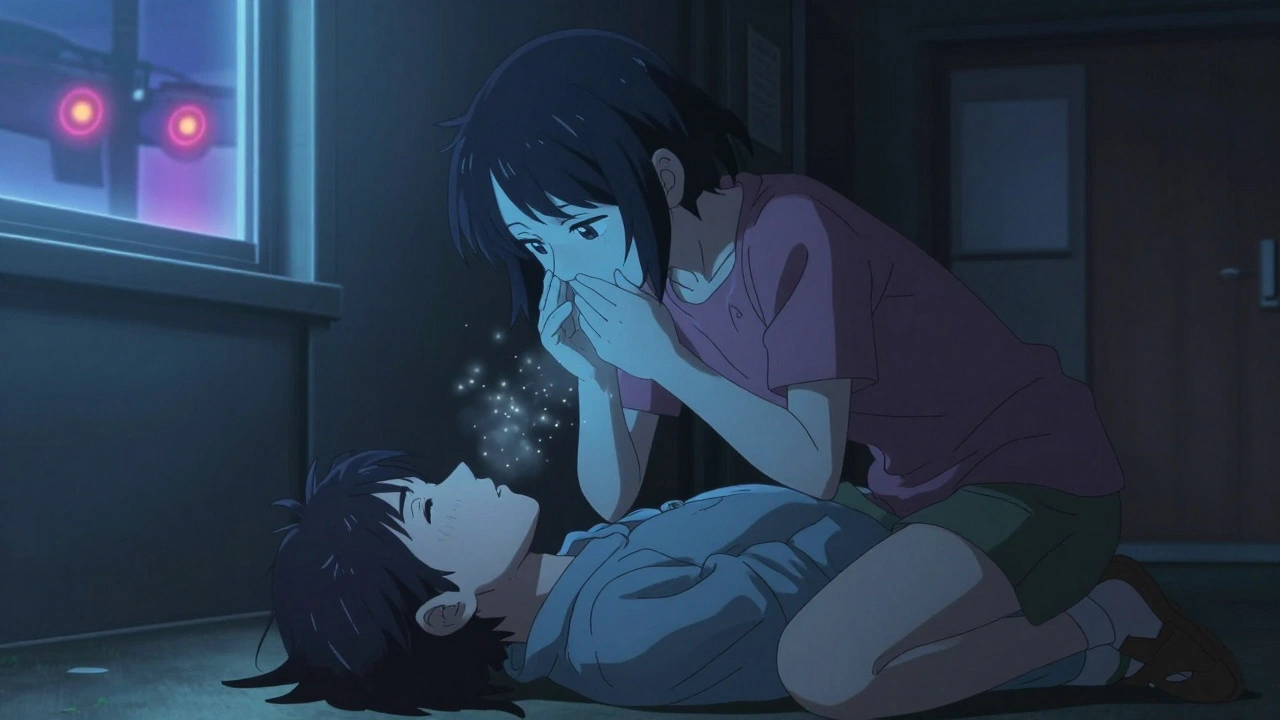
If they’re not breathing, start rescue breathing right away. Tilt their head back, lift their chin, pinch their nose shut, and give one slow breath into their mouth every 5 to 6 seconds. Each breath should last about one second and make their chest rise. Don’t blow too hard - you don’t want air going into their stomach. Keep going until they start breathing on their own or help arrives. Rescue breathing alone can keep someone alive for 10 to 15 minutes. Most overdose deaths happen because breathing stops, not because the heart fails.
Step 4: Use Naloxone If You Have It - But Only for Opioids
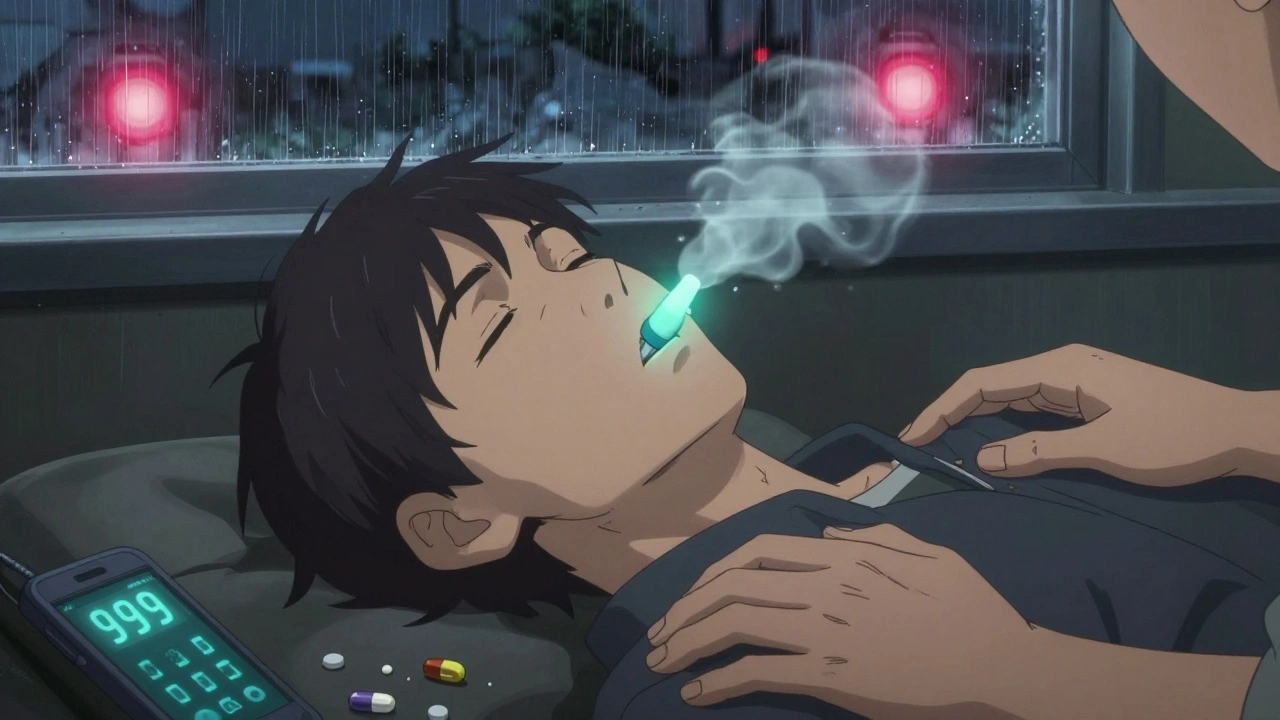
If you have naloxone (like Narcan nasal spray), use it if you suspect an opioid overdose. Signs include very slow or no breathing, pinpoint pupils, and skin that feels cold and clammy. Spray one dose into one nostril while the person is lying on their back. You don’t need to remove their clothing. Naloxone works in 2 to 5 minutes. But here’s the key: naloxone only works on opioids. It won’t help if they took cocaine, alcohol, benzodiazepines, or ecstasy. Even if you give naloxone, you still need to call 999 and keep giving rescue breaths. Naloxone wears off after 30 to 90 minutes - the overdose can come back. People who’ve been revived with naloxone often need hospital care.
Step 5: Don’t Try These Common Myths
Don’t put them in a cold shower or ice bath. That can trigger dangerous heart rhythms, especially with stimulants like cocaine or MDMA. Don’t make them walk around. Don’t give them coffee or food. Don’t try to make them vomit. These things can make things worse. Don’t assume they’re just drunk or sleeping. Overdose looks like deep sleep - but the body is shutting down. If they’re not responding to loud voices or shoulder shakes, treat it like an emergency.
What If You Don’t Know What They Took?
You don’t need to know. If someone is unresponsive and not breathing normally, start rescue breathing and call 999. If you have naloxone, use it anyway. Most overdoses in the UK now involve opioids - even if other drugs are mixed in. Naloxone is safe to give even if opioids aren’t involved. It won’t hurt someone who didn’t take them. The priority is keeping oxygen flowing to the brain. Every second without breath can cause brain damage. Rescue breathing buys time until paramedics arrive.
Why This Works: The Science Behind the Steps
Overdose kills by stopping breathing. The brain can only survive 4 to 6 minutes without oxygen before permanent damage happens. Rescue breathing keeps oxygen moving. Naloxone reverses opioid effects by kicking the drugs off brain receptors. It’s not a cure - it’s a bridge. Studies show bystanders who perform rescue breathing and use naloxone can cut overdose deaths by up to 50%. In communities with widespread training, survival rates to hospital discharge hit 98.7%. That’s not luck - it’s knowing what to do.
What to Expect After Help Arrives
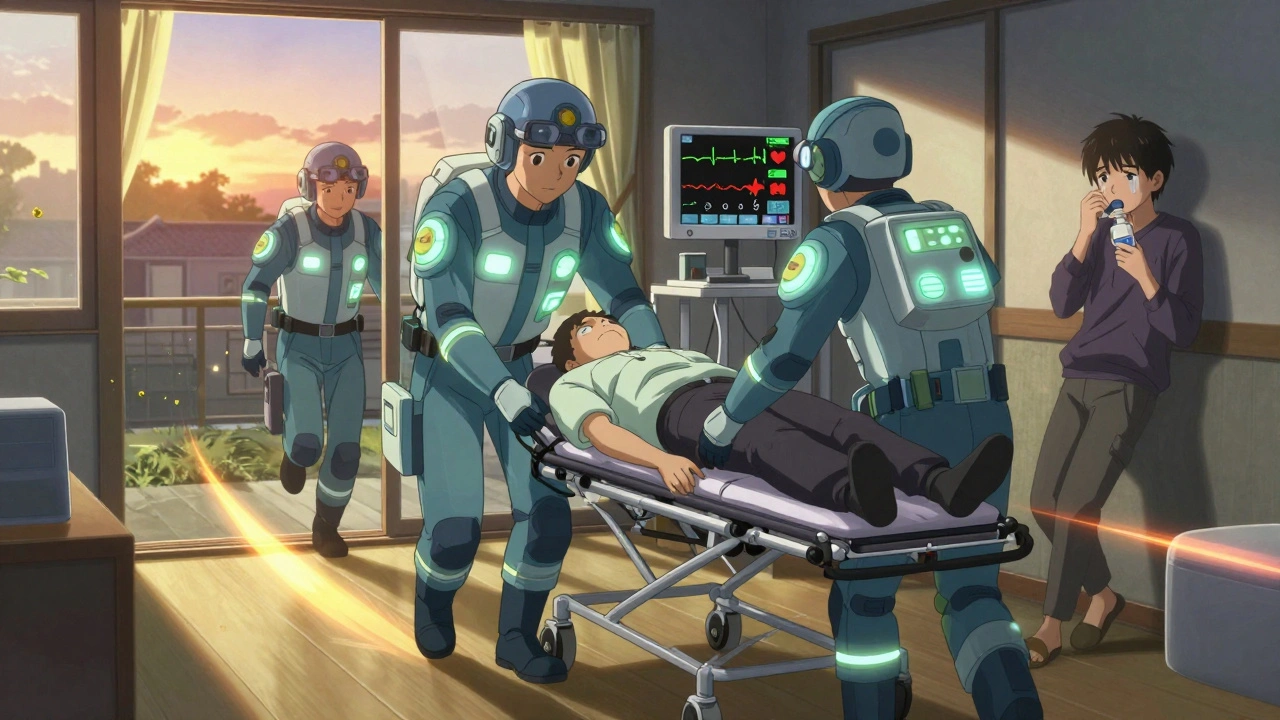
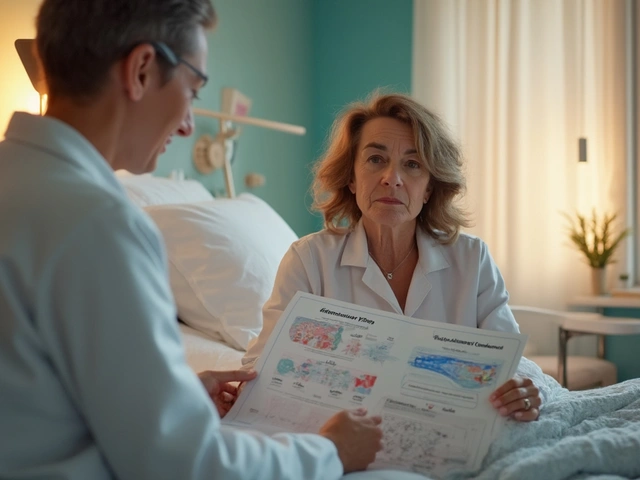
Paramedics will check vital signs, give oxygen, and may give more naloxone if needed. They’ll monitor heart rate, breathing, and blood pressure. Even if the person wakes up, they’ll likely be taken to the hospital. Overdose can cause delayed complications like lung injury or organ stress. Hospitals also connect people to support services - addiction treatment, counseling, harm reduction programs. This isn’t punishment. It’s care.
How to Be Ready Before It Happens
Keep naloxone in your home, car, or bag if you or someone you know uses opioids. It’s now available without a prescription in many pharmacies. Learn the recovery position. Watch a 5-minute video on rescue breathing - the Red Cross has free ones online. Talk to friends about what to do if someone overdoses. Many people freeze because they’ve never practiced. Training takes less than an hour. You don’t need to be perfect. You just need to start.
Final Thought: You Don’t Have to Be Brave - Just Do Something
You might feel scared. You might worry about getting in trouble. You might think, "What if I do it wrong?" The truth is, doing something is better than doing nothing. People have saved lives by just calling 999 and giving breaths. You don’t need to be a hero. You just need to be there. And if you are, you might just give someone another chance.
Can naloxone be used for any type of overdose?
No. Naloxone only reverses overdoses caused by opioids like heroin, fentanyl, oxycodone, or codeine. It has no effect on overdoses from alcohol, cocaine, benzodiazepines, or ecstasy. If you’re unsure what was taken, give naloxone anyway - it’s safe and won’t harm someone who didn’t take opioids. But always call 999, even if you use naloxone.
What if the person wakes up after I give naloxone?
Keep monitoring them. Naloxone wears off in 30 to 90 minutes, but the drug they took may still be in their system. They can stop breathing again. Stay with them until paramedics arrive. Even if they seem fine, they need medical evaluation. Some people feel angry or aggressive after naloxone - that’s normal. Don’t leave them alone.
Is it illegal to call 999 for an overdose?
No. The UK has strong Good Samaritan laws that protect people who call for help during an overdose. Police won’t arrest someone for drug possession if they’re seeking emergency help. Paramedics focus on saving lives, not enforcement. Calling 999 is the right thing to do - and it’s protected by law.
Can I give rescue breathing if I’m worried about disease transmission?
Yes. The risk of disease from rescue breathing is extremely low. If you’re uncomfortable giving mouth-to-mouth, you can do hands-only CPR (chest compressions only) - but rescue breathing is more effective for overdoses. If you have a face shield or cloth, use it. But don’t delay. Breathing support is the most critical step. Saving a life matters more than fear.
How do I know if someone is really overdosing and not just asleep?
Try shaking their shoulders and shouting their name loudly. If they don’t respond, check their breathing. If they’re breathing very slowly (less than 8 breaths per minute), irregularly, or making snoring/gurgling sounds, it’s likely an overdose. Pinpoint pupils and cold, clammy skin are signs - but fentanyl overdoses often don’t show pinpoint pupils. If in doubt, treat it as an overdose. Better safe than sorry.
Where can I get naloxone in the UK?
Naloxone is available for free from many community pharmacies, needle exchange programs, and addiction support services across the UK. Some pharmacies sell it over the counter without a prescription. Ask your local pharmacy or contact charities like Turning Point or Frank for guidance. Keep it in an easy-to-reach place - not tucked away in a drawer.
What should I do after the person is stable?
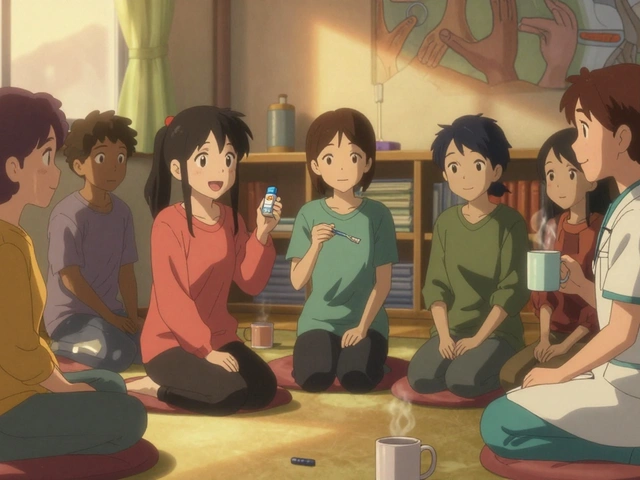
Stay with them until paramedics arrive and hand over what you did. If they’re discharged from hospital, encourage them to seek help - addiction services, counseling, or peer support. Overdose is often a sign of deeper struggles. You can help by offering support, not judgment. Many people survive their first overdose and go on to recover - with the right help.

Comments (10)
Marvin Gordon
December 5, 2025 AT 14:31 PMI’ve had to use this exact protocol on a friend last winter. Didn’t know naloxone was in my car until I needed it. Gave two breaths, sprayed the Narcan, and within 90 seconds he was gasping. Paramedics said if I hadn’t acted, he wouldn’t have made it. You don’t need to be a hero. Just don’t freeze.
Norene Fulwiler
December 7, 2025 AT 06:33 AMThis is the kind of info that should be taught in high school. Not just drug ed, but actual emergency response. I taught my whole family the recovery position last month. My little sister said she felt empowered. That’s the real win here.
Ada Maklagina
December 8, 2025 AT 08:17 AMI’m not gonna lie I used to think people overdosed because they were weak but after my cousin died I realized it’s not about willpower it’s about access and education and honestly if I’d known what to do maybe I could’ve done something
Harry Nguyen
December 8, 2025 AT 23:06 PMSo let me get this straight. We’re handing out free narcan like candy and telling people to breathe into strangers’ mouths but we can’t lock up dealers? This is what happens when you turn every crisis into a public health issue instead of a crime problem.
James Moore
December 8, 2025 AT 23:36 PMThe underlying philosophical dilemma here, if we’re willing to engage with it beyond the performative first-aid checklist, is the epistemological rupture between individual agency and systemic collapse: when the body shuts down due to pharmacological interference, the moral imperative to intervene is not merely medical - it is ontological. We are not merely preserving life; we are affirming the very possibility of human continuity against the nihilistic tide of commodified despair. Naloxone, then, is not a drug - it is a metaphysical act.
Kylee Gregory
December 9, 2025 AT 20:17 PMI appreciate how this breaks it down without judgment. I used to be scared to help because I didn’t know what I was doing - now I keep a Narcan kit in my purse. I’ve used it twice. Both times, the person survived. One of them texted me last week to say thank you. That’s more than most of us get in a lifetime.
Lucy Kavanagh
December 10, 2025 AT 03:01 AMI heard on the news that the government is putting tracking chips in the Narcan kits. They’re using the overdose crisis to monitor drug users. That’s why they’re pushing this so hard - it’s not about saving lives, it’s about control. You think they really want people to survive? Or just to keep them alive long enough to register them?
Chris Brown
December 10, 2025 AT 20:08 PMWhile I commend the intent behind this guide, I must emphasize that the normalization of opioid use through widespread naloxone distribution undermines the moral fabric of our society. Encouraging laypersons to administer life-saving measures to those who have chosen self-destruction sends the message that consequences are optional. This is not compassion - it is enabling.
Stephanie Fiero
December 10, 2025 AT 23:35 PMDude I just saved someone last week and I didn’t even know what I was doing but I did the breathing and the naloxone and they woke up and I was crying so hard I couldnt stop and I think I might have misspelled something but like… I did it and they’re alive and I’m still shaking but I’m so proud of myself
Michael Dioso
December 11, 2025 AT 23:55 PMYou people act like this is some groundbreaking revelation. I’ve been doing this since 2012. The recovery position? Basic. Rescue breathing? Standard. Naloxone? Available since 2005. The only reason you’re hearing about this now is because the media finally stopped ignoring addicts. Real heroes don’t need a blog post to act. They just do it. And you? You’re just catching up.