

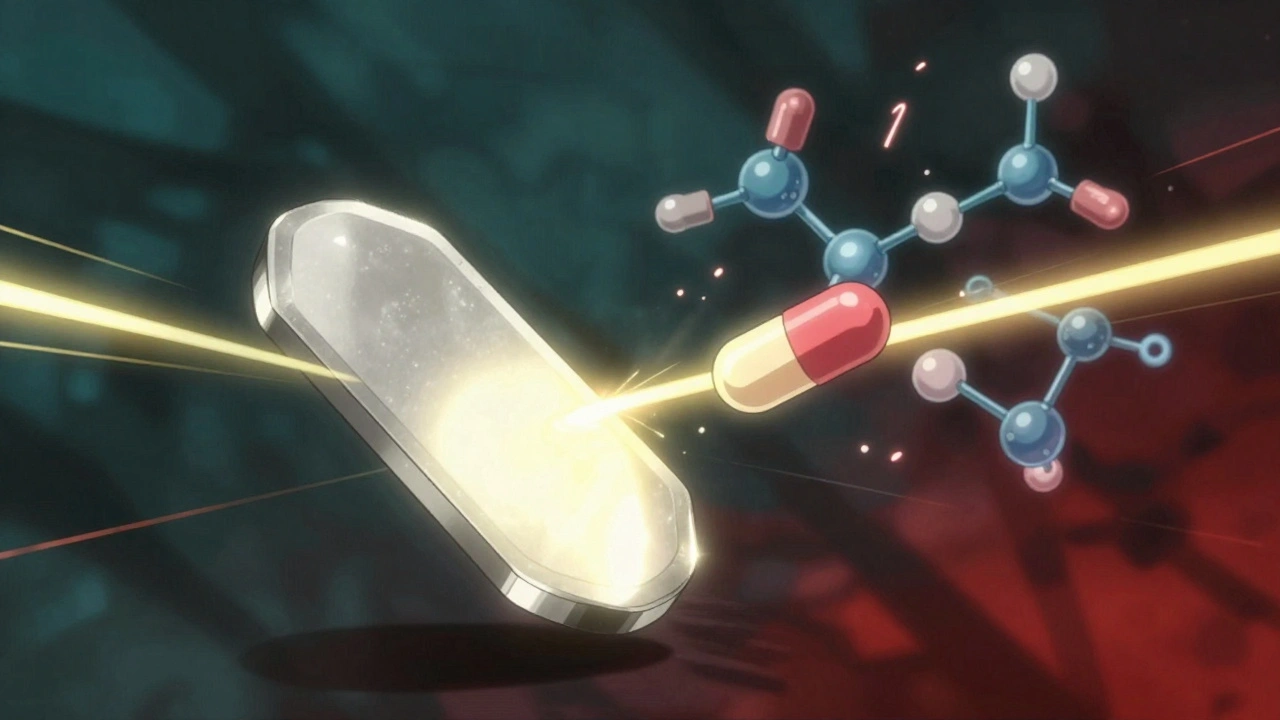
Zinc-Antibiotic Timing Calculator
Important: Zinc in multivitamins (15-30mg) also causes interference. Never take zinc supplements with your antibiotic dose.
Why this matters: Zinc reduces antibiotic absorption by 20-50%, risking treatment failure and antibiotic resistance. Separation time is clinically proven.
When you’re on antibiotics and also taking zinc supplements, you’re not just stacking two health moves-you’re risking your treatment. Taking them together can make your antibiotic less effective, leaving your infection untreated. This isn’t a myth or a vague warning. It’s a well-documented, clinically proven interaction that can lead to longer illness, antibiotic resistance, or even a full relapse.
Why Zinc and Antibiotics Don’t Mix
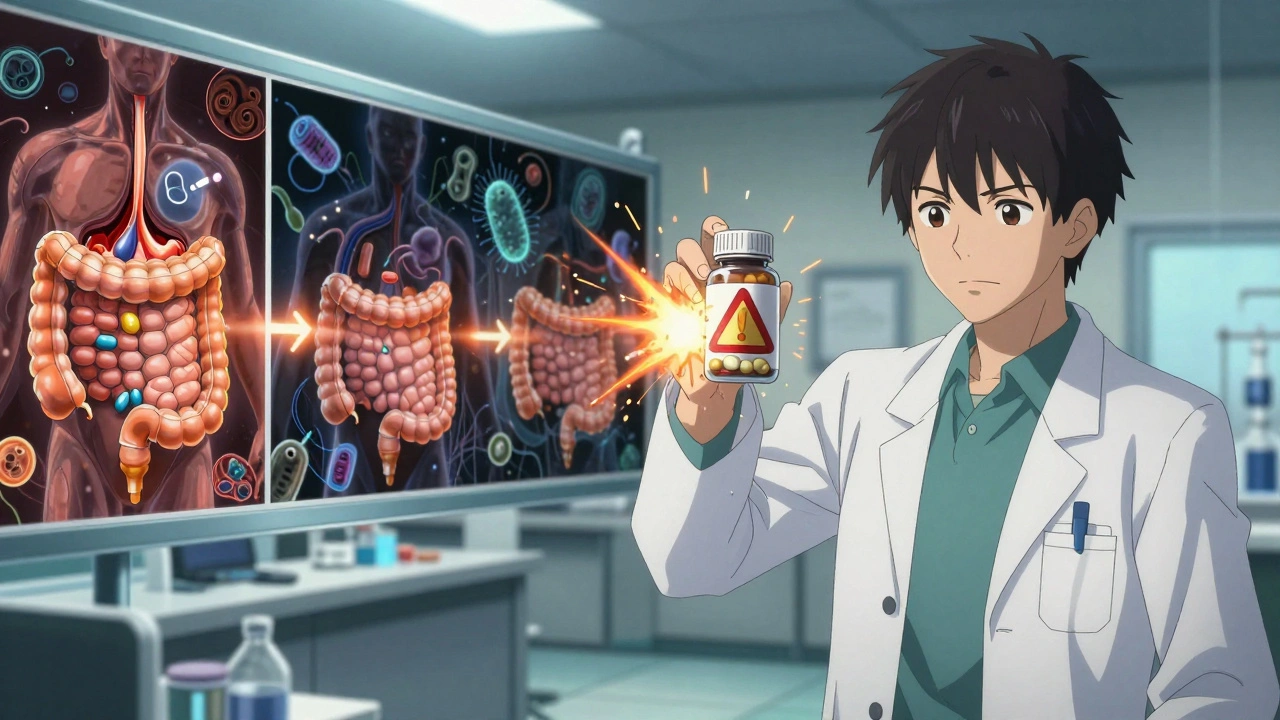
Zinc interferes with how your body absorbs certain antibiotics in your gut. It doesn’t just sit there quietly-it actively blocks the transporters your body uses to pull these drugs into your bloodstream. The main culprit is a protein called PEPT1, which helps absorb β-lactam antibiotics like cephalexin. Zinc competes for the same doorway, and when it wins, your antibiotic gets left behind. The problem gets worse with other classes. Tetracyclines-like doxycycline and minocycline-form tight chemical bonds with zinc, a process called chelation. Think of it like glue: the zinc sticks to the antibiotic and the whole mess passes through your gut without being absorbed. Quinolones, including ciprofloxacin and levofloxacin, are similarly affected. Studies show zinc can slash ciprofloxacin absorption by 20-40% and cut doxycycline absorption by up to 50%. Not all antibiotics are affected the same way. Macrolides like azithromycin and aminoglycosides don’t interact much with zinc. If you’re on one of these, you’re in the clear. But if you’re on doxycycline, cephalexin, or ciprofloxacin, timing matters.What the Research Says
A 2012 study published in the Journal of Antimicrobial Chemotherapy tracked 12 healthy men who took cephalexin with or without zinc. When taken together, the antibiotic’s peak blood level (Cmax) dropped by 35%, and the total exposure (AUC) fell by 30%. That’s not a small dip-it’s enough to push the drug below the level needed to kill bacteria. The National Institutes of Health (NIH), Linus Pauling Institute, and WebMD all agree: you can’t take zinc and these antibiotics at the same time. The Linus Pauling Institute calls it a “bidirectional interaction,” meaning zinc’s absorption is also reduced when taken with antibiotics. You end up getting less of both. Real-world cases back this up. On pharmacy forums, people report infections that just won’t clear-until they separate their doses. One Reddit user shared that their patient on doxycycline for Lyme disease saw no improvement for three days. After spacing zinc 4 hours after the antibiotic, symptoms improved in under 24 hours. Another case on Drugs.com involved a woman whose UTI came back after finishing ciprofloxacin-she’d been taking a 50 mg zinc supplement within an hour of her dose.How Far Apart Should You Take Them?
The rule isn’t vague. It’s specific.- For tetracyclines (doxycycline, minocycline, tetracycline): Take zinc at least 4 to 6 hours after your antibiotic. These bind tightly to zinc, so you need more time.
- For quinolones (ciprofloxacin, levofloxacin, moxifloxacin): Separate by at least 2 hours, but 4 hours is safer.
- For β-lactams (cephalexin, amoxicillin): A 2-hour gap is enough based on clinical data.

What About Multivitamins and Fortified Foods?
This is where people get tripped up. Most multivitamins contain zinc-often 15-30 mg per pill. That’s enough to cause interference. If you take a daily multivitamin at breakfast, and your antibiotic at the same time, you’re sabotaging your treatment. Check the label. Look for “elemental zinc.” That’s the amount that matters. If your vitamin says “zinc (as zinc oxide) 25 mg,” that’s still 25 mg of elemental zinc. Same goes for fortified cereals, protein bars, or meal replacements. You might not realize you’re consuming zinc throughout the day. If you’re on antibiotics, skip your multivitamin until your course is done. Or take it at a time that doesn’t conflict. For example: take your antibiotic at 8 a.m., wait 4 hours, then take your multivitamin at noon.Does Zinc Formulation Matter?
Yes. Not all zinc supplements are created equal. Zinc sulfate is the cheapest and most common form-but it’s also the most likely to interfere with antibiotics. Zinc citrate and zinc gluconate appear to cause less inhibition, according to a 2022 study in the Journal of Pharmaceutical Sciences. If you’re on long-term antibiotics and need zinc, switching from sulfate to citrate might help reduce the interaction. Still, even zinc citrate isn’t risk-free. The safest approach is still timing. Don’t rely on the form alone.What Happens If You Ignore This?
Ignoring the separation rule doesn’t just mean “maybe it won’t work.” It means your antibiotic might not work at all. Subtherapeutic antibiotic levels don’t just prolong your illness-they encourage bacteria to adapt. That’s how antibiotic resistance starts. A single failed course can lead to harder-to-treat infections later. Patients who’ve ignored this advice report:- Infections that didn’t clear after finishing the full course
- Need to restart antibiotics
- Worsening symptoms despite taking meds
How to Make This Easy
Timing sounds complicated, but it doesn’t have to be.- Use phone alarms. Set two: one for your antibiotic, one for your zinc. Apps like Medisafe or MyTherapy can send alerts and track interactions.
- Plan your day. Take your antibiotic first thing in the morning on an empty stomach. Take zinc after lunch or dinner.
- Write it down. Keep a small note on your pill organizer: “Antibiotic at 8 a.m. - Zinc after 4 p.m.”
- Ask your pharmacist. They can review your full list of meds and flag interactions you might miss.
When to Talk to Your Doctor
You don’t need to stop zinc altogether. If you’re taking it for immune support, low zinc levels, or skin health, you can still use it safely. But talk to your doctor if:- You’re on long-term antibiotics (like for acne or Lyme disease)
- You’re taking high-dose zinc (over 40 mg daily)-this can also cause nausea, headaches, or copper deficiency
- Your infection isn’t improving despite taking meds as directed
- You’re unsure which form of zinc you’re taking
Bottom Line: Timing Is Everything
Zinc supplements and antibiotics can coexist-but only if you give them space. Don’t take them together. Don’t assume your multivitamin is safe. Don’t rely on gut feeling. Zinc and antibiotics need at least 2 hours apart. For tetracyclines, go for 4-6 hours. Use alarms, check labels, and talk to your pharmacist. Your treatment depends on it.If you take your antibiotic correctly but your infection doesn’t clear, ask: “Did I take zinc too close?” It might be the missing piece.




Comments (20)
Ollie Newland
December 2, 2025 AT 17:54 PMBeen on doxycycline for Lyme and was popping zinc daily like it was candy. Turned out my rash wasn’t improving because the antibiotic wasn’t even getting into my system. Spaced them 6 hours apart and boom - started feeling human again in 48 hours. Don’t be me.
Martyn Stuart
December 3, 2025 AT 01:41 AMLet’s be precise: zinc chelation with tetracyclines is a well-documented pharmacokinetic interference, mediated by divalent cation binding to the β-lactam ring and quinolone carbonyl groups - which inhibits passive diffusion across enterocytes via PEPT1 downregulation. Bottom line: don’t mix. Use separate dosing windows. Your microbiome will thank you.
Jessica Baydowicz
December 4, 2025 AT 20:30 PMOMG I JUST REALIZED I’VE BEEN DOING THIS WRONG FOR MONTHS 😱 I take my multivitamin with my morning coffee and my antibiotic right after… no wonder my UTI came back TWICE. Going to switch to taking zinc after dinner now. Thank you for saving me from myself!!
Shofner Lehto
December 6, 2025 AT 11:28 AMThere’s a reason pharmacists flag this interaction in the system now. I’ve seen too many patients come back with relapses because they thought ‘natural’ meant ‘safe with everything.’ Zinc isn’t the villain - ignorance is. Educate yourself.
George Graham
December 6, 2025 AT 16:14 PMI’m a nurse and I’ve had patients cry because their antibiotics didn’t work - only to find out they were taking zinc for ‘immune support’ at breakfast. It’s heartbreaking. This post is a public service. Please share it with someone who’s on antibiotics right now.
John Filby
December 7, 2025 AT 15:58 PMSo if I take my cipro at 8am, can I take zinc at 12pm? Or is 2 hours not enough? I’m confused. Also - does it matter if I take zinc with food? My supplement says ‘take with meals.’
Ben Choy
December 9, 2025 AT 04:17 AMJust want to say - this is the kind of post that makes Reddit worth it. No fluff, just facts. I’ve been taking zinc citrate with my cephalexin because I read it’s ‘less binding’ - but now I’m just waiting 4 hours after. Better safe than sorry. Thanks for the clarity!
Emmanuel Peter
December 10, 2025 AT 04:44 AMSo you’re telling me Big Pharma doesn’t want us to know this? Why isn’t this on every antibiotic bottle? Why do pharmacies still sell zinc with no warning labels? This is a scam. Someone’s making money off our ignorance.
Ashley Elliott
December 10, 2025 AT 19:57 PMMy doctor never mentioned this. I took zinc and doxycycline together for 10 days. My acne got worse. I thought it was the antibiotic failing. Turns out it was me. Lesson learned. I’ll be checking every label from now on.
Chad Handy
December 12, 2025 AT 04:24 AMI’ve been taking 50mg of zinc daily since 2020. I’ve had 3 UTIs, 2 pneumonia episodes, and my last antibiotic course lasted 6 weeks. I thought I was just unlucky. Turns out I was poisoning my own treatment. I’m not mad - I’m just… devastated. I wish I’d known sooner. I’m going to stop zinc cold turkey until my next round of meds is done. I’m sorry I wasted so much time.
Augusta Barlow
December 12, 2025 AT 14:46 PMWait - so this is just another fear-mongering article to sell you more ‘special’ supplements? What if the real issue is that antibiotics are overprescribed? What if zinc is actually helping your immune system fight the infection, and the drug is just suppressing symptoms? I’ve read studies that say zinc reduces cold duration - why is this different? Who funded this post?
Scott van Haastrecht
December 12, 2025 AT 14:49 PMYou people are so naive. You think this is about absorption? Nah. It’s about control. The pharma industry wants you dependent on pills. Zinc is free. Antibiotics? $$$ They’re lying to you. Don’t fall for it.
Chase Brittingham
December 13, 2025 AT 00:06 AMThank you for writing this. I’ve been on azithromycin and thought I was fine because it doesn’t interact - but now I’m double-checking everything. I’ll be taking zinc only after dinner. Small changes, big results. Appreciate the clarity.
Bill Wolfe
December 13, 2025 AT 19:10 PMLet’s be honest - if you’re taking zinc supplements, you’re probably already falling for the wellness-industrial complex. Zinc isn’t a magic bullet. Your immune system doesn’t need 50mg of elemental zinc. You’re just chasing placebo effects. Stop. Breathe. Eat real food. Let your body do its job.
zac grant
December 14, 2025 AT 00:34 AMJust took my cephalexin this morning. Took zinc at 4pm. Set a phone alarm. No more guesswork. This is the kind of practical, science-backed info we need more of. No hype. Just timing. Thank you.
Heidi Thomas
December 15, 2025 AT 15:27 PMSo you’re saying I can’t take my daily multivitamin with my antibiotic? What’s next? No water with pills? This is ridiculous. I’ve been doing this for years and I’m fine. Stop scaring people.
Alex Piddington
December 17, 2025 AT 11:37 AMIt is imperative that individuals adhere to the prescribed temporal separation between pharmacological agents. Failure to do so may result in suboptimal therapeutic outcomes. I recommend consulting the prescribing physician and reviewing the FDA’s drug interaction database for further guidance.
Libby Rees
December 17, 2025 AT 11:50 AMSimple advice: wait 2 hours before or after. Check labels. Don’t assume. This isn’t complicated. People overcomplicate health because they’re scared of being wrong. You don’t need to be a scientist. Just be careful.
Dematteo Lasonya
December 17, 2025 AT 16:15 PMI had no idea my protein bar had 10mg of zinc. I thought it was just ‘minerals.’ Now I read every label. I’m so glad I found this. My last infection cleared up within 2 days after I stopped the zinc. I’m not a hero - I just listened.
Rudy Van den Boogaert
December 19, 2025 AT 12:34 PMMy pharmacist flagged this when I picked up my doxycycline. She said, ‘You take zinc?’ I said ‘Yeah, for immunity.’ She said, ‘Then take it at night.’ I did. My sinus infection vanished in 3 days. Sometimes the best advice comes from someone who’s seen 100 people make the same mistake.