

Most of us grew up with the same mental image of a medicine cabinet: a mirrored box mounted above the bathroom sink. It’s convenient, sure. But if you’re storing your family’s over-the-counter OTC medications is a collection of non-prescription drugs used to treat minor ailments like pain, fever, and allergies there, you might be risking their health. The steam from your morning shower doesn’t just fog up the mirror; it degrades the chemicals inside those bottles. And that "child-proof" cap? A determined four-year-old can often pop it open in less than ten minutes.
We need to rethink how we store these essentials. Building a safe home medicine cabinet isn’t about paranoia; it’s about practical protection. With over 60,000 emergency room visits every year caused by children under five accidentally ingesting meds, the stakes are real. Plus, teens accessing prescription leftovers at home account for a significant chunk of adolescent substance misuse. Let’s fix this together, step by step, so your home is both prepared for illness and secure against accidents.
Why Your Bathroom Mirror Is the Worst Place for Meds
It feels logical to keep remedies close to where you wash your hands or brush your teeth. But experts say this is a major mistake. Melonie Crews-Foye, a Pharmacy Supervisor at Cone Health, points out that moisture from showers and tubs deteriorates medications. When pills get damp, they don’t just look bad-they become less effective or even crumble into useless dust. Some might even develop harmful compounds when exposed to consistent humidity.
Temperature swings in bathrooms are another killer. Pharmaceuticals start degrading at temperatures above 86°F (30°C). If your bathroom gets hot during winter showers, your aspirin and ibuprofen are slowly losing their potency. You think you’re taking a full dose, but you’re actually getting a fraction of what’s on the label. This is why moving your stash away from the bathroom is the single most important step you can take.
The Ideal Location: High, Dry, and Locked
So, where should you put them? Look for a high, dry spot that kids rarely access. A linen closet, a bedroom dresser drawer, or a hallway cabinet works perfectly. The key rule here is height. ADT’s safety guidelines specify that medicines should be stored at least 4 feet off the ground. This keeps them out of reach of toddlers who are learning to climb.
But height alone isn’t enough. Dr. Connie Zajicek, a psychiatrist with Memorial Hermann, reminds us that "kids can get into anything-and will." Curiosity drives them to find ways up. That’s why physical barriers are non-negotiable. If your chosen cabinet doesn’t have a lock, install one. Childproof locks are inexpensive and easy to attach. For extra security, especially if you store controlled substances or strong painkillers, use a locked drawer within a locked cabinet. This double-layer approach stops casual access and deters theft during house guests or open houses.
| Location | Humidity Risk | Access Difficulty for Kids | Verdict |
|---|---|---|---|
| Bathroom Mirror | High (Steam) | Low (Easy Reach) | Avoid |
| Kitchen Counter | Medium | Very Low | Avoid |
| Linen Closet (High Shelf) | Low | High (With Lock) | Ideal |
| Bedroom Drawer (Locked) | Low | High | Ideal |
Essential Items for a Family-Ready Cabinet
Once you’ve picked the right spot, you need to stock it wisely. You don’t need a pharmacy’s worth of inventory, but you do need the basics to handle common household emergencies. Here’s what should be in your kit:
- Pain and Fever Reducers: Acetaminophen (Tylenol) and Ibuprofen (Advil/Motrin). Keep both adult and children’s versions if you have little ones.
- Allergy Relief: Antihistamines like Diphenhydramine (Benadryl) for immediate relief and Loratadine (Claritin) or Cetirizine (Zyrtec) for daily management.
- Digestive Aids: Antacids for heartburn, Loperamide (Imodium) for diarrhea, and an anti-diarrheal powder like Pedialyte for rehydration.
- Topical Treatments: Hydrocortisone cream for rashes, antibiotic ointment for cuts, and hydrocortisone eye drops for irritation.
- First Aid Basics: Adhesive bandages, sterile gauze, medical tape, and hydrogen peroxide for cleaning wounds.
Keep everything in its original container. Never transfer pills to generic jars. The original bottle has the expiration date, dosage instructions, and ingredient list. If you lose that info, you’re guessing-and guessing with medicine is dangerous.
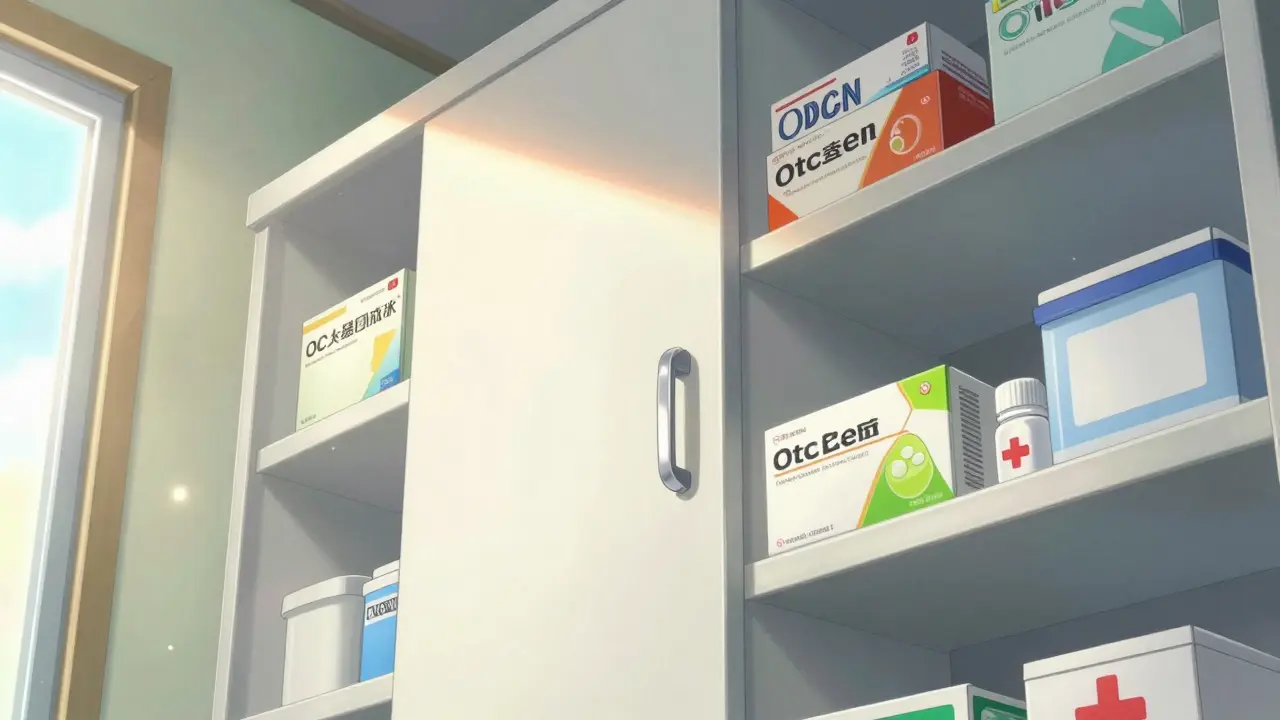
Organizing for Safety and Speed
When you’re rushing because someone has a fever or a cut, chaos is your enemy. Organize your cabinet so you can grab what you need in seconds. Group items by purpose or time of day. For example, keep all pain relievers together, all allergy meds together, and all first-aid supplies in a separate bin.
If you have multiple family members on different schedules, consider separating morning and evening medications. Cone Health suggests using adherence packaging or simple labeled boxes to keep things straight. This prevents accidental double-dosing, which is a common error in busy households. Also, create a master list of all medications in your home-including vitamins and supplements-and keep it in your phone or wallet. Share this with any caregiver who helps watch your kids. It ensures everyone knows what’s available and what to avoid.
The Six-Month Purge: Disposal and Maintenance
A safe medicine cabinet is not a "set it and forget it" project. You need to check it at least every six months. Why? Because expired drugs can be toxic. Dr. Virani from Memorial Hermann warns that expired antibiotics can cause harmful reactions. Even if a pill looks fine, its chemical structure may have broken down.
Here’s how to do the purge:
- Check Dates: Look at every bottle. If it’s past the expiration date, toss it. FDA guidelines say discard anything more than 12 months old if no date is visible, but always default to the printed date.
- Inspect Condition: Throw away any pills that are discolored, crumbly, or smell odd. Liquid meds that have changed color or developed sediment should go too.
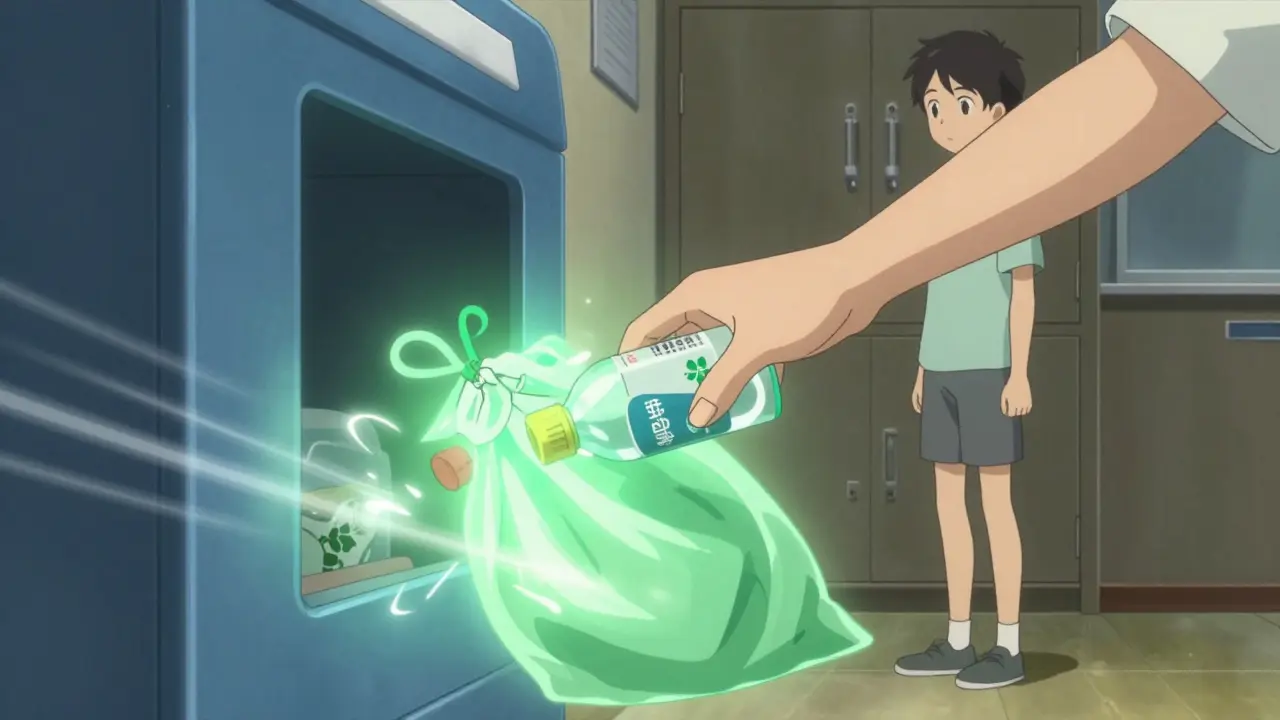
- Dispose Properly: Don’t flush most meds down the toilet unless the label specifically says to. Flushing contaminates water supplies. Instead, use drug take-back programs. CVS pharmacies offer DisposeRX powder for free, which makes opioids safe for trash disposal. Alternatively, wait for DEA National Prescription Drug Take Back Day events, which collect millions of pounds of unused meds annually.
For everyday disposals, many local pharmacies have drop-off kiosks. Check with your nearest CVS, Walgreens, or independent pharmacy. They’ll accept expired OTC and prescription drugs safely. This habit protects your family and the environment.
Tech and Teens: Modern Safety Layers
As families evolve, so do the risks. Teens accessing prescription drugs at home is a growing concern. According to SAMHSA data, a large percentage of adolescents who misuse substances get them from friends or family homes. To combat this, some families are turning to smart technology. Asset protection devices, like those recommended by ADT, can send alerts to your phone when a specific cabinet door is opened. This adds a layer of accountability and peace of mind.
While not necessary for every home, these tools are great if you have teenagers or frequent visitors. They remind you that security isn’t just about keeping kids safe from accidents; it’s also about preventing misuse. Talk to your teens about the dangers of sharing meds. Make it clear that the locked cabinet is a boundary, not a challenge.
Emergency Preparedness: Know Your Numbers
No matter how well you organize, accidents happen. That’s why emergency information must be visible and accessible. Post Poison Help’s number-800-222-1222-on your fridge, near your phone, and in your smartphone contacts. These specialists provide free, confidential advice 24/7. If a child swallows a pill, don’t wait for symptoms. Call them immediately. They can guide you through next steps while you prepare to go to the ER if needed.
Also, ensure all caregivers know where the medicine cabinet is and how to open the locks. In a panic, fumbling with a combination lock wastes precious time. Practice opening it quickly. Consider keeping a small flashlight nearby in case of power outages.
Building a Culture of Safety
Finally, talk to your family about medicine safety. Explain to young children that medicine is not candy. Use clear, simple language. Show them the locked cabinet and explain that only adults can open it. For older kids and teens, discuss the risks of mixing drugs and taking someone else’s prescription. Education is your best defense alongside physical locks.
By moving your meds out of the bathroom, locking them up, purging expired items regularly, and educating your family, you create a safer home. It takes a few hours to set up, but it pays off in peace of mind every day. Your family’s health deserves that level of care.
Where is the best place to store OTC medications?
The best place is a high, dry, cool location away from bathrooms, such as a linen closet or bedroom dresser. Store items at least 4 feet off the ground and use a locked cabinet or drawer to prevent access by children and teens.
Can I flush expired medications down the toilet?
Generally, no. Flushing most medications contaminates water supplies. Only flush if the label explicitly instructs you to do so. Otherwise, use pharmacy drop-off kiosks, DEA take-back events, or disposal powders like DisposeRX for safe trash disposal.
How often should I check my medicine cabinet?
Experts recommend checking expiration dates and condition at least every six months. Remove any expired, damaged, or discolored medications immediately to prevent accidental ingestion of ineffective or harmful drugs.
Are child-proof caps enough to keep kids safe?
No. Studies show that many children aged 4-5 can open standard safety caps within 10 minutes. Always store medications in a locked cabinet or drawer at least 4 feet high for true safety.
What should I do if a child accidentally ingests medication?
Call Poison Help immediately at 800-222-1222. Do not wait for symptoms to appear. Have the medication bottle ready to provide details about the drug, amount ingested, and the child's age and weight to the specialist.