


Hair Loss Treatment Selector
Find Your Best Treatment
Answer a few questions to get personalized recommendations based on the latest research
Rogaine 5 has been the go-to solution for hair loss for decades. It’s the brand name for 5% minoxidil, a topical treatment approved by the FDA and used by millions. But with so many new options on the market, is it still the best choice? And if it’s not working for you, what else actually delivers results?
How Rogaine 5 Really Works
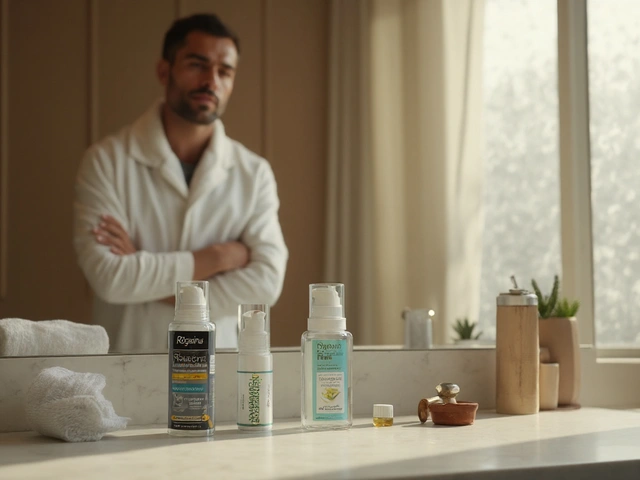
Rogaine 5 contains 5% minoxidil, a vasodilator that wakes up dormant hair follicles. It doesn’t grow new hair where there’s no follicle - it reactivates ones that have slowed down. Studies show about 65% of men using it daily for 4-6 months see some regrowth, mostly along the crown and hairline. Women using the 5% formula report similar results, though they often need to use it longer before noticing changes.
The catch? You have to keep using it. Stop for even a few weeks, and you’ll start shedding again. That’s because minoxidil doesn’t fix the root cause - usually genetic hair loss (androgenetic alopecia). It just keeps the follicles active while you’re using it.
Top Alternatives to Rogaine 5
If Rogaine isn’t working, or you hate the sticky feeling, the mess, or the daily routine, here are the most proven alternatives.
Finasteride (Propecia)
Finasteride is an oral pill that blocks DHT, the hormone that shrinks hair follicles in genetic hair loss. Unlike minoxidil, it targets the cause, not just the symptom. Clinical trials show 83% of men using finasteride stopped hair loss after one year, and 66% saw visible regrowth.
It’s not topical, so it works systemically. That means it can affect more areas - including the front and temples - where minoxidil often falls short. But it comes with potential side effects: reduced libido, erectile dysfunction, and mood changes in a small percentage of users. These usually go away after stopping, but some report lingering effects (post-finasteride syndrome), though this is rare and debated.
Finasteride isn’t approved for women of childbearing age due to birth defect risks. But post-menopausal women can use it under supervision.
Low-Level Laser Therapy (LLLT) Devices
Devices like the iRestore Laser Cap or Capillus 272 use red light to stimulate follicles. They’re non-invasive, painless, and have no systemic side effects. A 2019 study in the Journal of Clinical and Aesthetic Dermatology found that 74% of users saw improved hair density after 26 weeks of consistent use.
They work best when combined with minoxidil or finasteride. Used alone, results are slower and less dramatic. You need to use them 3-5 times a week for at least 6 months. The upfront cost is high - $300 to $1,000 - but no ongoing fees. Good for people who want a drug-free option.
Platelet-Rich Plasma (PRP) Injections
PRP uses your own blood. A technician draws a small amount, spins it in a centrifuge to concentrate platelets, then injects it into your scalp. The growth factors in platelets help regenerate tissue and reduce inflammation around follicles.
Studies show PRP can improve hair density and thickness, especially when combined with minoxidil. One 2022 trial found PRP users gained 22% more hairs per cm² after 6 months compared to minoxidil alone. But it’s expensive - £150 to £300 per session - and you need 3-4 sessions initially, then maintenance every 3-6 months. Not covered by the NHS or most insurance plans.
Spironolactone (for Women)
Spironolactone is a prescription pill often used for acne and high blood pressure, but it’s also effective for female pattern hair loss. It blocks androgen receptors, reducing the impact of testosterone on hair follicles.
Women using spironolactone (typically 50-100 mg daily) report slower shedding and noticeable regrowth after 6-12 months. It’s not approved for men because it can cause breast enlargement and other hormonal side effects. It’s also not safe during pregnancy.
Essential Oils and Natural Supplements
Peppermint oil, rosemary oil, and saw palmetto are popular natural alternatives. Rosemary oil, in particular, has shown promise. A 2015 study found it worked as well as 2% minoxidil for hair growth over 6 months, with fewer scalp irritations.
But here’s the truth: these don’t work for everyone. They’re not regulated like drugs, so quality varies wildly. Saw palmetto may help some men by mildly blocking DHT, but studies are small and inconsistent. You’ll need to use them daily for 6+ months and accept that results are unpredictable.
Comparison Table: Rogaine 5 vs Alternatives
| Treatment | How It Works | Time to See Results | Effectiveness | Side Effects | Cost (Monthly) |
|---|---|---|---|---|---|
| Rogaine 5 (Minoxidil) | Stimulates follicles | 3-6 months | 65% see regrowth | Scalp irritation, initial shedding | £15-£30 |
| Finasteride (Propecia) | Blocks DHT hormone | 3-12 months | 83% stop loss, 66% regrow | Low libido, erectile issues (rare) | £10-£25 |
| LLLT Devices | Red light stimulates cells | 4-8 months | 74% see improvement | None | £10-£20 (amortized) |
| PRP Injections | Growth factors from own blood | 3-6 months | 22% more growth vs minoxidil alone | Mild pain, bruising | £50-£100 |
| Spironolactone (Women) | Blocks androgen receptors | 6-12 months | 60-70% see improvement | Menstrual changes, fatigue | £5-£15 |
| Rosemary Oil | Anti-inflammatory, mild DHT blocker | 6+ months | Comparable to 2% minoxidil | Scalp sensitivity | £5-£10 |

Who Should Choose What?
There’s no one-size-fits-all. Your best option depends on your gender, budget, tolerance for side effects, and how fast you want results.
- If you’re a man and want the strongest, fastest results: finasteride is your best bet. Add minoxidil if you want even more density.
- If you’re a woman with hormonal hair loss: spironolactone or 5% minoxidil are the top choices. Avoid finasteride.
- If you hate pills or chemicals: LLLT devices are safe and effective - just be patient and consistent.
- If you’ve tried everything and still see thinning: PRP can give you that extra boost, especially if you’re in your 30s or 40s.
- If you’re on a tight budget and want something natural: rosemary oil is worth a shot, but don’t expect miracles.
What Doesn’t Work
There’s a lot of noise out there. Don’t waste your money on:
- Hair growth shampoos with biotin or keratin - they don’t penetrate deep enough to affect follicles.
- Scalp micropigmentation - it’s cosmetic, not a treatment. It looks like shaved hair, but doesn’t grow real hair.
- Supplements like biotin - unless you have a severe deficiency (rare), they won’t help hair loss.
- Topical caffeine serums - some early studies show promise, but no long-term data yet.

Combining Treatments for Better Results
The smartest approach isn’t picking one - it’s layering. Most dermatologists recommend combining treatments for maximum effect.
For example:
- Men: Finasteride + Rogaine 5 + LLLT
- Women: Minoxidil 5% + rosemary oil + PRP if budget allows
Studies show that combining minoxidil and finasteride leads to 85-90% of users seeing improvement - far better than either alone. LLLT adds another 10-15% boost in density.
Don’t try everything at once. Start with one, give it 6 months, then add another if needed. Too many products at once can irritate your scalp and make it hard to tell what’s working.
When to See a Doctor
If you’re losing more than 100 hairs a day, noticing bald patches, or your hairline is receding rapidly, see a dermatologist. Hair loss can be a sign of thyroid issues, iron deficiency, or autoimmune conditions like alopecia areata.
They can do a scalp biopsy or blood test to rule out other causes. If it’s just genetic hair loss, they can prescribe finasteride or spironolactone - which you can’t get over the counter in the UK.
Also, if you’ve tried minoxidil for 6 months with no change, it’s time to switch strategies. Not everyone responds to it - and that’s okay. There are other paths.
Is Rogaine 5 better than generic minoxidil?
No. Rogaine 5 is just branded minoxidil. The active ingredient is identical to generic 5% minoxidil solutions sold by pharmacies like Boots or Superdrug. You’re paying for the brand, packaging, and scent. Generic versions cost half as much and work just as well.
Can I use minoxidil and finasteride together?
Yes, and many doctors recommend it. Minoxidil stimulates growth, while finasteride stops the hormone that causes thinning. Together, they work on two different pathways, leading to better results than either alone. Studies show up to 90% of men see improvement with the combo.
Does minoxidil work on a receding hairline?
It can, but less reliably than on the crown. The frontal hairline has fewer active follicles, so results are often slower and less dramatic. For best results on the hairline, combine minoxidil with finasteride or PRP.
How long do I need to use minoxidil?
For as long as you want to keep the results. Minoxidil doesn’t cure hair loss - it manages it. If you stop, you’ll lose the hair you gained within 3-6 months. Most people use it for life, like taking blood pressure medication.
Are there any new hair loss treatments on the horizon?
Yes. JAK inhibitors like ruxolitinib (used for alopecia areata) and topical prostaglandin analogs like bimatoprost are showing promise in trials. Some are already available by prescription in the US. In the UK, they’re still experimental or limited to clinical trials. Don’t expect them to replace minoxidil or finasteride anytime soon.
Final Thoughts
Rogaine 5 is still a solid option - cheap, accessible, and backed by decades of research. But it’s not the only option. Finasteride is more powerful for men. Spironolactone is better for women. LLLT and PRP offer drug-free paths. And rosemary oil? It’s worth trying if you want something gentle.
The key isn’t finding the "best" treatment. It’s finding the one that fits your life, your body, and your goals. Start with one. Stick with it for six months. Track progress with photos. Then adjust. Hair loss isn’t a race - it’s a long-term project. And you have more control than you think.



Comments (15)
Sean McCarthy
December 2, 2025 AT 00:04 AMRogaine works if you use it every day but stop and you lose everything. Simple. No magic. Just science.
ANN JACOBS
December 3, 2025 AT 13:59 PMIt is absolutely imperative to recognize that the path to hair restoration is not merely a matter of topical application or pharmacological intervention; rather, it is a deeply holistic endeavor that requires the integration of nutritional adequacy, psychological well-being, and consistent, disciplined adherence to therapeutic protocols. Many individuals falter not due to the inadequacy of the treatment, but because they fail to acknowledge the profound interplay between systemic health and follicular vitality.
For instance, the presence of micronutrient deficiencies-particularly in zinc, vitamin D, and iron-can substantially undermine even the most robust regimens. Moreover, chronic stress, which elevates cortisol levels, has been empirically linked to telogen effluvium, a condition that may masquerade as androgenetic alopecia. Therefore, while minoxidil and finasteride are undeniably efficacious, they are most potent when embedded within a comprehensive wellness framework that includes sleep hygiene, stress reduction techniques, and dietary optimization.
Furthermore, the psychological toll of hair loss should not be underestimated. The erosion of self-image often precipitates a cascade of emotional consequences, including social withdrawal and diminished self-worth. In this context, therapeutic interventions must extend beyond the scalp to encompass cognitive-behavioral support and peer validation. The journey is not merely physical; it is existential.
Thus, while the market is saturated with quick-fix solutions and commercialized optimism, the truest form of intervention lies in patience, persistence, and the quiet courage to embrace a long-term, multifaceted strategy. This is not a sprint-it is a lifelong commitment to self-care.
Nnaemeka Kingsley
December 4, 2025 AT 01:17 AMman i tried rogaine for 6 months and nothing happened. then my cousin told me to try rosemary oil. i mixed it with coconut oil and rubbed it in every night. after 4 months i could see tiny hairs coming back near my temples. not a miracle but better than paying $30 a month for a bottle that dont work. try it cheap first. no side effects.
Linda Migdal
December 4, 2025 AT 18:20 PMFinasteride is the only real solution for American men. The rest are gimmicks. Europe’s got their herbal teas and witchcraft, but we’ve got FDA-approved science. If you’re wasting time on rosemary oil or laser caps, you’re just delaying the inevitable. Take the pill. Deal with the side effects. Or accept baldness. No third option.
Tommy Walton
December 5, 2025 AT 14:29 PMMinoxidil is the capitalist’s answer to biology. Finasteride is the philosopher’s scalpel. LLLT? Aesthetic theater for the Instagram generation. PRP? A luxury spa ritual for the 1%. The truth? You’re not losing hair-you’re losing access to privilege. The real cure is systemic: stop the patriarchy that equates hair with worth.
✨
James Steele
December 6, 2025 AT 03:16 AMThe entire discourse around hair loss is a pathological projection of ontological insecurity. Minoxidil is not a treatment-it is a performative act of temporal defiance against the entropy of aging. Finasteride, by contrast, is a molecular intervention into the hormonal hegemony of DHT-a neo-patriarchal endocrine tyranny that has, for millennia, dictated male corporeal legitimacy. The rise of LLLT and PRP reflects a post-pharmaceutical desire for bio-ritualism: we no longer wish to be cured, we wish to be sanctified.
And yet, the most radical act is not the pill, nor the laser, nor the injection-it is the conscious, unapologetic embrace of baldness as a form of sovereign self-definition. To be hairless is to be liberated from the myth of virility encoded in follicular density.
Louise Girvan
December 8, 2025 AT 00:15 AMBig Pharma paid for all these studies. Rogaine? Designed to keep you hooked. Finasteride? Made men depressed so they’d buy more antidepressants. LLLT devices? Overpriced toys from China. PRP? They inject your blood and charge you $200 because they know you’re desperate. Rosemary oil? They don’t want you to know it works better than minoxidil because it’s free. They’re lying to you. All of it.
soorya Raju
December 9, 2025 AT 00:25 AMyo everyone be like finasteride this minoxidil that but in india we just use kesh king oil and eat curry leaves and guess what? my uncle 65 still got thick hair. maybe the real problem is not your scalp its your western diet. burgers and soda = baldness. simple. no pills needed. you just need real food. also minoxidil makes your face puffy. i tried it.
Grant Hurley
December 9, 2025 AT 23:41 PMI started with minoxidil, got frustrated, then added finasteride after 4 months. Didn’t see much until month 8. Took pics every week. Finally noticed a difference when I looked back at old photos. It’s slow but it works if you stick with it. Don’t quit. I’ve been on it for 3 years now and my hairline is way better than I thought possible. Just keep going.
Lucinda Bresnehan
December 11, 2025 AT 20:35 PMAs a nurse who’s helped patients with hair loss for over a decade, I’ve seen how much this affects self-esteem. Many women avoid mirrors, cancel plans, feel ashamed. The good news? You’re not alone. Spironolactone changed my life-I had thinning after pregnancy and it stopped the shedding within 5 months. Rosemary oil? I recommend it as a gentle add-on. But please, don’t ignore underlying issues. Get your iron, thyroid, and vitamin levels checked. Hair loss isn’t just cosmetic-it’s a signal.
Shannon Gabrielle
December 12, 2025 AT 10:35 AMWow. So many people paying $1000 for a laser cap while their Uber Eats receipts show they’re eating 3 pizzas a week. You want hair? Stop eating garbage. Stop drinking soda. Stop stressing over a scalp. Fix your life. Then maybe your hair will follow.
Kshitij Shah
December 12, 2025 AT 11:42 AMin my village in kerala, men over 70 still have full hair. no pills, no lasers. just coconut oil, no stress, no processed food. you think science fixed it? nah. culture did. we don’t obsess over hair here. maybe that’s the real treatment.
Dennis Jesuyon Balogun
December 14, 2025 AT 05:29 AMLet us not mistake symptom management for healing. The follicle is a mirror of systemic imbalance. When we apply minoxidil, we are not restoring life-we are artificially stimulating a dying system. Finasteride suppresses a hormone, but what of the endocrine chaos that produced the imbalance in the first place? The true path lies in ancestral wisdom: sunlight, grounding, plant-based nutrition, and the cessation of modern toxins. We have forgotten that the body knows how to heal. We just refuse to listen.
And yet, the pharmaceutical-industrial complex profits from our ignorance. They sell you a bottle of hope, while the real cure-lifestyle, mindfulness, community-is free. But free is not profitable. So we remain trapped.
Lauryn Smith
December 14, 2025 AT 21:37 PMI was skeptical about combining minoxidil and finasteride, but after 8 months, my hair density improved so much that my sister asked if I got a transplant. I didn’t. Just consistency. And I started taking biotin because my nails were brittle-not because I thought it helped my hair, but because I felt better overall. It’s not about one magic thing. It’s about showing up for yourself every day.
Sean McCarthy
December 16, 2025 AT 14:42 PMAuthor here. Thanks for all the comments. For those asking about generic minoxidil-yes, it’s identical. I use the Boots version. Saves me $20/month. And yes, I take finasteride daily. No side effects. Just don’t stop.