

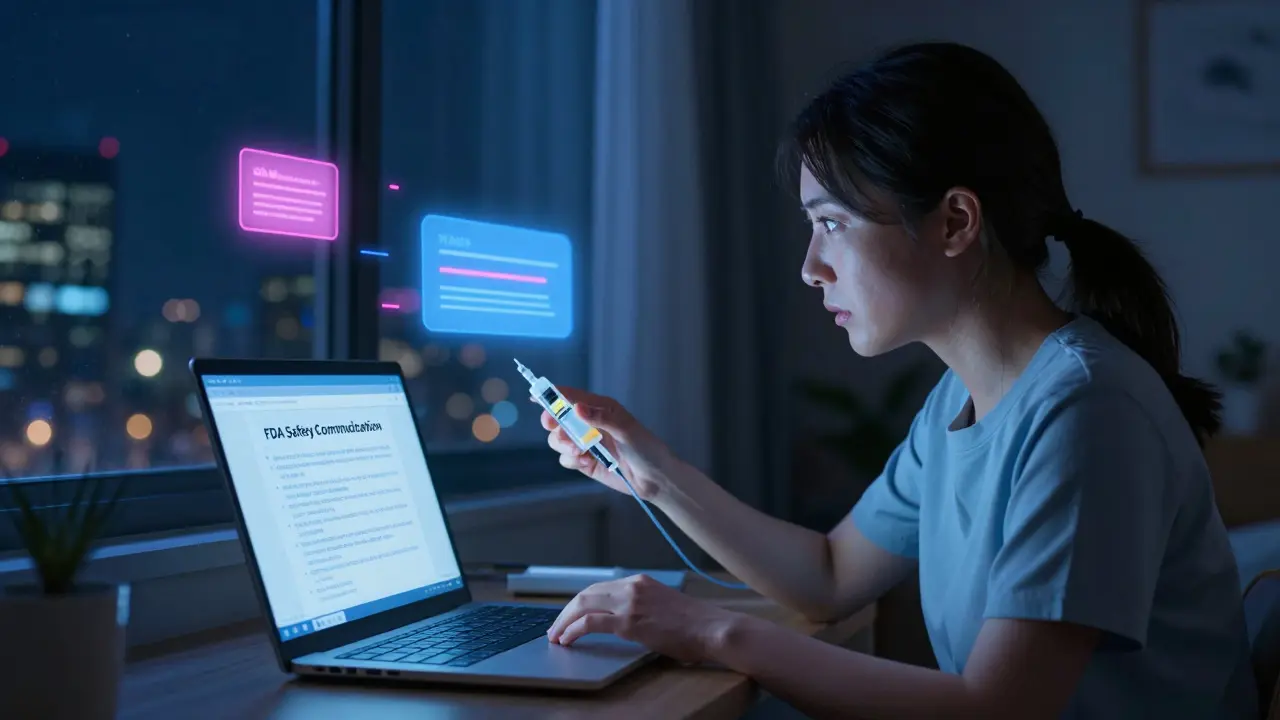
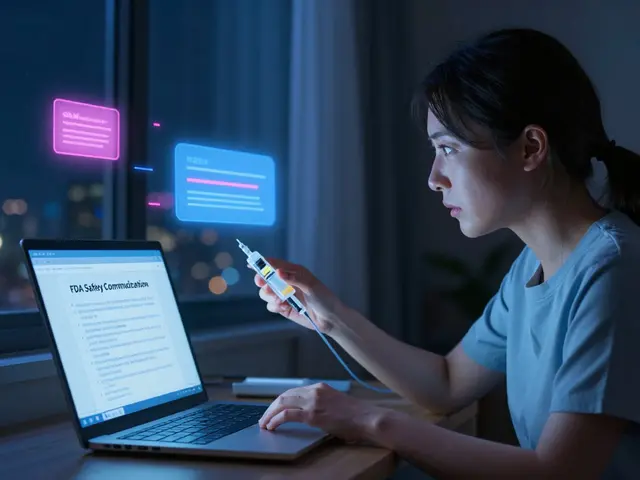
Every year, the FDA issues hundreds of safety alerts about medicines, medical devices, and food products that could harm you or someone you care about. These aren’t just notices-they’re lifesavers. But if you’re not signed up to get them, you’re flying blind.
The FDA doesn’t wait for a crisis to happen. They monitor problems as they emerge. When a batch of insulin is found to be contaminated, when a pacemaker battery fails at a higher rate than expected, or when a children’s cough syrup contains a dangerous ingredient-the FDA acts fast. But their job isn’t done until you know about it. That’s where FDA Safety Communications come in.
What Exactly Are FDA Safety Communications?
FDA Safety Communications are official alerts sent out when something regulated by the FDA-like a drug, device, or food product-is found to have a safety issue. These aren’t press releases. They’re targeted, specific, and designed to help you take action.
There are three main types:
- Medical Device Safety Communications - These warn about problems with things like heart monitors, insulin pumps, hip replacements, or even contact lenses. In 2022 alone, the FDA issued 30 of these.
- Drug Safety Communications - These cover prescription and over-the-counter medicines. Think recalls of blood pressure pills, warnings about side effects from antidepressants, or alerts about contaminated cough syrups.
- Enforcement Reports - These are recall notices. When a company pulls a product off the shelves, the FDA publishes the details here-and you can get them emailed to you.
And since September 29, 2025, there’s a new layer: Early Alert Communications. This isn’t a recall. It’s a heads-up. If the FDA learns a device might be dangerous-even before they’ve confirmed it’s a full-blown recall-they send out an Early Alert. This is huge. It means you might hear about a problem weeks before it hits the news.
How the Subscription System Works
Signing up takes less than five minutes. Go to the FDA website, find the subscription page, and choose what you want to hear about.
The best part? You don’t get flooded with every single alert. You pick up to five keywords. For example:
- If you take insulin, subscribe to insulin.
- If your child has a peanut allergy, subscribe to peanut.
- If you use a CPAP machine for sleep apnea, subscribe to CPAP.
- If you’re a caregiver for someone with a pacemaker, subscribe to pacemaker.
The system filters everything down to only what matters to you. No more scrolling through hundreds of unrelated alerts. Just the ones that affect your health or your family’s.
And here’s the kicker: if you’re a doctor, nurse, pharmacist, or medical device manufacturer, this isn’t optional. It’s part of your job. The FDA expects you to be tracking these alerts. Why? Because if you miss one, you might be prescribing a risky drug, using a faulty device, or unknowingly distributing a contaminated product. In 2022, the Center for Devices and Radiological Health issued 45 safety communications-30 of them about devices. That’s not noise. That’s your early warning system.
Why Early Alerts Are a Game Changer
Before September 2025, Early Alerts only covered five types of medical devices: cardiovascular, gastrorenal, general hospital, obstetrics and gynecology, and urology. Now? They cover all medical devices. That includes everything from hearing aids to surgical gloves.
These aren’t vague warnings. Each Early Alert includes:
- Which products are affected
- Why the FDA thinks there’s a problem
- What you should do right now
- Any reported deaths or injuries tied to the issue
They even copy the language companies use when they notify their own customers. That means the advice is clear, practical, and meant to be acted on immediately.
This change didn’t happen by accident. Patient advocates pushed for it. The old system waited until a recall was officially confirmed-which could take weeks. Early Alerts cut that delay in half. That’s the difference between getting help before a problem turns deadly and waiting for it to happen.
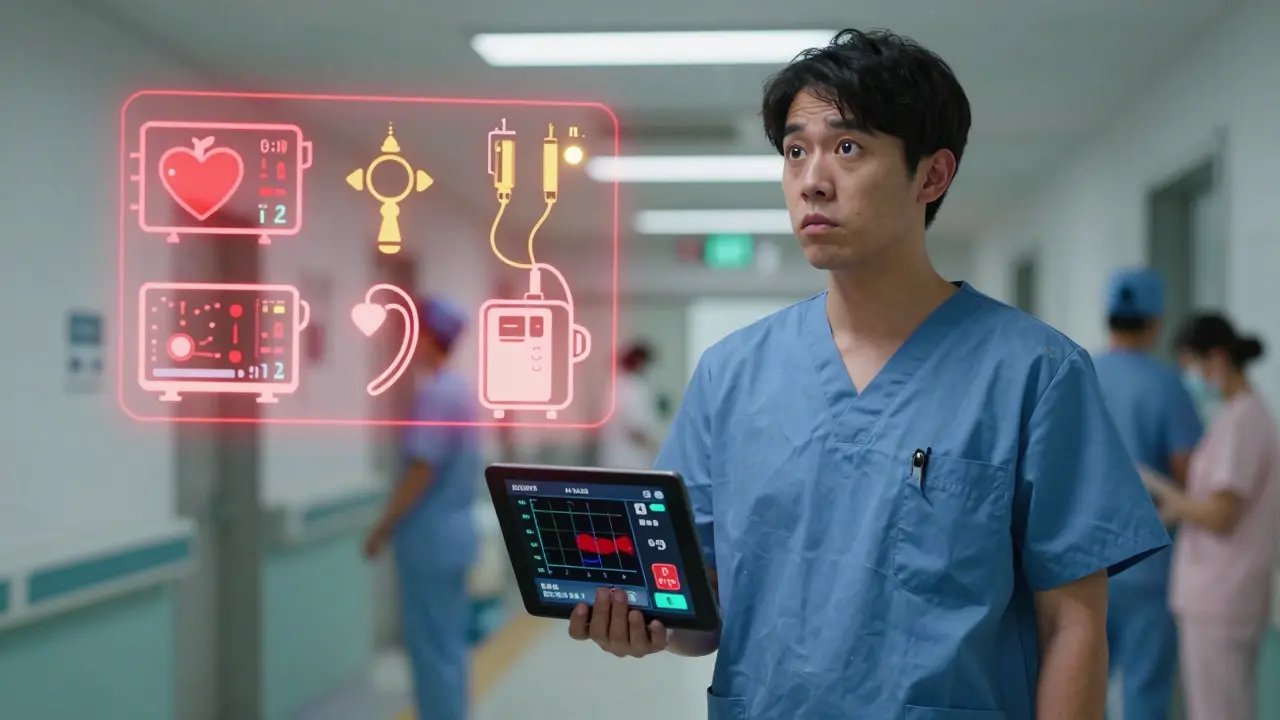
What Happens If You Don’t Subscribe?
Let’s say you take a blood thinner called warfarin. In January 2026, the FDA issues a safety alert: a new generic version has been linked to dangerous bleeding in elderly patients. The alert goes out. Hospitals get it. Pharmacies get it. Your doctor gets it.
But you? You don’t know. You keep taking it. Two weeks later, you end up in the ER with internal bleeding.
This isn’t hypothetical. It’s happened before. In 2021, a contaminated cough syrup led to the deaths of 23 children overseas. The FDA issued a warning-but only people who were subscribed got it in time to stop using it. Everyone else? They found out from the news… too late.
Not subscribing doesn’t make you careless. It just means you’re relying on luck. And in healthcare, luck isn’t a strategy.
Who Should Subscribe? Everyone.
You might think, “I don’t use medical devices. I don’t take risky drugs.” But here’s the truth: you probably do.
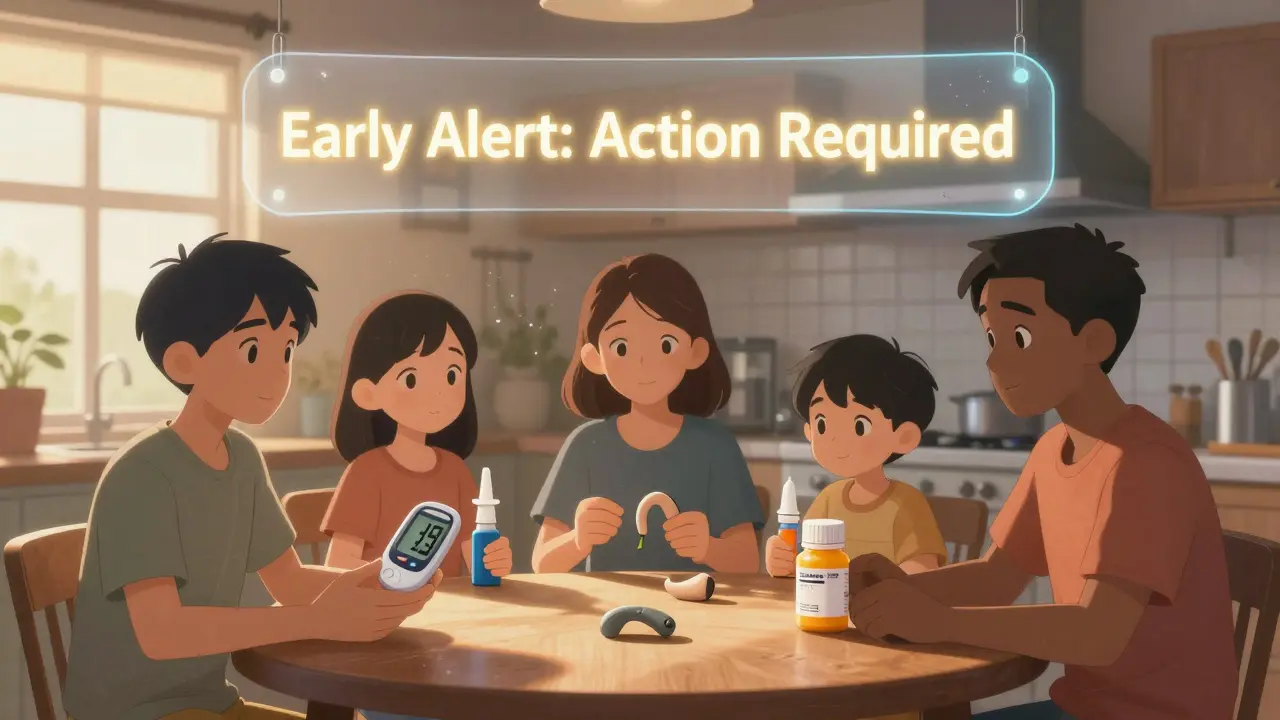
- Do you use a glucose monitor? That’s a device.
- Do you take ibuprofen? That’s a drug.
- Do you use a nasal spray? A patch? A hearing aid? A contact lens solution? All regulated by the FDA.
And if you care about someone else? A parent, a grandparent, a partner? Their safety is your responsibility too.
Even if you’re healthy, you’re one prescription away from needing this info. A sudden surgery. A new diagnosis. A change in meds. That’s when you’ll wish you’d already subscribed.
How to Sign Up (Step by Step)
It’s simple. Here’s how:
- Go to www.fda.gov and click on “Subscribe to FDA Email Updates” in the footer.
- Choose “Enforcement Report Subscription Service” for recalls of food, drugs, and devices.
- Choose “Subscribe to Medical Device Safety and Recalls” for device-specific alerts.
- For each, enter your email and select up to five keywords.
- Confirm your subscription via the email you’ll receive.
Pro tip: Use specific terms. Instead of “medicine,” use “lisinopril.” Instead of “device,” use “insulin pump.” The more precise, the fewer false alarms you’ll get.
Need help? The FDA’s Division of Industry and Consumer Education (DICE) answers questions. No form needed. Just email them. They’re there to help.
What’s Next? The Future of FDA Alerts
The FDA isn’t stopping here. They’re testing ways to use AI to scan millions of patient reports from the Sentinel System-which tracks data from over 300 million people-to spot problems before they even reach a recall stage.
They’re also looking at expanding Early Alerts to food and cosmetics. Imagine getting a heads-up before a new sunscreen causes a rash in thousands of people.
For now, the system you have access to is powerful. It’s free. It’s fast. And it’s updated in real time.
Final Thought: Don’t Wait for the News
The news doesn’t tell you when a drug is safe. It tells you when something went wrong. By then, it’s too late.
FDA Safety Communications are your front-line defense. They’re the reason people don’t die from avoidable mistakes. Subscribe today. Set your keywords. Check your inbox. And sleep a little easier knowing you’re not just informed-you’re protected.



Comments (14)
Joey Pearson
March 8, 2026 AT 13:17 PMJust signed up for insulin and CPAP alerts-best five minutes I’ve spent all week. Seriously, if you’re on any med or use any device, this is free insurance.
Stop waiting for the news. Get the alert before it’s a crisis.
Roland Silber
March 8, 2026 AT 23:59 PMFor anyone wondering how specific you can get with keywords: I subscribed to 'metformin' and 'glimepiride'-two drugs I take-and now I only get alerts that matter. No fluff. No spam.
Also, if you’re a caregiver, set up alerts for the person you care for. It’s not overkill-it’s basic responsibility.
Patrick Jackson
March 9, 2026 AT 14:19 PMY’ALL. I just cried a little. 😭
My mom almost died last year because we didn’t know her blood pressure med was recalled. We found out from a Facebook post. The FDA had warned people WEEKS before.
Now I’ve got alerts for her pacemaker, her meds, even her blood pressure cuff. I’m not taking chances again. Thank you, FDA. 🙏
Adebayo Muhammad
March 10, 2026 AT 03:07 AMThis is a classic state-sanctioned distraction. The FDA is not your mother. They’re a bureaucratic entity that’s been captured by pharmaceutical lobbying. You think they’re protecting you? They’re protecting profits. They approved the opioid crisis. They approved contaminated infant formula. They approved melamine in milk. You’re being manipulated into trusting a broken system.
Pranay Roy
March 11, 2026 AT 22:06 PMYou realize the FDA gets its data from the same companies that make the drugs? That’s like asking the fox to guard the henhouse. And these 'Early Alerts'? They’re just PR spin. The real dangers never make it to the public. The CDC and WHO know way more than they let on. You think your email is safe? They’re tracking you. Subscribe and they’ll know exactly what meds you take. This is surveillance disguised as safety.
Joe Prism
March 13, 2026 AT 02:12 AMAs someone who’s lived in three countries, I can say this: the U.S. has one of the most transparent systems out there. In Nigeria, you hear about recalls on WhatsApp after people start dying. In India, you hear nothing until the pharmacy runs out.
This system? It’s a gift. Use it. Don’t overthink it.
Bridget Verwey
March 14, 2026 AT 05:05 AMOh wow. I didn’t realize I was ‘flying blind’ until you said it. Thanks for the wake-up call. 🙃
Also, I didn’t know my nasal spray was FDA-regulated. I thought it was just… air. Turns out it’s a ‘medical device.’ Cool. I’m subscribed. Now I feel like a responsible adult.
Andrew Poulin
March 15, 2026 AT 20:24 PMStop wasting time with this. If you’re not a doctor or a pharmacist, you don’t need this. The FDA doesn’t care about you. They care about liability. Your subscription doesn’t change anything. Just take your pills and shut up.
Ferdinand Aton
March 16, 2026 AT 02:57 AMI don’t get it. Why are we trusting a government agency to tell us what’s safe? What if they get it wrong? What if they’re wrong about insulin? What if they’re wrong about pacemakers? Isn’t it better to research yourself? Isn’t that what freedom is?
William Minks
March 18, 2026 AT 01:31 AMJust subscribed for ‘ibuprofen’ and ‘hearing aid’-and I’m already glad I did.
My grandpa’s hearing aid had a recall last month. He didn’t know. I found out because of this. He’s not tech-savvy. I am. So I did it for him.
That’s what community looks like. 🤝
Jeff Mirisola
March 18, 2026 AT 08:04 AMThere’s something beautiful about this. It’s not about fear. It’s about agency.
You’re not being told what to do. You’re being given power. Power to choose what matters to you. Power to act before it’s too late.
This is the opposite of control. It’s the opposite of helplessness.
I used to think I didn’t need this. Now I see it as a tool for dignity.
Tim Hnatko
March 19, 2026 AT 11:58 AMJust set up alerts for my daughter’s asthma inhaler and my own blood pressure med. Took 3 minutes. No ads. No spam. Just clean, factual updates.
I used to feel helpless about health stuff. Now I feel… prepared.
Thanks for the nudge, OP.
Aaron Pace
March 21, 2026 AT 11:08 AMI just subscribed for 'sugar' and 'cough syrup' because my kid has allergies. But I also signed up for 'vaccine' and 'flu shot' because I think the FDA is hiding something. Like, why do they even have a 'vaccine' category? Why not just say 'COVID'? Something’s off. You think they’re hiding the real side effects? I’m not paranoid. I’m informed.
Weston Potgieter
March 23, 2026 AT 03:38 AMThis is the most condescending thing I’ve read all year. You’re acting like subscribing to emails is some heroic act of self-preservation. Meanwhile, the FDA approves 90% of drugs with under 6 months of testing. They don’t give a shit about you. They give a shit about lawsuits. You’re being sold a placebo wrapped in a safety blanket. Wake up.