


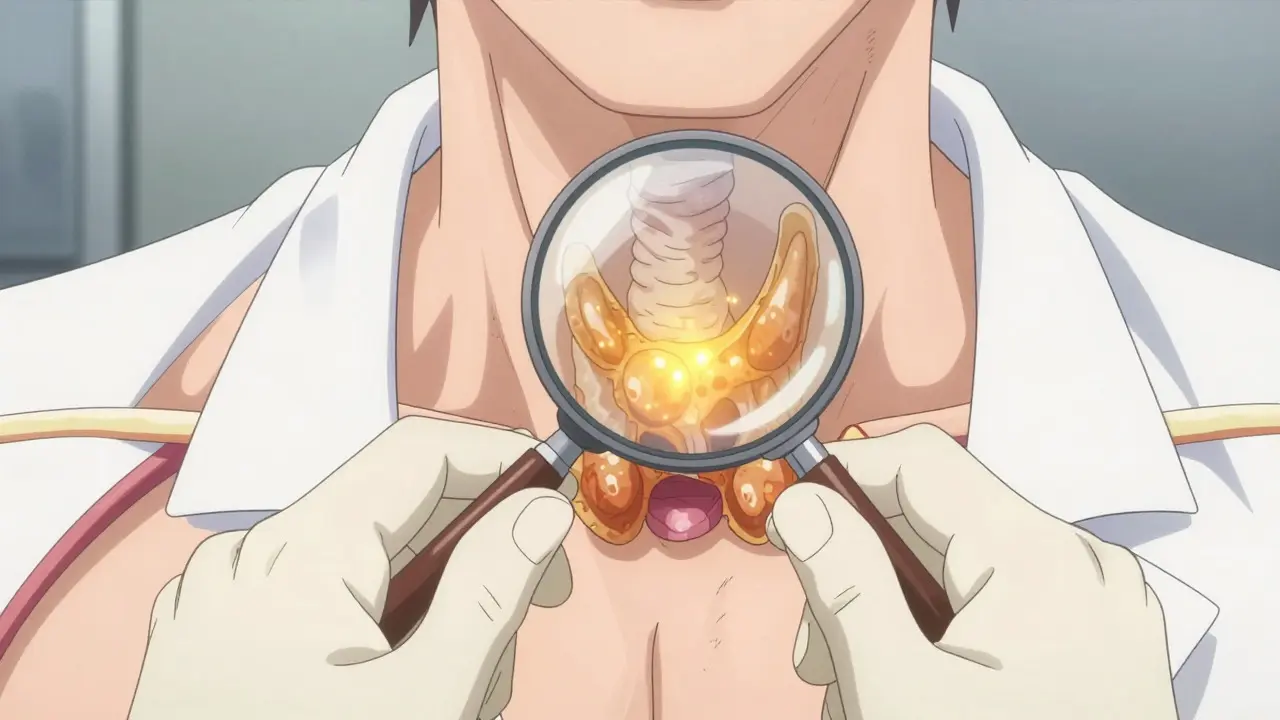
Imagine waking up exhausted, your bones aching in ways that don't make sense, and feeling like your brain is wrapped in cotton. You might assume it's stress or aging, but for many, it’s a silent signal from the neck: hyperparathyroidism. This condition occurs when one or more of the four tiny parathyroid glands produce too much parathyroid hormone (PTH), throwing your body's calcium balance into chaos. It’s not just about a blood test number; it’s a systemic issue that can quietly erode your skeleton and strain your kidneys until you take action.
Here is the reality: while often misdiagnosed as depression or general fatigue, primary hyperparathyroidism affects roughly 100,000 new people annually in the US alone. Women are three times more likely to develop it than men, and African-Americans face higher incidence rates. The good news? It is highly treatable. Whether you’re newly diagnosed or supporting a loved one, understanding the mechanics of this endocrine disorder is the first step toward reclaiming your energy and bone health.
Key Takeaways
- Primary Hyperparathyroidism is characterized by elevated blood calcium and inappropriately normal or high PTH levels, accounting for 80-85% of all cases.
- Bone density loss occurs at a rate of 2-4% per year in untreated patients, significantly increasing fracture risk compared to age-matched controls.
- Surgery remains the only definitive cure, with minimally invasive techniques achieving 95-98% success rates in experienced hands.
- Diagnostic delays are common, with nearly half of patients waiting 2-5 years for a correct diagnosis, highlighting the need for specific screening criteria.
- Post-surgical recovery typically involves temporary low calcium levels, manageable with short-term supplementation.
Understanding the Mechanics: Why Calcium Spikes
To understand why you feel so off, you have to look at how your body regulates minerals. Your parathyroid glands act as the thermostat for calcium. When blood calcium drops, they release PTH to pull calcium from your bones and increase absorption in the gut. In a condition where parathyroid glands fail to regulate calcium homeostasis properly, this thermostat gets stuck. The glands keep pumping out PTH even when calcium levels are already high.
This creates a dangerous feedback loop. Excessive PTH stimulates osteoclasts-cells that break down bone-to release stored calcium into the bloodstream. Simultaneously, it tells your kidneys to hold onto calcium rather than excrete it, and boosts vitamin D activation to absorb more from food. The result is hypercalcemia. Normal serum calcium sits between 8.5 and 10.2 mg/dL. In primary hyperparathyroidism, it typically exceeds 10.5 mg/dL. If left unchecked, severe cases can push levels above 14 mg/dL, potentially triggering a 'parathyroid crisis' with confusion, lethargy, or even coma.
It’s crucial to distinguish this from secondary hyperparathyroidism, which is a compensatory response to low calcium, often seen in chronic kidney disease. In secondary cases, calcium is usually low or normal, but PTH is high because the kidneys aren't working well enough to process vitamin D. Primary hyperparathyroidism, however, stems directly from glandular pathology, most commonly a benign tumor called an adenoma on a single gland.
The Hidden Toll: Symptoms Beyond Fatigue
"Bones, stones, groans, and psychic moans." That’s the classic medical mnemonic for hyperparathyroidism symptoms, and it’s surprisingly accurate. Patients frequently report deep, dull bone pain, particularly in the hips, spine, and wrists. But the most debilitating complaint isn't always physical. In surveys of over 1,200 patients, 78% cited bone pain and fatigue as their worst symptoms, while 65% struggled with cognitive difficulties often described as "brain fog."
This mental cloudiness can manifest as trouble concentrating, memory lapses, or irritability. Many patients visit multiple doctors before the connection is made, sometimes being treated for anxiety or depression for years. Kidney involvement is another major player. High calcium levels can crystallize in the urine, leading to frequent kidney stones. One patient shared, "After 7 years of misdiagnosed depression and chronic kidney stones, my calcium was 11.8... Parathyroidectomy eliminated all symptoms within 3 months."
Even if you feel "fine," the damage may be accumulating silently. Dual-energy X-ray absorptiometry (DXA) scans reveal that untreated patients lose 2-4% of their bone mineral density annually at the hip and lumbar spine. This accelerates osteoporosis, raising the risk of fractures by 30-50%. The longer the hypercalcemia persists, the harder it becomes to fully reverse certain neurological and bone-related effects, making early detection vital.
Diagnosis: Cutting Through the Noise
Getting a confirmed diagnosis requires more than a single blood test. The standard protocol involves measuring serum calcium and intact PTH levels. A diagnosis is generally confirmed when two separate tests, taken at least a week apart, show elevated calcium alongside an inappropriately normal or elevated PTH. If calcium is high but PTH is suppressed, the cause is likely elsewhere. If both are high, primary hyperparathyroidism is the prime suspect.
Once biochemistry confirms the condition, the next step is localization. Surgeons need to know exactly which gland is acting up to plan a focused operation. The gold standard for imaging includes:
- Technetium-99m Sestamibi Scan: This nuclear medicine scan has a sensitivity of around 90% for detecting adenomas. It works best for larger glands (>500mg).
- High-Resolution Ultrasound: With 85% sensitivity, this is often paired with the sestamibi scan. It provides real-time images and helps map the anatomy relative to nerves and blood vessels.
- 4D-CT Scanning: Reserved for complex cases where other methods fail, achieving 95% accuracy. It uses contrast dye to track blood flow through the gland over time.
For patients under 40 or those with a family history of endocrine tumors, genetic testing is increasingly recommended. About 10% of cases involve hereditary syndromes like Multiple Endocrine Neoplasia type 1 (MEN1), which changes the surgical approach from removing one gland to addressing multiple potential sites.
Surgical Solutions: The Path to Cure
While medications can manage symptoms, surgery is the only way to fix the underlying problem. The procedure, known as parathyroidectomy, removes the overactive gland(s). For the vast majority of patients (85%), this means removing a single adenoma via a minimally invasive approach. This technique involves a small incision near the Adam's apple, taking just 1-2 hours, with 90% of patients going home the same day.
Success rates are impressive when performed by high-volume surgeons. Experienced specialists who perform more than 50 cases a year achieve 95-98% cure rates. Intraoperative PTH monitoring adds another layer of precision; if PTH levels drop by more than 50% ten minutes after removing the suspected gland, the surgeon knows they’ve found the culprit. This rapid assay allows them to confirm the cure before closing the incision.
| Approach | Cure Rate | Recovery Time | Long-Term Monitoring |
|---|---|---|---|
| Minimally Invasive Parathyroidectomy | 95-98% | 3-7 days | Annual calcium checks for 2 years, then as needed |
| Bilateral Neck Exploration | 90-95% | 1-2 weeks | Similar to minimally invasive, higher complication risk |
| Medical Management (Cinacalcet) | 0% (Symptom control only) | N/A | Lifelong medication, regular blood work |
| Bisphosphonates | 0% (Bone protection only) | N/A | Lifelong therapy, does not fix calcium levels |
What about those who aren't candidates for surgery? Medical management exists but has limits. Cinacalcet (Sensipar) can lower PTH by 30-50%, but it doesn't normalize calcium in most primary cases. Bisphosphonates like alendronate help protect bone density by slowing resorption, adding 3-5% density over two years, but they do nothing to address the high calcium itself. These options are typically reserved for patients with significant comorbidities that make anesthesia risky.

Life After Surgery: Recovery and Maintenance
Most patients feel a dramatic shift in their quality of life post-operation. Surveys indicate 92% see an improvement in kidney stone frequency, and 88% report reduced bone pain within six months. However, the immediate aftermath requires attention. Because the remaining parathyroid glands have been suppressed for a long time, they may struggle to produce enough PTH right away. This leads to transient hypocalcemia (low calcium) in 30-40% of patients.
You might experience tingling in your lips, fingers, or toes, or muscle cramps. This is usually temporary, lasting 2-8 weeks. Doctors monitor calcium levels at 4, 24, and 72 hours post-surgery. Most patients are sent home with oral calcium supplements (500-1000mg three times daily) and calcitriol to bridge the gap until their remaining glands wake up. It’s a manageable phase, but it requires strict adherence to dosing schedules.
Long-term, the prognosis is excellent. DXA scans show that bone density begins to recover within a year, gaining 3-5% at the lumbar spine. To maintain these gains, lifestyle factors become critical. Aim for 1,200mg of calcium daily through diet or supplements, engage in 30 minutes of weight-bearing exercise daily, and avoid thiazide diuretics, which can raise calcium levels. While recurrence is rare (2-3% for single-gland disease), annual check-ups are prudent for the first few years to ensure everything stays in balance.
Frequently Asked Questions
Is hyperparathyroidism always caused by a tumor?
In primary hyperparathyroidism, 85% of cases are caused by a single benign adenoma. About 15% involve hyperplasia (enlargement) of all four glands, and less than 1% are due to cancer. Secondary hyperparathyroidism, however, is caused by other conditions like kidney failure, not a tumor.
Can I live with hyperparathyroidism without surgery?
Yes, but with caveats. If you are asymptomatic, over 50, and have normal bone density and kidney function, doctors may opt for watchful waiting. However, surgery is recommended if calcium is more than 1 mg/dL above normal, bone density is low (T-score ≤ -2.5), kidney function is impaired, or you are under 50. Untreated, the risk of fractures and kidney stones increases significantly.
Will my voice change after parathyroid surgery?
Fear of voice change is a common reason patients delay surgery, but the risk is very low. In experienced hands, the rate of permanent recurrent laryngeal nerve injury is less than 1%. Temporary hoarseness can occur but usually resolves within weeks. Surgeons use careful dissection and intraoperative monitoring to minimize this risk.
How soon will I feel better after surgery?
Many patients notice improved energy and clarity of thought within days to weeks. Physical symptoms like bone pain and kidney stone issues typically improve significantly within 3 to 6 months. Full bone density recovery takes longer, with measurable improvements seen on DXA scans after 1 to 2 years.
Does diet affect hyperparathyroidism?
Diet plays a supportive role. Before surgery, correcting vitamin D deficiency is essential, as low vitamin D can worsen bone loss. Post-surgery, maintaining adequate calcium intake (1,200mg/day) supports bone healing. Avoiding excessive salt and staying hydrated helps prevent kidney stones. Thiazide diuretics should be avoided as they reduce calcium excretion.







Comments (11)
Alex Brown
August 24, 2026 AT 14:26 PMIt is fascinating how the body’s homeostasis can be so subtly disrupted yet have such profound systemic consequences. The concept of the parathyroid glands acting as a 'thermostat' for calcium is a compelling metaphor that highlights the precision required in endocrine regulation. When this mechanism fails, it is not merely a numerical anomaly on a lab report but a fundamental shift in physiological balance. This underscores the importance of viewing health through an interconnected lens rather than isolated symptoms.
The diagnostic delay mentioned here speaks to a broader issue in modern medicine where complex endocrine disorders are often masked by more common complaints like fatigue or anxiety. Recognizing these patterns early could save patients years of misdiagnosis and unnecessary suffering. It is a reminder that sometimes the most silent signals are the loudest in their long-term impact.
Kaylyn Mello
August 25, 2026 AT 09:52 AMmy mom had this exact thing and nobody would listen to her for like 3 years she was just told she was stressed out and needed to sleep more
it was only when she got a kidney stone that they finally checked her calcium levels and boom there it was
the surgery was actually way less scary than i thought she was home the next day and felt normal within a week which was wild considering how tired she was before
joyce Hogewoning
August 26, 2026 AT 22:18 PMoh my god this post is literally screaming at me because my sister has been dealing with this for almost five years now and its been such a nightmare trying to get doctors to take her seriously since everyone just assumes its depression or maybe just getting older right?
like who even thinks to check their parathyroid glands unless they are having some kind of major crisis??
i am so glad this article explains all the different tests and why you need multiple blood draws because honestly if you only go once you might miss it completely and then you are stuck waiting forever while your bones are just slowly breaking down inside you which is terrifying to think about
also did anyone else notice that women get this way more often? its so unfair that we have to deal with so many hormonal and endocrine issues that men never even have to worry about
anyway i hope everyone reading this gets their calcium checked just in case because better safe than sorry especially if you feel like your brain is wrapped in cotton like the title says
Maneesh kv
August 27, 2026 AT 19:20 PMGreat explainer! 📚🔥 But let's be real, the biggest bottleneck is NOT the surgery itself-it's the access to high-volume surgeons. In India, we see many cases where patients travel from rural areas to metros just to find a specialist who does >50 cases/year. If you don't have that expertise, the cure rate drops significantly. Don't settle for any ENT doctor; find an endocrine surgeon. 💪🏽🩺
John Park
August 28, 2026 AT 20:56 PMtypical medical narrative... they tell you the cure is simple but ignore the fact that finding the gland is a guessing game until you are under anesthesia.
in my experience with similar endocrine issues, the imaging is often useless for small adenomas and you end up with a bilateral neck exploration which is a much bigger deal than they make it sound.
don't trust the "minimally invasive" hype too much, it depends entirely on whether the sestamibi scan actually works for you.
Kathleen McGrath
August 29, 2026 AT 03:34 AMthis is really helpful info! i was worried about the voice change part because that is something a lot of people fear.
good to know that the risk is low if you go to an experienced surgeon.
thanks for breaking it down so simply!
Lemuel Gomez
August 30, 2026 AT 17:17 PMI recently read a study that suggested genetic testing should be standard for anyone under 40 diagnosed with primary hyperparathyroidism, which aligns with what this post mentions regarding MEN1 syndromes. It’s a bit of an under-discussed aspect of the diagnosis process, but crucial for long-term management. The distinction between single-gland adenoma and multi-gland disease really changes the surgical scope, so catching those hereditary markers early seems like a no-brainer for younger patients.
Emmanuel Umana
August 31, 2026 AT 07:21 AMIn Nigeria, awareness is low. Many patients come to us after bone fractures occur. Early screening is key.
Lilian Binda
September 2, 2026 AT 06:22 AMwhy do americans always think surgery is the answer to everything??
in africa we manage these things with diet and rest first
all this fancy talk about minimally invasive cuts is just marketing to scare people into paying for procedures
just eat more calcium and stop stressing out
Fabian Saldana
September 3, 2026 AT 05:34 AMAn excellent summary of a condition that remains under-recognized in primary care settings. The emphasis on the 95-98% success rate of minimally invasive parathyroidectomy is particularly encouraging for patients who may be hesitant due to fears of neck surgery. It is imperative that healthcare providers remain vigilant for non-specific symptoms such as fatigue and cognitive decline, especially in post-menopausal women, to ensure timely intervention and prevention of long-term skeletal complications.
Colin Finch
September 4, 2026 AT 05:36 AMOh, the sheer drama of it all! I mean, imagine waking up feeling like your brain is made of wet cotton wool – that is absolutely harrowing! But then, wham, you get the surgery and suddenly you are back to being yourself again. It is quite the rollercoaster, isn't it? I suppose it is better to have the little niggling pain in your bones sorted out rather than living with the constant dread of a fracture. Cheers to getting your calcium levels back in check, folks!