

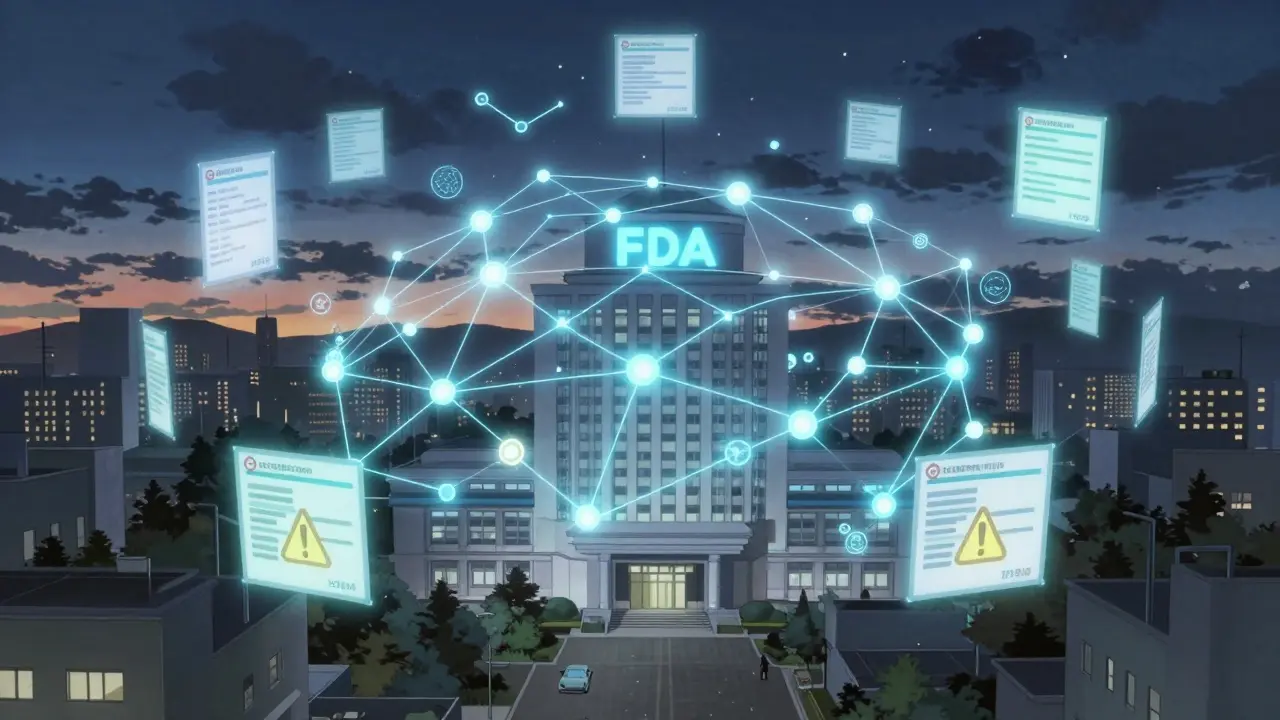
When a new drug hits the market, the work isn’t done. In fact, the real safety test begins after approval. Pre-clinical trials involve a few thousand patients under controlled conditions. They rarely include older adults, pregnant women, or people with multiple chronic conditions. That’s where post-marketing surveillance comes in - tracking how drugs behave in the real world, where millions of people use them every day.
Why Post-Marketing Studies Matter
Before a drug is approved, clinical trials are limited. They’re short, tightly controlled, and exclude large segments of the population. But once that pill is in millions of medicine cabinets, rare side effects show up. Maybe it causes liver damage in people with a specific gene. Maybe it interacts dangerously with a common over-the-counter painkiller. These aren’t theoretical risks - they’re real, and they’ve led to black box warnings, label changes, and even withdrawals. The U.S. Food and Drug Administration (FDA) requires drugmakers to track safety after approval. This isn’t optional. It’s the law. And the data collected isn’t just paperwork - it’s what keeps patients safe. Between 2018 and 2022, 87% of safety actions taken by the FDA were triggered by findings from post-marketing studies. That means most drug safety updates you see - like new warnings on packaging or changes to dosing instructions - came from real-world use, not lab tests.The Three Pillars of Post-Marketing Surveillance
Tracking drug safety isn’t one system. It’s three interconnected systems working together. First is spontaneous reporting. This is where doctors, pharmacists, nurses, and even patients report unexpected side effects. The FDA’s FAERS (FDA Adverse Event Reporting System) is the main hub. As of 2023, it held over 30 million reports. Anyone can submit one - a patient who felt dizzy after taking a new blood pressure med, a nurse who noticed unexplained bleeding in a patient on an anticoagulant. These reports are the earliest warning signs. Second is active surveillance. Unlike spontaneous reports, this system proactively digs into real-world data. The FDA’s Sentinel System analyzes health records from over 300 million Americans. It looks at insurance claims, electronic health records (EHRs), and lab results. It doesn’t wait for someone to report a problem - it finds patterns automatically. For example, if a new diabetes drug shows up in 15% more heart failure cases than expected across a million patient records, Sentinel flags it. This system caught safety signals that spontaneous reports missed, especially for drugs used by older adults. Third is mandated post-marketing studies. The FDA can require drugmakers to run specific studies after approval. These aren’t optional. They’re legally binding. For example, a new cancer drug might be required to track long-term kidney damage in patients over 70. Or a psychiatric medication might need a 5-year study on suicide risk in teenagers. These studies are often slow. In fact, between 2015 and 2022, 72% of these studies missed their deadlines. The median completion time was 5.3 years - over two years past the required 3-year window.How to Track These Studies - Step by Step
If you’re a pharmacist, clinician, or someone managing drug safety for a healthcare system, here’s how to stay on top of it.- Know your drug’s safety plan. Every approved drug has a Risk Evaluation and Mitigation Strategy (REMS). This document lists required post-marketing studies, monitoring protocols, and reporting obligations. Check the FDA’s REMS database or the drugmaker’s website. If a drug has a REMS, you’re expected to follow its rules.
- Subscribe to FDA Drug Safety Communications. The FDA publishes these every week. They’re short, clear alerts about new risks, label changes, or study results. Sign up for email alerts. Don’t wait for a patient to come in with a problem - be proactive.
- Use your EHR alerts. Many electronic health record systems now integrate with FAERS and Sentinel data. If your system flags a new safety signal for a drug your patient is taking, act on it. These alerts aren’t perfect, but they’re better than nothing.
- Track study deadlines. If your organization is running a post-marketing study, use a centralized tracker. Set reminders for enrollment targets, data submission dates, and final reports. Miss a deadline, and you risk regulatory penalties - or worse, delayed safety updates.
- Report everything. Even if you think it’s minor. A headache after a new medication? A rash? A change in blood sugar? Report it. The more data, the better the signal detection. In 2022, the UK’s Yellow Card system received over 76,000 reports - and 12% more than the year before. That’s because people kept reporting.

What Happens When a Problem Is Found?
Finding a problem is just the start. The real work is responding. The FDA doesn’t pull drugs off the market lightly. Most actions are changes to the label. That means adding new warnings, changing dosing instructions, or restricting use in certain groups. Between 2018 and 2022, 87% of safety actions were label updates. That’s the most common outcome. Sometimes, it’s a Dear Health Care Professional letter - a direct message from the drugmaker or FDA to doctors and pharmacists. These often come when a risk is serious but not common enough to warrant a label change. Rarely, it’s a REMS modification. That might mean requiring special training for prescribers, limiting distribution to certified pharmacies, or requiring regular blood tests. Withdrawals happen less than 1% of the time. But they do happen - when the risk clearly outweighs the benefit, and no other solution works.The Big Challenges
It’s not easy. There are major gaps. One problem is data quality. The Sentinel System uses insurance claims and EHRs, but those records often lack details. Did the patient have kidney disease? Were they taking other meds? Were their lab values normal? Without this, it’s hard to tell if a side effect is truly caused by the drug or something else. Another issue is speed. Post-marketing studies take years. By the time results come in, the drug may have been used by millions. That’s why the FDA is testing new tools. In 2023, pilot programs using Large Language Models (LLMs) to scan unstructured EHR notes improved signal detection by 42%. But they also generated 23% more false alarms. It’s a trade-off. And then there’s global coordination. The U.S. has FAERS and Sentinel. The EU has EudraVigilance. Japan has its own system. But data doesn’t flow easily between them. That’s why the WHO is pushing for a global pharmacovigilance network by 2027 - to catch signals that one country might miss.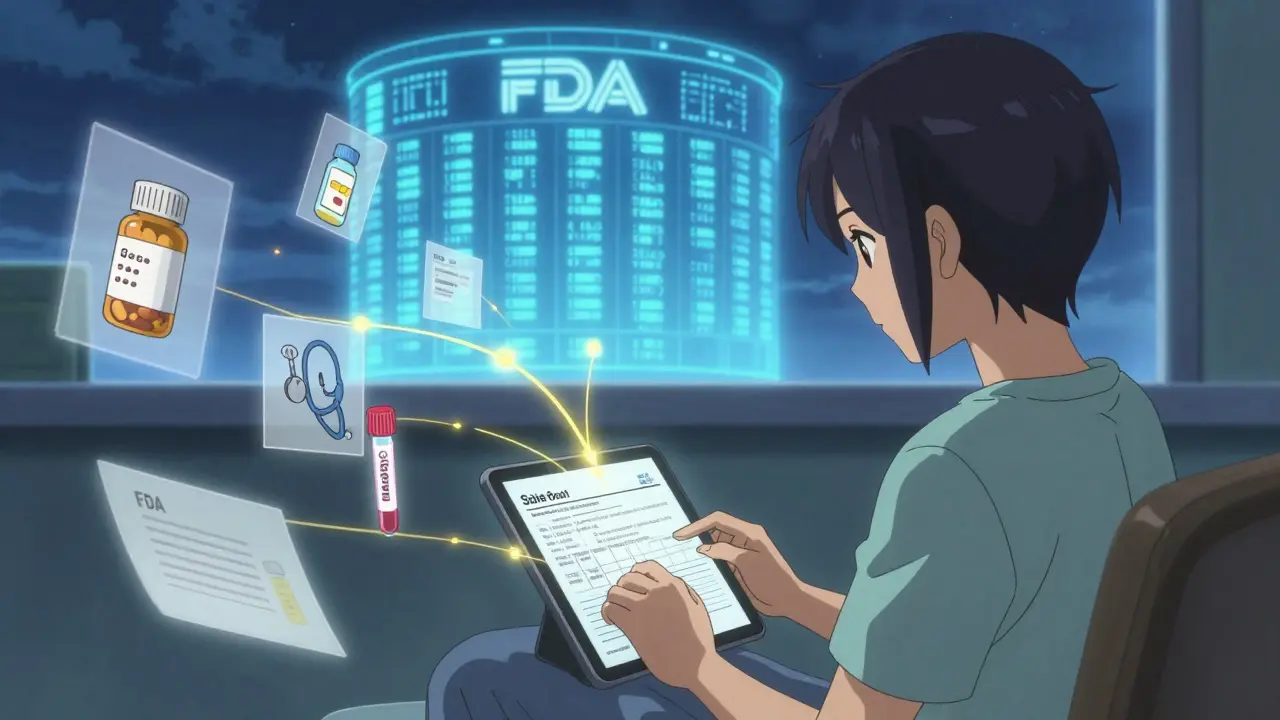
What’s Next?
The future of drug safety is smarter, faster, and more connected. By 2026, the FDA’s Sentinel Common Data Model Plus (SCDM+) will include genomic data for 50 million patients. That means we’ll be able to see if a side effect is linked to a specific gene - not just age or gender. The EU is launching an AI-powered signal detection system in 2025. It will analyze millions of reports automatically, reducing manual review time. And drugmakers are finally getting better at tracking their own studies. Distributed data networks have cut study start times from 14 months to under 9 months. That’s progress. But the most important tool hasn’t changed: people. Doctors reporting side effects. Pharmacists asking patients about new symptoms. Nurses noticing unusual patterns. Technology helps - but it doesn’t replace human vigilance.What You Can Do Today
You don’t need to be a regulatory expert to make a difference. - If you prescribe a new drug, check its REMS status. - If you’re a pharmacist, encourage patients to report side effects - even small ones. - If you’re a patient, keep a simple log: what you took, when, and how you felt. Bring it to your next appointment. - If you’re in healthcare management, make sure your team has access to FDA safety alerts and knows how to report. Drug safety isn’t a one-time check. It’s a continuous conversation - between patients, providers, regulators, and manufacturers. The more voices in that conversation, the safer we all are.What is the difference between FAERS and the Sentinel System?
FAERS is a passive database where anyone - doctors, patients, or drug companies - can voluntarily report adverse events. It’s like a hotline for safety concerns. Sentinel is active surveillance. It automatically pulls data from electronic health records and insurance claims across hundreds of millions of patients to find patterns. FAERS catches rare, unexpected events. Sentinel finds trends across large populations. Together, they give a fuller picture.
How long do post-marketing studies usually take?
The FDA typically requires studies to be completed within 3 years. But in reality, most take longer. Between 2015 and 2022, the median completion time was 5.3 years. Delays happen because of slow patient recruitment, complex data collection, and fragmented healthcare systems. Some studies take over 7 years to finish.
Can patients report side effects themselves?
Yes. The FDA encourages patients to report side effects directly through the MedWatch portal. You don’t need a doctor’s note. Just describe what happened, what drug you took, and when. These reports are reviewed by safety teams and can trigger new investigations. In 2022, over 20% of FAERS reports came from patients or caregivers.
What are REMS programs, and why do they matter?
REMS stands for Risk Evaluation and Mitigation Strategy. It’s a safety plan the FDA requires for drugs with serious risks. REMS can include special training for prescribers, restricted distribution, mandatory patient monitoring, or special consent forms. It’s not just paperwork - it’s a way to control risk while keeping a useful drug available. If a drug has a REMS, you need to follow its rules.
Are post-marketing studies only for new drugs?
No. Even older drugs can be required to run new studies. If new safety concerns arise - like a link to a rare heart condition in older users - the FDA can ask for a new study, even if the drug has been on the market for 20 years. This happened with some older diabetes and arthritis drugs in the past decade.
How does the FDA decide if a drug is unsafe?
It’s not based on one report. The FDA looks at the volume of reports, the severity of outcomes, whether the pattern appears across multiple data sources, and whether other explanations (like underlying disease) can be ruled out. They use statistical models and expert review. A signal becomes a concern only when the evidence is strong enough to outweigh the drug’s benefits.
What’s the role of machine learning in drug safety?
Machine learning helps sift through massive amounts of data to find hidden patterns. For example, AI can scan thousands of doctor’s notes in EHRs to spot mentions of rare side effects that weren’t coded in structured fields. In 2023, pilot programs showed a 42% improvement in detecting signals. But AI also creates more false alarms - so human experts still review every flagged signal.



Comments (8)
Andrew Freeman
January 13, 2026 AT 15:05 PMlol who even reads these remss anyway. i saw a guy on reddit take metformin and his hair turned green. reported it. no one cared. FDA probably just sits there eating donuts while people die
says haze
January 14, 2026 AT 06:45 AMThe structural inadequacy of post-marketing surveillance lies not in its methodology but in its epistemological humility. We mistake statistical signals for ontological truths, conflating correlation with causation under the false pretense of scientific rigor. The Sentinel System, while technologically elegant, remains a hermeneutic prison of algorithmic determinism-reducing human suffering to binary outcomes in a dataset designed by bureaucrats who’ve never held a dying patient’s hand.
Alvin Bregman
January 15, 2026 AT 23:38 PMi get what you're saying about reporting side effects but sometimes its just a bad day. i took that new migraine pill and felt weird for 2 hours. turned out i hadn't slept in 36 hours. still reported it cause why not. better safe than sorry i guess
Sarah -Jane Vincent
January 16, 2026 AT 10:08 AMyou think this is about safety? please. this is a money laundering scheme disguised as public health. drug companies pay the FDA millions in fees to approve drugs faster, then they pay for the post-marketing studies that take 5 years to finish because they don't want to find anything. the FDA's 'signal detection' is a joke. they ignore 90% of patient reports. i know this because my sister died from a drug interaction they never warned about. and now they want us to trust their 'AI' tools? lol
Henry Sy
January 17, 2026 AT 20:52 PMman i swear these drug companies are running a cult. they got doctors hypnotized into thinking every new pill is the holy grail. i had a patient on this new anticoagulant who started hallucinating cats. told the pharmacist. he said 'that's not in the brochure' so we just kept giving it to her. turns out she was one of the 0.003% who react like that. now she's in a nursing home and the company just released a 'Dear Healthcare Professional' letter. like that fixes anything. we're all just lab rats with better insurance
Anna Hunger
January 17, 2026 AT 22:28 PMWhile the article provides a comprehensive overview of post-marketing surveillance mechanisms, it is imperative to underscore the ethical obligation of all healthcare professionals to prioritize patient-reported outcomes above algorithmic outputs. The integration of FAERS and Sentinel must be supplemented with structured patient interviews and longitudinal clinical documentation to mitigate data fragmentation. Furthermore, adherence to REMS protocols should be codified into institutional quality assurance frameworks, with mandatory continuing education modules for prescribers and pharmacists. The integrity of pharmacovigilance rests not on technological advancement alone, but on the unwavering commitment of individuals to act with diligence, compassion, and accountability.
Jason Yan
January 19, 2026 AT 15:48 PMyou know what's wild? we treat drugs like they're magic bullets but we forget they're just chemicals. same chemical that helps someone's arthritis might mess up someone else's liver because their body processes it differently. it's not about being paranoid-it's about being human. we're all different. our genes, our diets, our sleep, our stress levels-they all change how a pill works. that's why reporting even a tiny rash or weird dream matters. it's not just data. it's someone's life. and if we keep pretending we can automate empathy with AI, we're gonna miss the real signals-the ones whispered in exam rooms, not coded in databases.
shiv singh
January 21, 2026 AT 11:37 AMthis whole system is rigged. you think the FDA cares about patients? they care about lawsuits. they care about stock prices. they care about keeping the pharma industry happy so they can get their next lobbying gig. my cousin took a drug for 7 years. got kidney failure. they said 'rare side effect' and closed the case. meanwhile the company made 2 billion. you want real change? ban all post-marketing studies. just take the drugs off the market until they prove they're safe for real people-not lab rats with insurance cards.