

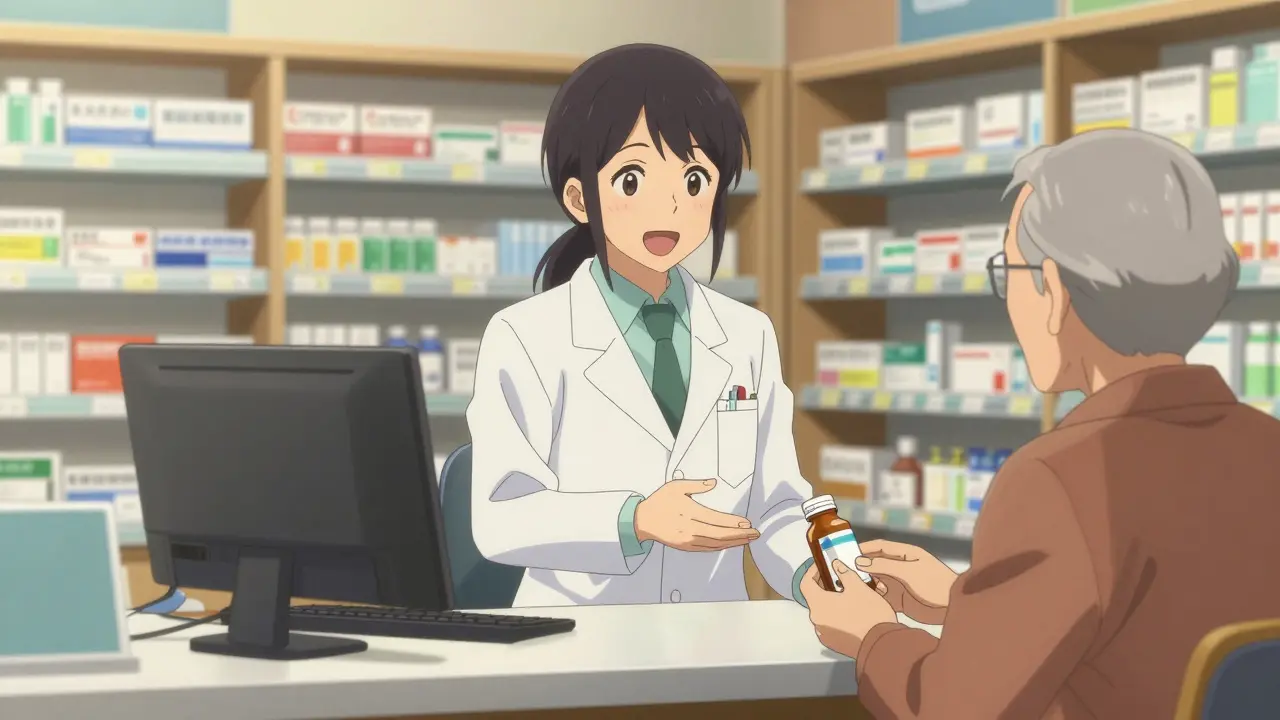
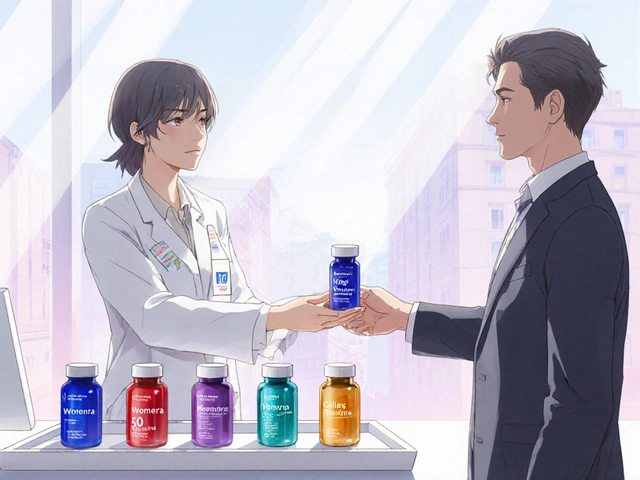
Did you know that most people visit their local community pharmacy nearly twice as often as they see their primary care doctor? In 2025 and heading into 2026, this statistic hasn't changed much. We walk into the pharmacy for prescriptions, vitamins, and over-the-counter remedies, but we rarely stay long enough to ask the one question that could save us from a serious health crisis: "Can you review my medications with me?" Pharmacy consultation services are structured interactions between pharmacists and patients designed to optimize medication therapy, prevent errors, and improve safety outcomes. These aren't just quick chats at the counter; they are formalized medical interventions that have proven to reduce hospital visits and catch dangerous drug interactions before they happen.
Many of us assume our doctors have the full picture of what we take. They don't. Between prescription drugs, supplements, and occasional painkillers, your medication list is complex. A pharmacist’s role extends far beyond counting pills. They are trained experts in pharmacology who can spot conflicts that even physicians might miss due to time constraints. If you are taking multiple medications, or if you have chronic conditions like diabetes or hypertension, skipping this service is leaving safety on the table.
What Is a Pharmacy Consultation?
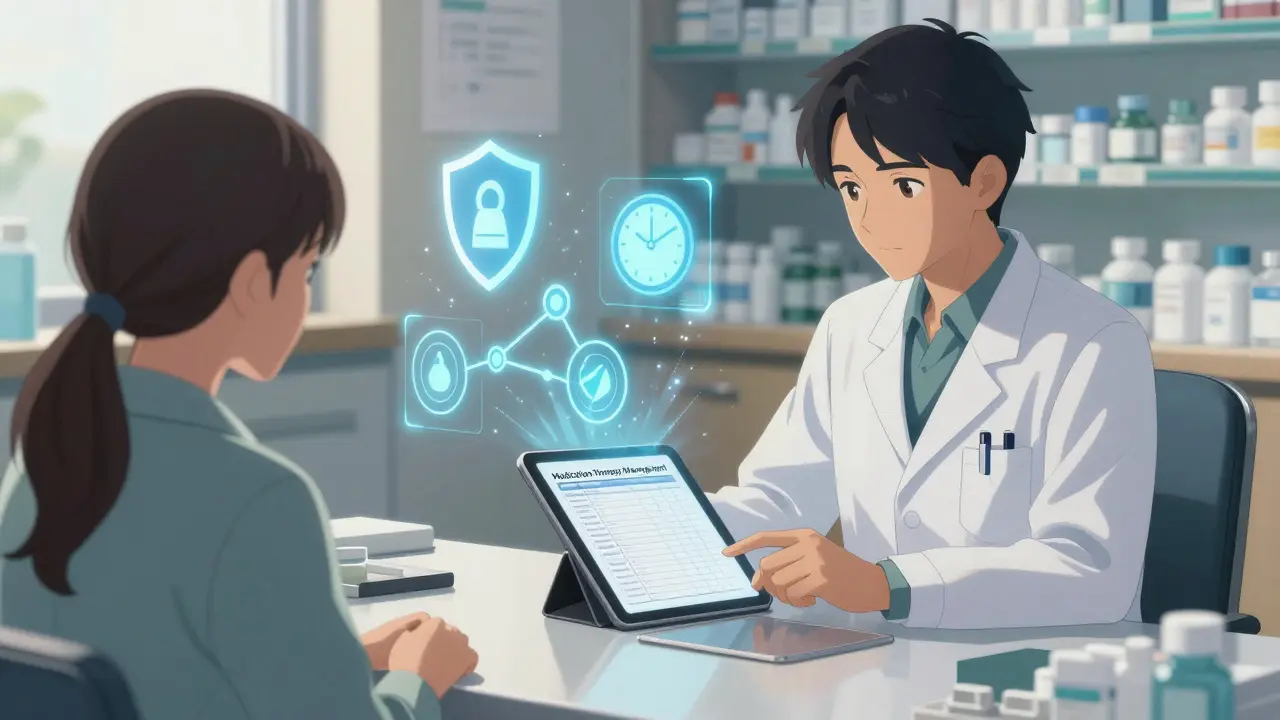
A pharmacy consultation, often referred to professionally as Medication Therapy Management (MTM), is a comprehensive review of all the substances you ingest. It’s not about telling you how to swallow a pill correctly-that’s basic counseling. MTM digs deeper. The pharmacist looks at your entire regimen to answer critical questions: Are these two drugs fighting each other? Is this dose too high for your kidney function? Are you paying more than necessary for generic alternatives?
The process typically involves three main components. First, the pharmacist creates a Personal Medication Record (PMR), which is a master list of everything you take, including doses and reasons for use. Second, they develop a Medication-Related Action Plan (MAP) that outlines what you should do if you miss a dose or experience side effects. Third, they identify specific problems, such as therapeutic duplications or unnecessary costs. This structured approach transforms a simple transaction into a proactive health management strategy.
Who Qualifies for Free or Covered Consultations?
One of the biggest barriers to using these services is the belief that they cost extra money. For many Americans, especially those on Medicare, this is no longer true. Under Medicare Part D, comprehensive MTM services are covered for eligible beneficiaries. As of early 2023, the Centers for Medicare & Medicaid Services (CMS) expanded eligibility criteria. You likely qualify if you meet three conditions:
- You have two or more chronic conditions (such as diabetes, hypertension, asthma, or congestive heart failure).
- You take three or more medications that treat those chronic conditions.
- Your projected annual drug costs exceed a certain threshold (often around $4,000, though this varies by plan).
If you fall into this category, your insurance pays for an annual comprehensive review plus additional follow-ups as needed. For those on private commercial insurance, coverage is less universal. Only about 43% of large employer plans offer comparable MTM benefits as of 2023. However, some private insurers cover these visits at rates ranging from $25 to $75 per consultation. Always check your plan’s summary of benefits under "preventive services" or "pharmacy benefits." Even if it’s not free, the potential savings from avoiding a hospital stay or switching to cheaper generics often outweighs the copay.
Why Pharmacists Are Critical for Medication Safety
You might wonder why you need a pharmacist when you already have a doctor. The answer lies in frequency and specialization. According to data from the American Pharmacists Association, patients interact with community pharmacists an average of 17.3 times a year, compared to just 9.1 visits to primary care physicians. This makes pharmacists the "last line of defense" against medication errors.
Consider the risk of Adverse Drug Events (ADEs). These are injuries caused by medications, ranging from mild nausea to life-threatening organ failure. A 2023 analysis published in PMC looked at pharmacist-adjudicated prior authorization drug request consult services in Veterans Affairs medical centers. The results were striking: 87% of interventions prevented major ADEs classified as severe. In another study, pharmacist-led medication reconciliation identified potential interactions or omissions in 40% of medication lists during care transitions-moments when patients are most vulnerable, such as after being discharged from the hospital.
Dr. Lucian Leape, a professor emeritus at Harvard T.H. Chan School of Public Health, notes that community pharmacists are uniquely positioned to intervene because of this frequent contact. When you pick up a new antibiotic, your doctor isn’t there to see if it clashes with your blood pressure med. Your pharmacist is. They have the real-time data and the specialized training to flag these issues immediately.
How to Prepare for Your Consultation
To get the most out of your appointment, preparation is key. Don’t just show up empty-handed. Here is a checklist to ensure your pharmacist can provide accurate advice:
- Gather All Bottles: Bring every prescription bottle, over-the-counter medication, vitamin, herbal supplement, and even topical creams. Pharmacists need to see the exact formulation and dosage.
- List Your Allergies: Write down any known drug allergies and reactions. Did you get a rash from penicillin? Did aspirin cause stomach bleeding? Specific details help avoid cross-reactivity.
- Note Your Goals: What bothers you most? Is it dizziness? High costs? Difficulty remembering doses? Being specific helps the pharmacist tailor the action plan.
- Update Your Contacts: Ensure the pharmacy has your current phone number and email, as well as your doctor’s contact information, so they can communicate directly if a change is needed.
Most consultations last about 15 minutes. While this seems short, it’s sufficient for a focused review if you come prepared. If you have a very complex case involving dozens of medications, ask if you can schedule a longer session or split it into two visits.
Common Problems Pharmacists Catch
What exactly do they find during these reviews? Based on industry data and patient reports, here are the most common issues resolved during consultations:
| Issue Type | Description | Potential Consequence |
|---|---|---|
| Drug-Drug Interactions | Two medications interfering with each other’s effectiveness or increasing toxicity. | Reduced efficacy or severe side effects. |
| Duplicate Therapies | Prescribing two drugs from the same class (e.g., two different NSAIDs). | Increased risk of organ damage without added benefit. |
| Inappropriate Dosing | Doses too high for age, weight, or kidney/liver function. | Toxicity or adverse events. |
| Adherence Barriers | Complex schedules or difficult-to-swallow pills leading to missed doses. | Worsening of chronic condition. |
| Cost Inefficiencies | Using brand-name drugs when generics or preferred formulary options exist. | Unnecessary financial burden. |
For example, a patient might be prescribed both ibuprofen and naproxen by different specialists, unaware they are both NSAIDs. Taking them together significantly raises the risk of gastrointestinal bleeding. A pharmacist spots this duplication instantly and contacts the prescribers to consolidate therapy. Another common win is cost avoidance. Patients have reported saving hundreds of dollars monthly simply because a pharmacist suggested a therapeutically equivalent generic or a lower-tier alternative covered better by their insurance.
Overcoming Barriers to Access
Despite the clear benefits, only a fraction of eligible patients utilize these services. Why? Time and awareness. Many pharmacies are high-volume environments where pharmacists spend only 22% of their time on patient care versus 47% on dispensing functions. Dr. Donald Murphy, Chief Safety Officer at the Institute for Safe Medication Practices (ISMP), highlights that time constraints remain the most significant barrier. In busy settings, the average consultation time drops to 6.2 minutes, well below the recommended 15-minute minimum for effective review.
To navigate this, look for pharmacies that prioritize clinical services. Signs of a robust program include:
- Private Consultation Rooms: About 68% of community pharmacies now offer private spaces, ensuring confidentiality and reducing distractions.
- Dedicated Hours: Some pharmacies set aside specific hours for MTM, reducing wait times.
- Certified Pharmacists: Look for staff certified in the Pharmacists Patient Care Process (PPCP). As of late 2023, over 28,000 pharmacists held this certification, indicating advanced training in communication and documentation.
If your local pharmacy is too rushed, consider larger chains or specialty clinics that employ clinical pharmacists specifically for these roles. Telehealth options have also exploded post-pandemic, with 62% of pharmacies now offering virtual medication reviews. This can be a convenient alternative if mobility or transportation is an issue.
The Future of Medication Safety
The landscape is shifting rapidly. With 22 states having expanded pharmacist authority to initiate certain medication therapies, the role of the pharmacist is evolving from dispenser to provider. This expansion means that in the future, you may not just receive advice on existing meds, but your pharmacist could prescribe preventive treatments or adjust dosages under collaborative practice agreements with your physician.
Integration with Electronic Health Records (EHR) is also improving. While fragmented records remain a challenge, 65% of community pharmacy consultation services now integrate with EHR systems, allowing for smoother data exchange between your doctor and pharmacist. This connectivity ensures that when your doctor writes a new prescription, the pharmacist has immediate context, further reducing error rates.
Ultimately, medication safety is a team effort. Your doctor diagnoses and treats; your pharmacist ensures the treatment is safe, effective, and affordable. By actively using your pharmacy’s consultation service, you take control of your health narrative. You transform from a passive recipient of pills into an informed partner in your care. Given that these services are often free for Medicare beneficiaries and increasingly available for others, ignoring them is a missed opportunity for peace of mind and physical well-being.
Is a pharmacy consultation the same as a regular pickup conversation?
No, they are quite different. A regular pickup conversation is brief and focuses on instructions for a single new prescription (how to take it, storage, etc.). A formal consultation or Medication Therapy Management (MTM) review is a scheduled, comprehensive assessment of all your medications, supplements, and health goals. It aims to identify interactions, redundancies, and cost-saving opportunities across your entire regimen, not just one drug.
Do I need a referral from my doctor to see a pharmacist for MTM?
Generally, no. You can self-refer for MTM services at most community pharmacies. However, it is helpful to inform your primary care physician that you are undergoing a medication review. This ensures they are aware of any changes made by the pharmacist and maintains continuity of care. Some insurance plans may require proof of eligibility, but a doctor's referral is rarely mandatory for the initial consultation.
How much does a pharmacy consultation cost?
For Medicare Part D beneficiaries who meet the eligibility criteria (multiple chronic conditions and multiple medications), the annual comprehensive review is covered at no extra cost. For those on private insurance, coverage varies; some plans cover it fully, while others may charge a copay ranging from $25 to $75. If your insurance doesn't cover it, you can pay out-of-pocket, but the potential savings from switching to cheaper generics or avoiding hospitalizations often offset this cost quickly.
Can a pharmacist change my prescription without talking to my doctor?
In most cases, no. Pharmacists cannot independently change the dosage or type of a prescribed medication without contacting the prescribing physician. Their role is to recommend changes. They will call your doctor to discuss the interaction or issue, and once the doctor agrees, they will update the prescription. In some states with expanded scope-of-practice laws, pharmacists may have limited authority to initiate or modify certain therapies under specific protocols, but this is still relatively rare.
How often should I have a medication review?
An annual comprehensive review is standard for most patients. However, you should request an additional consultation anytime there is a significant change in your health status. This includes starting a new medication, stopping a long-term drug, being hospitalized, experiencing new side effects, or changing insurance plans. Regular reviews help keep your Personal Medication Record accurate and prevent errors during care transitions.





Comments (15)
Tallulah Sandison
May 3, 2026 AT 17:13 PMfinally someone gets it!! go to the pharmacy and ask for help!!!
Prudence Wesson
May 3, 2026 AT 20:57 PMIt is absolutely maddening that people still treat pharmacists as mere vending machines with a pulse. This article, while adequately written, fails to address the sheer negligence of patients who refuse to engage in their own healthcare management. One would think that after decades of medical advancements, basic literacy regarding medication safety would be universal. It is not. The ignorance displayed by those who skip these consultations is staggering.
We must demand better from ourselves. If you cannot take five minutes to review your regimen, perhaps you do not deserve the privilege of complex pharmaceutical therapy. Stop being lazy. Start reading the labels. And for heaven's sake, schedule the damn appointment.
SWATI NAWANGE
May 4, 2026 AT 12:01 PMI simply cannot comprehend why the masses continue to ignore such obvious wisdom. The average person is quite frankly an idiot when it comes to self-preservation. They walk into the pharmacy, grab their pills, and leave without a second thought. It is pathetic. I had my consultation last week and the pharmacist was nearly weeping at the state of my previous regimen. Do you know what happens when you mix certain supplements with prescription drugs? Disaster. Absolute disaster. You are all walking time bombs.
Furthermore, the idea that this service is 'free' for some is a joke. It should be mandatory. Mandatory! If you want to live past forty, you will submit to the authority of the pharmacist. There is no other way. The elite understand this. The rest of you are just waiting for the other shoe to drop.
Ken Baldridge
May 5, 2026 AT 21:28 PMHey everyone, let’s break this down because the clinical utility here is massive. We’re talking about Medication Therapy Management (MTM) which is essentially a high-yield intervention for optimizing therapeutic outcomes. The data suggests that pharmacist-led reconciliation reduces adverse drug events (ADEs) significantly. Think about the pharmacokinetics involved; if you’re on multiple agents, the risk of CYP450 interactions skyrockets.
I always tell my team that the community pharmacist is the gatekeeper of safety. They have the most frequent touchpoints with the patient population. So, leverage that. Don’t just pick up the script; engage in a collaborative care model. It’s about synergy between the prescriber and the dispenser. If you aren’t utilizing MTM, you’re basically flying blind in terms of polypharmacy management. Let’s get smarter about our health stack, folks.
Bradley Gusick
May 5, 2026 AT 22:14 PMThis is part of the great deception. They want you to believe that the pharmacist is your friend. He is not. He is an agent of the system designed to keep you dependent on the chemical industry. Why do they offer these consultations for free? To gather data. To track your movements. To ensure you never question the narrative.
I don’t need a pharmacist telling me how to take my meds. I know my body better than any so-called expert. They push these services to create more bureaucracy, more red tape, more control over the individual. Wake up! The government doesn’t care about your safety. They care about compliance. Keep your money, keep your privacy, and trust only yourself. This whole MTM thing is a psyop.
Leah Sentz
May 7, 2026 AT 13:42 PMOMG yes!! 😡😡 My mom refuses to go and she almost ended up in the hospital last year because of her blood pressure meds interacting with her ibuprofen. It was a total nightmare. 🤬🤬 Pharmacists are literally lifesavers and people are so stupid for ignoring them. Like, come on!! 🙄🙄 Just go already!! 💊💊 Save yourself the pain and the money. Don’t be like my mom!! 😭😭 #MedicationSafety #PharmacistLife
Robert Cowley
May 9, 2026 AT 12:48 PMOh, please. Spare me the propaganda.
You think a fifteen-minute chat with a guy who spends half his day counting pills is going to save your life? Please. The real issue is that doctors prescribe too much junk in the first place. Blaming the patient for not asking questions is victim-blaming at its finest. And don't get me started on the 'cost savings' argument. Insurance companies love these programs because it keeps people alive long enough to pay premiums. It’s not about health; it’s about profit margins.
I’d rather die free than live under the watchful eye of a corporate pharmacist. :D
Sarah Mifsud
May 9, 2026 AT 13:10 PMhi there! i totally agree with this post. i went for my mtm review last month and it was super helpful. my pharmacist noticed i was taking two different acid reducers which was causing kidney issues. scary right?!
if u havent done it yet, just bring all ur bottles. even the vitamins. they really do check everything. it takes like 15 mins but its worth it. hope this helps u guys! dont be shy to ask questions!
Christina Lancey
May 10, 2026 AT 18:36 PMI’m so glad this topic is getting attention. It’s wonderful to see resources that empower us to take charge of our health. Small steps make a big difference. I encourage everyone to try it out. You might be surprised by what you learn. Stay safe and healthy, everyone.
Halle Dagley
May 12, 2026 AT 11:48 AMThe United States has the best pharmacists in the world, period. Our healthcare system is superior because we prioritize innovation and safety protocols that other countries can only dream of. This MTM program is a testament to American excellence. Other nations look at our pharmacy standards and tremble. We lead the world in medical advancement. Those who criticize our system are simply jealous of our success. America first, always. 🇺🇸
Rebekah Korak
May 13, 2026 AT 05:16 AMLook, I’ve been thinking about this deeply. The concept of the 'consultation' is inherently flawed if we view it as a transactional event. It should be a continuous dialogue. But society is broken. We’ve lost the ability to communicate effectively. The pharmacist is positioned as a savior, but really, they are just another cog in the machine. However, I will concede that the data on ADE reduction is compelling.
But here’s the thing: why do we need a specialist to tell us what’s wrong with our bodies? Shouldn’t we know? The answer is no. We are disconnected from our own physiology. The consultation is a band-aid on a gaping wound. We need systemic change. Until then, use the service, but don’t mistake it for enlightenment. It’s merely damage control. And honestly, most people are too dumb to even prepare for it. They show up empty-handed. Pathetic.
Lando Neal
May 15, 2026 AT 01:02 AMReally interesting read... I never knew pharmacists did all that stuff... seems pretty important actually... I guess I should try it sometime... maybe next month...
Srinivas Komakula
May 16, 2026 AT 10:46 AMThe implementation of Medication Therapy Management (MTM) within the framework of community pharmacy practice represents a critical juncture in the mitigation of Adverse Drug Events (ADEs). However, one must scrutinize the underlying motivations. Is this truly altruistic patient care, or is it a mechanism for enhanced surveillance and data aggregation by pharmaceutical conglomerates? The integration of Electronic Health Records (EHR) facilitates seamless data exchange, ostensibly improving safety, yet it also creates a panopticon of medical oversight.
Furthermore, the reliance on algorithmic decision support systems employed by pharmacists raises questions about the erosion of clinical autonomy. Are we trusting human expertise or proprietary software? The expansion of pharmacist scope-of-practice laws is not merely a professional evolution; it is a strategic realignment of healthcare delivery models driven by cost-containment imperatives rather than pure clinical benefit. Proceed with caution. Verify every interaction. Trust no one.
Divya Patel
May 17, 2026 AT 03:07 AMIn the vast tapestry of human existence, the act of healing is often reduced to transactions. Yet, the pharmacy consultation offers a moment of pause, a chance to reconnect with the wisdom of the body. In India, we have a rich tradition of Ayurveda, where balance is key. Perhaps the Western model of MTM can learn from this holistic approach. It is not just about avoiding errors; it is about harmony.
I find it profound that a stranger in a white coat can hold the key to your well-being. It speaks to the interconnectedness of all things. We must honor this connection. Let us not rush through life, swallowing pills without reflection. Let us sit, breathe, and listen. The pharmacist is not just a dispenser; they are a guardian of the threshold between sickness and health. Treat them with respect. Treat yourself with kindness.
nikki paurillo
May 17, 2026 AT 15:15 PMOkay, hear me out. This is like finding a secret level in a video game but for your actual life. You walk in, expecting to just grab your blue bottle of sadness, and boom-the pharmacist pulls back the curtain and shows you the matrix of your own meds. It’s wild.
I had a consultation once and it felt like a detective story. My pharmacist found this duplicate med situation that was basically making my kidneys cry. It was a whole vibe shift. Suddenly, I wasn’t just a customer; I was a partner in crime against bad health. Plus, saving money feels like winning loot boxes. So yeah, go forth and consult. It’s the power-up you didn’t know you needed.