
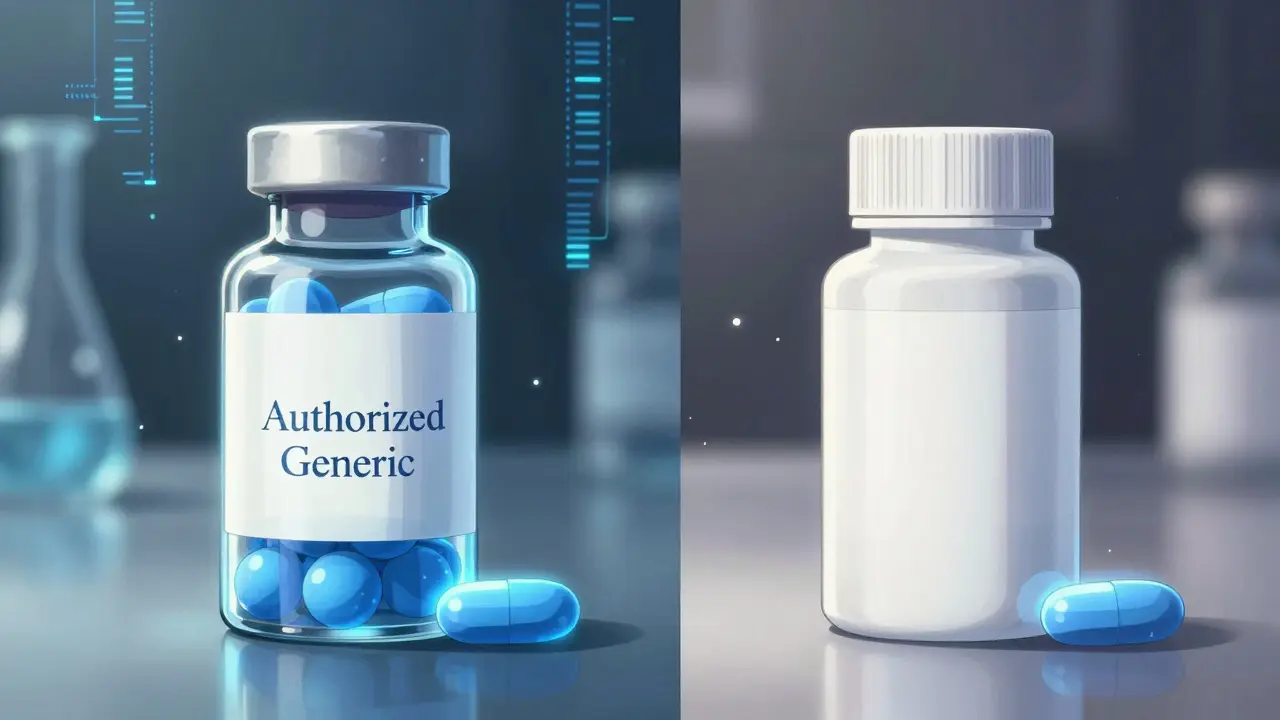
Have you ever looked at your prescription bill and wondered why one 'generic' costs significantly less than another? Or perhaps your pharmacist handed you a pill that looks completely different from the brand-name version, raising questions about whether it will work the same way. The answer often lies in a subtle but critical distinction within the pharmaceutical market: the difference between authorized generics and traditional generics.
While both types of drugs aim to lower costs for patients and insurers, they are not created equal. One is essentially the brand-name drug with a price tag change, while the other is a chemically similar alternative manufactured by a different company. Understanding this difference matters because it affects everything from insurance coverage to potential side effects. Let’s break down exactly what these terms mean, how they differ, and why you should care when filling your next prescription.
What Is an Authorized Generic?
An authorized generic is a unique hybrid in the world of pharmacy. It is produced by the same company that makes the original brand-name drug. The only difference? The label doesn’t carry the famous brand name. Instead, it might be sold under the chemical name or a simple identifier.
Authorized Generic is an approved brand-name drug marketed without the brand name on its label, containing identical active and inactive ingredients as the branded product. It operates under the original New Drug Application (NDA), meaning it does not require separate FDA approval as a new entity.
Think of it this way: if Brand X manufactures a popular cholesterol medication, they can also sell that exact same pill as an 'authorized generic.' The manufacturing process, the factory, the quality control standards, and even the inactive ingredients (like fillers and binders) remain unchanged. The FDA considers this product therapeutically equivalent to the brand because it *is* the brand, just re-labeled.
This pathway was formalized under the Hatch-Waxman Act of 1984, though it gained strategic prominence around 2007-2008. Companies use authorized generics to capture price-sensitive customers who want the reliability of the brand but cannot afford the full price. Because the manufacturer already holds the New Drug Application (NDA), they simply notify the FDA of their intent to market the authorized version. There is no need for a new safety trial or a lengthy review process.
What Is a Traditional Generic?
Traditional generics, often called 'typical generics,' are the most common form of off-patent medication. These are produced by third-party manufacturers who did not create the original drug. To get their product to market, they must prove to the Food and Drug Administration (FDA) that their version is 'bioequivalent' to the brand-name drug.
Bioequivalence means the generic drug reaches the same part of the body, at the same speed, and in the same amount as the brand-name reference drug. However, unlike authorized generics, traditional generics may have different inactive ingredients. While the active ingredient-the part that treats your condition-must be identical in strength and dosage form, the filler, color, shape, and binding agents can vary.
These products enter the market through the Abbreviated New Drug Application (ANDA) process. This pathway is 'abbreviated' because the manufacturer does not need to repeat clinical trials to prove safety and efficacy; they rely on the FDA’s previous determination that the reference drug is safe. This makes traditional generics generally less costly to produce and approve, which translates to lower prices for consumers. Typically, traditional generics enter the market after the brand-name patent expires, although some challenge patents early to gain exclusivity periods.

Key Differences: Composition and Regulation
The core difference between authorized and traditional generics comes down to composition certainty and regulatory pathways. Here is how they stack up against each other:
| Feature | Authorized Generic | Traditional Generic |
|---|---|---|
| Manufacturer | Original brand-name company | Third-party generic manufacturer |
| Active Ingredients | Identical to brand | Identical to brand |
| Inactive Ingredients | Identical to brand | May differ from brand |
| FDA Approval Pathway | New Drug Application (NDA) | Abbreviated New Drug Application (ANDA) |
| Listed in Orange Book? | No | Yes |
| Market Entry Timing | Any time (even before patent expiry) | Usually after patent expiry or patent challenge |
| Therapeutic Equivalence | Same as brand (identical) | Bioequivalent (clinically similar) |
The absence of authorized generics from the FDA’s Orange Book-a database listing approved drug products with therapeutic equivalence evaluations-is a crucial detail for pharmacists and prescribers. Since authorized generics are not listed there, verifying their status requires checking specific FDA lists or contacting the manufacturer directly. Traditional generics, conversely, are fully documented in the Orange Book, making substitution tracking straightforward.
Why Do Manufacturers Launch Authorized Generics?
You might wonder why a brand-name company would undercut itself by selling a cheaper version of their own drug. The strategy is actually quite sophisticated. By launching an authorized generic, the brand manufacturer can segment the marketplace.
Research published in Health Affairs indicates that brand manufacturers often wait until the first traditional generic is approved before launching their authorized generic. This allows them to compete directly with the new traditional generic entrants rather than cannibalizing their own high-margin brand sales immediately. It creates a middle tier: more expensive than the traditional generic but cheaper than the brand, appealing to patients who are wary of switching to a completely different manufacturer’s product.
Additionally, authorized generics allow companies to maintain control over quality and supply chain integrity. For complex drug formulations, such as certain respiratory inhalers or narrow therapeutic index drugs, minor changes in inactive ingredients can affect performance. By offering an authorized generic, the brand ensures that cost-conscious patients still receive the exact formulation they were prescribed, reducing the risk of adverse reactions associated with switching manufacturers.
Impact on Patients and Prescribers
For patients, the implications are largely financial and psychological. An authorized generic offers the peace of mind of knowing the pill is physically identical to the brand-name version, which can alleviate anxiety about efficacy. Some patients report sensitivity to inactive ingredients in traditional generics, experiencing mild side effects or perceived differences in effectiveness. In these cases, an authorized generic serves as a perfect bridge.
However, confusion is common. Many patients do not realize their 'generic' is actually an authorized generic. Pharmacists note that identification can be tricky since the packaging lacks the brand logo. Insurance coverage also varies. Some health plans cover authorized generics instead of the brand name medicine, but formulary placement differs significantly by payer. You might find that your insurer prefers a traditional generic due to lower wholesale costs, forcing you to pay a higher copay for the authorized version unless your doctor specifies 'Dispense As Written' (DAW).
Prescribers face similar challenges. Dr. Aaron Kesselheim, Professor of Medicine at Harvard Medical School, has highlighted that authorized generics provide greater price transparency while maintaining clinical consistency. Yet, the lack of visibility in standard references like the Orange Book complicates therapeutic interchange policies. Doctors must be aware that not all generics are created equal if patient outcomes depend on formulation stability.
Market Trends and Future Outlook
The U.S. generic drug market, valued at approximately $120 billion in 2022, sees authorized generics as a small but growing segment. Between 2010 and 2020, 217 unique authorized generic products were launched in the United States. Industry analysts predict increased use of authorized generics as brand manufacturers respond to aggressive competition from traditional generics.
This trend is particularly noticeable in oral solid drug products, where launches have been far higher than the overall proportion of those products in the market. Specialty pharmacies report higher usage of authorized generics for respiratory medications, where formulation consistency is critical. Conversely, traditional generics dominate areas like cardiovascular medications, where bioequivalence is easier to achieve and patients are less sensitive to inactive ingredients.
Recent FDA guidance updates in 2022 clarified reporting requirements, requiring NDA holders to notify the agency if they decide to market an authorized generic. This increased transparency helps regulators monitor market dynamics and ensure fair competition. As patent cliffs continue to hit major pharmaceutical blocks, expect to see more strategic deployments of authorized generics as a defense mechanism for brand owners.
Is an authorized generic safer than a traditional generic?
Both authorized and traditional generics are considered safe and effective by the FDA. However, authorized generics contain identical active and inactive ingredients to the brand-name drug, eliminating any variability in formulation. Traditional generics must demonstrate bioequivalence but may have different inactive ingredients, which rarely cause issues but can affect patients with specific sensitivities.
Can my pharmacist substitute an authorized generic for a brand-name drug?
In many states, pharmacists can substitute generic forms of prescriptions. However, because authorized generics are not listed in the FDA Orange Book, substitution policies vary. If you prefer the brand-name formulation, ask your doctor to write 'Dispense As Written' (DAW) on the prescription to prevent automatic substitution.
How do I know if my generic is an authorized generic?
It can be difficult to tell by looking at the pill alone. Check the manufacturer's name on the bottle; if it matches the brand-name manufacturer, it is likely an authorized generic. You can also consult the FDA's quarterly List of Authorized Generic Drugs or ask your pharmacist directly.
Do insurance plans cover authorized generics?
Coverage varies by plan. Some insurers treat authorized generics similarly to brand-name drugs, while others may require you to try a traditional generic first. Always check your specific formulary or contact your insurance provider to understand copay differences.
When do authorized generics enter the market?
Authorized generics can enter the market at any time, even before the brand-name patent expires. This allows brand manufacturers to offer lower-priced options early, competing with potential traditional generic challengers or capturing price-sensitive segments before patent expiration.