

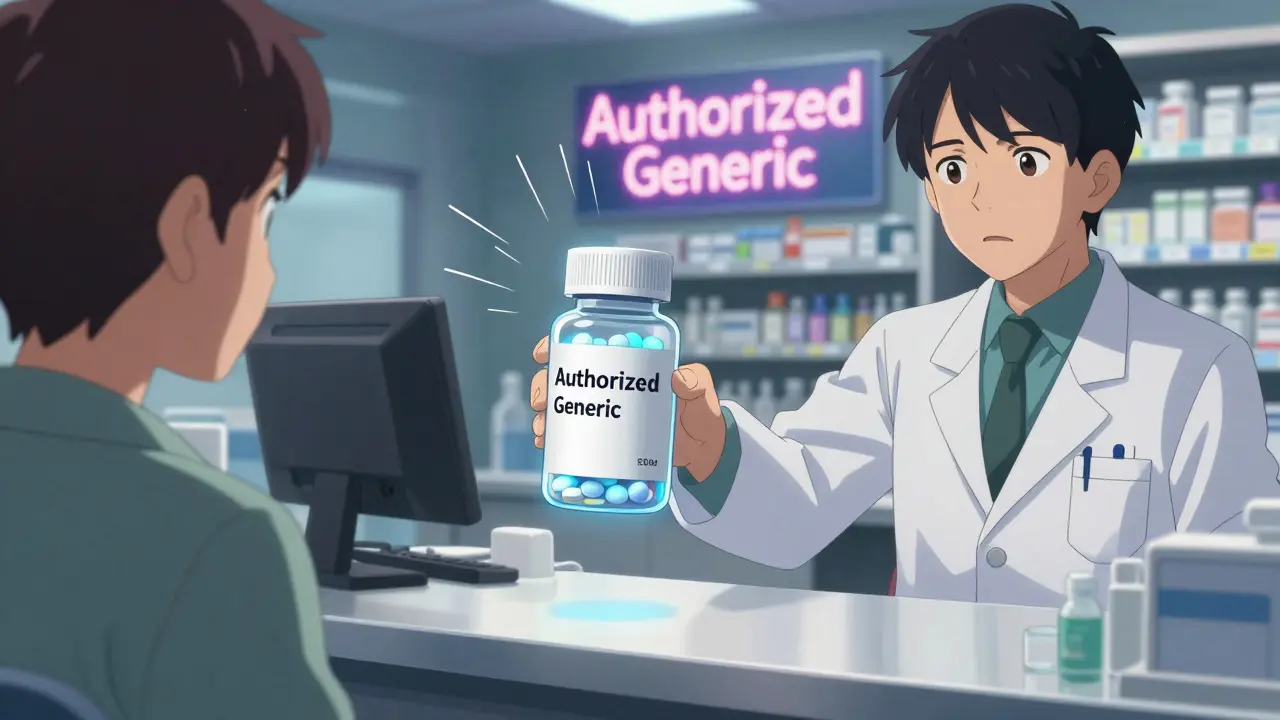
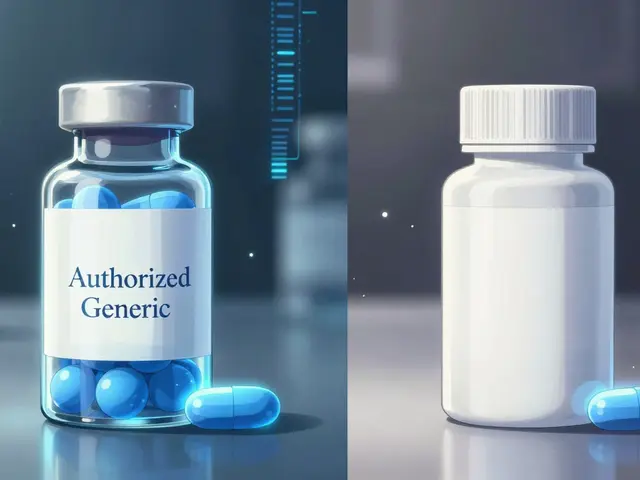
When a brand-name drug’s patent runs out, the market doesn’t just flip open to generic competitors-it gets messy. That’s where authorized generics come in. These aren’t your typical generics. They’re the exact same pill, capsule, or injection made by the original brand company, but sold under a different label with no brand name on it. No reformulation. No changes to the active ingredient. Not even a tweak to the fillers or dyes. It’s the same factory, same batch, same quality control-just a different box.
Why Authorized Generics Exist
Brand drug companies don’t wait for generic competitors to steal their market. They get there first. When a patent is about to expire, many manufacturers launch an authorized generic before the first generic company even files its application. Why? To keep control of the price and the customer. The Hatch-Waxman Act gives the first generic company 180 days of exclusive rights to sell the generic version. That’s a big window. If the brand company doesn’t act, that first generic can charge high prices and corner the market. But if the brand company launches its own authorized generic during that same 180-day window, it splits the market. Suddenly, there are two low-cost versions: the first generic and the brand’s own version. Prices drop faster. Patients win. The brand company still makes money. It’s a strategic move, not a charity.How Authorized Generics Are Different
Traditional generics only need to prove they’re bioequivalent to the brand drug-meaning they deliver the same amount of active ingredient into the bloodstream. They can change the shape, color, or inactive ingredients. That’s fine for most drugs. But for drugs with a narrow therapeutic index-like warfarin, levothyroxine, or lithium-even tiny differences in fillers can cause problems. That’s where authorized generics shine. Because they’re made under the original New Drug Application (NDA), they’re identical in every way. No guessing. No risk. That’s why pharmacies and doctors often prefer them for critical medications. Here’s the catch: authorized generics don’t show up in the FDA’s Orange Book. That’s the official list of approved drugs and their therapeutic equivalents. Traditional generics are listed there. Authorized generics? Not a trace. Why? Because they’re not new drugs. They’re just the brand drug with a different label. The FDA requires the brand company to notify them before selling an authorized generic, but no new approval is needed. That’s why pharmacists have to learn to spot them-through packaging, system alerts, or manufacturer codes.Real Examples You Might Be Taking
You might already be on an authorized generic without knowing it. Here are some common ones:- Colcrys (brand) → Colchicine (authorized generic by Prasco)
- Concerta (brand) → Methylphenidate ER (authorized generic by Watson/Actavis)
- Celebrex (brand) → Celecoxib (authorized generic by Greenstone, Pfizer’s generic arm)
- Unithroid (brand) → Levothyroxine (authorized generic by Jerome Stevens)
- Singulair (brand) → Montelukast (authorized generic by Teva)

Why Patients Get Confused
Here’s the biggest problem: patients don’t know what they’re getting. A 2023 survey by Pharmacy Times found that 68% of pharmacists say patients are confused about authorized generics. One patient on Drugs.com wrote: “I got this ‘generic’ but it looks identical to the brand I used before-is this actually generic?” The answer? Yes. It’s a generic. But it’s also the brand. That’s the paradox. Patients expect generics to look different. They expect cheaper pills with different shapes or colors. When they get the same pill, they think something’s wrong. They worry it’s fake. Or worse-they think they’re being charged more than they should. Pharmacists spend extra time explaining that this isn’t a trick. It’s the same medicine, just sold under a different name. And yes, it’s usually cheaper.What the Data Shows
Between 2010 and 2019, 854 authorized generics hit the U.S. market, according to a 2022 study in Health Affairs. The peak? 2014. That’s when the biggest wave of patents expired-drugs like Lipitor, Plavix, and Nexium. Companies didn’t wait. They launched authorized generics within six months of patent loss. In fact, 70% of authorized generics launched before or during the 180-day exclusivity window for the first generic. The Federal Trade Commission found that when authorized generics entered the market during that exclusivity period, prices dropped 15-20% more than in markets without them. That’s real savings. But here’s the flip side: critics argue that authorized generics delay broader generic competition. If the first generic company sees a second low-price version from the brand, they might hold off on expanding production. They might even sell out to the brand company. That’s why the Generic Pharmaceutical Association (GPhA) has pushed back. They call it market manipulation.How Pharmacies Handle Them
Pharmacists are on the front lines. They have to know which prescriptions are authorized generics, because insurance systems don’t always label them clearly. In 2021, the National Community Pharmacists Association found that 41% of independent pharmacies had billing issues with authorized generics. Some insurance plans treat them as brand-name drugs. Others treat them as generics. It’s inconsistent. To fix this, pharmacy software companies like Epic Systems added special flags in their 2021 update. Now, if a prescription is for an authorized generic, the system highlights it. That cut identification errors by 67%. But not every pharmacy uses Epic. Smaller clinics and rural pharmacies still struggle. Training is key. AmerisourceBergen’s 2022 training program found that 73% of pharmacy technicians needed 2-3 weeks of extra learning to confidently explain authorized generics to patients.
Who Benefits?
Patients benefit from lower prices. Insurers benefit from lower costs. Pharmacies benefit from fewer complaints about drug effectiveness. The brand companies benefit by keeping revenue flowing after patent loss. Even the FDA acknowledges that authorized generics help maintain access to stable, consistent medication. But the real winners? Patients on narrow therapeutic index drugs. If you take levothyroxine for hypothyroidism, switching to a traditional generic with different fillers can throw off your hormone levels. You might feel tired, gain weight, or get heart palpitations. Switch to the authorized generic? No change. Same pill. Same results.The Future of Authorized Generics
The FDA updated its list of authorized generics in October 2025, now including 1,247 products. That’s up from just 500 in 2015. Evaluate Pharma predicts that by 2027, 45% of major branded drugs will have authorized generics launched within a year of patent expiry. That’s up from 32% in 2022. But pressure is building. Congress introduced the “Promoting Competition in Pharmaceutical Markets Act” in 2023. If passed, it would ban brand companies from launching authorized generics during the first generic’s 180-day exclusivity period. That would change the game. It could mean higher prices for patients during that critical window. It could mean more market share for true generic manufacturers. For now, authorized generics are here to stay. They’re not a loophole. They’re a legal, FDA-approved strategy. And for many patients, they’re the safest, most reliable option when the brand name disappears.What You Should Do
If you’re on a brand-name drug that’s about to go generic, ask your pharmacist: “Is there an authorized generic?” Don’t assume the cheapest option is the best. If you take a drug where consistency matters-thyroid meds, seizure drugs, blood thinners-ask for the authorized generic. It’s not just cheaper. It’s the same as your brand. No surprises. No risks. If you’re switching from brand to generic and feel different, don’t assume it’s your body. Ask if you got an authorized generic. If you did, and you still feel off, talk to your doctor. It might be something else. But if you didn’t get the authorized version, ask for it. You deserve the same medicine you were on-just at a lower price.Are authorized generics the same as brand-name drugs?
Yes. Authorized generics are manufactured by the same company that makes the brand-name drug, using the exact same ingredients, formulation, and production process. The only difference is the label-no brand name, no marketing. They are not bioequivalent-they are identical.
Why aren’t authorized generics listed in the FDA’s Orange Book?
Authorized generics are marketed under the brand’s original New Drug Application (NDA), not a separate Abbreviated New Drug Application (ANDA). Since they’re not new drugs, they don’t need FDA approval as a new product. The Orange Book only lists drugs approved under ANDAs, so authorized generics are excluded-even though they’re therapeutically equivalent.
Do authorized generics cost less than traditional generics?
Usually, yes. Because they enter the market during the first generic’s 180-day exclusivity period, they create immediate competition. This drives prices down faster than if only one generic were available. In many cases, authorized generics are priced lower than traditional generics, especially in the first few months after patent expiration.
Can authorized generics cause side effects?
No more than the brand-name drug. Since they contain the same active and inactive ingredients, side effects should be identical. In fact, for patients who had bad reactions to traditional generics due to different fillers, authorized generics often resolve those issues. If you feel worse after switching, it’s likely not the authorized generic-it’s something else.
How do I know if I’m getting an authorized generic?
Check the label. Authorized generics won’t have the brand name. They’ll list the generic name and the manufacturer’s name (like Greenstone, Prasco, or Watson). Ask your pharmacist directly: “Is this an authorized generic?” Many pharmacies now flag them in their systems. If you’re unsure, look up the drug name and manufacturer online-authorized generics are often listed on the brand company’s website under “generic versions.”



Comments (9)
Cassie Widders
January 12, 2026 AT 13:59 PMSo basically the brand company is just slapping a new label on the same pill and calling it a generic? Wild. I always thought generics were different companies making knockoffs. This makes sense though - no one wants their thyroid meds to suddenly make them feel like a zombie.
Rinky Tandon
January 14, 2026 AT 01:11 AMAuthorized generics are a corporate scam wrapped in a white coat. The pharma giants don’t want real competition - they want to control the narrative, the pricing, the supply chain. They’re gaming the Hatch-Waxman Act like it’s a video game and the 180-day window is their cheat code. Patients get fooled into thinking they’re saving money when really the same company is just rebranding their monopoly. This isn’t innovation - it’s exploitation dressed as transparency.
Lauren Warner
January 15, 2026 AT 03:41 AMLet’s be real - the FTC data is cherry-picked. Yes, prices drop 15-20% faster with authorized generics, but that’s because the brand company is artificially suppressing the first generic’s ability to scale. The GPhA isn’t just being dramatic - they’re pointing out a structural market distortion that’s been ignored for over a decade. This isn’t patient-centric. It’s shareholder-centric. And the FDA’s silence on listing them in the Orange Book? That’s regulatory capture in action.
beth cordell
January 15, 2026 AT 12:48 PMOMG this is so important 😭 I just got my levothyroxine switched and I thought I was losing my mind - same pill, different bottle, panic mode. Now I know it’s an authorized generic and I feel so much better. Pharmacist saved me. 🙏❤️
Cecelia Alta
January 17, 2026 AT 00:18 AMOkay but let’s not pretend this is some noble act by Big Pharma. They’re not doing this out of the goodness of their hearts. They’re doing it because they know if they don’t launch their own generic, some startup in India or China is gonna undercut them by 80% and they’ll be left holding the bag with a $200/month drug that nobody wants anymore. So they preemptively drop a version of their own at half price, split the market, and pretend they’re helping patients while quietly keeping 70% of the revenue. It’s capitalism at its most cynical. And don’t even get me started on how insurance companies treat these as brand-name drugs for billing purposes - that’s just adding insult to injury. Patients are stuck in this bureaucratic maze where the only thing consistent is the confusion.
Konika Choudhury
January 18, 2026 AT 03:58 AMWhy are Americans so obsessed with brand names when the medicine is literally the same? In India we take generics all the time and never question it. This whole authorized generic drama is just Western overthinking. If the pill works, why care who made it? You people treat medicine like a luxury brand
Craig Wright
January 19, 2026 AT 07:17 AMWhile the economic rationale for authorized generics is sound, the ethical implications demand scrutiny. The deliberate exclusion from the Orange Book constitutes a form of regulatory opacity that undermines pharmacist autonomy and patient autonomy. The FDA’s position, while technically defensible, creates a dangerous informational asymmetry. It is not sufficient to rely on pharmacy software flags or manufacturer codes - transparency must be codified, not circumvented.
Ben Kono
January 21, 2026 AT 00:10 AMMy pharmacist just told me my Concerta is an authorized generic and I didn’t even notice. Same pill. Same effect. Half the price. I’m never going back to the brand. Why pay more for a logo?
Lelia Battle
January 21, 2026 AT 12:10 PMThere’s a quiet dignity in this system - the brand company, facing obsolescence, chooses not to fight the tide but to soften its fall. They preserve continuity for patients who rely on absolute consistency, especially those with conditions where milligrams matter. It’s not a loophole; it’s a bridge. And while corporate motives are never pure, sometimes the most humane outcome arises from the least ideal starting point. We shouldn’t condemn the mechanism because the actors are imperfect. We should ask: does it work for those who need it most? And the answer, overwhelmingly, is yes.