

When it comes to senior medication dosing, the way drugs are prescribed and adjusted for older adults to reduce harm and improve outcomes. Also known as geriatric pharmacotherapy, it’s not just about giving smaller pills—it’s about asking whether the pill is still needed at all. As people age, their bodies change. Kidneys slow down. The liver processes drugs differently. Muscle mass drops, fat increases. These shifts mean a dose that was safe at 50 can become dangerous at 75. Many seniors take five, ten, even fifteen medications—a situation called polypharmacy in elderly, the use of multiple medications by older adults, often leading to harmful interactions or side effects. This isn’t always because doctors are careless—it’s because each drug was prescribed for a separate condition, and no one stepped back to see the whole picture.
That’s where deprescribing seniors, the planned process of reducing or stopping medications that are no longer beneficial or may be causing harm. It’s not about quitting drugs cold turkey—it’s about smart, guided removal, one at a time, with monitoring. Think of it like cleaning out a closet: you keep what’s useful, toss what’s expired, and donate what you don’t need. The Beers Criteria, a widely used list of potentially inappropriate medications for older adults, updated regularly by experts. It’s not a rulebook—it’s a warning sign. Drugs like benzodiazepines for sleep, certain anticholinergics for overactive bladder, or long-term NSAIDs for arthritis? These show up often on the list because they raise fall risk, confusion, or stomach bleeding in seniors. And yet, many keep taking them for years because no one ever asked if they still worked.
Medication reviews for older adults aren’t a one-time event. They need to happen every time a new drug is added, or when a health issue changes—like a new fall, memory slip, or stomach upset. A simple question—"Is this still helping?"—can prevent hospital visits. Lab monitoring calendars help track blood levels for drugs like warfarin or lithium. Liver function tests reveal if the body is struggling to process meds. And sometimes, the best fix isn’t another pill—it’s stopping one.
What you’ll find below are real, practical guides on how to spot when a medication is doing more harm than good. You’ll learn how to talk to your doctor about deprescribing, why some drugs need extra monitoring in seniors, and how tools like the Beers Criteria are used in real clinics. No fluff. No jargon. Just clear steps to help older adults take fewer pills—and live better.
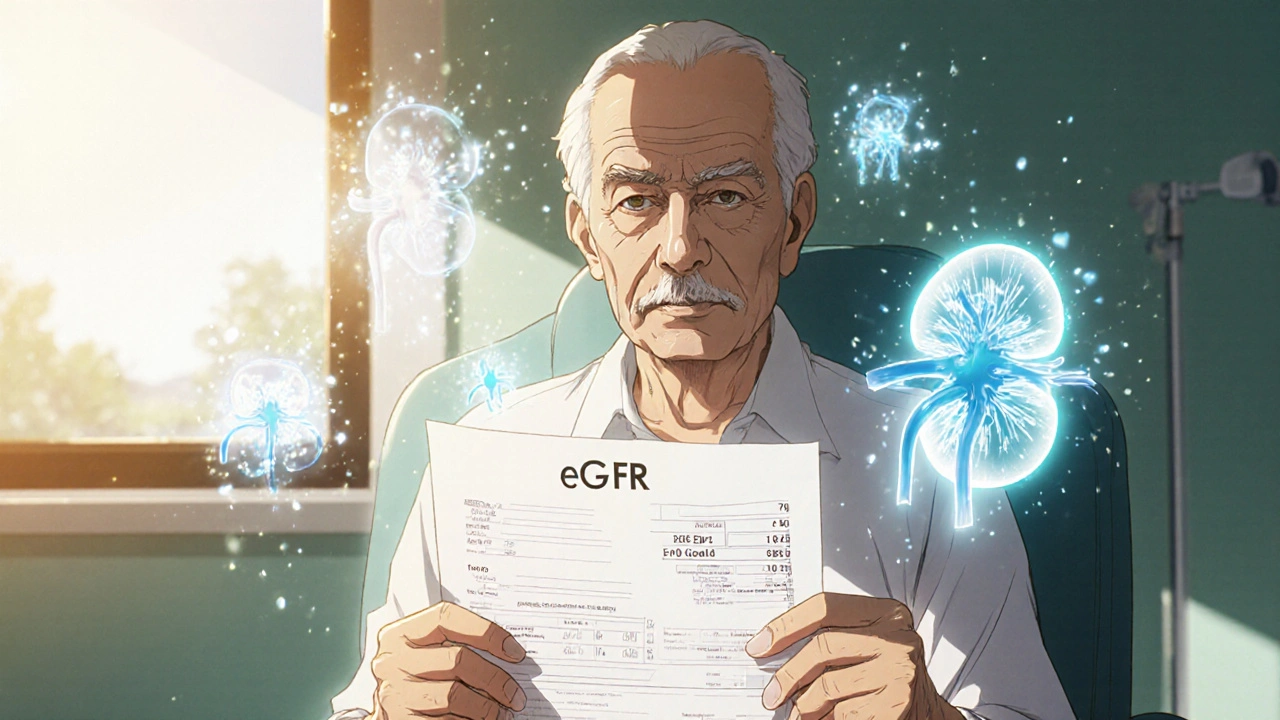
Learn how to accurately monitor kidney function in seniors to prevent dangerous medication overdoses. Discover which eGFR equations work best for older adults and what steps to take for safe dosing.