

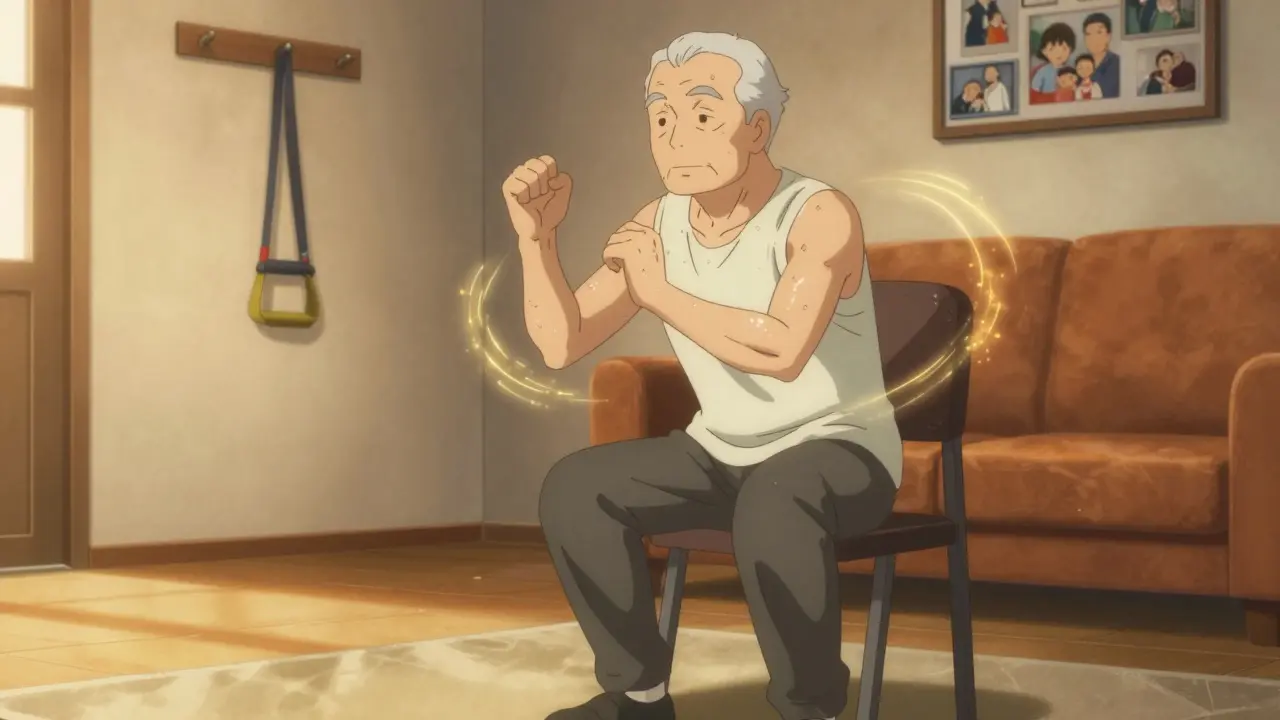
By the time you hit your 40s, your body is already losing muscle-slowly, silently, and often without you noticing. This isn’t just about getting weaker. It’s about losing the ability to stand up from a chair, climb stairs, or carry groceries. This condition is called sarcopenia, and it affects nearly 1 in 10 adults over 60, rising to half of those over 80. It’s not normal aging. It’s a medical condition with real consequences: higher fall risk, loss of independence, and a $18.5 billion annual cost to the U.S. healthcare system.
What Exactly Is Sarcopenia?
Sarcopenia isn’t just muscle loss. It’s the combination of shrinking muscle mass, dropping strength, and declining physical function-all happening because of aging. First named in 1989 by Dr. Irwin Rosenberg, it wasn’t officially defined as a disease until 2010 by the European Working Group on Sarcopenia in Older People (EWGSOP). Their latest guidelines (EWGSOP3, 2023) say you have sarcopenia if you meet two criteria: low muscle mass and low strength or slow walking speed.
Here’s what the numbers look like:
- Handgrip strength below 27kg for men or 16kg for women
- Walking speed slower than 0.8 meters per second
- Appendicular lean mass below 7.0kg/m² for men or 5.5kg/m² for women (measured by DXA scan)
Unlike general muscle loss from being inactive (which can happen at any age), sarcopenia starts in your 30s and 40s and accelerates after 65. You lose about 1-2% of your muscle mass every year after 60. That adds up to 30-40% less muscle by age 80. And it’s not just size-it’s quality. Fast-twitch muscle fibers, the ones you use for quick movements like catching yourself from a fall, shrink the most.
Why Does This Happen?
Your muscles aren’t just wasting away-they’re being broken down faster than they can rebuild. Several biological changes drive this:
- Motor neurons (nerves that tell muscles to move) die off at 3-5% per year after 60
- Satellite cells, your muscle’s repair crew, drop by 50-60% by age 70
- Your body becomes less responsive to protein-you need more to trigger muscle growth
- Chronic low-grade inflammation (higher IL-6 and TNF-α levels) blocks muscle repair
- Mitochondria, the energy factories in your cells, produce 15-20% less ATP as you age
These changes make it harder for your body to respond to exercise. But here’s the good news: your muscles still listen. They just need the right kind of signal.
Sarcopenia vs. Other Muscle Problems
Not all muscle loss is the same. It’s easy to confuse sarcopenia with other conditions:
- Muscular atrophy: Caused by not using muscles-like after a long hospital stay. You can regain it quickly with activity.
- Cachexia: A severe wasting syndrome tied to cancer, heart failure, or kidney disease. It involves major weight loss and metabolic chaos.
- Dynapenia: Just strength loss without muscle mass loss. You can be strong for your size but still weak.
- Sarcopenic obesity: Low muscle mass and high body fat. This group has the highest risk of disability.
Sarcopenia is unique because it requires both low mass and low function. You can’t have one without the other for a diagnosis.
Strength Training Is the Only Proven Fix
Medications, supplements, and diet alone don’t cut it. The only intervention with strong, consistent evidence is strength training. Dr. Jeremy Walston from Johns Hopkins says resistance exercise can increase muscle mass by 1-2kg and strength by 25-30% in just 12-16 weeks for older adults.
Studies show:
- Two weekly sessions improve walking speed by 0.1-0.2 meters per second
- Fall risk drops by 30-40%
- People who train regularly are 75% more likely to stay independent in daily tasks
One man in his late 60s on a fitness forum said his handgrip strength went from 18kg to 24kg after six months of training. He could finally open jars again. A 72-year-old woman in a health review said her fall risk score dropped from 42 to 28 after a 10-week SilverSneakers program.
How to Start Strength Training After 60
You don’t need a gym membership or heavy weights. You just need consistency and smart progression.
The American College of Sports Medicine recommends:
- Train 2-3 times per week, with at least 48 hours between sessions
- Do 1-3 sets of 8-12 repetitions per exercise
- Use 60-80% of your one-rep max (or what feels challenging but doable)
- Target all major muscle groups: legs, back, chest, shoulders, arms, core
Here’s a simple beginner plan:
- Weeks 1-4: Bodyweight exercises-chair squats, wall push-ups, seated leg lifts, standing calf raises. Do 10 reps, 2 sets, twice a week.
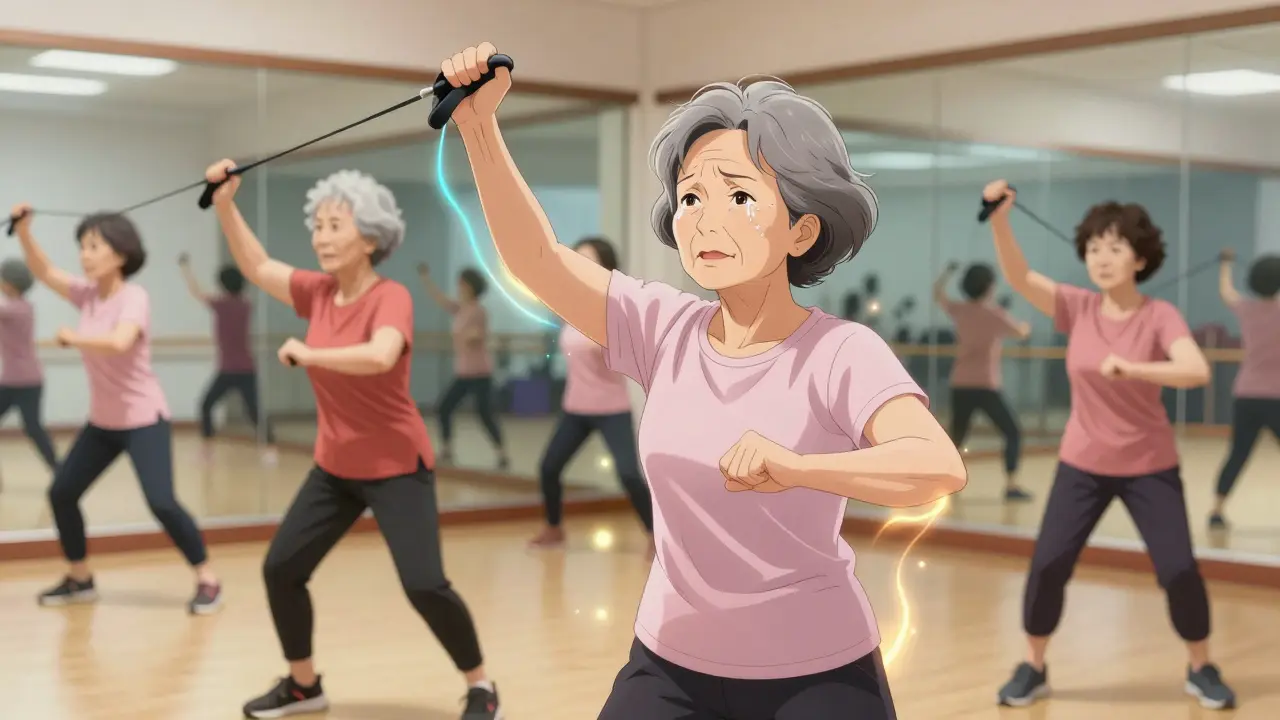
- Weeks 5-8: Add resistance bands (TheraBand light to medium). Use them for rows, bicep curls, and leg presses. Keep reps at 10-15.
- Weeks 9-16: Move to weight machines at the gym or home resistance equipment. Increase weight by 2.5-5% every week.
Always exhale when you push or lift. Don’t hold your breath. And if you feel joint pain, switch to seated versions or reduce your range of motion by 20-30 degrees. Machines are safer than free weights for beginners.
What Gets in the Way?
Many older adults want to train-but they don’t know how, or they’re afraid.
- 35-40% say joint pain stops them
- 25-30% say the effort feels too high
- 34% can’t find programs made for their age group
- 27% say it’s too expensive-$50-$75/month for senior-specific training
Here’s how to beat those barriers:
- Pain? Try seated exercises, water aerobics, or machines that limit joint stress.
- Too hard? Start with lighter weights and focus on form, not load. Progress slowly.
- No program? Ask your local gym if they offer SilverSneakers or similar senior classes. Medicare Advantage plans cover it for 4.2 million people.
- Too costly? YouTube has free senior strength programs. The CDC and National Institute on Aging offer printable guides.
People who train in groups stick with it 35-40% longer. Find a friend. Join a class. Make it social.
Protein and Recovery
Training alone isn’t enough. Your muscles need fuel. After age 65, your body needs more protein to trigger growth. Aim for 20-30 grams of high-quality protein within 45 minutes after training.
Good sources:
- 2 eggs + 1 cup Greek yogurt
- 1 scoop whey protein shake
- 3 oz chicken or fish + 1 cup lentils
- 1 cup cottage cheese
Spread protein evenly across meals-25-30g per meal-not just dinner. That’s more effective than loading up at night.
What’s Next for Sarcopenia Treatment?
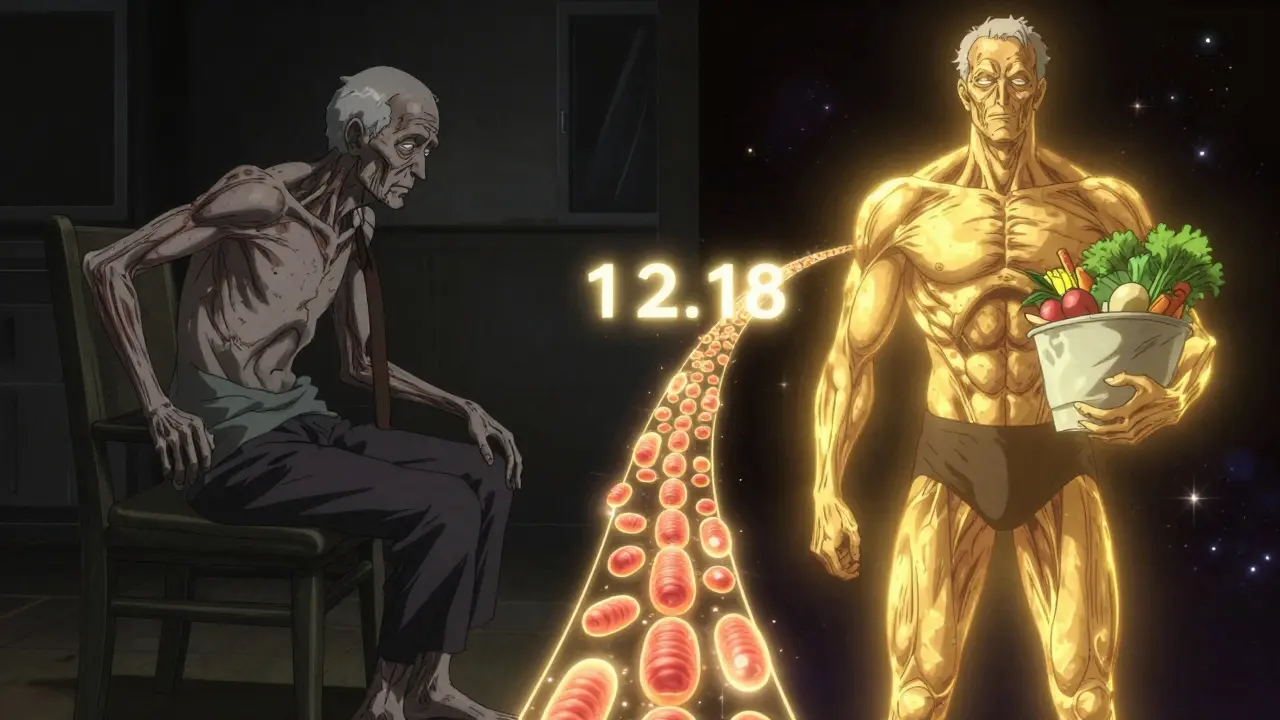
Researchers are testing new drugs like RT001 (a mitochondrial booster) and looking at blood markers like myostatin and GDF-15 to catch sarcopenia early. AI-powered apps like Exer AI give real-time feedback on form and intensity, improving adherence by 25%.
But the biggest challenge isn’t science-it’s access. By 2030, 72 million Americans will be over 65. There are only 12,500 certified geriatric physical therapists in the U.S. That’s why telehealth programs are growing fast. One 2022 JAMA study found virtual training was 85% as effective as in-person.
The message is clear: if you’re over 60 and not strength training, you’re at risk. But it’s never too late to start. Even small gains in muscle and strength mean more independence, fewer falls, and better quality of life.
Final Thought
You don’t need to become a bodybuilder. You just need to be strong enough to live your life without help. That’s the goal. And it’s achievable-with consistent, smart training, proper nutrition, and the willingness to begin.
Is sarcopenia reversible?
Yes, sarcopenia can be reversed-even in your 80s. Strength training has been shown to rebuild muscle mass and improve strength in older adults. Studies show gains of 1-2kg of muscle and 25-30% strength improvement in just 12-16 weeks with consistent training. The key is progressive overload and proper nutrition.
Can I build muscle after 70?
Absolutely. Your muscles don’t lose their ability to grow with age-they just need more stimulus and recovery. Research shows people over 70 who train with resistance can gain muscle mass at nearly the same rate as younger adults, as long as they train consistently and consume enough protein. Age doesn’t stop growth-it just changes the rules.
What’s the best exercise for sarcopenia?
Compound movements that work multiple muscle groups are most effective. Squats (chair or bodyweight), lunges, step-ups, push-ups (wall or knee), rows with bands or machines, and calf raises are top choices. Focus on controlled movement and progressive overload. Avoid isolation exercises like bicep curls alone-they don’t build functional strength as well.
How often should I strength train?
Two to three times per week is ideal, with at least 48 hours between sessions for muscle recovery. More than three times doesn’t add much benefit and can increase injury risk. Even one session per week helps, but two is the minimum for noticeable results. Consistency matters more than intensity.
Do I need supplements to fight sarcopenia?
No. Supplements like creatine or HMB may help slightly, but they’re not necessary. The foundation is strength training and getting enough protein from food-20-30g per meal, especially after workouts. Most older adults get enough vitamins and minerals from a balanced diet. Focus on real food first, then consider supplements only if you have a diagnosed deficiency.
Can I do strength training with arthritis?
Yes-and it’s often recommended. Strength training reduces joint pain by strengthening the muscles around the joint, which takes pressure off. Use machines instead of free weights, avoid full range of motion if it hurts, and start with light resistance. Water-based exercises and seated workouts are excellent options. Always consult a physical therapist if you’re unsure about specific movements.
What if I’ve never exercised before?
Start with bodyweight exercises at home: sit-to-stand from a chair, wall push-ups, standing on one foot (with support), and heel raises. Do 5-10 minutes, twice a week. Focus on moving safely and feeling the muscle work. After two weeks, add resistance bands. Progress slowly. The goal isn’t to be strong right away-it’s to build the habit. Every small effort counts.
How long until I see results?
Most people notice improved strength and easier movement within 4-6 weeks. You’ll feel stronger getting out of a chair or climbing stairs. Visible muscle changes take longer-usually 8-12 weeks. But functional gains come first. That’s what matters most: being able to live independently, safely, and without pain.
Next Steps
If you’re over 60 and not strength training yet, start today. Don’t wait for a diagnosis. Don’t wait for pain. Pick one exercise-like chair squats-and do it twice this week. Add a protein-rich snack after. That’s it. You don’t need permission, equipment, or a gym. You just need to begin.
For those already training: keep going. Progress might be slow, but every rep counts. Your future self will thank you.




Comments (12)
josue robert figueroa salazar
December 27, 2025 AT 15:40 PMThis post is just a fancy ad for gyms and protein shakes. My grandpa did squats with a cane and lived to 92. He didn't need a DXA scan.
Jody Kennedy
December 29, 2025 AT 09:52 AMI started with wall push-ups at 68. Six months later, I carried my own luggage up three flights. No gym. No supplements. Just me and a wall. You can too. Seriously. Just start.
Joanne Smith
December 30, 2025 AT 05:00 AMI used to roll my eyes at strength training. Then I tried lifting my grandkid. Now I do kettlebells. Turns out, muscles don't care how old you are-they just care if you show up. Also, I still misspell 'kettlebell'.
jesse chen
December 30, 2025 AT 08:17 AMI really appreciate how this breaks down the science without jargon... it's so easy to feel hopeless when you're told you're 'just aging'. But the part about satellite cells dropping by 50-60%? That hit me hard. And then the part about how training still works? That's the lifeline I needed.
carissa projo
December 31, 2025 AT 21:26 PMWe treat muscle loss like a tragedy, but what if it's just nature's way of saying: slow down, savor, rest? Still... I watched my mother lose her independence because she couldn't lift her own tea cup. So I started lifting. Not to defy age. But to hold onto the quiet joy of pouring my own coffee. There's poetry in that, isn't there?
christian ebongue
January 2, 2026 AT 19:07 PMcreatine is literally the only thing that matters. protein? overrated. sleep? yeah sure. but creatine? that's the magic juice. you're welcome.
Ryan Cheng
January 3, 2026 AT 15:42 PMI've trained seniors for 15 years. The biggest mistake? People think they need to go hard. Nah. They need to go consistent. One rep. Every day. That's how you outlast sarcopenia. Not by becoming a beast. But by becoming a habit.
Bryan Woods
January 4, 2026 AT 15:16 PMThe data presented here is methodologically sound and aligns with current geriatric exercise literature. I would only suggest supplementing with longitudinal cohort studies to reinforce causality over correlation.
Alex Ragen
January 5, 2026 AT 14:40 PMAh yes, the modern myth of 'strength training as salvation'-as if lifting weights can undo the existential decay of a post-industrial society that has forgotten the dignity of rest. The real tragedy isn't sarcopenia-it's that we've turned the human body into a machine to be optimized.
Prasanthi Kontemukkala
January 6, 2026 AT 02:53 AMIn India, many elders carry water pots on their heads or walk miles daily-no machines, no protein shakes. Strength comes from living, not from reps. But I still believe in gentle resistance. It’s not about being strong for others-it’s about being strong enough to keep your own rhythm.
Lori Anne Franklin
January 7, 2026 AT 16:38 PMi just started doing chair squats and now i can reach the top shelf without crying. also i ate a whole chicken breast after. i think i'm becoming a legend. or maybe just less of a mess. either way, i'm proud.
david jackson
January 9, 2026 AT 08:30 AMDo you realize what this means? That every time you lift a dumbbell at 70, you're not just building muscle-you're defying entropy itself! You're saying to the universe: 'I know you're trying to turn me to dust, but I have a plan, and it involves resistance bands and a stubborn refusal to die quietly!' I cried when I first did a proper deadlift at 73. Not from pain. From awe. My body remembered how to fight. And so did I.