

Statin Myopathy Risk Calculator
Personal Risk Assessment
Personalized Risk Assessment
Recommended Actions
Statins save lives. Millions of people take them every day to lower cholesterol and prevent heart attacks and strokes. But for some, the cost is muscle pain - sometimes severe enough to stop the medication altogether. The real danger isn’t just the statin itself. It’s what happens when it meets other drugs. That’s where the risk of myopathy spikes - a condition that can turn into rhabdomyolysis, a rare but life-threatening breakdown of muscle tissue.
Why Some Statins Are Riskier Than Others
Not all statins are created equal. Some are more likely to cause muscle problems, and it’s not just about the dose. The chemical structure matters. Lipophilic statins - like simvastatin, lovastatin, and atorvastatin - slip easily into muscle cells. Hydrophilic ones - pravastatin, rosuvastatin, and fluvastatin - don’t. That’s why pravastatin has one of the lowest rates of muscle symptoms: just 0.6% to 1.4% of users. Rosuvastatin, on the other hand, reports up to 12.7% muscle-related complaints, even though it’s hydrophilic. Why? Because it’s often prescribed at higher doses, and high dose = higher risk.Simvastatin 80mg is the worst offender. Studies show it carries a 0.44% annual risk of myopathy - nearly 20 times higher than low-dose pravastatin. That’s why the European Atherosclerosis Society and the FDA both warned against using simvastatin 80mg. It’s not worth the risk. Even if your cholesterol drops, the muscle damage might not be reversible.
Drugs That Make Statin Myopathy Worse
The biggest danger comes from drug interactions. Statins are broken down by liver enzymes - mainly CYP3A4 - and moved in and out of cells by transporters like OATP1B1. When another drug blocks these pathways, statin levels in your blood skyrocket.Clarithromycin and erythromycin - common antibiotics for sinus or lung infections - are major culprits. They can boost simvastatin levels by 10 times and atorvastatin by 4 times. That’s why the NHS recommends stopping simvastatin or lovastatin during any course of these antibiotics. Azithromycin? Safe. It doesn’t touch CYP3A4. So if you need an antibiotic and take a statin, ask for azithromycin instead.
Then there’s cyclosporine, used after organ transplants. It can increase statin levels by up to 13 times. Gemfibrozil - a fibrate for triglycerides - doubles statin levels. That’s why combining gemfibrozil with statins is a red flag. Fenofibrate? Much safer. If you need both a statin and a fibrate, go with fenofibrate.
Even common heart drugs like diltiazem and verapamil can interfere. The FDA now limits simvastatin to 20mg max if you’re taking either of these. That’s a direct result of too many hospitalizations from muscle damage.
Who’s Most at Risk?
It’s not just about the drugs. Your body matters too. Seven major risk factors make muscle damage more likely:- Age over 75
- Small frame or low body weight
- Chronic kidney disease
- Hypothyroidism (underactive thyroid)
- Heavy alcohol use
- Intense exercise - especially if you’re not used to it
- Taking multiple interacting drugs
If you’re a 78-year-old woman with kidney issues, taking simvastatin and diltiazem, and you’ve just started a new walking routine - you’re in the danger zone. Your doctor should know this before prescribing anything.

What to Do If You Have Muscle Pain
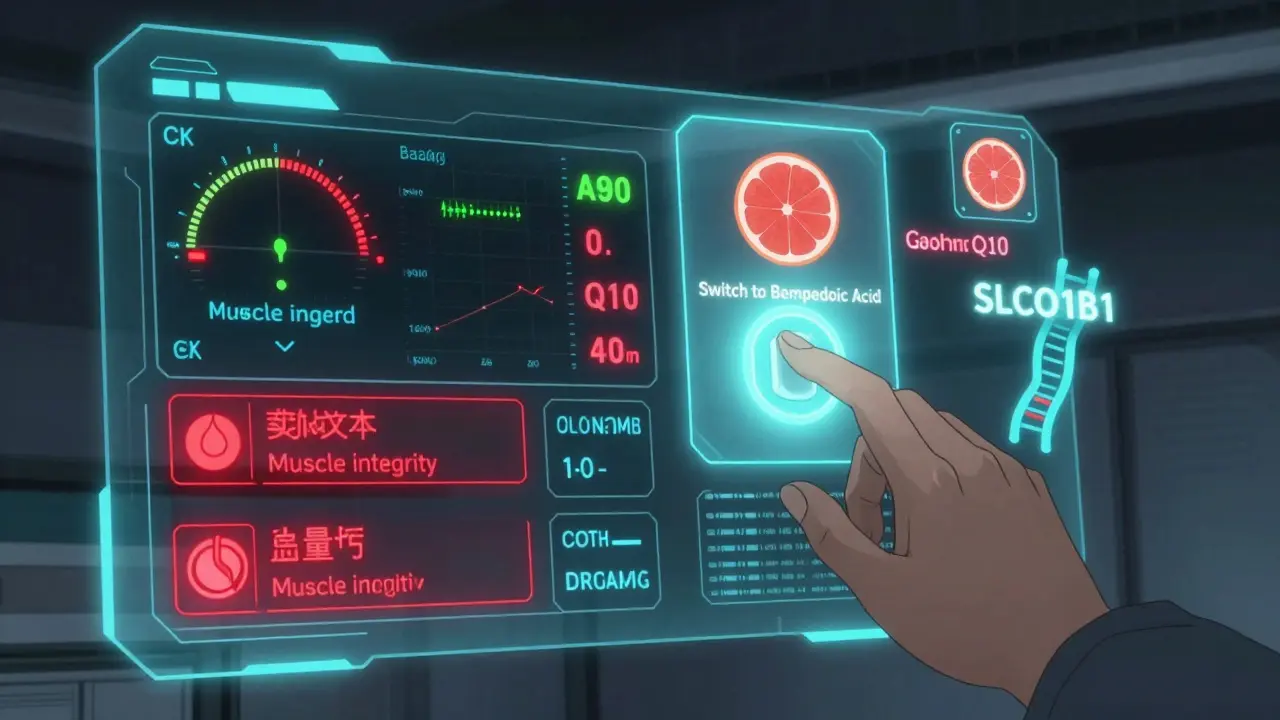
Muscle pain from statins doesn’t always feel like a cramp. It’s often a deep ache, stiffness, or weakness - especially in the shoulders, thighs, or lower back. It’s not just soreness after the gym. It lingers. It gets worse over time.Don’t ignore it. The first step? Get your creatine kinase (CK) levels checked. A CK level more than 10 times the upper limit of normal means myopathy. Even if it’s only 5 times higher and you have no symptoms, your doctor should pause the statin. That’s the standard from the American College of Cardiology and the American Heart Association.
But here’s the good news: 71% of people who quit statins because of muscle pain can go back on a different one. Switching from simvastatin to pravastatin or fluvastatin often fixes the problem. Lowering the dose helps too. Many patients do fine on rosuvastatin 10mg instead of 20mg.
Alternatives When Statins Don’t Work
If you’ve tried multiple statins and still get muscle pain, you’re not out of options. Bempedoic acid (Nexletol) is a newer drug that lowers LDL cholesterol without entering muscle cells. That means almost no myopathy risk. The catch? It costs over $4,000 a year. Generic atorvastatin? Around $6.60. But if your muscles can’t handle statins, the cost might be worth it.Another option: icosapent ethyl (Vascepa). It doesn’t lower LDL, but it reduces heart attacks and strokes in people already on statins. It’s not a replacement, but it can let you use a lower, safer statin dose.
Some doctors suggest coenzyme Q10 supplements (100-200mg daily). The evidence isn’t solid, but if your muscle pain is mild and you’re otherwise healthy, it’s harmless to try.
What Your Doctor Should Do
Before starting a statin, your doctor should:- Check your kidney function and thyroid levels
- Review every medication you take - including over-the-counter and herbal ones
- Choose the safest statin for your profile: pravastatin or fluvastatin if you’re high-risk
- Start low, especially if you’re over 70 or have other risk factors
- Order a baseline CK test
When you’re on a statin, they should:
- Ask about muscle pain at every visit - don’t wait for you to bring it up
- Check CK if you report pain, weakness, or dark urine (a sign of muscle breakdown)
- Stop statins during short antibiotic courses like clarithromycin
- Recheck CK every 3-6 months if you’re on long-term interacting drugs
The Bigger Picture
Statins are still the best tool we have for preventing heart disease. The benefits far outweigh the risks for most people. But that doesn’t mean we should treat them like harmless vitamins. They’re powerful drugs with narrow safety margins when mixed with other medications.For decades, doctors focused on cholesterol numbers. Now, we’re learning to look at the whole person: age, other meds, kidney health, even exercise habits. That’s how we prevent muscle damage before it starts.
And if you’ve been told your muscle pain is "just in your head" - that’s outdated thinking. Statin-associated muscle symptoms are real. They’re measurable. And they’re manageable - if you and your doctor work together.
Can I take ibuprofen with statins?
Yes, ibuprofen and other NSAIDs like naproxen don’t interact with statins in a way that increases myopathy risk. They’re generally safe to take together. But if you have kidney issues or take blood pressure meds, NSAIDs can strain your kidneys - which already raises your risk for muscle damage. Talk to your doctor before combining them long-term.
Does grapefruit juice affect all statins?
No. Grapefruit juice blocks the CYP3A4 enzyme, so it only affects statins metabolized by that pathway: simvastatin, lovastatin, and atorvastatin. Even then, a small glass occasionally is usually fine. But drinking a whole pitcher daily can spike statin levels dangerously. Pravastatin, rosuvastatin, and fluvastatin aren’t affected. If you love grapefruit, switch to one of those.
Is muscle pain from statins permanent?
In most cases, no. Muscle pain and weakness usually go away within weeks after stopping the statin. But if rhabdomyolysis occurs - and it’s rare - muscle damage can be severe and take months to heal. In very rare cases, it can lead to lasting weakness or kidney damage. That’s why early detection matters. Don’t wait until your urine turns dark brown.
Can genetic testing help avoid statin myopathy?
Yes, but it’s not routine yet. A gene called SLCO1B1 affects how your body handles statins. People with a certain variant have a 4.5 times higher risk of myopathy from simvastatin. The FDA added this info to simvastatin’s label in 2011. But most doctors don’t order the test because it’s expensive and not covered by insurance. It’s most useful if you’ve had muscle pain on multiple statins and need guidance on what to try next.
Should I stop my statin if I feel muscle pain?
Don’t stop on your own. Call your doctor. Muscle pain could be from statins - or from something else, like a virus or overtraining. Your doctor will check your CK levels and review your meds. If it’s a drug interaction, they might switch you to a safer statin or adjust your dose. Stopping without guidance can raise your heart attack risk.
Are there any supplements that help with statin muscle pain?
Coenzyme Q10 is the most studied. Some people report less pain, but large studies haven’t proven it works consistently. Magnesium and vitamin D deficiencies can also cause muscle cramps - so if you’re low, fixing those might help. But don’t assume supplements will fix statin side effects. The best fix is switching to a safer statin or lowering the dose.
Can I take statins every other day to avoid side effects?
For some people, yes. Studies show that rosuvastatin 40mg every other day works almost as well as 20mg daily for lowering LDL. It may also reduce muscle pain. This isn’t approved by the FDA as a standard dose, but it’s a common off-label strategy used by cardiologists for statin-intolerant patients. Talk to your doctor - don’t try it without supervision.
What’s Next?
The future of statin therapy is smarter, not stronger. Genetic testing, intermittent dosing, and non-statin drugs like bempedoic acid are changing how we manage cholesterol. But right now, the best tool is still awareness: knowing which drugs to avoid, which statins are safest for your body, and when to speak up about muscle pain.Don’t let fear stop you from taking a statin if you need it. But don’t ignore the warning signs either. Your muscles are telling you something. Listen - and work with your doctor to find the right balance.





Comments (10)
Cassandra Collins
December 16, 2025 AT 02:14 AMok but have u ever heard that statins are actually made by big pharma to keep people sick? like why else would they hide the muscle damage? i read this one guy on reddit who said his doctor told him to stop but then he got a bill for $12k in lab tests-smells fishy to me. they dont want us switching to turmeric or whatever.
Elizabeth Bauman
December 17, 2025 AT 23:33 PMStatins are a national security issue. The FDA and European Atherosclerosis Society? Both are influenced by pharmaceutical lobbying. Meanwhile, real Americans are getting their muscles destroyed while Big Pharma profits. If you're over 70, you're basically being told to sacrifice your legs for stock prices. Wake up, people.
Mike Smith
December 18, 2025 AT 16:53 PMThank you for this thorough and clinically grounded overview. The distinction between lipophilic and hydrophilic statins is critical, and the emphasis on drug interactions-particularly with macrolides and calcium channel blockers-is precisely what primary care providers need to internalize. Starting low, choosing pravastatin or fluvastatin in high-risk patients, and monitoring CK levels are not optional best practices-they are standard of care. I urge all clinicians to revisit their prescribing patterns.
Ron Williams
December 20, 2025 AT 06:47 AMBeen on rosuvastatin 10mg for 5 years. No issues. But I also don’t drink grapefruit juice, take azithromycin if I need antibiotics, and my doc checks my kidney function yearly. It’s not magic-it’s just paying attention. Also, I walk 8k steps a day. Maybe that helps. Don’t overthink it. Just be smart.
anthony epps
December 21, 2025 AT 21:47 PMso like... if i take simvastatin and i get muscle pain... does that mean i need to stop? or can i just take less? also what if i dont know what medicine i'm on? can i just look at the pill?
Andrew Sychev
December 23, 2025 AT 06:58 AMMy uncle died after taking simvastatin. They said it was "natural causes." He was 72, had kidney disease, took diltiazem, and was walking more than usual. They didn't check his CK. He was in pain for weeks. They told him it was "just aging." Now I don't trust any doctor who prescribes statins without a blood test and a full med review. This isn't medicine. It's gambling with human bodies.
Dan Padgett
December 24, 2025 AT 05:50 AMBack home in Nigeria, we say: "The medicine that heals can also bury you." Statins? They work. But the body isn't a machine you tweak with pills. It's a river-block one part, the whole flow changes. Muscle pain? That’s your body whispering. Most people wait till it screams. Listen earlier. Your muscles remember. Your kidneys remember. Your liver remembers. Don’t wait for the dark urine.
Hadi Santoso
December 24, 2025 AT 18:02 PMhey so i just found out my doc gave me simvastatin and i take diltiazem… i thought they were fine together? i’ve been taking them for 3 years and i’ve had this weird ache in my thighs. should i panic? also i take a ton of ibuprofen for my back… is that bad? lol
Arun ana
December 25, 2025 AT 21:16 PMThank you for sharing this! 🙏 I’ve been on rosuvastatin for 2 years and had zero issues. But I also switched from simvastatin after a friend had rhabdo. My doctor didn’t even mention the interaction with grapefruit juice. I now avoid it completely. Also, I take CoQ10 daily-feels better. 💪❤️
Kayleigh Campbell
December 27, 2025 AT 20:10 PMSo let me get this straight: the safest statin is the one no one prescribes because it’s cheap, and the most dangerous one is the one they still push because it’s profitable? And we’re supposed to be grateful they didn’t kill us yet? Classic. Also, if you take statins and don’t know your CK levels, you’re not managing your health-you’re playing Russian roulette with your quadriceps.