

When a brand-name drug’s patent runs out, the market doesn’t just quietly shift-it explodes. Within months, multiple generic versions flood the market, prices plummet, and the company that spent billions developing the drug suddenly sees its revenue collapse. This isn’t magic. It’s math. And if you’re in pharma, you better know exactly when it’s coming.
Why Timing Matters More Than You Think
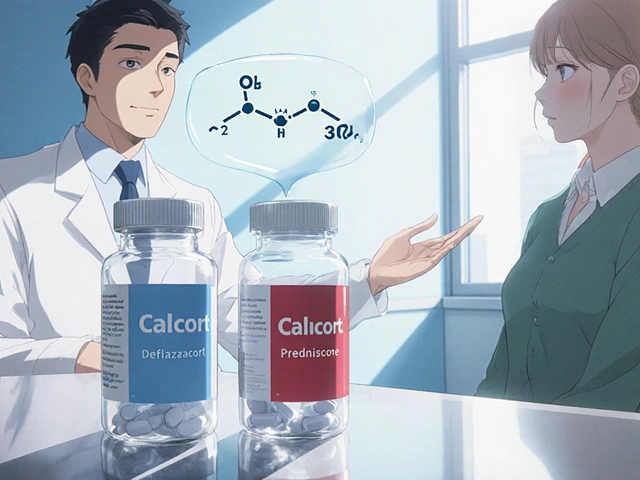
The moment a drug loses patent protection, it’s no longer protected. Generic manufacturers can file an Abbreviated New Drug Application (ANDA) with the FDA and start selling the same medicine for a fraction of the cost. But it’s not as simple as waiting for the patent date to tick over. Some drugs see generics hit the market the day after expiration. Others sit untouched for years. Why? It comes down to three things: patents, regulations, and strategy. The 1984 Hatch-Waxman Act created the legal framework for generics, but it also gave brand companies tools to delay competition. Think of it like a chess game where each side has hidden moves. If you’re a brand company, getting this wrong can cost hundreds of millions. A single oncology drug with $1.2 billion in annual sales can lose 80% of its revenue within two years after generics arrive. If you forecast entry six months too late, you’ve already missed your chance to adjust pricing, shift marketing, or launch a new version.The Core Tools: What Data Actually Predicts Entry
The FDA’s Orange Book is the starting point. It lists every patent covering a drug and the exclusivity periods. But that’s just the surface. The real prediction game starts when you layer in:- Patent litigation: If a generic company files a Paragraph IV certification (challenging a patent), it triggers a 30-month stay. That’s 2.5 years of delay right there.
- ANDA approval timelines: On average, it takes 38 months from submission to FDA approval. But some take 52+ months for complex drugs like inhalers or topical creams.
- Market size: Drugs making over $1 billion a year attract generic competitors faster-on average, 11.3 months sooner than smaller drugs.
- Therapeutic equivalence codes: The FDA assigns these to show if a generic can be swapped for the brand. If the code is ‘A’, substitution is allowed. If it’s ‘B’, it’s not. That affects how fast generics spread.
Big Mistakes Everyone Makes
Most companies rely on outdated assumptions. Here are the top three errors:- Ignoring ‘product hopping’: When a brand company switches patients to a new formulation-say, from a pill to a capsule-right before the patent expires, it tricks pharmacies and doctors into staying with the brand. This tactic delayed competition on 63% of the top 100 drugs. The FDA doesn’t stop it. The law allows it.
- Overlooking authorized generics: Sometimes, the brand company itself launches a generic version under a different label. This happens in 41% of cases. But only 22% of forecasting tools predict it. That means you think you’re safe from competition… until your own generic undercuts your price.
- Forgetting state substitution laws: In California, pharmacists can substitute generics without doctor approval. In Texas, they can’t. These rules change how fast prices drop. National models miss this entirely.
Biologics Are a Different Game
Small-molecule drugs (like pills) are easy to copy. Biologics-injectables made from living cells-are not. The 2010 BPCIA gave them 12 years of data exclusivity. Even after that, biosimilars take 18 months longer to develop and face stricter approval rules. As a result, only 38% of eligible biologics have biosimilar competition. Compare that to 92% of small-molecule drugs. And when biosimilars do arrive, prices drop only 25-35% after three competitors. For small molecules? 85% below the original price by the sixth generic. The Humira case is the textbook example. Its core patent expired in 2016. But with over 130 patents, AbbVie kept competitors at bay until 2023. Even then, they shifted patients to Skyrizi, a newer drug, cutting the biosimilar market share by 35% before it even launched.What’s Changing in 2026
The game is evolving. In 2023, the FDA launched the Competitive Generic Therapy (CGT) pathway. If a drug has little or no competition, the first generic to file gets 180 days of exclusivity-just like under Hatch-Waxman. That’s changing how companies time their ANDA filings. AI is also stepping in. New models now scan thousands of patent lawsuits, FDA letters, and court documents using natural language processing. By 2026, these tools are expected to cut prediction errors in half-from 11.4 months to 6.8 months. But even AI can’t predict everything. The FTC found 12 new delay tactics in 2022 that current models don’t catch. One? Pay-for-delay deals, where brand companies pay generics to hold off on launching. Another? Citizen petitions-where competitors file bogus complaints with the FDA to stall approval. These delay entry by an average of 7.1 months.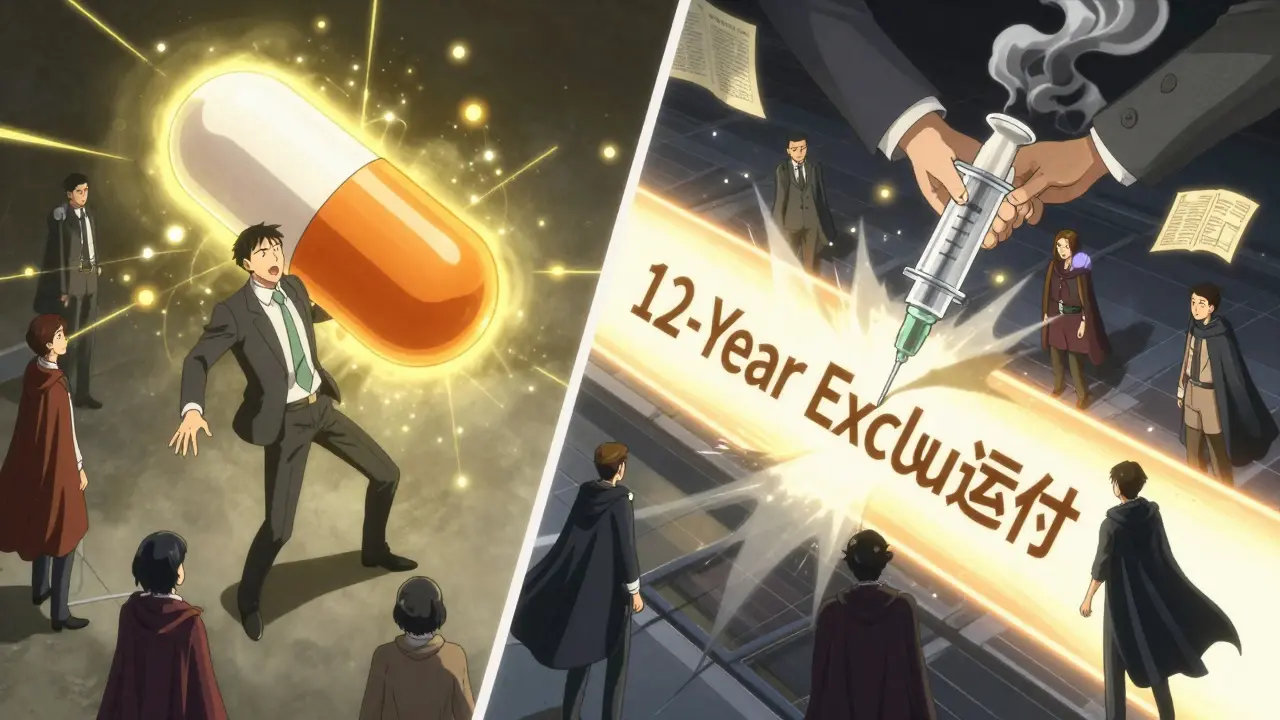
What You Can Do Right Now
If you’re tracking a drug’s path to generics, here’s your checklist:- Check the FDA Orange Book weekly for patent changes and exclusivity updates.
- Track Paragraph IV certifications-they’re the clearest signal a generic is coming.
- Use a tool that includes litigation outcomes, not just patent dates.
- Factor in state substitution laws if you’re selling in multiple states.
- Watch for authorized generics-ask your sales team if the brand company has a generic line.
- Monitor FDA backlog trends. After the pandemic, approval times jumped by 7.2 months.
What’s Next for the Market
By 2027, over $394 billion in drug sales will face generic competition. That’s more than the entire U.S. generic market today. Companies that forecast accurately will protect revenue. Those that don’t will scramble. The good news? You don’t need a $1 million platform to start. You just need to stop trusting patent expiration dates alone. Start digging into litigation, FDA timelines, and state laws. The difference between guessing and knowing could be your company’s survival.How long after patent expiration do generics usually launch?
There’s no fixed timeline. Some generics launch the same day. Others wait years. On average, the first generic enters 11-18 months after patent expiry, but delays from litigation, FDA backlogs, or patent thickets can push that to 3+ years. The key is not the patent date-it’s whether a Paragraph IV challenge was filed and if it triggered a 30-month stay.
Can a brand company stop generics from coming?
Not permanently, but they can delay them. Tactics include filing new patents (evergreening), launching authorized generics, switching patients to new formulations (product hopping), or paying generic makers to delay entry (pay-for-delay). These are legal under current U.S. law, though they’re under increasing scrutiny from regulators.
Why do some generic drugs cost more than others?
It’s not about the drug-it’s about competition. The first generic often prices at 39% below brand. The second drops it to 54%. By the sixth competitor, prices fall 85%. But if only one or two generics enter-like with complex inhalers or biologics-prices stay higher. Supply chain issues, manufacturing failures, and FDA delays also cause price spikes.
What’s the difference between a generic and a biosimilar?
Generics are exact copies of small-molecule drugs (pills, capsules). Biosimilars are similar-but not identical-to biologic drugs (injectables made from living cells). They’re harder to make, cost more to develop, and take longer to get approved. They also don’t always substitute automatically at the pharmacy, which slows adoption and keeps prices higher.
How accurate are generic entry forecasts today?
Simple models using only patent dates are only about 40-50% accurate. Advanced models using litigation data, FDA timelines, and market size are 78-85% accurate within a six-month window. AI-driven tools are expected to improve that to over 90% by 2026. But even the best models can’t predict every strategic move-like patient switching or pay-for-delay deals.
Do state laws affect when generics enter the market?
Not when they enter-but how fast they spread. In states like California, pharmacists can substitute generics without a doctor’s permission, which speeds up price erosion. In states that require prescriber approval, substitution is slower. National forecasts often miss this, leading to inaccurate revenue predictions.



Comments (14)
Caleb Sutton
February 3, 2026 AT 13:46 PMThe system is rigged. Big Pharma owns the FDA, the courts, and Congress. They don't just delay generics-they buy time with lawyers, bribes disguised as 'citizen petitions,' and pay-for-delay schemes that make Wall Street blush. And we're supposed to be grateful they let us breathe at all? This isn't capitalism. It's feudalism with pill bottles.
Roshan Gudhe
February 5, 2026 AT 11:23 AMIt’s fascinating how we treat medicine like a commodity instead of a human right. The math here is cold, yes-but behind every patent cliff is a patient who can’t afford their insulin. We optimize for profit, not survival. Maybe the real question isn’t when generics arrive-but why we let corporations decide who lives and who doesn’t.
Rachel Kipps
February 5, 2026 AT 22:21 PMi read this and thought wow this is so detailed but also kinda overwhelming? like i get the point but i dont know if i can track all those variables. maybe i just need a simple checklist?
Prajwal Manjunath Shanthappa
February 6, 2026 AT 15:56 PMLet’s be clear: anyone who still believes patent expiration = generic entry is either willfully ignorant or tragically unqualified to work in this field. The Orange Book is a fiction. The FDA is a puppet. And the ‘models’? They’re spreadsheets written by interns who think ‘litigation’ is a Netflix show. This isn’t forecasting-it’s archaeology.
Wendy Lamb
February 8, 2026 AT 00:26 AMState substitution laws are the silent engine of price drops. California’s rules alone cut brand sales by 40% faster than Texas. Yet most companies still use national averages. It’s like planning a road trip using a map of another country.
Antwonette Robinson
February 8, 2026 AT 11:22 AMOh wow, so the ‘solution’ is to hire more lawyers and pay for AI that reads court documents? How revolutionary. Next you’ll tell us to put a QR code on every pill that says ‘Sorry, your drug is now a corporate chess piece.’
Jhoantan Moreira
February 10, 2026 AT 08:18 AMThis is such a critical topic-and you laid it out so clearly. Even if you’re not in pharma, this shows how broken our healthcare incentives are. Hope more people read this and start asking: Who really benefits when medicine becomes a financial instrument?
Shelby Price
February 12, 2026 AT 02:52 AMSo… if a drug has 15 patents, it’s basically got a 5-year shield? That’s wild. I thought patents were supposed to expire. Guess not.
Nathan King
February 13, 2026 AT 06:30 AMOne must distinguish between regulatory timelines and strategic maneuvering. The former is quantifiable; the latter is behavioral economics disguised as law. To conflate them is to misunderstand the architecture of pharmaceutical monopolies.
Harriot Rockey
February 15, 2026 AT 04:07 AMThis is actually really helpful! I work with small clinics and we see patients struggle every time a drug goes generic. Knowing the real timeline helps us prepare. Thanks for breaking it down without jargon overload. 🙏
Demetria Morris
February 16, 2026 AT 14:07 PMIt’s disgusting how legal fraud is treated as ‘strategy.’ Pay-for-delay? Product hopping? These aren’t loopholes-they’re crimes. And the fact that we call them ‘business tactics’ proves how far we’ve fallen.
Geri Rogers
February 17, 2026 AT 10:04 AMY’all are overcomplicating this. Here’s your checklist: 1) Check Orange Book every Monday. 2) Set alerts for Paragraph IV filings. 3) Ask your sales team: ‘Is our company selling a generic under another name?’ 4) Don’t trust anything that doesn’t include state laws. Done. No AI needed.
Samuel Bradway
February 18, 2026 AT 11:51 AMMan, I just read this on my lunch break and my head is spinning. I’m not even in pharma but now I’m obsessed. Like… why is this not on the news?
pradnya paramita
February 18, 2026 AT 20:19 PMThe CGT pathway is a structural intervention designed to mitigate market failure in therapeutically underserved indications. The 180-day exclusivity window incentivizes first-to-file ANDAs by internalizing the social value of generic entry-thereby correcting the negative externality created by patent thickets and regulatory capture.