
Renal Dosing Calculator for Metformin and SGLT2 Inhibitors
Enter the patient's estimated glomerular filtration rate (eGFR) to receive evidence-based dosing recommendations for Metformin and SGLT2 inhibitors.
Metformin Recommendation
SGLT2 Inhibitor Recommendation
Managing type 2 diabetes with chronic kidney disease (CKD) used to mean choosing between blood sugar control and kidney protection. Today, the rules have changed dramatically. The old fear of stopping Metformin is the first-line medication for type 2 diabetes that lowers blood glucose by reducing liver production of sugar at lower kidney function levels has been replaced by nuanced dosing strategies. At the same time, SGLT2 inhibitors are a class of diabetes drugs that help kidneys remove excess sugar through urine while protecting heart and kidney health like Dapagliflozin is an SGLT2 inhibitor brand name Farxiga or Jardiance proven to slow kidney disease progression are now recommended even when kidney function is quite low. Understanding exactly when to adjust these doses can save a patient’s kidneys.
The New Rules for Metformin in Kidney Disease
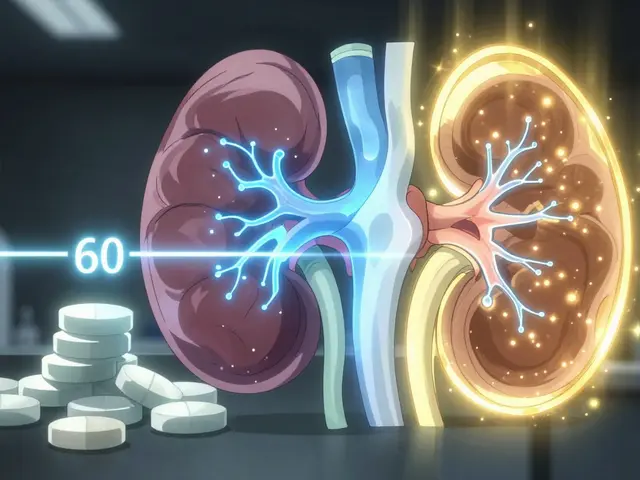
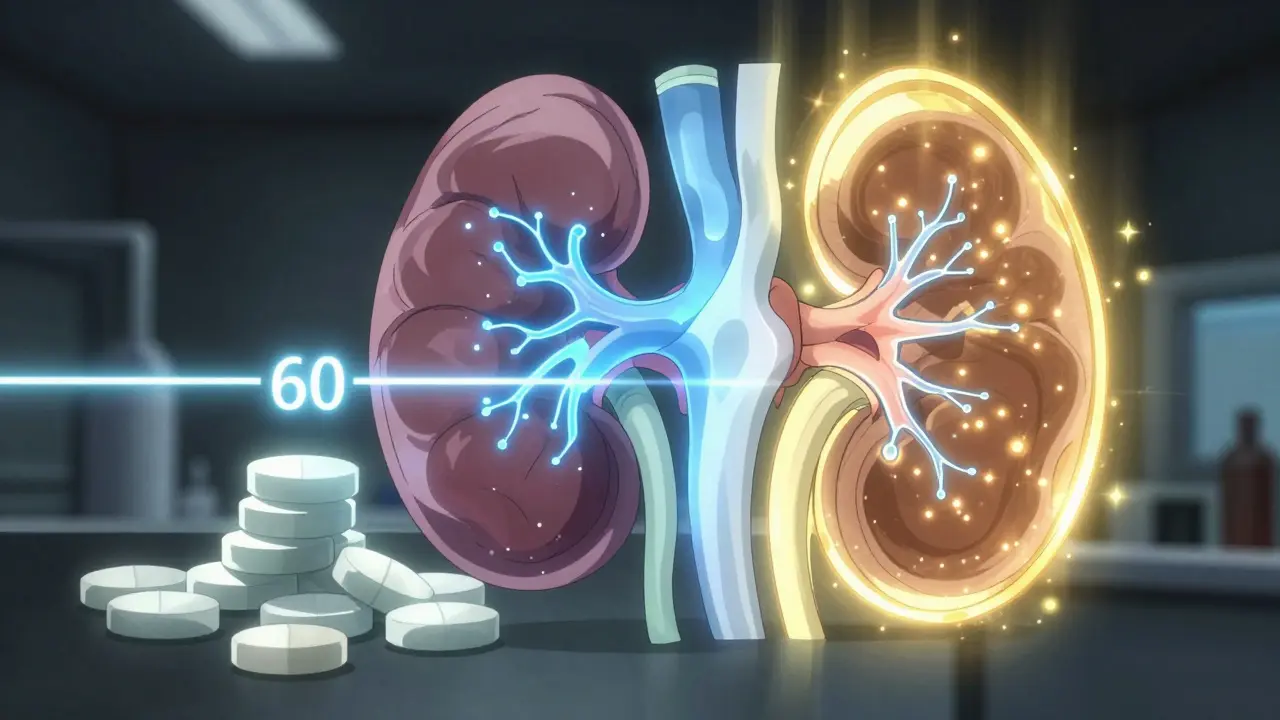
Gone are the days when an estimated glomerular filtration rate (eGFR) below 60 mL/min/1.73 m² meant stopping metformin immediately. Since the FDA updated its guidance in 2016, we know that the risk of lactic acidosis-the rare but serious side effect associated with metformin-is extremely low in stable patients. A 2014 study in the BMJ found the incidence rate to be just 3.3 cases per 100,000 patient-years. This data allowed major organizations like the American Diabetes Association (ADA) to rewrite the playbook.
Today, you don't stop metformin until it becomes unsafe. Instead, you reduce the dose as kidney function declines. Here is how the current consensus breaks down:
- eGFR ≥60 mL/min/1.73 m²: You can use the maximum daily dose of up to 2550 mg.
- eGFR 45-59 mL/min/1.73 m²: Reduce the maximum daily dose to 2000 mg.
- eGFR 30-44 mL/min/1.73 m²: Further reduce the maximum daily dose to 1000 mg.
- eGFR <30 mL/min/1.73 m²: Metformin is generally contraindicated. Most guidelines say to avoid it entirely, though some clinicians may cautiously prescribe 500 mg daily in very stable patients if no other options exist.
The key here is monitoring. If your eGFR is above 60, check kidney function every 6-12 months. If it drops to the 45-59 range, check every 3-6 months. Once it hits the 30-44 range, you need to monitor every 3 months. This frequent checking ensures you catch any rapid decline before it becomes dangerous.
SGLT2 Inhibitors: Lower Thresholds, Higher Benefits
If metformin adjustments are about caution, SGLT2 inhibitor recommendations are about opportunity. For years, doctors stopped these drugs when eGFR dropped below 30 or 45, thinking they wouldn't work anymore. We were wrong. Drugs like Empagliflozin is an SGLT2 inhibitor brand name Jardiance shown to reduce cardiovascular death and kidney failure, Canagliflozin is an SGLT2 inhibitor brand name Invokana effective for kidney protection in diabetic patients, and Dapagliflozin actually protect the kidneys *because* of their mechanism, not despite low kidney function.
The landmark KDIGO 2022 Clinical Practice Guideline Update changed everything. It lowered the threshold for starting SGLT2 inhibitors from eGFR ≥30 to eGFR ≥20 mL/min/1.73 m². This was based on robust evidence from trials like DAPA-CKD and EMPA-KIDNEY, which showed a 30-40% reduction in the risk of progressing to end-stage renal disease. Dr. Katherine R. Tuttle, lead author of the guideline, noted that the evidence for kidney protection is so strong that benefits extend across the entire CKD spectrum.
Here is the practical dosing breakdown for common SGLT2 inhibitors:
| Drug Name | Max Dose at Moderate CKD | Contraindication Threshold | KDIGO Recommendation |
|---|---|---|---|
| Canagliflozin | 100 mg (if eGFR 45-59) | eGFR <45 mL/min/1.73 m² | Use down to eGFR ≥20 |
| Dapagliflozin | 10 mg (if eGFR 25-45) | eGFR <25 mL/min/1.73 m² | Use down to eGFR ≥20 |
| Empagliflozin | 10 mg (if eGFR 30-45) | eGFR <30 mL/min/1.73 m² | Use down to eGFR ≥20 |
Notice the gap between the FDA labeling (contraindication thresholds) and the KDIGO recommendation. This is where many clinicians get stuck. The FDA labels are often more conservative than the latest clinical evidence. However, KDIGO explicitly states that once started, it is reasonable to continue an SGLT2 inhibitor even if eGFR falls below 20, unless the patient is intolerant or starts dialysis.
The "Initial Dip" Don't Panic
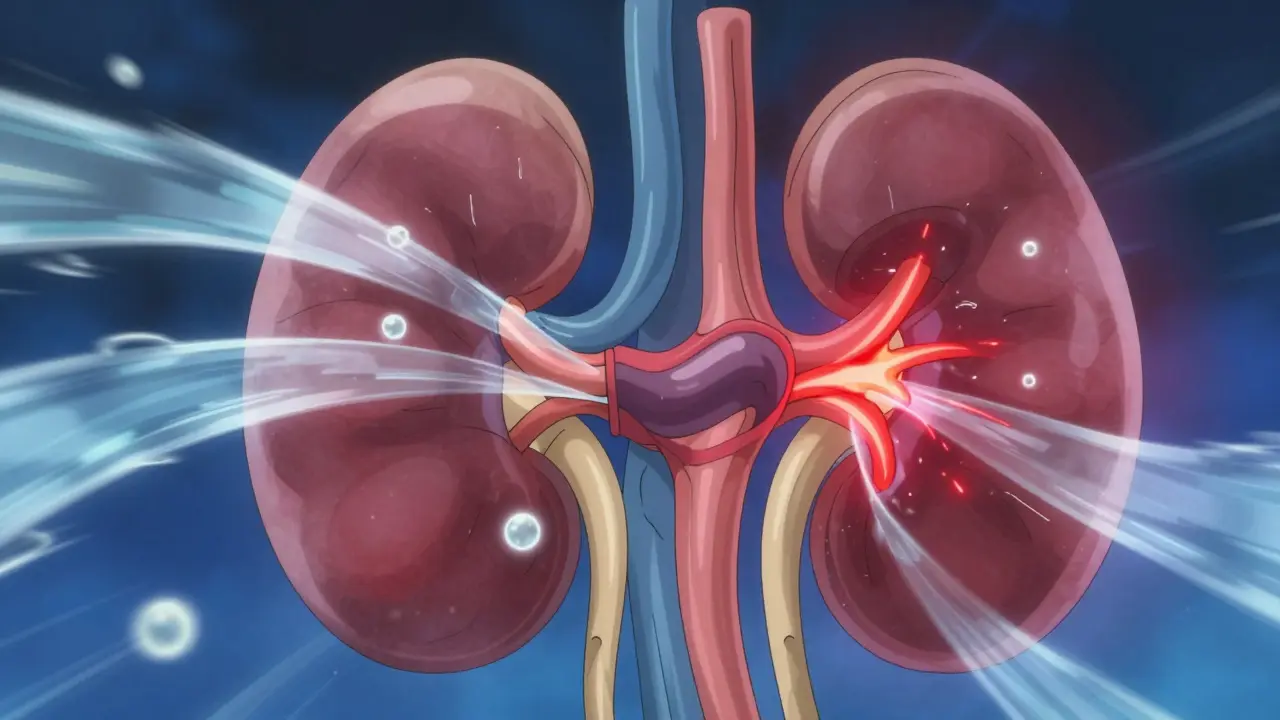
When you start an SGLT2 inhibitor, something weird happens. Your patient's eGFR will drop by 2-5 mL/min/1.73 m² in the first few weeks. This is called the "initial dip." It feels alarming, especially if you are watching those numbers closely. But this is normal. It is a hemodynamic effect caused by the drug constricting the afferent arteriole in the kidney, which reduces pressure inside the filtering units. This reduced pressure is actually what protects the kidney long-term.
The UK Kidney Association (UKKA) 2021 guideline warns against unwarranted discontinuation. Do not stop the drug because of this initial dip. Instead, interpret the decline in context. After the first few weeks, the eGFR usually stabilizes. In fact, studies show that patients who experience this dip often have better long-term kidney outcomes than those who do not. Just make sure to perform a renal function assessment within the first few weeks post-initiation to establish this new baseline.
Navigating the Gap Between Guidelines and Insurance
Here is the frustrating reality: while science says "keep going," insurance companies often say "stop." A 2022 ADA survey found that 43% of endocrinologists reported insurance denials for SGLT2 inhibitors in patients with eGFR between 20 and 29. Why? Because the FDA label hasn't caught up to the KDIGO guidelines yet.
For example, Canagliflozin is labeled as contraindicated below eGFR 45, yet KDIGO recommends using it down to 20. If you try to prescribe it for a patient with an eGFR of 35, the pharmacy system might block it. This creates a tension between regulatory labeling and evidence-based practice. Dr. Bertram L. Kasiske, Chair of the KDIGO Work Group, advises clinicians to follow evidence-based guidelines rather than regulatory labeling when they conflict. You may need to write appeals or prior authorization letters citing the KDIGO 2022 guidelines to get coverage approved.
Combination Therapy: The Sweet Spot
The most powerful strategy for patients with type 2 diabetes and CKD is early combination therapy. Starting both metformin and an SGLT2 inhibitor together, provided eGFR thresholds are met, offers dual protection. Metformin controls blood sugar and has cardiovascular benefits, while the SGLT2 inhibitor directly slows kidney damage.
There is a narrow window where this gets tricky. If a patient’s eGFR drops into the 20-29 range, you must stop metformin (per most guidelines) but you should *continue* the SGLT2 inhibitor. This transition requires careful communication with the patient. Explain that while one drug is ending its role, the other is becoming even more critical for saving their remaining kidney function. Dr. David M. Nathan from Massachusetts General Hospital cautions that in this low eGFR range, you must monitor for volume depletion, especially if the patient is also on loop diuretics. The risk of acute kidney injury increases if they become dehydrated.

Sick-Day Rules: When to Pause
Even with perfect dosing, there are times when you must hold these medications. Both KDIGO and UKKA recommend temporarily withholding SGLT2 inhibitors during acute illness-this is known as "sick-day rules." Conditions like vomiting, diarrhea, fever, or surgery can cause dehydration. Since SGLT2 inhibitors promote fluid loss through urine, combining them with illness-induced dehydration can spike the risk of acute kidney injury or euglycemic diabetic ketoacidosis (DKA).
Tell your patients: "If you are sick and can't eat or drink normally, pause your SGLT2 inhibitor. Restart it once you are eating and drinking again." For metformin, the rule is similar but stricter regarding conditions that predispose to lactic acidosis, such as severe sepsis or liver failure. Always err on the side of caution during acute events.
Monitoring and Next Steps
Implementing these changes isn't just about picking a dose; it's about active management. You need a plan.
- Baseline Assessment: Check eGFR and albuminuria before starting or adjusting therapy.
- Early Follow-up: Recheck eGFR 2-4 weeks after starting or changing an SGLT2 inhibitor to account for the initial dip.
- Regular Monitoring: Adhere to the frequency schedule based on current eGFR (every 3 months for eGFR 30-44).
- Hydration Education: Ensure patients understand the importance of staying hydrated, especially in hot weather or during exercise.
- Advocacy: Be prepared to appeal insurance denials using KDIGO 2022 guidelines as justification.
The landscape of renal dosing for diabetes drugs is evolving rapidly. By moving away from rigid cutoffs and embracing evidence-based thresholds, you can keep patients on life-saving medications longer. The goal isn't just to lower HbA1c; it's to preserve kidney function for as long as possible. With the right adjustments and monitoring, you can achieve both.
Should I stop metformin if my eGFR drops below 60?
No, you do not need to stop metformin immediately if your eGFR drops below 60. Current guidelines recommend reducing the dose instead. If your eGFR is between 45-59, the max dose is 2000 mg/day. If it is between 30-44, the max dose is 1000 mg/day. You only typically stop metformin if your eGFR falls below 30 mL/min/1.73 m².
Can I take SGLT2 inhibitors if my eGFR is below 30?
Yes, according to the KDIGO 2022 guidelines, you can start and continue SGLT2 inhibitors like dapagliflozin or empagliflozin if your eGFR is ≥20 mL/min/1.73 m². While some FDA labels still say to stop at higher thresholds, clinical evidence shows these drugs protect kidneys even at lower function levels. Always consult your doctor to navigate insurance and specific drug labeling.
Why does my eGFR drop when I start an SGLT2 inhibitor?
An initial drop of 2-5 mL/min/1.73 m² in eGFR is normal and expected when starting an SGLT2 inhibitor. This is called the "initial dip" and is due to a healthy change in kidney blood flow dynamics that reduces pressure inside the kidney filters. It is not a sign of kidney damage; in fact, it is associated with better long-term kidney outcomes. Do not stop the medication because of this temporary dip.
What are "sick-day rules" for diabetes medications?
Sick-day rules advise pausing certain medications, particularly SGLT2 inhibitors and sometimes metformin, during acute illnesses that cause dehydration (like vomiting, diarrhea, or fever). Dehydration combined with these drugs can increase the risk of acute kidney injury or diabetic ketoacidosis. You should restart the medication once you are fully recovered and eating/drinking normally.
How often should I check my kidney function if I am on these drugs?
Monitoring frequency depends on your eGFR level. If your eGFR is ≥60, check every 6-12 months. If it is 45-59, check every 3-6 months. If it is 30-44, check every 3 months. Additionally, you should check eGFR within the first few weeks of starting an SGLT2 inhibitor to account for the expected initial dip.