

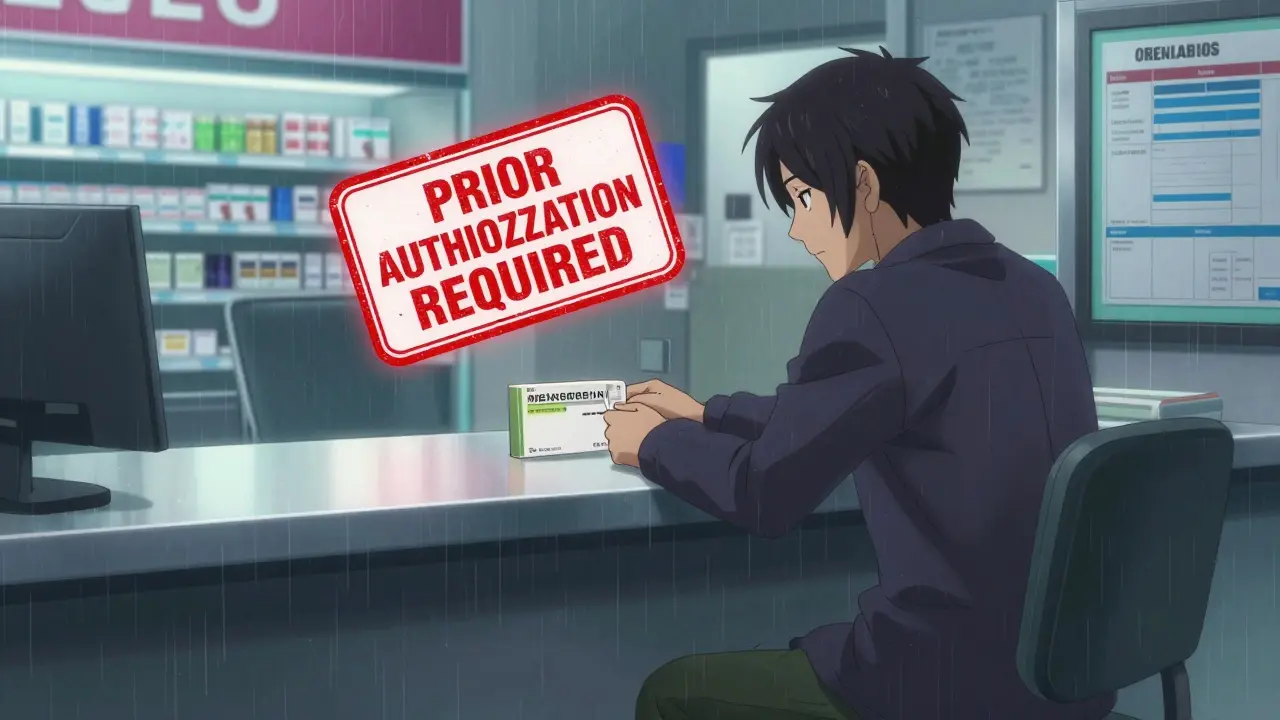
It’s 2025. You’ve been taking generic metformin for type 2 diabetes for three years. Your doctor prescribes it again. You fill the prescription at your local pharmacy-only to be told, "We need prior authorization from your insurance." You pause. Wait, this is a generic. It’s cheap. It’s been on the market for decades. Why are they asking for permission?
This isn’t a glitch. It’s becoming the norm. Even though generics make up 90% of all prescriptions filled in the U.S., nearly one in five now require insurance approval before you can get them. That’s up from just 5% in 2018. And it’s happening to medications you’d never expect to need paperwork for: lisinopril for high blood pressure, levothyroxine for thyroid issues, atorvastatin for cholesterol, even methotrexate for autoimmune conditions. These aren’t expensive specialty drugs. They’re the foundation of everyday care. So why the holdup?
How Prior Authorization for Generics Actually Works
Prior authorization is supposed to be a safety net-not a speed bump. Back in the 1990s, insurers started using it to stop patients from getting unnecessary or overly expensive brand-name drugs. The idea was simple: if a generic version exists, use it. But now, the system is flipping. Insurers are asking doctors to prove why a patient needs a generic version of a drug, even when it’s the first-line treatment.
Here’s how it plays out: Your doctor writes a prescription for generic metformin. The pharmacy’s system checks your insurance plan’s formulary and sees a red flag: “Prior auth required.” The pharmacy sends a request to your insurer-usually via electronic portal, fax, or phone. The insurer then reviews clinical notes, lab results, or proof that other generics failed. If they approve it, you get your pills. If not, your doctor has to appeal, resubmit, or switch your medication-all while you wait.
On average, doctors handle 43 prior authorization requests per week. Nearly 4 out of 10 of those are for generic drugs. That’s not just paperwork-it’s time stolen from patient care. One clinic in Ohio reported spending 17.3 hours a week just managing prior auths for generics. That’s the equivalent of half a full-time employee’s workweek, gone.
Why Are Insurers Doing This? The Hidden Logic
At first glance, this makes no sense. Generics cost 80-90% less than brand-name drugs. They’re proven safe. They’re widely used. So why add a barrier?
The answer lies in how pharmacy benefit managers (PBMs) make money. PBMs are middlemen between insurers, pharmacies, and drugmakers. They collect rebates and fees based on which drugs are prescribed. Sometimes, a brand-name drug-even if it’s more expensive-pays a bigger rebate to the PBM than the generic. That creates a financial incentive to delay or block the cheaper option.
Other times, it’s about control. Some insurers use prior authorization to enforce step therapy-forcing patients to try a different generic first, even if the prescribed one is the most appropriate. For example, a patient with Crohn’s disease might be required to try one generic immunosuppressant before being allowed to use another-even if their doctor knows the second one works better for their specific case.
And it’s not just one insurer doing this. Aetna requires prior authorization for 25% of its generic medications. UnitedHealthcare, 22%. Humana, 18%. The variation isn’t random-it’s based on which rebates and contracts each plan has with drugmakers. So your coverage depends less on medical need and more on which company your insurer struck a deal with last year.

Who Gets Hurt the Most?
Patients. Doctors. And ultimately, the healthcare system.
A 2024 Kaiser Family Foundation case study tracked a patient whose generic metformin was delayed for 14 days due to prior authorization. During that time, their HbA1c jumped from 6.8% to 8.2%. That’s not just a number-it’s increased risk of nerve damage, kidney problems, vision loss. The delay wasn’t because the drug was unsafe. It was because the system demanded paperwork.
Doctors are caught in the middle. A 2023 American Medical Association survey found that 93% of physicians say prior authorizations cause treatment delays. And 24% say they’ve seen patients hospitalized because they couldn’t get their meds on time. That’s not hypothetical. That’s real people in emergency rooms because a form didn’t get approved fast enough.
On Reddit, threads like “Generic levothyroxine requiring prior auth-what’s next?” have hundreds of comments. People are frustrated. They’re confused. They’re scared. One user wrote: “I’ve been on the same generic thyroid med for 12 years. Now they say I need a new blood test, a letter from my doctor, and a signed form just to refill it. I’m not asking for a miracle drug. I’m asking for the same pill I’ve taken since 2013.”
What’s Being Done to Fix It?
Change is coming-but slowly.
In December 2023, Congress passed the Improving Seniors’ Timely Access to Care Act. Starting in 2026, Medicare Advantage plans must use electronic prior authorization and respond to urgent requests within 72 hours. That’s a step forward. But it only covers seniors.
States are acting too. California’s SB 1024, effective January 2025, bans prior authorization for 47 common generic drugs on the state’s Essential Drug List. That includes metformin, lisinopril, atorvastatin, and others. Thirty-four other states have similar restrictions for certain generic classes.
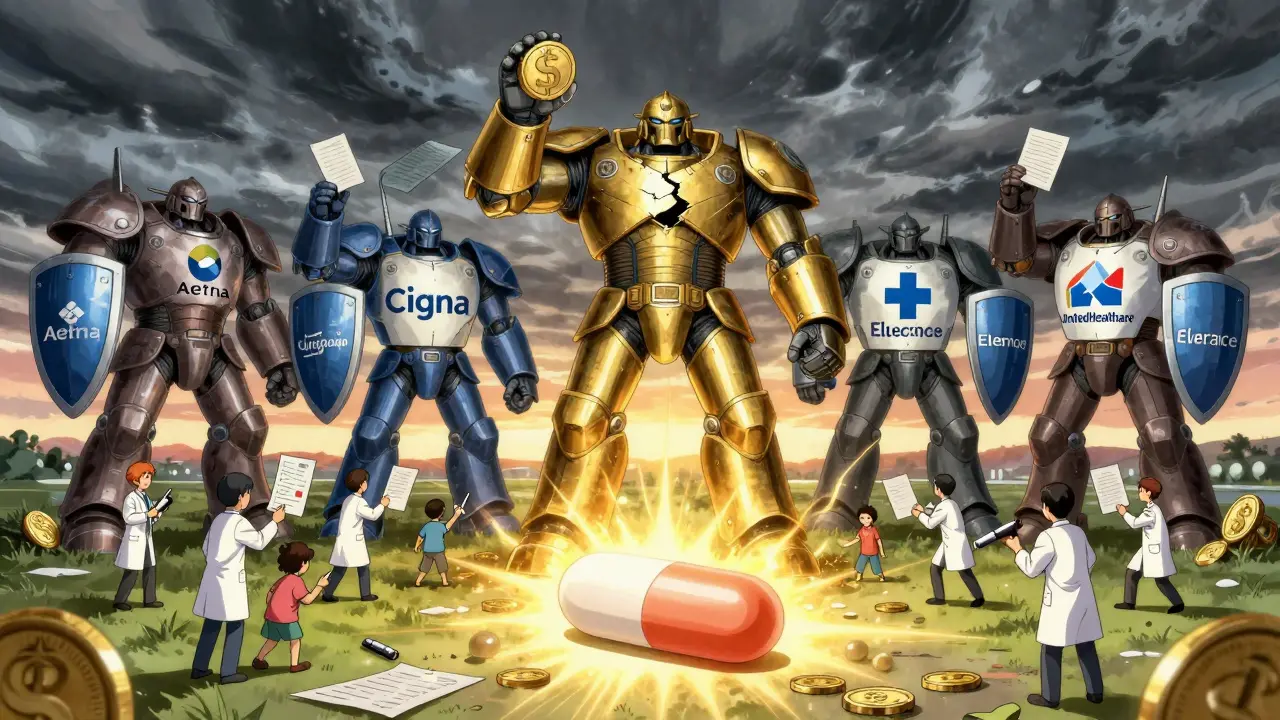
And on June 23, 2025, six major insurers-Aetna, UnitedHealthcare, Cigna, Humana, Elevance Health, and Blue Cross Blue Shield-announced a joint reform. Starting January 2026, they’ll eliminate prior authorization for 12 commonly prescribed generic medications, including ACE inhibitors, statins, and metformin. They’ll also standardize electronic forms and cut approval times to 72 hours for urgent cases.
But here’s the catch: these reforms are voluntary. And they only cover a small slice of the problem. There are thousands of generic drugs. Only 12 are being exempted. The rest? Still stuck in the system.
What You Can Do Right Now
If you’re facing a prior authorization delay for a generic drug, don’t just wait. Take action.
- Ask your doctor if they’ve submitted the request electronically. Electronic submissions are 32% faster than fax or phone.
- Request urgent status if your condition is unstable. Cigna and others process urgent requests in 72 hours-but you have to ask.
- Get copies of all paperwork. Keep track of dates, names, and reference numbers. If your request is denied, you can appeal-and 67% of denials are overturned with better documentation.
- Check your plan’s formulary. Many insurers list which generics require prior authorization online. Know what’s coming before your next refill.
- Call your insurer. Ask: “Why is this generic requiring prior authorization? Is there a cheaper alternative on file?” Sometimes, the answer is: “There isn’t.” That’s your leverage.
And if you’re still stuck? Talk to your pharmacist. They often know which insurers are easier to work with-and which ones are the worst.
The Bigger Picture
This isn’t just about pills and paperwork. It’s about trust in the system. When a patient has to wait weeks for a $5 generic drug that’s been used safely for decades, it sends a message: your health isn’t the priority. Profit margins are.
The goal of insurance should be to make care accessible-not to turn routine prescriptions into bureaucratic hurdles. Generics exist to save money and lives. When insurers make you jump through hoops to get them, they’re not controlling costs-they’re creating them. Delayed treatment leads to complications. Complications lead to hospital visits. Hospital visits cost more than the original drug ever did.
The data shows it: prior authorization for generics increases total healthcare costs by 18% due to avoidable delays and worsening conditions. That’s not efficiency. That’s waste.
Change is happening. But until every insurer follows the same rules-and until prior authorization is truly reserved for cases where it makes medical sense, not financial sense-you need to be your own advocate. Know your rights. Ask questions. Push back. Your health shouldn’t depend on a form.






Comments (11)
Jigar shah
December 15, 2025 AT 23:53 PMIt’s wild how the system incentivizes the wrong behavior. PBMs make more money off brand-name drugs through rebates, so they engineer barriers to generics-even when those generics are safer, cheaper, and equally effective. This isn’t about cost control; it’s about profit extraction disguised as clinical oversight.
The fact that a 12-year patient on levothyroxine now needs a letter, a blood test, and a signed form just to refill their prescription is absurd. It’s not medicine. It’s administrative theater.
And the worst part? Doctors are forced to become paperwork clerks instead of clinicians. I’ve seen specialists spend hours on prior auths instead of reviewing imaging or adjusting treatment plans. That’s not efficiency-it’s systemic sabotage.
It’s also classist. People with time, resources, and health literacy can fight this. Those who work two jobs, don’t speak English fluently, or can’t afford to miss a day of work? They just go without. And then they end up in the ER with a diabetic ketoacidosis they could’ve avoided.
There’s no clinical justification for this. Only financial. And until we hold PBMs accountable like we hold drugmakers, nothing will change.
California’s SB 1024 is a start. But it needs to be federal. And it needs to include all generics-not just a curated list of 12.
Also, why do insurers still use fax machines in 2025? That’s not a glitch. That’s negligence.
Sachin Bhorde
December 16, 2025 AT 21:16 PMbro this is so real. i had to wait 3 weeks for my generic lisinopril last year. my bp spiked to 180/110. doc had to call em 5 times. they kept saying ‘need more data’-like i’m trying to get a new tesla, not my blood pressure med.
pbms are the real villains here. they don’t even make the drugs. they just take a cut. like middlemen in a black market. 🤡
and the worst part? they’ll approve the brand-name version faster. same active ingredient. same side effects. just 10x more expensive. it’s like paying for a Ferrari badge on a Toyota.
my cousin in florida got denied metformin for 6 weeks. ended up with neuropathy. now she’s on disability. all because of a form.
if you’re reading this and you’re on a generic-save every email, every call log, every reference number. if they deny it, appeal. 67% get overturned. don’t let them gaslight you.
Joe Bartlett
December 17, 2025 AT 19:02 PMWhat’s next? Prior authorization for water? 😂
UK doesn’t do this. We get generics straight off the shelf. No forms. No delays. Just medicine.
US healthcare is broken. Full stop.
Naomi Lopez
December 19, 2025 AT 04:06 AMIt’s not just the prior authorization-it’s the *arbitrary* nature of it. Why is atorvastatin flagged but not simvastatin? Why does Humana require it for metformin but not Aetna? It’s not clinical. It’s contractual arbitrage dressed up as clinical governance.
And let’s not pretend this is about ‘cost containment.’ The average PBM rebate on a brand-name statin is $12 per script. The generic costs $4. The math doesn’t add up to savings-it adds up to greed.
It’s also worth noting that most of these PBMs are owned by the same corporations that run insurers. So they’re literally profiting from the very inefficiencies they claim to fix.
Until we break up these vertically integrated behemoths, we’re just rearranging deck chairs on the Titanic.
Chris Van Horn
December 20, 2025 AT 16:12 PMLet me be perfectly clear: this is a national disgrace. I am a physician. I have been practicing for 22 years. I have watched this system devolve from a necessary safeguard into a bureaucratic nightmare designed to enrich shareholders at the expense of human lives.
My patient, a 68-year-old veteran with congestive heart failure, was denied lisinopril for 18 days because the insurer demanded a repeat echocardiogram-something he had done three months prior. He was admitted with acute pulmonary edema. The bill: $42,000. The cost of the generic: $5.
This is not healthcare. This is predatory capitalism with a stethoscope.
And to those who say, "Well, it prevents overuse"-show me the data. There is none. Not a single peer-reviewed study shows that prior auth for generics reduces utilization or improves outcomes. Only delays. Only suffering. Only death.
My license is on the line if I don’t comply. But my conscience is on the line if I do.
Someone needs to sue these PBMs. Not just in class actions. In criminal court.
Virginia Seitz
December 20, 2025 AT 18:49 PMOMG YES. I just got denied my generic levothyroxine again 😭 I’ve been on it since 2010. Same dose. Same pharmacy. Same everything. Now I need a letter? A blood test? 😩
My doctor said, "I’ve seen this 50 times this month."
Also, why does my insurance care if I take this pill? I’m not trying to get a new car or a vacation. I’m trying to not turn into a zombie. 🧟♀️
Also, I found out my neighbor’s insurer doesn’t require it. So I’m switching plans next year. No more drama.
PS: Pharmacist said to ask for "urgent status"-did that. Got it in 48 hrs. 🙌
amanda s
December 22, 2025 AT 12:52 PMSo let me get this straight-your insurance company doesn’t trust you to take a $5 pill correctly? That’s not healthcare. That’s surveillance. That’s control. And it’s racist. It’s classist. It’s sexist. It’s everything wrong with America.
They don’t ask for prior auth on Viagra. Or Adderall. But they ask for it on metformin? The drug that keeps diabetics alive?
It’s because the people who take these meds are poor, old, brown, or Black. And they’re not profitable.
This is medical apartheid. And we need to call it what it is.
Peter Ronai
December 24, 2025 AT 11:17 AMWow. You people are so naive. This isn’t about greed-it’s about *risk management*. You think insurers are villains? They’re the only thing standing between you and a $20,000 drug bill for a drug you don’t even need.
What if you’re allergic to the inactive ingredient? What if you’re taking it with another drug? What if you’re just hoarding it?
And let’s not forget: generics aren’t all created equal. Some have different fillers. Some are made in China. The FDA doesn’t even test every batch.
So yes, I support prior auth. It protects people like me-people who actually care about safety-not just convenience.
And if you can’t handle a little paperwork, maybe you shouldn’t be on medication at all.
Steven Lavoie
December 26, 2025 AT 03:12 AMI’ve been a pharmacist for 17 years. I’ve seen this from both sides-the counter and the back office.
Patients don’t understand how broken this system is. They think it’s the pharmacy’s fault. But we’re just the middlemen. We send the request. We wait. We call. We fax. We cry.
One day, a woman came in crying because her insulin was denied. She was 72. Had no family. Worked part-time cleaning offices. She hadn’t eaten in two days because she couldn’t afford to buy the insulin out of pocket.
I called the insurer. They said, "We’ll approve it tomorrow."
I gave her my own bottle of generic metformin. Just one bottle. I had extra.
She hugged me. I cried in the back room.
This isn’t about policy. It’s about people. And we’re failing them.
Michael Whitaker
December 27, 2025 AT 10:03 AMIt is my professional assessment that the current regulatory framework governing pharmacy benefit management is not only suboptimal but fundamentally incompatible with the ethical imperatives of clinical medicine. The conflation of fiscal incentives with therapeutic outcomes constitutes a structural violation of the Hippocratic Oath as interpreted through the lens of contemporary bioethics.
Moreover, the institutionalized reliance upon antiquated communication modalities-such as facsimile transmission-represents a profound failure of technological integration within the healthcare ecosystem.
One might posit that the proliferation of prior authorization requirements for low-cost, high-efficacy generic pharmaceuticals reflects a deeper epistemological crisis: the prioritization of actuarial logic over clinical judgment.
It is, therefore, not merely a policy issue. It is a moral one.
Brooks Beveridge
December 28, 2025 AT 13:20 PMHey everyone-this is heavy, but you’re not alone.
I’ve been through this with my dad’s atorvastatin. Took 11 days. He got dizzy. Fell. Broke his hip. We were lucky he didn’t die.
But here’s what helped: I started a spreadsheet. Every denial. Every call. Every date. I sent it to my rep at the state health department. They called the insurer. They changed the policy for our county.
Change doesn’t come from waiting. It comes from showing up. Documenting. Talking. Repeating.
And yes-it’s exhausting. But if we don’t do it, who will?
You’re not just fighting for a pill. You’re fighting for dignity.
And you’re doing it right.
❤️