
That gnawing pain in your stomach isn't just "bad digestion." It might be a peptic ulcer. If you are dealing with burning epigastric pain that seems to get worse on an empty stomach or wakes you up at night, you are likely experiencing peptic ulcer disease, a condition where open sores develop on the inner lining of your stomach or the upper part of your small intestine. For decades, doctors blamed stress and spicy food. We now know the truth is more biological-and much more treatable.
The landscape of treating these ulcers has shifted dramatically since Barry Marshall and Robin Warren discovered the role of bacteria in 1982. Today, we have highly effective protocols involving specific antibiotics and powerful acid-reducing drugs. Understanding which cause triggered your ulcer-bacteria or medication-is the single most important step toward healing it for good.
What Actually Causes Peptic Ulcers?
To understand why you have an ulcer, you have to look at the balance between attack factors and defense factors in your stomach. Your stomach produces strong acid to digest food, but it also creates a thick layer of mucus to protect its own walls from being digested. An ulcer forms when that protective barrier breaks down.
There are two main culprits responsible for this breakdown:
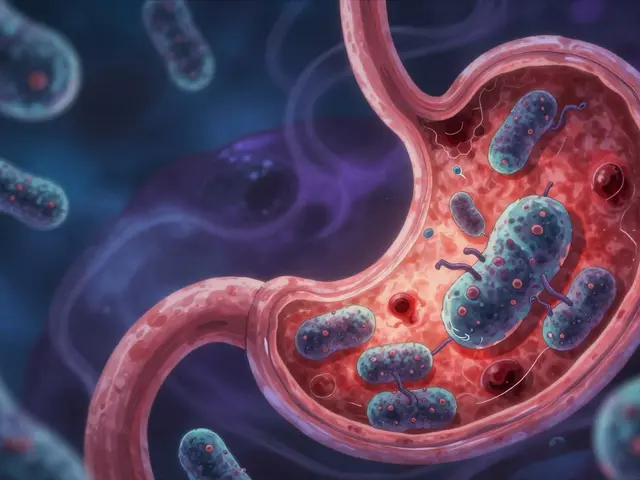
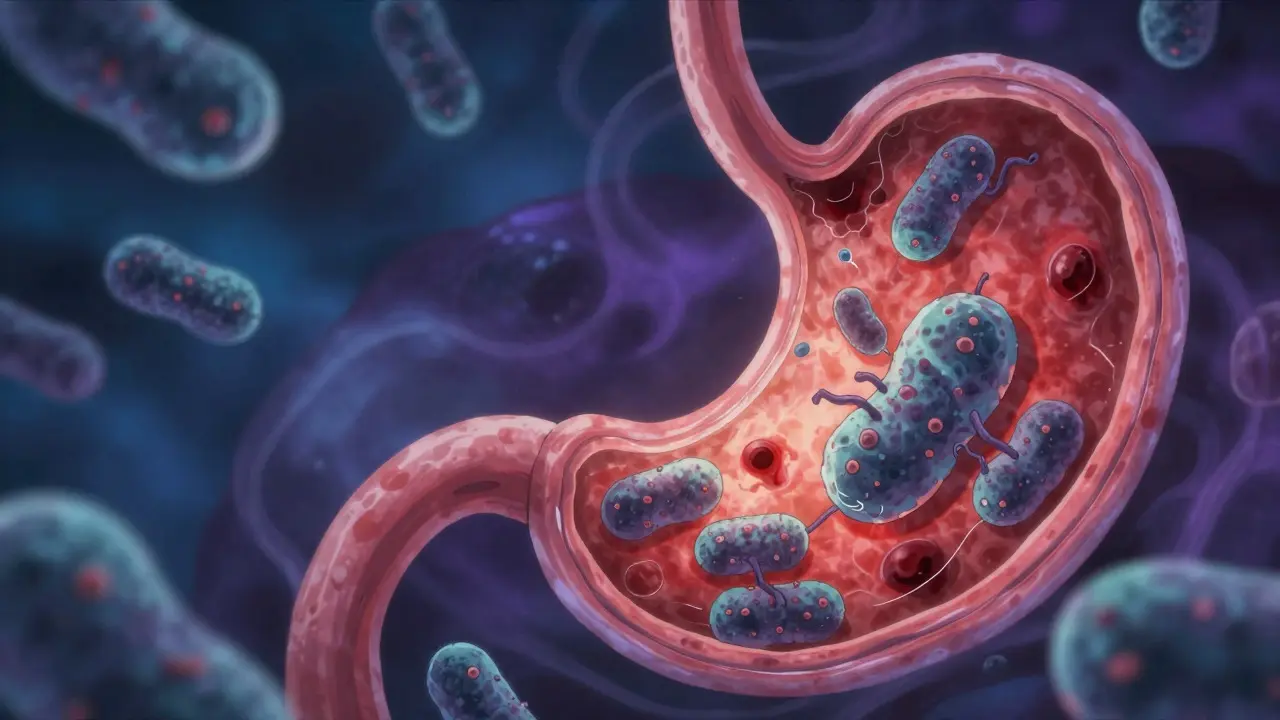
- Helicobacter pylori (H. pylori): This spiral-shaped bacterium burrows into the stomach's mucous lining. It weakens the protective barrier, allowing acid to eat away at the sensitive tissue underneath. H. pylori is found in over 50% of patients with duodenal ulcers and 30-50% of those with gastric ulcers. It is often acquired in childhood and can remain dormant for years before causing symptoms.
- Nonsteroidal Anti-Inflammatory Drugs (NSAIDs): Painkillers like ibuprofen (Advil, Motrin), naproxen (Aleve), and aspirin inhibit enzymes called cyclooxygenases (COX). While this reduces pain and inflammation, it also suppresses the production of prostaglandins-the very chemicals that tell your stomach to produce protective mucus. Long-term or high-dose use of NSAIDs accounts for more than 50% of peptic ulcers today.
Other factors like smoking and heavy alcohol consumption don't directly cause ulcers, but they significantly slow down healing and increase the risk of recurrence. Smoking, for instance, increases the risk of developing an ulcer by two to three times.
Identifying the Symptoms
Most people recognize the classic symptom: a burning or gnawing sensation in the pit of your stomach (the epigastrium). However, the timing of the pain can help distinguish the type of ulcer.
If you have a gastric ulcer (in the stomach), the pain often worsens shortly after eating because food stimulates acid production that irritates the sore. If you have a duodenal ulcer (in the small intestine), the pain typically occurs two to five hours after a meal or during the night, and it may temporarily improve when you eat something.
Beyond the pain, watch for these warning signs that indicate complications:
- Vomiting blood or material that looks like coffee grounds
- Bloody or black, tarry stools (melena)
- Unexplained weight loss
- Severe abdominal tenderness
- Persistent nausea or vomiting
If you experience any of these severe symptoms, seek immediate medical attention. They could signal bleeding or perforation (a hole in the stomach wall), which are life-threatening emergencies.
The Role of Antibiotics in Treatment
If your ulcer is caused by H. pylori, acid reducers alone won't cure it. You must eradicate the bacteria. The standard approach is known as "triple therapy" or "quadruple therapy," combining antibiotics with a proton pump inhibitor (PPI) to create an environment where the bacteria cannot survive.
Here is how the antibiotic regimens typically work:
- Clarithromycin-based Triple Therapy: This involves taking a PPI plus clarithromycin and amoxicillin (or metronidazole if allergic to penicillin) for 10 to 14 days. This was the gold standard for years, but resistance to clarithromycin is rising globally.
- Bismuth Quadruple Therapy: Recommended by the American College of Gastroenterology as first-line treatment in areas where clarithromycin resistance exceeds 15%. This regimen includes a PPI, bismuth subsalicylate (Pepto-Bismol), tetracycline, and metronidazole for 10 to 14 days. Bismuth coats the ulcer and helps kill the bacteria.
Adherence is critical. Missing doses allows resistant strains of H. pylori to survive, leading to treatment failure. Common side effects include a metallic taste (especially with metronidazole), nausea, and dark stools (from bismuth). Always finish the entire course, even if you feel better.

Acid-Reducing Medications: PPIs vs. H2 Blockers
Whether your ulcer is caused by H. pylori or NSAIDs, reducing stomach acid is essential to allow the tissue to heal. There are two primary classes of drugs used for this purpose.
| Feature | Proton Pump Inhibitors (PPIs) | H2-Receptor Antagonists (H2 Blockers) |
|---|---|---|
| Mechanism | Blocks the final step of acid production (the proton pump) | Blocks histamine receptors that trigger acid release |
| Duration of Effect | 24-72 hours per dose | 10-12 hours per dose |
| Healing Efficacy | Superior; heals most ulcers within 4-8 weeks | Good for mild cases; slower healing |
| Common Examples | Omeprazole (Prilosec), Esomeprazole (Nexium), Pantoprazole (Protonix) | Famotidine (Pepcid AC), Cimetidine (Tagamet) |
| Dosing Timing | Must be taken 30-60 minutes before meals | Can be taken with or without food |
Proton Pump Inhibitors (PPIs) are currently the preferred choice for treating active ulcers. They provide profound acid suppression, which is particularly important for duodenal ulcers where nocturnal acid secretion plays a major role. Because PPIs work on the active proton pumps, they are most effective when taken before breakfast, as food intake activates these pumps.
H2 Blockers are generally reserved for mild cases or for patients who cannot tolerate PPIs. They are less potent and require multiple daily doses to maintain control over acid levels. While they offer quick relief, they are not as effective as PPIs in healing large or complicated ulcers.
New Developments: Vonoprazan
A new class of medication called potassium-competitive acid blockers (P-CABs) is gaining traction. Vonoprazan, approved by the FDA in early 2023, represents a significant advancement. Unlike PPIs, vonoprazan binds reversibly to the proton pump and does not require activation by acid. This means it works faster and maintains higher efficacy even in patients with genetic variations that affect PPI metabolism. Clinical trials show eradication rates of up to 90% for H. pylori when combined with antibiotics, compared to 75-85% for traditional PPI-based regimens.

Managing NSAID-Induced Ulcers
If your ulcer is caused by long-term NSAID use, the strategy is different. Simply suppressing acid doesn't address the root cause. Your doctor will likely recommend one of the following approaches:
- Discontinuation: Stopping the NSAID entirely if possible.
- Switching Medications: Using acetaminophen (Tylenol) for pain relief, as it does not irritate the stomach lining. For arthritis or chronic inflammation, switching to a COX-2 selective inhibitor (like celecoxib) can reduce ulcer risk while maintaining anti-inflammatory benefits.
- Prophylaxis: If you must continue taking non-selective NSAIDs, your doctor may prescribe a low-dose PPI or misoprostol (a prostaglandin analog) to protect the stomach lining.
Lifestyle Changes That Support Healing
Medication does the heavy lifting, but your lifestyle choices determine whether the ulcer comes back. Here are practical steps to support recovery:
- Quit Smoking: Nicotine reduces blood flow to the stomach lining and interferes with the effectiveness of acid-suppressing medications.
- Limit Alcohol: Excessive alcohol (more than three drinks daily) can erode the mucosal lining and increase acid production.
- Eat Regularly: Skipping meals can lead to excess acid buildup. Small, frequent meals may help manage symptoms better than large ones.
- Manage Stress: While stress doesn't cause ulcers, it can exacerbate symptoms and delay healing. Techniques like mindfulness or moderate exercise can help.
Long-Term Risks and Monitoring
While PPIs are safe for short-term use, long-term reliance requires monitoring. The FDA has issued warnings about potential risks associated with prolonged high-dose PPI use, including:
- Vitamin B12 Deficiency: Reduced acid can impair the absorption of vitamin B12 from food.
- Bone Fractures: Chronic acid suppression may slightly increase the risk of osteoporosis-related fractures in the hip, wrist, or spine.
- Clostridium difficile Infection: A rare but serious intestinal infection linked to altered gut flora.
Always use the lowest effective dose for the shortest duration necessary. After your ulcer heals, your doctor may taper you off the medication or switch you to an H2 blocker for maintenance.
How long does it take for a peptic ulcer to heal?
With proper treatment, most duodenal ulcers heal within 4 to 8 weeks, while gastric ulcers may take 8 to 12 weeks. Adherence to the full course of antibiotics (if H. pylori positive) and acid-suppressing medication is crucial for complete healing.
Can I take ibuprofen if I have a history of ulcers?
It is generally recommended to avoid ibuprofen and other NSAIDs if you have a history of peptic ulcers. If you must take them, consult your doctor about using a COX-2 inhibitor or taking a protective PPI alongside the painkiller. Acetaminophen is a safer alternative for general pain relief.
Is H. pylori contagious?
Yes, H. pylori can spread through direct contact with saliva, vomit, or fecal matter. It often spreads within families, especially in childhood. Practicing good hygiene, such as washing hands thoroughly after using the bathroom and before eating, can help prevent transmission.
What foods should I avoid with a peptic ulcer?
While no specific diet cures ulcers, certain foods can aggravate symptoms. Common triggers include spicy foods, acidic fruits (like citrus), chocolate, caffeine, and fatty or fried foods. Keep a food diary to identify your personal triggers and avoid them during the healing process.
Will my ulcer come back after treatment?
If H. pylori is successfully eradicated, the recurrence rate drops to about 10%. However, if you continue to smoke, drink heavily, or take NSAIDs regularly, the risk of recurrence remains high. Follow-up testing for H. pylori is recommended to ensure the bacteria are completely gone.