

Fall Risk Medication Checker
Select Your Medications
Click on any medications you are currently taking (prescription or over-the-counter).
Risk Assessment
No medications selected.
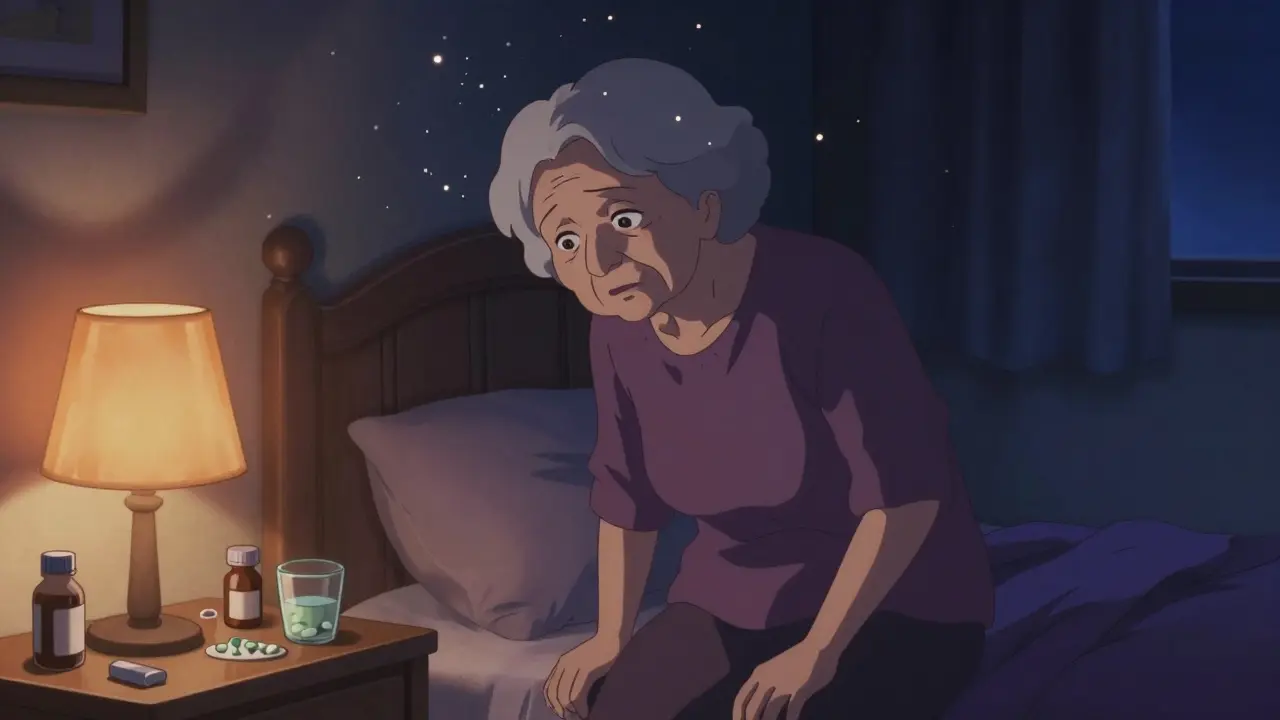
Falls are more than just a bump or a bruise for older adults. They are the leading cause of injury and death in this demographic, often shattering independence and leading to long-term disability. While we often blame slippery floors or poor lighting, there is a silent culprit sitting on many medicine cabinets: prescription drugs. In fact, research shows that between 65% and 93% of older adults who suffer a fall-related injury were taking at least one medication known to increase fall risk at the time of the incident.
This isn't about blaming doctors or patients. It’s about understanding how our bodies change as we age and how those changes interact with the chemicals we use to stay healthy. The surge in fall-related deaths since the early 1990s tracks closely with increased prescribing of certain sedatives and painkillers. Today, nearly half of all older adults are taking medications deemed 'potentially inappropriate' by geriatric experts. This guide breaks down exactly which drugs pose the highest risks, why they cause falls, and what you can do to protect yourself or your loved ones.
The Hidden Culprits: High-Risk Medication Classes
Not all pills carry the same danger. Some medications affect balance, blood pressure, or alertness in ways that become hazardous when combined with age-related physical changes. The American Geriatrics Society identifies specific "Fall Risk-Increasing Drugs" (FRIDs) that consistently appear in fall incidents. Here are the most common offenders:
- Benzodiazepines: Often prescribed for anxiety or sleep, drugs like Alprazolam (Xanax), Lorazepam (Ativan), and Diazepam (Valium) slow down brain activity. This causes drowsiness, muscle relaxation, and impaired coordination. The risk spikes significantly if these are used for longer than two weeks, as the body builds tolerance while side effects persist.
- Sedative-Hypnotics: Sleep aids such as Zolpidem (Ambien), Eszopiclone (Lunesta), and Zaleplon (Sonata) are particularly tricky. They don’t just make you sleepy; they can cause complex sleep behaviors where a person gets up to walk or even drive without being fully awake. This state of unconscious movement is a major recipe for disaster.
- Antidepressants: Surprisingly, antidepressants show the strongest association with falls among all medication classes. Both Tricyclic Antidepressants (TCAs) and Selective Serotonin Reuptake Inhibitors (SSRIs) can cause dizziness, orthostatic hypotension (a drop in blood pressure upon standing), and confusion.
- Opioids: Painkillers like oxycodone, hydrocodone, and morphine induce sedation and cognitive impairment. The risk is dose-dependent, meaning higher doses lead to significantly greater instability. High-potency opioids can increase fall risk by up to 80% compared to low-potency options.
- Antipsychotics: Used for conditions like dementia or severe mental health disorders, these drugs can cause stiffness, tremors, and sudden drops in blood pressure. First-generation antipsychotics generally carry a higher risk than newer alternatives.
Why Do These Drugs Cause Falls?
To understand the risk, you have to look at the mechanics of a fall. Balance requires three things: good vision, strong muscles, and clear signals from the brain. Many medications disrupt one or more of these systems.
For example, cardiovascular medications like beta-blockers and diuretics can cause orthostatic hypotension. This is when your blood pressure drops suddenly as you stand up from a chair or bed. For a younger person, the body compensates quickly. For an older adult, that split-second delay can mean hitting the floor. Similarly, anticholinergics-often used for urinary incontinence or COPD-can cause blurred vision and confusion, stripping away the visual cues needed to navigate stairs or uneven surfaces.
Then there is the issue of "polypharmacy," which is the term for taking multiple medications simultaneously. If an older adult takes a benzodiazepine for anxiety and an opioid for pain, the sedative effects multiply. This combination creates a dangerous cocktail of drowsiness and impaired judgment that drastically increases the likelihood of a stumble.
| Medication Class | Primary Mechanism of Risk | Estimated Risk Increase |
|---|---|---|
| Benzodiazepines | Sedation, impaired coordination | ~50% |
| Sedative-Hypnotics | Drowsiness, complex sleep behaviors | High (varies by drug) |
| Antidepressants (TCAs/SSRIs) | Dizziness, orthostatic hypotension | Strongest association |
| Opioids (High-Potency) | Cognitive impairment, sedation | Up to 80% |
| Muscle Relaxants (e.g., Baclofen) | Pronounced sedation, weakness | ~70% |
| NSAIDs | Blood pressure fluctuations | ~25% |

The "Brown Bag" Review: A Simple Solution
You don’t need to be a pharmacist to manage this risk. One of the most effective tools recommended by the National Council on Aging is the "brown bag method." Here is how it works:
- Gather every single medication you take. This includes prescription pills, over-the-counter drugs (like allergy meds or pain relievers), vitamins, and herbal supplements.
- Put them all in a bag or box.
- Bring this collection to your next doctor or pharmacist appointment.
Many people forget to mention that they take ibuprofen for knee pain or melatonin for sleep. These "small" additions can interact dangerously with prescriptions. For instance, 65% of older adults are unaware that common allergy medications with antihistamine properties can increase fall risk by causing drowsiness and dry mouth.
During this review, ask your provider specifically: "Could any of these contribute to my fall risk?" Healthcare providers should be using tools like the Beers Criteria or STOPP guidelines to screen for potentially inappropriate medications. If a drug is no longer necessary, or if a safer alternative exists, this is the time to switch.

Safer Alternatives and Deprescribing
The goal isn’t always to stop medication entirely, but to find the safest path. This process is called deprescribing, and it requires patience and professional guidance.
For insomnia, the gold standard is now Cognitive Behavioral Therapy for Insomnia (CBT-I). Studies show CBT-I is 70-80% effective and carries zero risk of chemical dependency or next-day grogginess. It addresses the root cause of sleep issues rather than masking them with sedatives.
If you must continue taking high-risk medications, the CDC’s STEADI program recommends the "STOP, SWITCH, REDUCE" approach:
- STOP: Discontinue medications that are no longer providing benefit.
- SWITCH: Move from a high-risk drug to a lower-risk alternative. For example, switching from a long-acting benzodiazepine to a short-acting one, or using non-drug therapies for anxiety.
- REDUCE: Lower the dose to the minimum effective amount. Never taper off sedatives or opioids abruptly, as this can cause severe withdrawal symptoms. Tapering should typically happen over 8-12 weeks under medical supervision.
Signs You Need to Act Now
Don’t wait for a fall to happen. Watch for these warning signs that your medications may be affecting your stability:
- Feeling dizzy or lightheaded when standing up.
- Experiencing excessive drowsiness during the day.
- Feeling unsteady or "off-balance" when walking.
- Confusion or difficulty concentrating after taking a new pill.
- Near-misses, such as stumbling over rugs or missing steps.
If you notice any of these, document when they occur relative to your medication schedule and report them to your healthcare provider immediately. Remember, 28% of older adults attribute their falls to medication side effects, yet only 15% discuss this with their doctors. Breaking that silence can save lives.
Can over-the-counter medications increase fall risk?
Yes. Common OTC drugs like antihistamines (for allergies), cough suppressants, and NSAIDs (like ibuprofen) can cause drowsiness, dizziness, or blood pressure changes. Always include these in your medication review with your doctor.
What is the Beers Criteria?
The Beers Criteria is a widely accepted guideline published by the American Geriatrics Society that lists medications considered potentially inappropriate for older adults due to increased risks of side effects, including falls. It helps doctors identify drugs to avoid or use with caution.
How long does it take to safely stop a benzodiazepine?
Stopping benzodiazepines abruptly can be dangerous and cause seizures or severe withdrawal. A safe taper usually takes 8 to 12 weeks, depending on the dosage and how long you’ve been taking the drug. Always follow a plan created by your healthcare provider.
Are natural supplements safe from fall risks?
Not necessarily. Supplements like valerian root, kava, and high-dose melatonin can have sedative effects similar to prescription sleep aids. They can also interact with other medications. Treat supplements with the same caution as prescription drugs.
What is orthostatic hypotension?
Orthostatic hypotension is a sudden drop in blood pressure when you stand up from sitting or lying down. It causes dizziness or fainting and is a common side effect of blood pressure medications, diuretics, and some antidepressants. It is a major contributor to falls in older adults.





Comments (12)
swetha r
May 9, 2026 AT 15:11 PMthey want you to believe it's just the pills but what about the fluoride in the water making your bones brittle so you fall easier? think about it. the big pharma narrative is a distraction from the real agenda of depopulation through 'accidents'. my grandmother fell and they gave her more drugs instead of taking them away. it's all connected.
i don't trust these guidelines at all. who wrote this? a committee of people who profit from keeping us sedated and dependent. we need to wake up and look at the whole system not just the medicine cabinet. silence is golden but suspicion is survival.
Dat Alexander
May 11, 2026 AT 11:40 AMlook i get that paranoia can feel like insight sometimes but let's stick to the physiology here. the interaction between benzodiazepines and aging bodies is well documented in peer reviewed literature not conspiracy forums. swetha r might be feeling overwhelmed by the information but dismissing medical science doesn't help anyone stay safe on their feet.
the brown bag review is actually a really practical tool for families to use. it creates a shared space for truth rather than secrecy. if you are caring for an older adult please encourage them to bring every bottle to the next appointment. it takes five minutes and could prevent a hip fracture which is often a death sentence for seniors.
Derick Garcia
May 12, 2026 AT 05:39 AMThe author presents a rather simplistic view of pharmacological risk reduction as if the solution is merely to discard medications prescribed by professionals who have dedicated decades to understanding human pathology. This approach ignores the complex trade-offs inherent in treating chronic conditions such as anxiety, insomnia, and pain. To suggest that one should simply stop taking prescribed medication without rigorous medical supervision is not only irresponsible but potentially lethal due to withdrawal syndromes. The Beers Criteria is a guideline, not a law, and must be applied with nuance by qualified physicians who understand the individual patient's history. Furthermore, the implication that doctors are negligent for prescribing these drugs is a gross oversimplification of clinical decision-making processes. We must respect the expertise of healthcare providers rather than relying on internet articles to dictate our medical regimens. The notion that 'de-prescribing' is a panacea is intellectually lazy and medically dangerous.
Abhimanyu Pandey
May 13, 2026 AT 08:09 AMYou are ignoring the systemic corruption;!! the pharmaceutical industry;!! lobbies congress;!! to keep these drugs profitable;!! even when they cause harm;!! It is not about 'nuance';!! It is about greed;!! They know these drugs cause falls;!! They know they cause dementia;!! But they do not care;!! Because the stock price goes up;!! And the shareholders get rich;!! While the elderly suffer;!! And die;!! In nursing homes;!! That is the reality;!! You cannot ignore the money trail;!! It leads directly to the boardrooms;!! Of big pharma;!! Who are poisoning us;!! Slowly;!! With their pills;!! Wake up;!!
Raymond Roberts
May 15, 2026 AT 05:52 AMhonestly i think everyone here is getting way too worked up about the politics of it all when the real issue is just plain old biology and bad habits. i mean sure the companies make money but my dad took ambien for years and he literally walked into a wall once while half asleep. it was scary as hell. we switched him to cbt-i and yeah it was hard work for him but now he sleeps naturally without feeling like a zombie the next day.
the typo prone part of me wants to say its no big deal but falling is a big deal. if you are taking opioids or benzos just talk to your doc about tapering off slowly. dont just stop cold turkey because that causes seizures which is worse than falling. take it slow and steady folks. life is short enough without adding drug induced accidents to the mix.
andrew iregbayen
May 16, 2026 AT 13:33 PMthis is such a great reminder for all of us! i never realized how many otc meds could actually contribute to dizziness or balance issues. thanks for sharing this info it really makes me want to go home and check my mom's medicine cabinet right now. she takes a lot of different things and we never really thought about how they might interact.
i love the idea of the brown bag review. it sounds so simple but effective. we will definitely try that at her next appointment. hopefully she won't mind bringing everything along. it's better to be safe than sorry especially when it comes to preventing falls. keep up the good work!
Sarah Grenberg
May 16, 2026 AT 19:30 PMI am absolutely thrilled to see this topic being discussed with such clarity and precision. As someone who works in geriatric care I see the devastating impact of falls every single day and it breaks my heart. The statistics cited here are accurate and alarming. We must prioritize safety above all else.
Please remember that orthostatic hypotension is a silent killer. Many patients do not realize they are at risk until they hit the ground. Educating yourself and your loved ones is the first step toward prevention. Do not hesitate to question your prescriptions. Your health is paramount. Let us stand together in advocating for safer medication practices for our aging population. This is a critical public health issue that demands our immediate attention and action.
Brian Lee
May 17, 2026 AT 10:18 AMhi there i read this post and it seems very important. i am not smart about medicine but my uncle fell last year and broke his hip. the doctor said it was because of his blood pressure meds. i did not know that before. now i know to ask questions. thank you for writing this. it helps people like me who do not understand big words. i will tell my family to be careful with their pills. hope everyone stays safe and healthy. no more falls please.
Guy Birtwhistle
May 18, 2026 AT 07:09 AMoh wow another article telling grandmas to stop taking their happy pills so they don't break a hip. classic. like any of us would actually go through the hassle of a brown bag review when we can just buy melatonin gummies and pretend we're doing something productive.
but seriously if you are reading this and you are over 60 and still taking xanax daily you are basically walking around with a target on your back. gravity does not care about your anxiety. it just cares about your center of mass. fix your posture or lose your independence. your choice. i'm just saying the floor is always ready for you.
Kenny Pines
May 18, 2026 AT 08:44 AMlol @guy birtwhistle you are so harsh 😂 but honestly he has a point about gravity being undefeated. 🤣 i had to laugh at the 'target on your back' line though. seriously though this list is terrifying. i take an ssri for depression and i never thought about the fall risk part. i guess i should mention it to my doc next time. maybe switch to something safer? or just walk slower? 🤷♂️ either way thanks for the heads up everyone. lets keep those hips intact! 💪✨
Liz and Nick
May 18, 2026 AT 10:31 AMugh why does everything have to be so complicated. i just want to sleep and not fall down. but no now i have to worry about every pill i pop. it is exhausting dealing with all this medical nonsense. doctors never listen anyway they just write scribbles and send you out the door. i am done trying to figure it out myself. whatever happens happens. i am too tired to fight the system anymore. just leave me alone.
Brian Fibelkorn
May 18, 2026 AT 20:55 PMThe moral imperative to engage in self-surveillance regarding pharmacological intake is undeniable yet largely ignored by the populace. The dramatic consequences of polypharmacy-induced instability are frequently trivialized by individuals who lack the intellectual fortitude to comprehend the physiological ramifications of anticholinergic burden. It is lamentable that society continues to normalize the ingestion of neurotoxic compounds under the guise of symptom management without acknowledging the profound ethical violations inherent in such practices. One must cultivate a rigorous discipline of inquiry and skepticism towards institutional medical recommendations. Failure to do so constitutes a dereliction of duty towards one's own bodily autonomy and integrity. The path to true wellness requires a rejection of passive compliance and an embrace of active resistance against pharmaceutical hegemony.