


Imagine a surgeon ready to start a procedure, only to find out the anesthesia they need isn't in the building. Or a cancer patient arriving for chemotherapy, but the clinic has to postpone their treatment because a critical drug is missing from the supply chain. For many hospitals, this isn't a nightmare scenario-it's a weekly reality. While you might occasionally find a pharmacy out of a specific brand of allergy meds, injectable medication shortages are a completely different beast, and hospital pharmacies are caught in the crossfire.
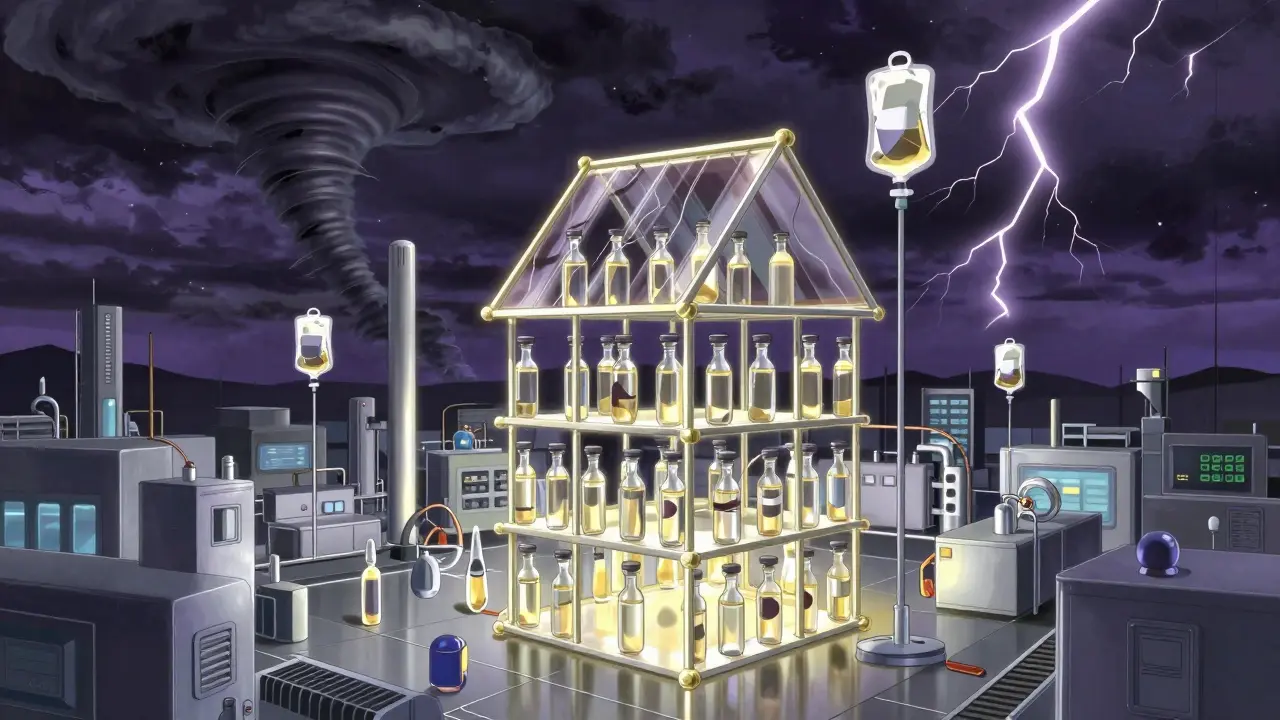
The scale of the problem is staggering. By mid-2025, the American Society of Health-System Pharmacists (ASHP) reported 226 active drug shortages across the U.S. But the real sting is felt in the sterile injectable category. These aren't just "out of stock" items; they are essential, life-saving fluids and medications that often have no easy substitute. Because they are so hard to make and barely profitable, the supply chain is essentially a house of cards waiting for a breeze to knock it over.
| Metric | Retail/Community Pharmacy | Hospital Pharmacy |
|---|---|---|
| Inventory Affected | 15-20% | 35-40% |
| Sterile Injectables Role | Low | 60-65% of shortages |
| Patient Impact | Treatment delay/switch | Immediate clinical risk/surgical postponement |
| Substitution Ease | Moderate (Generic swaps) | Difficult (Bioavailability issues) |
Why sterile injectables are so hard to keep in stock
You might wonder why a simple bag of saline or a common anesthetic is so hard to find. It comes down to the sheer complexity of sterile injectables which are medications designed to be administered directly into the bloodstream or body tissues, requiring total absence of contaminants. Unlike a pill that can be pressed in a factory, these drugs require aseptic processing-a rigorous, expensive environment where a single speck of dust can ruin an entire batch.
Then there's the money. Most manufacturers of these generics operate on razor-thin profit margins, sometimes as low as 3-5%. When the profit is that low, companies aren't incentivized to invest in backup facilities or better technology. This creates a fragile system where a single event can trigger a nationwide crisis. For example, a tornado hitting a Pfizer plant in North Carolina in late 2023 wiped out the production of 15 critical medications instantly. Similarly, quality control failures at a plant in India recently shut down cisplatin a platinum-based chemotherapy drug used to treat various cancers production, leaving oncology wards scrambling for alternatives.
The systemic failures fueling the crisis
The problem isn't just bad luck with the weather; it's a systemic failure of how we source drugs. A massive 80% of active pharmaceutical ingredients for generics are manufactured in China and India. This geographic concentration means that any geopolitical tension or local regulatory crackdown in those regions sends shockwaves through U.S. hospitals.
Furthermore, the market has consolidated. A few giant companies now control 65% of the market for essential fluids like sodium chloride. When one of these "single points of failure" has a technical glitch, there is no one else with the capacity to pick up the slack. The FDA the federal agency responsible for regulating the manufacture and sale of drugs in the US has tried to intervene, but they have limited power. Internal data shows that only about 14% of shortage notifications actually lead to a timely resolution. We're essentially relying on a system that is designed for efficiency, not resilience.
How this hits the hospital floor
For a hospital pharmacist, a shortage isn't just a logistics problem-it's an ethical one. When the supply of a critical drug drops, pharmacists have to decide who gets the remaining doses. This creates immense psychological stress. In a recent survey, 68% of hospital pharmacists admitted to facing ethical dilemmas over medication allocation, and nearly half said they had to use less effective alternatives that could potentially hurt patient outcomes.
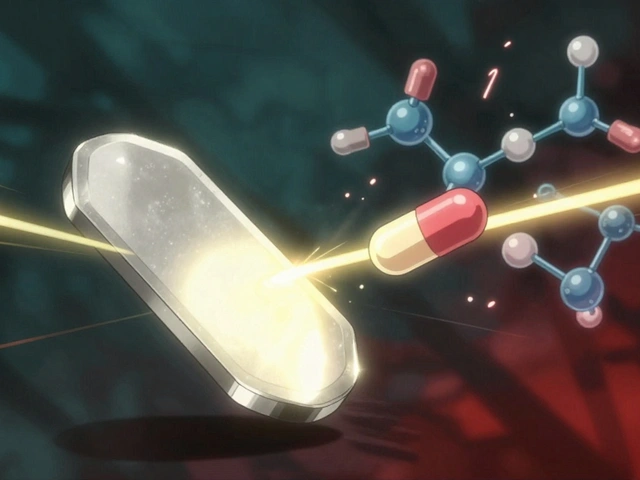
The operational burden is also crushing. Pharmacy directors are spending nearly 12 hours a week just hunting for alternative suppliers or managing substitutions. It's not as simple as picking a different brand. Because injectables have different bioavailability-meaning the body absorbs them differently-pharmacists can't just swap one for another without a formal review by a Pharmacy and Therapeutics Committee a committee of physicians and pharmacists that decides which drugs are used in a hospital. This bureaucracy, while necessary for safety, slows down the response time during a crisis.
We see the worst effects in three specific areas:
- Anesthetics: With a staggering 87% shortage rate, surgeries are being postponed, leading to massive backlogs.
- Chemotherapeutics: 76% of these drugs face shortages, which means cancer patients may have their treatment cycles interrupted.
- Cardiovascular Injectables: 68% are in shortage, putting patients in critical cardiac care at risk.

Practical strategies for managing the chaos
Since the government and manufacturers aren't fixing the problem fast enough, hospitals have had to get creative. Many have established "shortage management committees" to track every single missing vial in real-time. One effective move has been the implementation of tiered allocation systems, where the most critically ill patients get priority for the limited stock.
Pharmacists are also revising "standing order sets." Instead of a doctor ordering a specific drug that might be gone, the order is written as "Drug A or a therapeutic equivalent," which allows the pharmacist to switch to an available alternative without waiting for a new doctor's signature. In some extreme cases, like the 2024 saline shortage, hospitals even reverted to oral rehydration for post-op patients-a move that seems archaic but was necessary for survival.
However, these fixes are band-aids. Only about 45% of hospitals have a fully documented, updated protocol for shortages. Many still rely on ad-hoc, "wing-it" methods, which significantly increases the risk of medication errors during the stress of a shortage.
What the future holds
Is there any light at the end of the tunnel? The Biden administration allocated $1.2 billion in 2024 to boost domestic manufacturing, which is a start. But building a sterile manufacturing plant takes years, not months. Most analysts think we won't see a real impact from these funds until 2029 or 2030.
Meanwhile, the world is getting more unpredictable. Climate change is bringing more extreme weather that knocks out factories, and geopolitical shifts continue to threaten the flow of ingredients from Asia. Until the industry moves away from the "lowest cost possible" model and starts valuing stability and domestic production, hospital pharmacies will continue to be the hardest hit. For now, the focus remains on mitigation: better tracking, faster substitution protocols, and the hope that the next big storm doesn't hit a critical plant.
Why are injectable drugs more prone to shortages than pills?
Injectables require sterile manufacturing (aseptic processing), which is far more complex and expensive than making tablets. Because the profit margins are so low, companies don't invest in redundant facilities. If one sterile plant goes offline due to quality issues or a natural disaster, there are very few other facilities capable of filling that gap.
Can't hospitals just use a different brand of the same drug?
It's not always that simple. Because of bioavailability differences-how the drug is absorbed and distributed in the body-some injectables cannot be swapped 1:1. Hospitals must use therapeutic interchange protocols approved by a Pharmacy and Therapeutics Committee to ensure that the alternative drug is safe and effective for that specific patient's condition.
How do these shortages affect patients directly?
The most direct impacts are treatment delays and the postponement of elective or urgent surgeries. For example, shortage of anesthetics can lead to surgical backlogs, while shortages in chemotherapy drugs can disrupt the timing of cancer treatments, potentially impacting the overall success of the therapy.
What is the FDA doing to stop this?
The FDA has implemented the Drug Supply Chain Security Act to improve tracking and has encouraged earlier shortage notifications. However, the FDA has limited authority to force companies to produce more of a low-profit drug, and data suggests only a small fraction of shortage notifications result in a quick resolution.
Are there any long-term solutions being implemented?
There are two main pushes: increasing domestic manufacturing through government funding (like the $1.2 billion allocation in 2024) and the adoption of continuous manufacturing technology. Continuous manufacturing is more efficient and less prone to the "batch failure" issues that cause many current shortages, though only about 12% of producers currently use it.





Comments (14)
Sam Dyer
April 12, 2026 AT 22:17 PMAbsolutely pathetic that we've outsourced our basic survival to China and India. It's a total joke that we're relying on these foreign entities for life-saving fluids while our own industry rots from the inside out. We need to bring every single plant back to US soil and stop playing these games with global supply chains that are basically designed to screw us over. Total failure of leadership! 🙄
john chiong
April 13, 2026 AT 12:07 PMcorporate greed is a putrid stain on the soul of medicine and letting profit margins dictate who lives or dies is a moral bankruptcy of the highest order
Mary Johnson
April 13, 2026 AT 16:17 PMFunny how this always happens when they want to control the population or push some new agenda. You think it's just "weather" or "glitches"? Please. They're intentionally creating these shortages to see how we react and to force us into a more controlled system where the government decides who is "worthy" of medicine. It's all connected and the FDA is just the puppet show for the people actually pulling the strings from the shadows.
mimi clouet
April 14, 2026 AT 17:58 PMActually, it's worth mentioning that the move toward continuous manufacturing is the real game-changer here! 🌟 It basically removes the risk of whole-batch failures because the product is monitored in real-time, which would solve so many of the sterile injectable issues. It's just a matter of getting more factories to upgrade their tech! 🚀💖
Catherine Mailum
April 15, 2026 AT 05:39 AMoh great so we just wait until 2030 while people suffer because some suit decided 3% profit wasnt enough... absolute peak efficiency right there
Billy Wood
April 17, 2026 AT 02:57 AMWE CAN FIX THIS!!! SUPPORT OUR PHARMACISTS!!! NOW!!!
Princess Busaco
April 18, 2026 AT 07:19 AMI find it absolutely fascinating that people are just accepting these "band-aid" solutions as if they are acceptable in a modern society, when in reality, the sheer incompetence of the Pharmacy and Therapeutics Committees to act decisively without a decade of bureaucracy is the true tragedy here, and frankly, if you aren't outraged by the fact that we are reverting to oral rehydration in a world of space travel, you are simply not paying attention to the systemic decay of our institutional infrastructure.
Haley Moore
April 19, 2026 AT 06:35 AMImagine thinking a 1.2 billion dollar handout is going to save us when the infrastructure is literally prehistoric 🙄 Like, please, I've seen more effort put into a brunch menu than the FDA's shortage resolution plans 💅✨
Rim Linda
April 21, 2026 AT 03:08 AMThis is literally a nightmare! 😱 My heart breaks for those cancer patients just waiting on a phone call 😭
Olivia Lo
April 21, 2026 AT 03:30 AMOne must consider the ethical teleology of this crisis; we are witnessing a collision between the utilitarian drive for cost-efficiency and the deontological duty of care. While the reliance on offshore API production presents a precarious vulnerability, the resolution lies not merely in domesticity but in a paradigm shift toward pharmaceutical resilience over mere lean logistics.
melissa mac
April 21, 2026 AT 16:43 PMIt's so important to support the pharmacists who are carrying this burden. They're the ones making the hardest choices every day, and we should be looking for ways to ease that emotional load on them while we wait for the systemic changes to kick in.
Clare Elizabeth
April 22, 2026 AT 17:19 PMwe got this guys!! just keep pushing for those better protocols and supporting each other in the wards its gonna get better eventually!!
Mark Dueben
April 23, 2026 AT 22:21 PMI agree with the need for tiered allocation, but we must ensure that the process remains inclusive and transparent so that no patient feels abandoned by the system during these shortages.
Tabatha Pugh
April 25, 2026 AT 16:43 PMI actually read a white paper on this and the real issue is that most people don't realize that sterile compounding is a high-risk activity that requires specific ISO class 5 environments. If you don't have the cleanroom certification, you can't just "start making it" in a garage. The barrier to entry is astronomical, which is why those few companies have such a stranglehold on the market. Also, a lot of these hospitals are probably hoarding stock which only makes the shortage worse for everyone else, even if they won't admit it because they're terrified of the next shipment not arriving. It's a classic prisoner's dilemma where the rational individual choice leads to a collective disaster. Plus, the bioavailability issues aren't just about the drug itself but the excipients used in the formulation which vary wildly between manufacturers. If you switch a patient from one brand to another without adjusting the dose, you could end up with sub-therapeutic levels or toxicity depending on the molecule. This is why the P&T committee is so slow; they're trying to prevent a mass casualty event in the ICU. Most people just see a "missing bottle" but it's actually a complex pharmacological puzzle that takes hours of research to solve safely. And don't even get me started on the cold chain logistics for these things, because if one refrigerator fails at a distribution center, thousands of doses are trashed and the shortage spikes instantly. It's a fragile, broken mess of a system.