


Drug safety monitoring isn’t just paperwork anymore. It’s real-time alerts, automated flags, and dashboards that pop up while you’re reviewing a patient’s chart. If you’re still relying on paper forms or scattered spreadsheets to track side effects, you’re working in the past. Modern clinician portals and apps are changing how doctors, pharmacists, and safety officers catch dangerous drug reactions before they hurt patients. The goal? Faster detection, fewer errors, and better outcomes-all built into the workflow you already use.
What These Tools Actually Do
Clinician portals for drug safety aren’t fancy reporting tools. They’re integrated systems that pull data from your electronic health records (EHR), clinical trials, and lab results to spot patterns you might miss. Think of them as a second pair of eyes that never get tired. When a patient on a new blood thinner starts showing unusual bruising, the system doesn’t wait for you to file a report. It flags it. Immediately.
These platforms don’t just collect data-they analyze it. They compare your patient’s reaction to thousands of others in real time. If three patients on the same new antibiotic developed liver inflammation within two weeks, the system will alert you before the fourth one does. That’s not guesswork. That’s data-driven safety.
Most of these tools connect directly to your EHR. No extra logins. No duplicate entries. You see the safety alert right alongside the patient’s medication list, lab values, and allergy history. It’s not a separate system-it’s part of your workflow.
How to Get Started
Getting set up isn’t as complicated as it sounds, but it does require planning. Here’s how to begin:
- Know what your system already has. Most hospitals and clinics use EHRs like Epic or Cerner. Check if they already include built-in safety tools like Wolters Kluwer’s Medi-Span. If yes, you’re already halfway there.
- Identify your biggest pain point. Are you missing late-onset reactions? Are you drowning in false alerts? Are you struggling to report to regulators? Pick one problem to solve first.
- Check for integration. Don’t pick a tool that needs manual data uploads. Look for platforms that connect via HL7 or FHIR standards. These are the languages your EHR already speaks. Cloudbyz, for example, syncs with clinical trial systems in under 15 minutes after data is entered.
- Start small. Pilot the tool with one drug class-like anticoagulants or diabetes meds-before rolling it out across your whole practice. Track how many alerts were true positives versus noise.
- Train your team. A 2024 survey found that 87% of safety officers say data literacy is critical. Even the best tool fails if staff don’t know how to interpret the alerts. Schedule 2-3 hour training sessions. Use real cases from your own clinic.
Top Platforms Compared
Not all tools are made equal. Here’s what the leading platforms do well-and where they fall short:
| Platform | Best For | Key Strength | Biggest Limitation | Cost (Annual) |
|---|---|---|---|---|
| Wolters Kluwer Medi-Span | Hospitals and clinics | Real-time drug interaction alerts that prevented 187 adverse events in a 500-bed hospital over six months | Too many false alerts-causing alert fatigue among clinicians | $22,500-$78,000 |
| Cloudbyz | Clinical trials and pharma companies | Reduces time-to-detect safety signals by 40% and cuts report prep from 3 weeks to 4 days | Requires 6-12 weeks of integration; needs CDISC expertise | $185,000 |
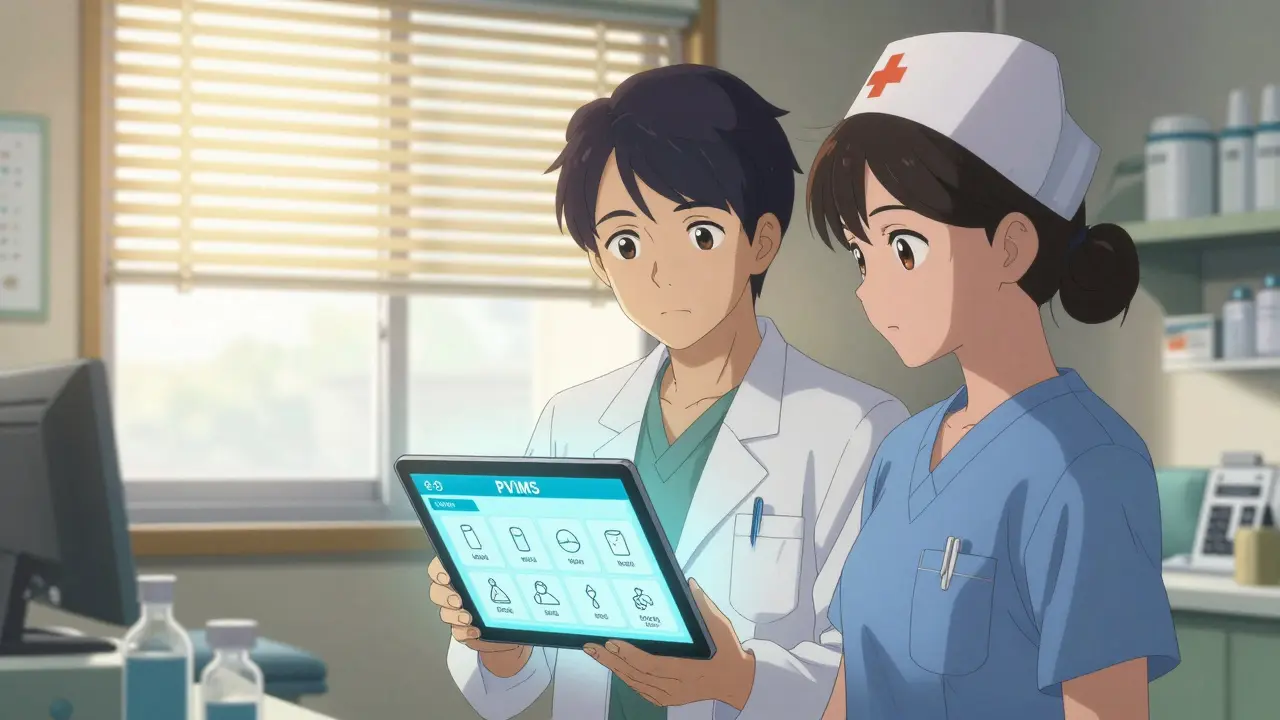
| PViMS | Low-resource settings | Free, simple interface; 95% adoption in 17 LMICs; uses MedDRA codes to cut data entry by 60% | No AI analytics; fails without stable internet | Free (donor-funded) |
| clinDataReview | Regulatory compliance teams | 100% FDA/EMA compliant; generates reproducible reports with automated validation | Requires R programming skills; steep learning curve | Free (open-source) |
| IQVIA AI Tools | Large-scale pharmacovigilance | Reduces false positives by 85% using AI; detects signals others miss | Needs 50,000+ patient records to work well; AI transparency concerns | Custom pricing |
Most clinicians in the U.S. already have access to a tool like Medi-Span inside their EHR. If you’re not using it, you’re leaving safety to chance. For clinical trial teams, Cloudbyz or IQVIA might be worth the investment. For clinics in rural or low-income areas, PViMS is the only realistic option.
What You Need to Know Before You Click ‘Submit’
These tools aren’t magic. They can’t replace your clinical judgment. In fact, over-reliance on them is dangerous.
A 2024 FDA workshop found that 22% of flagged safety signals were false positives-because the system didn’t understand context. A patient on a new drug who had a mild rash? The system flagged it as a possible allergic reaction. But you know they’ve had that rash for years. You know they’re on a new shampoo. That’s why your input matters.
Every alert needs three things:
- Context: Is this a new drug? Did they just start it? Are they on other meds?
- Timing: Did the reaction happen within hours? Weeks? Months?
- Exclusion: Could something else be causing this? Infection? Stress? Surgery?
Use the portal to spot patterns. Use your brain to decide what’s real.
Training and Skills That Actually Matter
You don’t need to be a coder to use these tools. But you do need to understand a few things:
- Clinical pharmacology: You need to know how drugs work, interact, and metabolize. No tool can replace that.
- Data literacy: Can you read a trend line? Understand what a signal means versus a random spike?
- Regulatory basics: Know what MedDRA and E2B are. You don’t have to code them, but you need to know why they matter for reporting.
Most organizations report that staff need 80-120 hours of training to use these systems effectively. That’s not one workshop. That’s ongoing learning. Make it part of your team’s routine. Review one alert per week together. Talk about why it was flagged. Was it right? Was it wrong? What did you learn?

What’s Next? The Future Is Real-Time
By 2027, most safety systems will use AI to predict risks before they happen. Cloudbyz’s new version 5.0, released in late 2024, already uses machine learning to combine lab results with clinical notes and predict liver toxicity before it shows up in blood tests. IQVIA’s AI co-pilot helps safety officers review signals 35% faster by pulling together relevant studies and patient histories automatically.
But here’s the catch: regulators are tightening the rules. The FDA’s 2026 guidance will require AI models to explain how they reached a decision. No black boxes. If the system says a drug caused a reaction, it must show you why-step by step.
That means the best tools won’t just be the most advanced. They’ll be the most transparent.
Common Pitfalls and How to Avoid Them
Here’s what goes wrong-and how to fix it:
- Alert fatigue: Too many false alarms? Talk to your vendor. Adjust thresholds. Filter by drug class. Don’t ignore alerts-fine-tune them.
- Disconnected data: If your portal doesn’t pull from your EHR, lab system, and pharmacy records, it’s useless. Demand integration.
- One-person reliance: Don’t let one safety officer handle everything. Train multiple staff. Rotate responsibilities.
- Ignoring low-tech users: In rural clinics, staff might not have reliable internet. PViMS works offline. Make sure your team knows how to use it.
The biggest mistake? Thinking this is a tech problem. It’s not. It’s a culture problem. If your team sees these tools as extra work, they’ll bypass them. If they see them as lifesavers, they’ll use them every day.
Can I use these tools if I work in a small clinic?
Yes, but start simple. Most small clinics already have drug safety alerts built into their EHR-like Wolters Kluwer’s Medi-Span. You don’t need a fancy portal. Use what’s already there. Focus on reviewing alerts, not managing systems. If you’re part of a network or hospital system, ask your IT team to enable the safety module. It’s often already licensed.
Do I need to be tech-savvy to use these platforms?
Not at all. Most clinician portals are designed for busy healthcare workers, not IT staff. You click, you review, you respond. The complex stuff-data mapping, API connections, regulatory formats-is handled in the background. You only need to understand what the alerts mean and how to act on them. Training is about clinical reasoning, not software buttons.
Are these tools only for doctors?
No. Pharmacists, nurses, clinical researchers, and safety officers all use them. In fact, pharmacists often catch the most reactions because they’re the ones reviewing every prescription. Nurses spot changes in symptoms during routine checks. Everyone plays a role. The tool just makes it easier to report and track.
What if my hospital doesn’t have one of these systems?
Start by asking your pharmacy or compliance department. Many hospitals have licenses for Medi-Span or similar tools but haven’t turned them on. If not, you can still report adverse events manually through national systems like the FDA’s MedWatch or the UK’s Yellow Card scheme. But don’t stop there. Push for integration. Patient safety should be a priority, not an afterthought.
How do I know if an alert is real or a false alarm?
Ask three questions: Is the timing right? Did the symptom start after the drug was introduced? Is there another explanation? Check the patient’s full history-recent infections, new supplements, changes in kidney function. If the reaction matches known patterns for that drug, it’s likely real. If it’s vague or matches a common condition, it’s probably noise. Always document your reasoning. That’s how you improve the system over time.
Are these tools expensive?
It depends. For hospitals, tools like Medi-Span cost $20,000-$80,000 a year. For large pharma companies, integrated platforms like Cloudbyz run over $180,000. But PViMS is free for clinics in low-income countries. And open-source tools like clinDataReview cost nothing but require technical skill to run. The real cost isn’t the software-it’s the time you waste missing a dangerous reaction because you didn’t have the right tools.
Final Thought: This Isn’t About Technology. It’s About Trust.
These portals don’t replace you. They empower you. They give you the data you need to make faster, safer decisions. But they only work if you use them-and if you trust them enough to act.
The most successful teams don’t just use the tools. They talk about them. They question them. They improve them. They turn alerts into learning moments. That’s how drug safety becomes part of everyday care-not a compliance checkbox.
If you’re not using a clinician portal for drug safety yet, you’re not alone. But you’re also not doing your job fully. Start today. Use what you have. Push for what you need. Your patients will thank you.







Comments (10)
Trevor Whipple
January 13, 2026 AT 05:41 AMbro i just clicked the alert on my epik and it told me my patient on warfarin had a weird bruise-turns out she fell outta bed. the system didnt know. now im paranoid every time it pings.
mike swinchoski
January 14, 2026 AT 08:27 AMif you’re not using AI tools to monitor drugs, you’re just a glorified scribe. real doctors use IQVIA. the rest of you are one step above handwriting prescriptions on napkins.
Lethabo Phalafala
January 14, 2026 AT 16:17 PMI work in a clinic with no internet half the time. PViMS saved my life last month. A kid came in with jaundice-no labs, no EHR-but the system flagged his meds anyway because his mom had reported it on her phone last week. I almost cried. This isn’t tech. This is human.
Damario Brown
January 15, 2026 AT 21:10 PMyou guys are missing the point. the real issue is alert fatigue isn't a UX problem-it's a systemic failure of clinical governance. we're drowning in noise because vendors prioritize compliance over cognition. and nobody wants to admit that 73% of alerts are false because the algorithm doesn't account for polypharmacy in elderly patients with CKD. fix the data pipeline, not the interface.
John Pope
January 16, 2026 AT 19:35 PMlet’s be honest-these portals are just digital placebo pills. they make us feel like we’re doing something while actually outsourcing our judgment to a black box trained on data from 2018. the real safety net isn’t software-it’s the quiet pharmacist who asks, ‘why is this patient on three anticoagulants?’
Avneet Singh
January 18, 2026 AT 19:17 PMMedi-Span? Please. That’s 2019 tech. Real pharmacovigilance requires FHIR-integrated ML pipelines with MedDRA 26.1 mapping and automated E2B R3 submissions. If you’re still using GUIs, you’re part of the problem.
Adam Vella
January 20, 2026 AT 02:41 AMWhile the technological infrastructure described is commendable, one must not conflate automation with clinical acumen. The physician’s role remains irreplaceable, as contextual understanding cannot be algorithmically derived from structured data alone. The integration of such tools must be predicated upon epistemological humility.
Nelly Oruko
January 20, 2026 AT 21:37 PMyou dont need fancy ai. you just need to talk to your team. last week, a nurse noticed a pattern in 3 patients on the same statin-same rash, same week. we looked at their charts together. turned out it was a new laundry detergent. no system caught that. just human eyes. and a little trust.
Alan Lin
January 21, 2026 AT 19:45 PMif your hospital doesn’t have a safety portal, you’re not just behind-you’re endangering lives. i’ve seen patients die because someone ignored a flag because ‘it was probably noise.’ stop making excuses. demand integration. train your staff. make safety non-negotiable. this isn’t optional. it’s your duty.
Rosalee Vanness
January 21, 2026 AT 20:12 PMremember when we used to sit in the break room and trade stories about weird reactions? ‘That one guy with the rash after the new antihypertensive?’ ‘Yeah, and his wife said he started eating mangoes last week.’ Now we get alerts that say ‘possible hypersensitivity’ and we just click ‘dismiss.’ We lost the art of the conversation. The tools are great-but they’re not replacing the human whisper in the hallway that saves lives. Maybe we need more coffee chats and fewer dashboards.