


If you’ve been told you’re allergic to penicillin or another antibiotic, you might be carrying around a label that isn’t even true. About 10% of people in the U.S. say they have a penicillin allergy, but when tested properly, fewer than 1% actually do. That means most people are avoiding safe, effective, and cheaper antibiotics based on a mistake - and it’s costing them more money, longer hospital stays, and higher risk of resistant infections.
Getting tested isn’t just about clearing your name. It’s about getting back to the right treatment. Antibiotic allergy testing, especially for beta-lactams like penicillin, is safe, accurate, and life-changing. But it only works if you prepare correctly. Here’s exactly what you need to do - step by step - to make sure your test gives you real answers.
Stop Taking Antihistamines Before Your Test
Antihistamines are the #1 thing that can mess up your test results. These are the pills you take for allergies, hives, or even sleep - like Benadryl, Zyrtec, Claritin, or Allegra. They block the body’s allergic response, so if you take them before your test, your skin might not react even if you’re truly allergic.
You need to stop these medications well in advance:
- First-generation antihistamines (like diphenhydramine or hydroxyzine): Stop at least 72 hours before your test.
- Second-generation antihistamines (like cetirizine, loratadine, fexofenadine): Stop for a full 7 days.
- Tricyclic antidepressants with antihistamine effects (like doxepin): Stop 14 days before.
This isn’t optional. Even one missed dose can give you a false negative. If you’re unsure what’s in your meds, bring your pill bottles to your appointment. Your allergist will check every one. Don’t assume your pharmacist or doctor already knows - many over-the-counter cold and sleep aids contain hidden antihistamines.
Keep Taking Your Essential Medications - But Tell Your Doctor
You don’t need to stop everything. Keep taking your blood pressure pills, thyroid meds, insulin, or asthma inhalers. But you must tell your allergist about every single thing you’re on, especially:
- Beta-blockers (like metoprolol or atenolol): These can hide early signs of anaphylaxis, like a racing heart or shaky hands. Your team will watch you extra closely if you’re on these.
- ACE inhibitors (like lisinopril or enalapril): These can make an allergic reaction harder to treat. If you’re on one, your allergist may adjust your emergency plan.
Never stop a medication without your doctor’s go-ahead. Skipping your blood pressure pill or heart meds is riskier than any test. The goal is to test safely - not to create new health problems.
What Happens During the Test
Allergy testing for antibiotics follows a clear, three-step process. It’s done in a clinic or hospital setting where emergency tools are right there - just in case.
Step 1: Skin Prick Test
A tiny drop of penicillin solution is placed on your forearm or back. A small plastic device gently pricks the skin through the drop. It doesn’t hurt - most people say it feels like a light mosquito bite. You wait 15 minutes. If there’s no red, itchy bump bigger than 3mm, you move to the next step.
Step 2: Intradermal Test
If the skin prick is negative, a small amount of the same solution is injected just under the skin. This creates a tiny bubble (called a bleb). Again, you wait 15 minutes. A positive reaction means redness and swelling over 3mm. This is a strong sign you’re truly allergic.
Step 3: Oral Challenge (If Needed)
If both skin tests are negative, you’ll get a small dose of the antibiotic - usually 10% of a regular pill - and wait 30 minutes. Then you’ll take the full dose and be monitored for another 60 minutes. You’ll be watched for any signs of rash, swelling, breathing trouble, or drop in blood pressure.
The risk of a serious reaction during this step is about 0.06%. That’s less than 1 in 1,000. Emergency meds - like epinephrine and albuterol - are always on hand. You’ll never be left alone.

What a Positive or Negative Result Means
A positive skin test - a raised, red, itchy bump - means you likely have a true allergy. You’ll be advised to avoid that antibiotic and carry an allergy alert card.
A negative result means you’re not allergic. That’s the goal for most people. And here’s why it matters:
- You can safely take penicillin or related drugs like amoxicillin - which are cheaper, more effective, and less likely to cause resistant infections.
- Doctors won’t have to use broader-spectrum antibiotics like vancomycin or daptomycin, which cost up to $1,850 per dose.
- One patient in a 2023 study saved over $63,000 a year just by switching from daptomycin to penicillin after testing.
Even if you had a bad reaction years ago, you might not be allergic anymore. About half of people who had anaphylaxis to penicillin lose their allergy within 5 years. Eighty percent lose it within 10. Retesting is worth it - even if you were told you were allergic as a kid.
What to Expect After the Test
Most people feel fine right after. But some things can happen:
- Local itching or redness: About 18% of people get mild itching or swelling at the test site. It lasts a few hours and can be treated with hydrocortisone cream.
- Delayed reaction: A small number (about 15%) get a rash or itch 4 to 8 hours later. This isn’t dangerous - it’s just your skin reacting. Still, call your allergist if it gets worse.
- No reaction: That’s the best outcome. You’ll get a note to give your doctor. Many clinics will update your electronic medical record so future providers know you’re not allergic.
Some people feel anxious before the test - especially if they’ve had a scary reaction in the past. But most say the actual process is way easier than they expected. One patient on Reddit wrote: “I thought I’d be hooked to machines and scared stiff. I just swallowed a pill and watched TV for an hour.”
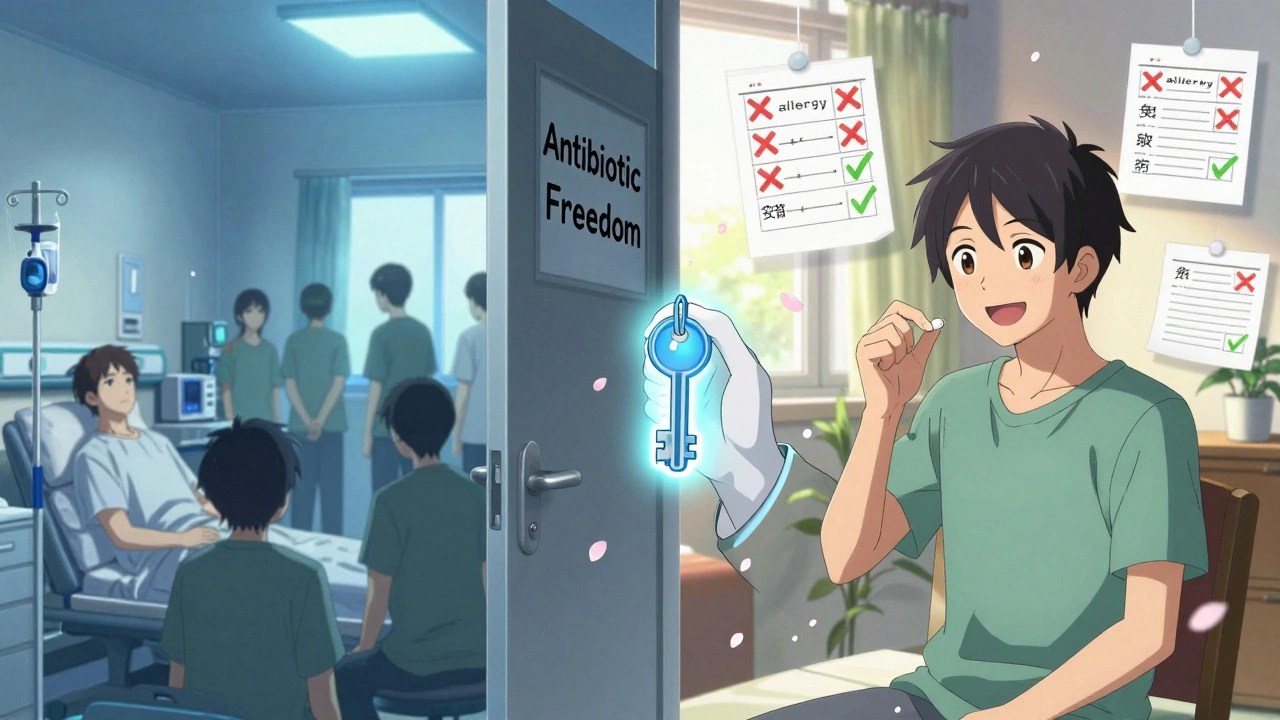
Why This Test Is More Important Than You Think
This isn’t just about you. It’s about public health. When people are wrongly labeled allergic, doctors use broader antibiotics - which kill good bacteria, increase side effects, and fuel superbugs. The CDC says patients with unconfirmed penicillin allergies get broader-spectrum drugs 69% more often. That adds $6,000 per patient per year in extra costs.
Testing saves money, saves lives, and fights antibiotic resistance. Every dollar spent on testing saves $5.70 in avoided complications and unnecessary drugs. And it’s not just for penicillin - similar testing is being developed for other antibiotics like cephalosporins.
Right now, only 17% of primary care doctors follow testing guidelines. Most don’t have easy access to allergists. But that’s changing. Hospitals are starting formal “de-labeling” programs. By 2027, 75% of U.S. hospitals will have them - up from 42% today.
If you’ve ever been told you’re allergic to an antibiotic, ask your doctor: “Can I get tested?” It’s simple, safe, and could change how you’re treated for the rest of your life.
Can I take antihistamines the night before my allergy test?
No. Antihistamines can block your body’s allergic response and give you a false negative result. First-generation antihistamines like Benadryl must be stopped 72 hours before, and second-generation ones like Zyrtec or Claritin must be stopped 7 full days before. Even one dose can interfere.
Is antibiotic allergy testing painful?
The skin prick feels like a light pinch or mosquito bite. The intradermal test involves a small injection that may sting briefly. The oral challenge is just swallowing a pill. Most patients say it’s far less uncomfortable than they expected. There’s no burning, cutting, or long-lasting pain.
How long does the whole test take?
The entire process usually takes 2 to 3 hours. Skin tests take about 30 minutes total, with waiting periods in between. If you need an oral challenge, you’ll be monitored for 90 minutes after taking the pill. Plan to be at the clinic for at least 3 hours.
Can I do this test at my regular doctor’s office?
Most primary care offices don’t have the equipment or staff trained for antibiotic allergy testing. It must be done in a clinic or hospital with immediate access to epinephrine, oxygen, and trained staff. Ask your doctor for a referral to an allergist or immunologist.
What if I had a reaction years ago - is it still valid?
Not necessarily. About 50% of people who had a severe reaction to penicillin lose their allergy within 5 years. After 10 years, 80% no longer react. Even if you were told you were allergic as a child, retesting can safely remove that label and let you use better antibiotics.
Are blood tests used to check for antibiotic allergies?
No. Blood tests for penicillin allergy are not accurate and should not be used. The only reliable method is skin testing followed by an oral challenge if needed. Many labs still offer blood tests, but they often give false positives and lead to unnecessary avoidance of safe drugs.
Will my insurance cover antibiotic allergy testing?
Yes, most insurance plans cover allergy testing for antibiotics because it’s medically proven to reduce costs and improve outcomes. Check with your provider, but testing for penicillin allergy is widely considered a standard, cost-saving procedure by major medical groups.
Next Steps After Testing
If your test is negative, ask your allergist for a written summary to give to your primary care doctor or pharmacist. Request that your electronic health record be updated so no one prescribes you a different antibiotic out of caution.
If your test is positive, you’ll get an allergy bracelet or card. You’ll also learn which antibiotics to avoid - and which ones are safe alternatives. Many people with true penicillin allergies can still take other beta-lactams like cefdinir or ceftriaxone, depending on their reaction history.
And if you’re still unsure - or if you’ve never been tested - don’t wait. Talk to your doctor. You might be carrying a label that’s costing you more than it’s protecting you.





Comments (8)
David Palmer
December 10, 2025 AT 21:44 PMso like... i just took zyrtec last night for my pollen thing. does that mean i'm screwed for my test next week? 😅
matthew dendle
December 11, 2025 AT 20:41 PMlol so much for all the drs telling me i cant have penicillin since i was 8. guess i just wasted 20 years paying extra for antibiotics that dont even work as good. thanks for the wake up call
Jimmy Kärnfeldt
December 11, 2025 AT 22:36 PMthis is actually one of those quiet life hacks that could change everything. i had a rash as a kid and got labeled allergic without any testing. turned out i was fine. switched to amoxicillin for my last infection and saved like $800. also didn't get the diarrhea from the 'safer' drug they gave me before. people need to know this stuff. it's not just about you - it's about not fueling superbugs. small steps matter.
Taylor Dressler
December 12, 2025 AT 17:54 PMJust to clarify for anyone reading: stopping antihistamines is non-negotiable. Even a single dose of cetirizine can suppress your skin's reactivity and produce a false negative. The 7-day window isn't a suggestion-it's based on the drug's half-life and receptor binding kinetics. If you're unsure what's in your meds, bring the bottles. Pharmacists can help decode OTC labels too. And yes, blood tests for penicillin allergy are useless. Skin testing + oral challenge is the gold standard. This is evidence-based medicine at its best.
Ben Greening
December 13, 2025 AT 03:59 AMThe public health implications here are profound. Antibiotic stewardship is one of the most underappreciated fronts in modern medicine. When patients are mislabeled, it creates a ripple effect-broader-spectrum drugs are prescribed, microbiomes are disrupted, resistance spreads. This testing protocol is cost-effective, safe, and scalable. It's a model for how clinical practice should evolve: not by assumption, but by verification.
john damon
December 14, 2025 AT 06:18 AMwait so i can finally take amoxicillin again?? 😭 i’ve been avoiding it since i was 6 and got a rash after ear tubes. also can i get a free allergy bracelet?? 🤩
Jean Claude de La Ronde
December 16, 2025 AT 05:00 AMso lets get this straight... we're spending billions on antibiotics because doctors dont wanna bother checking if you're really allergic? and the solution is... to ask people to read pill bottles? revolutionary. next they'll tell us to wash our hands before eating. 🤡
Ariel Nichole
December 17, 2025 AT 10:51 AMI'm so glad this is getting more attention. My mom got tested last year after being told she was allergic for 40 years. Turned out she wasn't. She's been on amoxicillin for her sinus infections since and feels way better. No more bloating, no more yeast infections from the broad-spectrum stuff. It’s wild how one test can change so much. Seriously, if you’ve ever been told you’re allergic, just ask. What’s the worst that could happen?