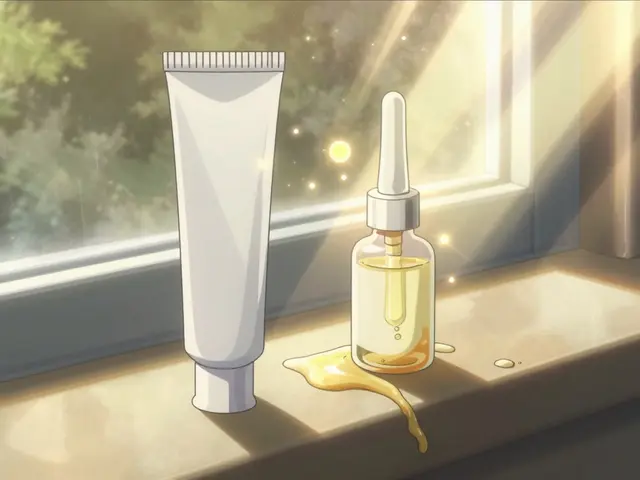

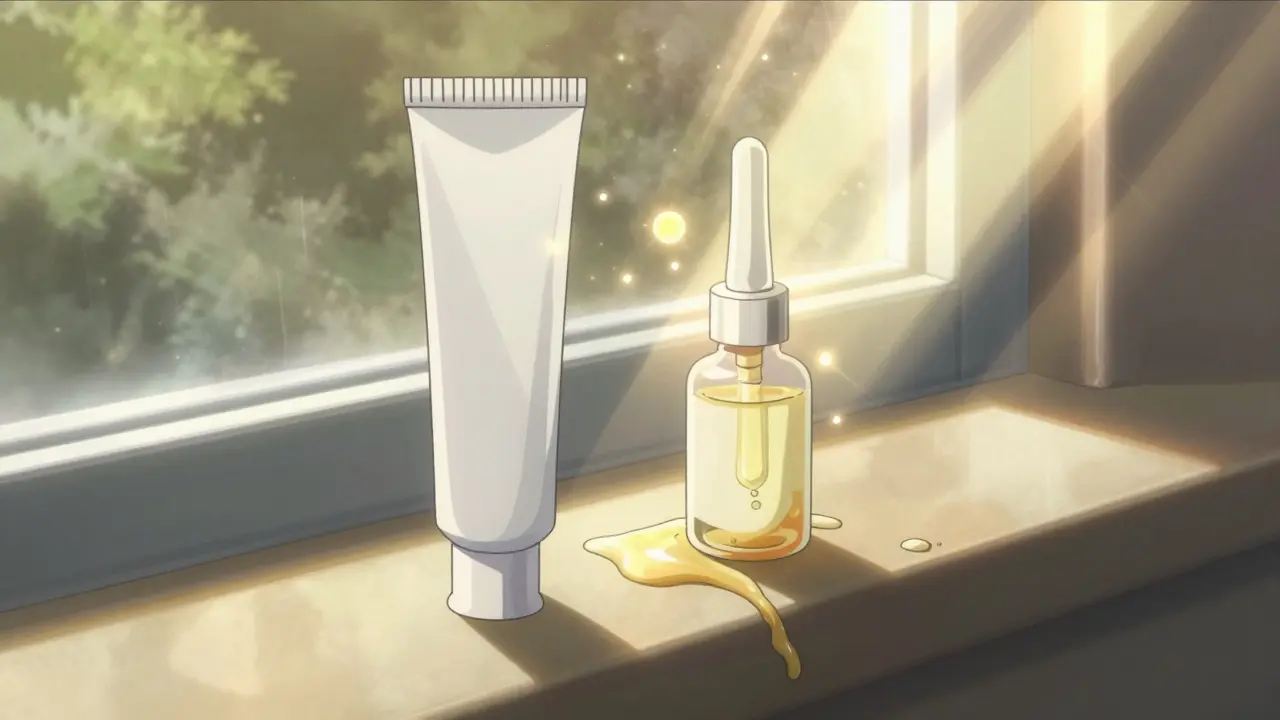
Have you ever noticed your white cream turning yellow or your eye drops losing their sting after a few weeks? That isn't just an annoyance-it’s a sign that your medicine is breaking down. For many drugs, light is the enemy. Exposure to sunlight or even bright indoor lighting can trigger chemical reactions that destroy potency and, in some cases, create harmful byproducts. This is especially true for light-sensitive medications, which include everything from certain antibiotics to life-saving chemotherapy agents.
If you’re taking these drugs, how you store them matters as much as the dose itself. Storing them incorrectly doesn’t just waste money; it risks your health. In this guide, we’ll break down exactly where to keep your meds, why those amber bottles exist, and how to protect delicate eye drops from degradation.
Why Light Destroys Medicine
It might seem counterintuitive, but light energy can actually rip apart the molecular structure of drugs. This process, known as photodegradation, happens when photons hit sensitive chemical bonds. Think of it like leaving a red shirt in the sun until it fades-the color changes because the molecules are breaking down. With medicine, the change is invisible but dangerous.
According to data from the United States Pharmacopeia (USP), hundreds of injectable drugs require strict light protection. A 2022 analysis published in US Pharmacist identified 470 parenteral drugs that need light shielding. Of those, 464 had specific warnings about storage in the dark. When these drugs are exposed to light, they don’t just become less effective; they can degrade by up to 50% within 30 days. For critical treatments like insulin or blood thinners, a 50% drop in potency could be life-threatening.
The pharmaceutical industry learned this lesson early. Back in the early 20th century, pharmacists noticed that drugs like nitroglycerin went bad rapidly if left on a sunny windowsill. Today, standards mandate that light-sensitive drugs be packaged in containers that block wavelengths below 470 nanometers-essentially filtering out the UV and blue light that causes the most damage.
The Truth About Amber Bottles
You’ve probably seen them: those dark orange or brown plastic bottles at the pharmacy. They aren’t there for style. These amber bottles are engineered to block UV rays. But not all dark bottles are created equal.
To be considered effective, an amber container must have a light transmission rate of less than 10% for wavelengths between 300 and 450 nm. High-quality amber glass blocks about 98% of UV light, while opaque plastics block around 85%. While glass offers superior protection, it’s heavier and more expensive. Plastic is lighter and shatterproof, making it better for travel, provided it meets USP standards.
| Material Type | UV Protection Level | Cost Efficiency | Durability |
|---|---|---|---|
| Amber Glass | Excellent (98% blockage) | Lower (40% more expensive) | Low (breakable) |
| Opaque Plastic | Good (85% blockage) | High ($0.08-$0.20/unit) | High (shatterproof) |
| Aluminum Foil Pouches | Perfect (100% blockage) | Medium | Low (tears easily) |
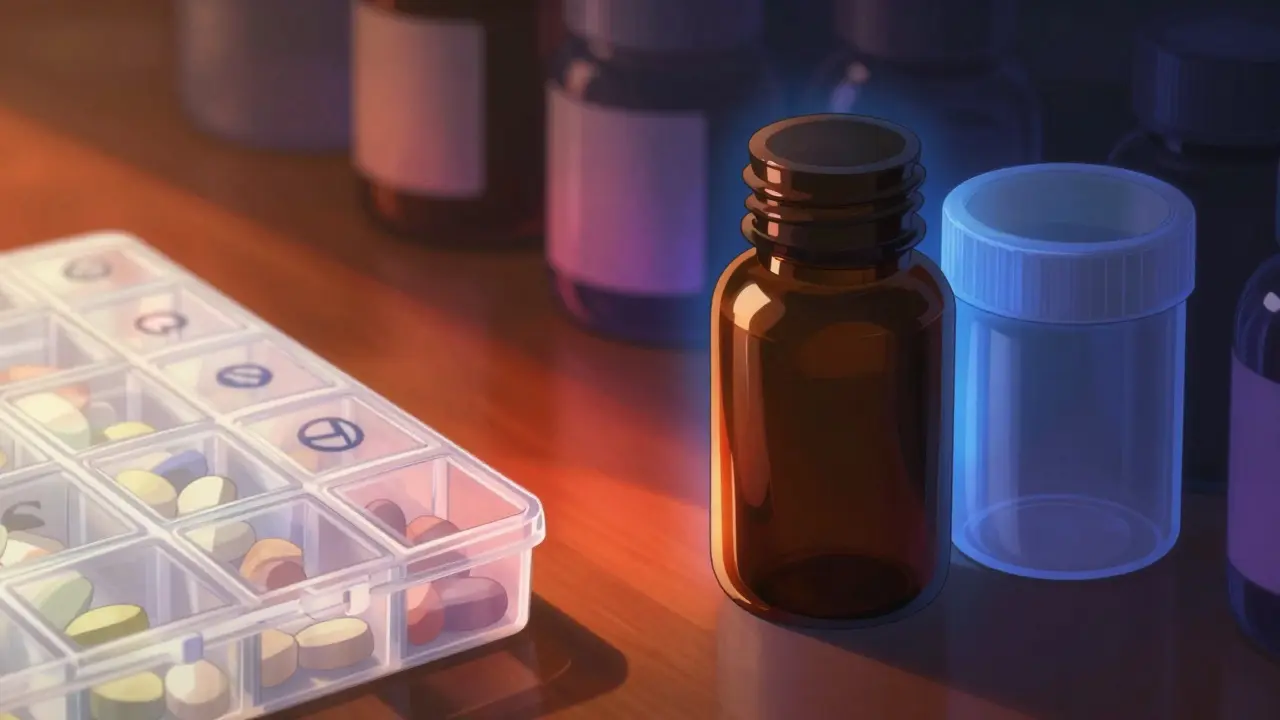
A common mistake people make is transferring pills from their original amber bottle into clear pill organizers. If your medication label says "protect from light," keep it in the original container until the moment you take it. Clear plastic organizers offer zero UV protection and can expose your meds to hours of ambient light daily.
Storing Eye Drops Correctly
Eye drops are particularly vulnerable. Because they are aqueous solutions (water-based), they lack the protective matrix that solid tablets have. Dr. Emily Chew, Deputy Clinical Director of the National Eye Institute, noted that some ophthalmic solutions lose 40% of their potency after just seven days of light exposure in non-protective containers.
Here is how to handle them:
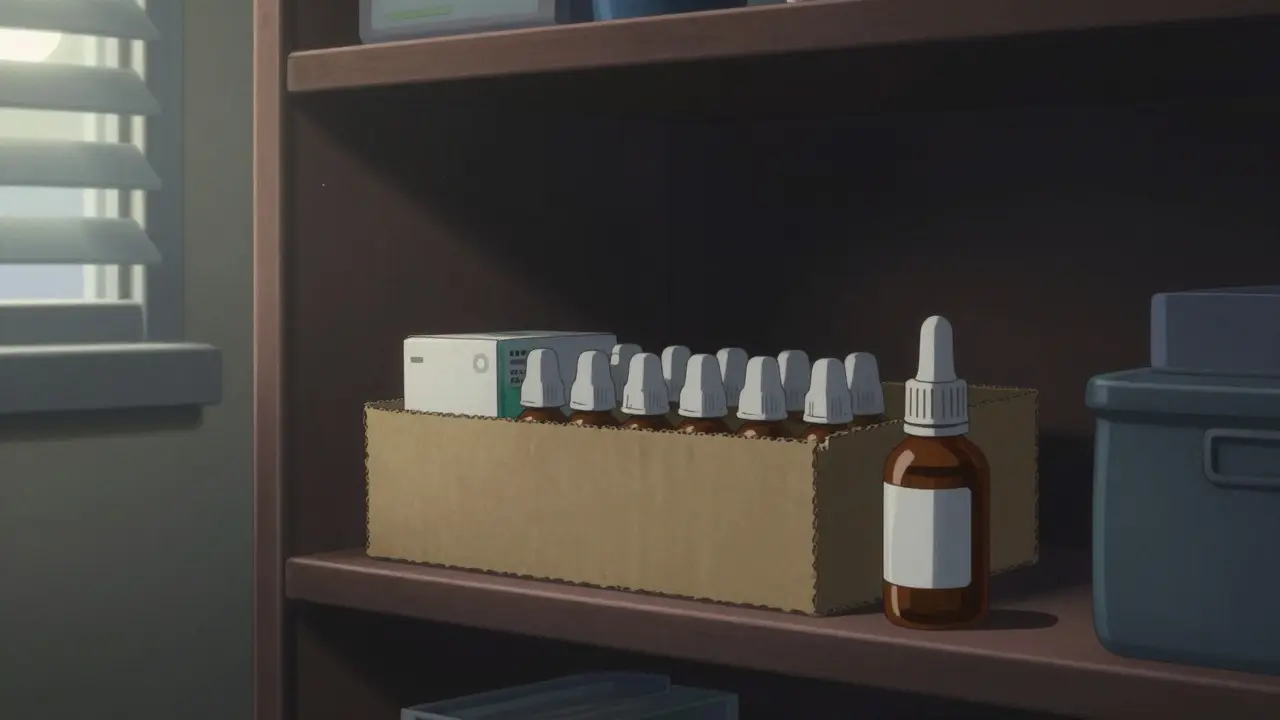
- Keep them in the box: Most eye drops come in an amber bottle inside a cardboard box. The box provides secondary shielding. Don’t toss the box immediately.
- Check the expiration date after opening: Multi-dose eye drops usually expire 28 days after opening, regardless of the printed date. Light exposure accelerates this degradation.
- Avoid bathroom counters: Bathrooms are often hot, humid, and brightly lit. This triple threat destroys eye drop stability faster than any other room in the house.
If you use glaucoma medications like latanoprost, proper storage is critical. Studies show that storing these in clear containers reduces efficacy significantly compared to amber ones. If your doctor prescribes a compounded eye drop, ask specifically about its light sensitivity. Compounded formulas often lack the stabilizers found in commercial brands.
Temperature Meets Light: The Storage Sweet Spot
Light isn’t the only factor. Heat and humidity work together with light to degrade medications. The general rule for most oral medications is to store them at room temperature, defined as 59-77°F (15-25°C). However, fluctuations matter. Storing meds in a car during summer can spike temperatures above 120°F, instantly ruining heat-sensitive compounds.
For biologics and unopened insulin, refrigeration is required at 36-46°F (2-8°C). But here’s the catch: fridges are wet and cold. Condensation can seep into bottles, and frequent door openings cause temperature swings. Plus, most fridge interiors have lights that turn on every time you open the door.
To solve this, use an insulated bag with a UV-blocking lining for travel. These bags maintain temperature stability within 5 degrees of ambient for 8-12 hours. For home storage of refrigerated light-sensitive drugs, consider a dedicated mini-fridge without an internal light, or keep the main fridge door closed as much as possible.
Where NOT to Store Your Meds
We’ve all been told not to store meds in the bathroom, but do you know why? It’s not just about moisture. It’s about light and heat cycles. Showers raise the temperature and humidity dramatically, creating a greenhouse effect for your medicine cabinet. A survey by the National Community Pharmacists Association found that 68% of patients still store meds in bathrooms, and 42% reported seeing discoloration or texture changes in their drugs.
Other bad spots include:
- Kitchen counters near the stove: Heat radiating from cooking appliances can exceed safe limits.
- Car glove compartments: Even on mild days, interior car temperatures can soar past 140°F.
- Windowsills: Direct sunlight is the fastest way to degrade photosensitive drugs.
The best place? A high, dry shelf in a bedroom closet or a dedicated kitchen cabinet away from the sink and stove. Keep it dark, cool, and consistent.
Signs Your Medicine Has Gone Bad
How do you know if light has damaged your drug? Look for these visual and sensory cues:
- Discoloration: White creams turning yellow or brown, or tablets developing spots.
- Odor changes: Aspirin, for example, smells strongly of vinegar when it degrades due to hydrolysis and oxidation.
- Texture shifts: Capsules that stick together or creams that separate into oil and water layers.
- Cloudiness in liquids: Clear eye drops or syrups becoming hazy.
If you see any of these signs, discard the medication safely. Do not take it. Reduced efficacy means you’re treating your condition with a placebo, which can lead to disease progression or resistance, especially with antibiotics.
Traveling with Light-Sensitive Drugs
Travel adds complexity. You’re dealing with varying climates, security checks, and limited access to proper storage. Here’s a practical checklist:
- Use original packaging: TSA and other security agencies prefer meds in labeled, original containers. It also ensures light protection.
- Invest in a UV-blocking cooler bag: Brands like MedMinder offer smart containers with UV sensors, but simple insulated bags with reflective linings work well too.
- Carry-on only: Never check meds in luggage. Cargo holds can freeze or overheat, destroying your supply.
- Minimize exposure during security: If asked to remove liquids, try to keep eye drops in their opaque case until the last second.
If you’re traveling to a region with intense sunlight, consider bringing extra foil pouches to wrap bottles during transit. It’s an extra step, but it guarantees 100% light blockage.
Frequently Asked Questions
Can I transfer light-sensitive pills to a weekly organizer?
Only if the organizer is opaque and UV-blocking. Standard clear plastic organizers offer no protection against light degradation. If your medication label says "protect from light," keep it in the original amber bottle until ingestion. Some specialized opaque pill boxes are available, but they must completely block light to be effective.
Do eye drops need to be refrigerated?
Most standard eye drops do not require refrigeration unless specified on the label. They should be stored at room temperature (40-77°F) in a dark place. Refrigeration can sometimes alter the viscosity of the solution, making it uncomfortable to use. Always check the package insert for specific instructions.
How long does light exposure take to ruin medication?
It varies by drug. Highly sensitive agents like certain chemotherapy drugs or tetracyclines can degrade in days. Others may take weeks. A study in the Journal of Pharmaceutical Sciences showed a 50% loss in efficacy for some drugs after 30 days of direct light exposure. There is no safe amount of unnecessary light exposure.
Is my bathroom medicine cabinet safe?
Generally, no. Bathrooms experience high humidity and temperature fluctuations from showers, which accelerate chemical breakdown. Additionally, bathroom lighting is often bright and prolonged. Experts recommend moving meds to a cool, dry, dark closet or drawer instead.
What should I do if my medication changes color?
Discard it immediately. Color changes indicate chemical degradation. Taking degraded medication can be ineffective or harmful. Contact your pharmacist for advice on disposal and replacement. Do not attempt to salvage partially discolored stock.