
Why Your Ears Feel Plugged: Understanding Conductive Hearing Loss
Have you ever tried to listen to a conversation while standing in front of a loud fan? The voices are there, but they sound distant, muffled, or like someone is talking through a wall. That is exactly what conductive hearing loss feels like. Unlike the ringing or distortion often associated with inner ear damage, this condition is a mechanical problem. Sound waves cannot travel efficiently from your outer ear, through the middle ear, to the fluid-filled cochlea where hearing actually happens.
The good news? Because this is a physical blockage or structural issue rather than nerve damage, it is often treatable-and sometimes curable-with medical intervention or surgery. Whether it’s a simple buildup of earwax or a complex bone fusion, understanding the mechanics of your middle ear is the first step toward getting your hearing back on track.
The Mechanics of the Middle Ear: Where Things Go Wrong
To understand why you can’t hear well, you need to know how sound travels. When sound hits your eardrum (tympanic membrane), it vibrates three tiny bones called the ossicles: the malleus (hammer), incus (anvil), and stapes (stirrup). These bones amplify the sound and push it into the inner ear. If any part of this chain is blocked, stiff, or broken, the signal gets lost before it even reaches the brain.
Otitis media with effusion, commonly known as "glue ear," is the most common culprit, especially in children. This happens when fluid builds up behind the eardrum without an active infection. StatPearls identifies this as the leading cause of acquired hearing loss in kids. The fluid acts like a damper, stopping the eardrum from vibrating freely. In adults, the causes shift slightly. A perforated eardrum-often from trauma or chronic infection-accounts for 15-20% of cases. Then there is otosclerosis, a genetic condition where the stapes bone fuses to the surrounding skull structure, freezing it in place so it can’t vibrate.
Another serious issue is cholesteatoma. This isn’t just wax; it’s a skin cyst that grows in the middle ear. It can be locally destructive, eating away at the delicate bones and requiring urgent surgical removal to prevent further damage.
If you think you have conductive hearing loss, don’t rely on a quick online test or a screening at a big-box store. Proper diagnosis requires the specific skills of an audiologist. The gold standard involves two key tests:
Dr. Aaron Pearlman, Director of Otology at Mass Eye and Ear, emphasizes that pinpointing the exact cause is critical. Is it wax? A hole in the drum? Or a broken bone chain? The treatment varies dramatically based on the answer. For persistent cases, doctors will also order a high-resolution CT scan of the temporal bone to visualize the anatomy in detail.
When medical management fails-typically after 3-4 months of persistence or if hearing loss exceeds 25-30 dB-surgery becomes the primary option. The type of surgery depends entirely on the underlying pathology.
Tympanoplasty is the go-to repair for eardrum perforations. Surgeons use a graft, often from temporalis fascia or newer bioengineered materials, to patch the hole. Recent studies show bioengineered grafts have a 92% success rate compared to 85% for traditional methods.
For otosclerosis, the procedure is more delicate. A stapedectomy involves removing the fused stapes bone and replacing it with a tiny prosthesis. Since the introduction of laser-assisted techniques, complication rates have dropped from 15% to less than 2%. Patients often report being able to hear whispers again shortly after recovery.
In children, placing tympanostomy tubes is one of the most common surgeries in the US, with 667,000 procedures performed annually. These tiny vents allow fluid to drain, instantly improving hearing and reducing infection risk.
Surgery is effective, but it’s not magic overnight. Recovery requires patience and strict adherence to post-op rules. For tympanoplasty patients, avoiding water exposure for six weeks and preventing pressure changes (like flying or diving) for eight weeks is non-negotiable.
Patient data from Mass Eye and Ear shows that 87% of stapedectomy patients report significant improvement in daily function. However, 12% experience temporary side effects. Vertigo affects about 7% of patients, taste disturbances occur in 4%, and some report worsened tinnitus initially.
For cholesteatoma removal, the recovery is longer. About 63% of patients need 4-6 weeks before returning to normal activities, and nearly a third notice changes in sound quality as the ear heals. It’s important to remember that for cholesteatomas, the primary goal is creating a "safe, dry ear" to stop destruction; hearing improvement is a bonus, not always guaranteed.
The field of otology is evolving rapidly. We are moving away from open incisions toward minimally invasive endoscopic surgery, which is predicted to become standard for 60% of procedures by 2028. This approach reduces recovery time by half.
Additionally, 3D-printed ossicular prostheses are entering clinical trials. Customized to fit individual anatomy perfectly, these implants have shown 94% hearing improvement rates in early studies, compared to 85% with standard off-the-shelf parts. As technology advances, the line between restoring hearing and enhancing it continues to blur, offering hope for those who previously had no options.
Not necessarily. Unlike sensorineural hearing loss (nerve damage), conductive hearing loss is often caused by reversible issues like fluid, wax, or perforations. Many cases resolve with medication or minor procedures. Even structural issues like otosclerosis can be effectively treated with surgery, often restoring near-normal hearing. Full healing typically takes 6 to 8 weeks. During this time, you must keep the ear dry and avoid blowing your nose forcefully. While pain is usually minimal, you may feel fullness or mild discomfort. Hearing may fluctuate during the healing process before stabilizing. Modern laser-assisted stapedectomy has a low complication rate of under 2%. Potential risks include temporary vertigo (dizziness), taste disturbance due to nerve irritation, and rare instances of total hearing loss in the operated ear. Most side effects are temporary and resolve within weeks. Many cases of conductive hearing loss in children, particularly glue ear, resolve on their own as the Eustachian tube matures. However, if hearing loss persists for more than 3 months or affects speech development, surgical intervention like tube placement is recommended to prevent long-term developmental delays. Most insurance plans cover medically necessary middle ear surgeries, such as tympanoplasty for perforations or tube placement for recurrent infections. Cosmetic or elective enhancements are rarely covered. Pre-authorization and documentation of failed medical management are typically required.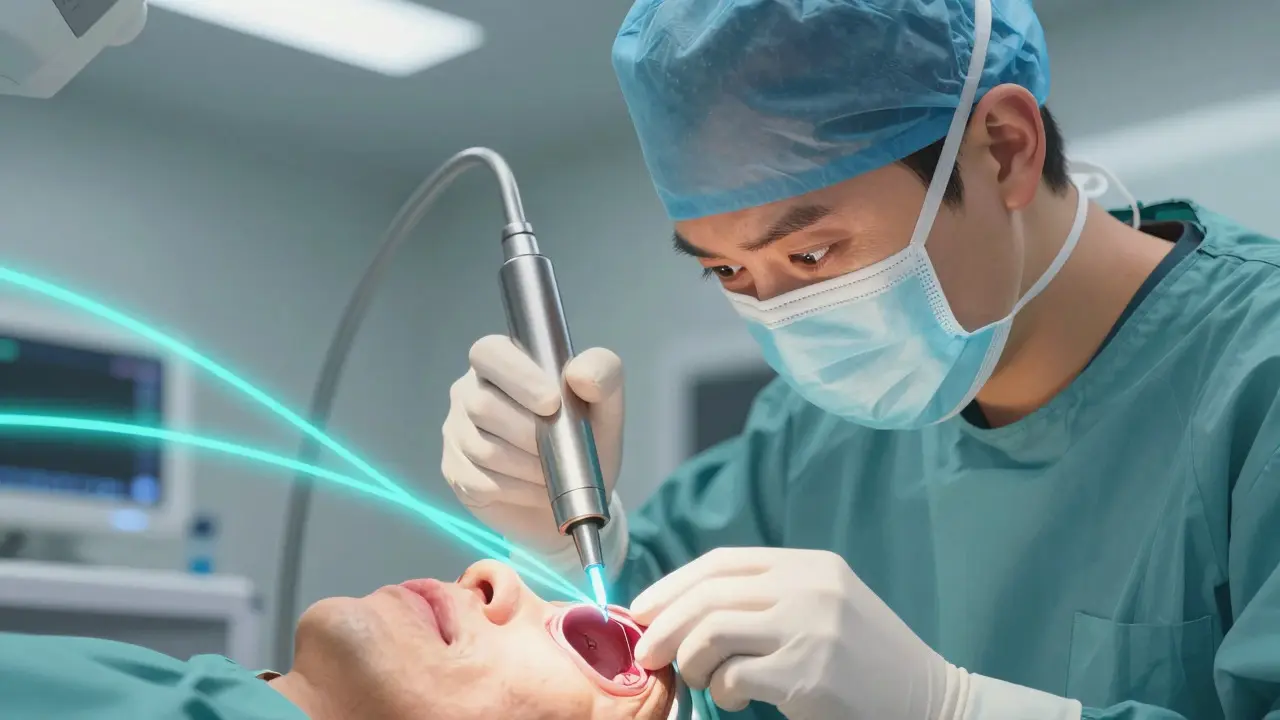
Diagnosis: More Than Just a Quick Check

Surgical Solutions: Fixing the Hardware
Condition
Surgical Procedure
Success Rate / Outcome
Perforated Eardrum
Tympanoplasty
85-95% for small holes; 70-85% for larger ones
Otosclerosis
Stapedectomy/Stapedotomy
Closes air-bone gap to within 10 dB in 80-90% of cases
Glue Ear (Children)
Myringotomy with Tubes
75% resolve within 3 months post-procedure
Cholesteatoma
Mastoidectomy/Removal
Primary goal is safety/dry ear; hearing restoration secondary
Recovery and Realistic Expectations
Future Innovations in Middle Ear Surgery
Is conductive hearing loss permanent?
How long does recovery take after tympanoplasty?
What are the risks of stapedectomy?
Can children outgrow conductive hearing loss?
Does insurance cover middle ear surgery?