


Simvastatin Interaction Checker
Simvastatin saves lives. It lowers bad cholesterol, reduces heart attacks, and has been used by millions for over 30 years. But here’s the part no one talks about loud enough: simvastatin can turn deadly when mixed with common medications-or even your morning glass of grapefruit juice.
Why the 80 mg Dose Is a Red Flag
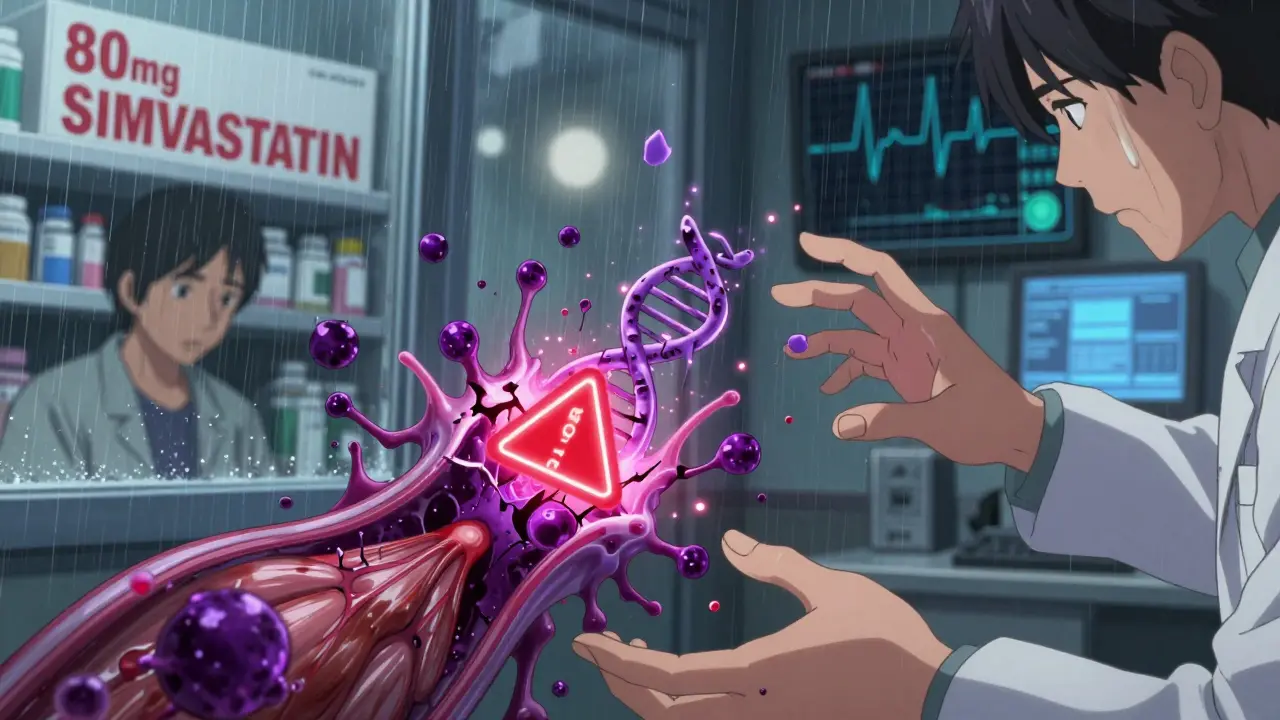
The highest dose of simvastatin-80 mg-was once seen as a powerful tool for patients with severe cholesterol problems. But after thousands of cases of muscle damage and dozens of deaths, the FDA pulled the plug on new prescriptions of this dose in 2011. Why? Because the risk wasn’t just higher-it was shockingly out of proportion. Studies showed that people taking 80 mg of simvastatin had a 0.61% chance of developing rhabdomyolysis, a condition where muscle tissue breaks down so badly it floods the bloodstream with toxins, potentially crashing your kidneys. That’s nearly eight times higher than the 0.08% risk with 20-40 mg doses. And it wasn’t just rare cases. The FDA’s own database tracked fatal outcomes linked directly to this dose. Today, doctors almost never start someone on 80 mg. If you’re already on it? You’re likely being monitored closely. But here’s the catch: many people still have old prescriptions lying around, or get switched to this dose without realizing how dangerous it is.The CYP3A4 Trap: How Your Liver Turns Simvastatin Toxic
Simvastatin doesn’t just sit in your body. Your liver breaks it down using an enzyme called CYP3A4. That’s fine-until something else blocks that enzyme. Suddenly, simvastatin doesn’t get cleared. It builds up. And when it builds up, your muscles start to die. This isn’t theoretical. It’s happened in real hospitals. A 62-year-old man in Manchester was prescribed clarithromycin for a sinus infection. He’d been on simvastatin 40 mg for years. Three days later, he couldn’t walk. His muscles ached like he’d run a marathon for a week. His creatine kinase levels were through the roof. He spent a week in ICU. He survived-but barely. Strong CYP3A4 inhibitors are the biggest offenders:- Antifungals: ketoconazole, itraconazole, voriconazole
- Antibiotics: clarithromycin, erythromycin, telithromycin
- HIV drugs: ritonavir, atazanavir, darunavir, cobicistat
- Immunosuppressants: cyclosporine, danazol
- Antidepressant: nefazodone
Grapefruit Juice: The Silent Killer in Your Fridge
You’ve probably heard grapefruit interacts with meds. But with simvastatin, it’s not just a warning-it’s a red alert. One small glass-8 ounces-of grapefruit juice can boost simvastatin levels in your blood by up to 260%. That’s not a little bump. That’s the difference between a safe dose and a toxic one. And it doesn’t matter if you drink it in the morning and take your pill at night. The enzyme-blocking effect lasts over 24 hours. A 2023 study found that 43% of patients on high-dose simvastatin kept drinking grapefruit juice-even after their pharmacist warned them. Why? They thought it was just a myth. Or they didn’t realize orange juice was safe, but grapefruit wasn’t. Or they thought "a little bit won’t hurt." It will.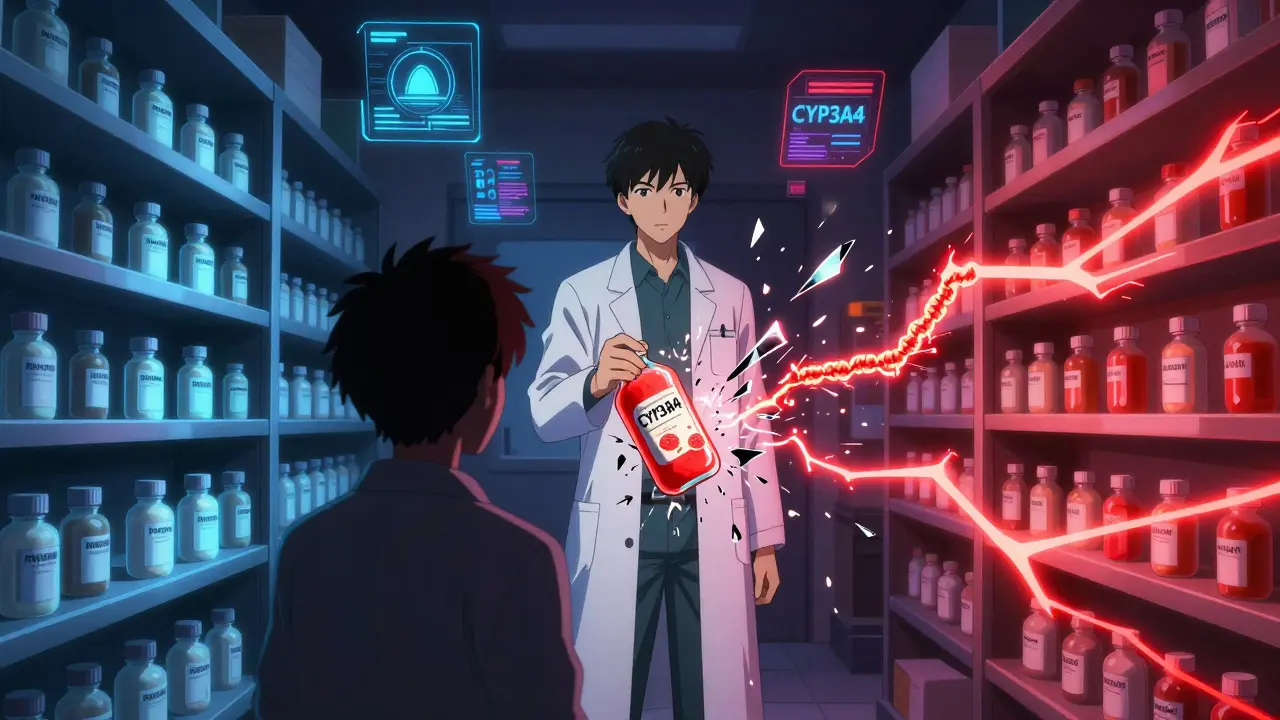
Other Dangerous Mixes You Might Not Know About
It’s not just CYP3A4 inhibitors. Other common drugs can also turn simvastatin dangerous:- Colchicine (used for gout): Even low doses combined with simvastatin have caused fatal muscle breakdown. The risk spikes if you’re over 70 or have kidney problems.
- Fenofibrate or niacin: Used to lower triglycerides. When paired with simvastatin, muscle damage risk jumps. Many doctors now avoid this combo entirely.
- Calcium channel blockers: Verapamil and diltiazem (for blood pressure) can push simvastatin levels up. The max safe simvastatin dose with these? 10 mg.
- Amlodipine or amiodarone: These can force your simvastatin dose down to just 5 mg daily.
What to Do If You’re on Simvastatin
If you’re taking simvastatin, here’s your action plan:- Check your dose. If you’re on 80 mg, ask your doctor if you really need it. Most people don’t.
- Review every medication. Prescription, over-the-counter, supplements-even herbal ones. Tell your pharmacist you’re on simvastatin. They’ll flag risks.
- Never drink grapefruit juice. Not even a sip. Swap it for orange, apple, or cranberry juice.
- Watch for muscle pain. If your shoulders, thighs, or back ache badly-especially if you’re also feeling weak or dark urine-you need to call your doctor now. Don’t wait.
- Get liver tests. Your doctor should check ALT and AST levels every 3-6 months. If they’re rising, your dose may need adjusting.
Alternatives That Are Safer
You don’t have to stick with simvastatin if the risks are too high. Other statins don’t rely as heavily on CYP3A4:- Pravastatin: Metabolized differently. Safe with most antibiotics and antifungals.
- Rosuvastatin: Strong cholesterol-lowering power, low interaction risk.
- Pitavastatin: Newer, fewer interactions, even works well with some HIV meds.
Why This Still Happens
Simvastatin is cheap. Generic versions cost under $4 a month. That’s why it’s still prescribed-especially in older patients on fixed incomes. But safety isn’t about price. It’s about survival. Pharmacists in the UK have cut dangerous combinations by 67% just by screening prescriptions before they’re filled. Yet many patients still slip through. Why? Because doctors don’t always know. Because patients forget. Because the warning labels are buried in fine print. The truth? You’re the last line of defense. If you’re on simvastatin, you need to be your own advocate.What’s Changing Now
The use of simvastatin 80 mg has dropped 82% since 2011. New prescriptions for it are now under 2% of all statin starts. Doctors are shifting to safer alternatives before even considering high-dose simvastatin. Genetic testing is also becoming more common. Some people have a gene variant (SLCO1B1) that makes them 4.5 times more likely to get muscle damage from simvastatin. If you’ve had unexplained muscle pain on statins before, ask your doctor about this test. It’s not perfect. But it’s progress.Simvastatin isn’t evil. It’s a tool. And like any tool, it’s dangerous in the wrong hands-or mixed with the wrong things. You don’t need to be scared of it. But you do need to be informed.
Can I take simvastatin with antibiotics?
Some antibiotics are deadly with simvastatin. Avoid clarithromycin, erythromycin, and telithromycin completely. Azithromycin is safe. Always check with your pharmacist before starting any new antibiotic.
Is grapefruit juice really that dangerous with simvastatin?
Yes. Even one glass can raise simvastatin levels by 260%. The effect lasts over a day. No amount is safe. Swap it for orange, apple, or cranberry juice. Don’t risk muscle breakdown or kidney failure.
What should I do if I feel muscle pain while on simvastatin?
Stop taking simvastatin and call your doctor immediately. Muscle pain, weakness, or dark urine are signs of rhabdomyolysis. This is a medical emergency. Don’t wait to see if it gets better.
Can I switch to a different statin?
Yes, and many people should. Pravastatin, rosuvastatin, and pitavastatin have far fewer dangerous interactions. Talk to your doctor about switching if you’re on simvastatin 40 mg or higher, or if you take other medications.
Is simvastatin still prescribed at all?
Yes-but only at lower doses (5-20 mg) and only when safer alternatives aren’t suitable. The 80 mg dose is now rarely used. If you’re on it, make sure your doctor has a clear reason why.
How often should I get blood tests on simvastatin?
Liver enzymes (ALT/AST) should be checked before starting, then every 3-6 months. If you’re on a higher dose or taking interacting drugs, your doctor may check them more often. Don’t skip these tests-they can catch problems before they become life-threatening.





Comments (10)
Lauren Wall
January 21, 2026 AT 20:08 PMPeople still drink grapefruit juice with simvastatin? I swear, some folks think warnings are suggestions. One glass isn’t ‘a little bit.’ It’s a one-way ticket to ICU. Stop it.
Kenji Gaerlan
January 22, 2026 AT 05:18 AMlol who even uses simvastatin anymore? i got my cholestrol down with fish oil and yelling at my scale. also grapefruit juice is fire fr.
Oren Prettyman
January 22, 2026 AT 14:07 PMWhile I acknowledge the empirical data presented regarding the pharmacokinetic interactions between simvastatin and CYP3A4 inhibitors, I must respectfully contest the assertion that the 80 mg dose is universally contraindicated. The FDA’s 2011 advisory was predicated upon population-level risk, yet individual pharmacogenomic variance-particularly with regard to SLCO1B1 polymorphisms-renders blanket restrictions both medically reductive and ethically questionable. Moreover, the conflation of correlation with causation in anecdotal case reports (e.g., the Manchester patient) undermines evidence-based clinical reasoning. A more nuanced approach, informed by genotyping and therapeutic drug monitoring, would better serve high-risk cohorts than arbitrary dose caps.
Tatiana Bandurina
January 24, 2026 AT 13:29 PMIt’s not just grapefruit juice. It’s the entire system. Pharmacies don’t flag interactions. Doctors don’t ask about supplements. Patients don’t read the tiny print. And when someone ends up in the hospital with rhabdomyolysis, everyone acts shocked-as if this was a surprise. We’ve known this for 15 years. This isn’t negligence. It’s institutional apathy.
arun mehta
January 24, 2026 AT 20:20 PMBrothers and sisters, this is life-saving info 🙏
Simvastatin is like a powerful tool-use it right, it builds your health. Use it wrong, it breaks your body. Please, if you're on this med, talk to your pharmacist. Get your genes tested if you can. Swap grapefruit for orange juice 🍊. Your muscles will thank you. Stay safe, stay informed, and never underestimate the power of asking ‘why?’
Chiraghuddin Qureshi
January 25, 2026 AT 20:23 PMIndia here. We still see 80 mg prescriptions in rural clinics because it’s cheap. One uncle took it with ketoconazole for a fungal infection. He couldn’t walk for 3 months. No one told him. No one warned him. This post? It’s not just for the West. It’s for every village where ‘doctor’s advice’ means ‘take the white pill.’ 🙏
Share this. Translate it. Save someone.
Patrick Roth
January 27, 2026 AT 12:07 PMOh please. The FDA is just trying to protect Big Pharma’s new expensive statins. Simvastatin’s been used safely by millions. If you’re worried about grapefruit, don’t drink it. But don’t scare people out of a drug that’s saved their life because some guy in Manchester took clarithromycin. Also, I’ve had simvastatin for 12 years with grapefruit juice daily. Still here. Still walking. Still not dead. You’re all overreacting.
Daphne Mallari - Tolentino
January 29, 2026 AT 07:38 AMWhile the article presents a compelling narrative, it lacks critical engagement with the ethical dimensions of pharmacovigilance. The conflation of anecdotal case reports with population-level risk assessment constitutes a rhetorical fallacy. Furthermore, the implicit moral imperative to ‘be your own advocate’ places undue burden on patients who may lack health literacy or access to care. This is not empowerment-it is abdication of professional responsibility by the medical establishment.
Neil Ellis
January 31, 2026 AT 03:46 AMSimvastatin isn’t the villain-it’s the quiet hero who got betrayed by bad info and lazy prescribing. I switched from 40 mg simva to rosuvastatin after my legs turned to jelly. Felt like a new person. No more ‘am I dying or just sore?’ panic. And yeah, I traded grapefruit juice for mango smoothies. Best. Decision. Ever. 🥭✨ You don’t have to suffer to be healthy. There are better tools. Use ‘em.
Rob Sims
January 31, 2026 AT 19:35 PMWow. A whole post about how simvastatin kills people. And yet, here we are-2025-and you still haven’t mentioned that the real killer is the $4/month price tag that makes it the default choice for insurance companies. You blame patients for drinking grapefruit juice? Blame the system that pushes cheap drugs like they’re candy. The ‘you’re your own advocate’ line? That’s not advice. It’s a cop-out.