

SJS/TEN Symptom Checker
Symptom Assessment
This tool helps you identify potential signs of Stevens-Johnson Syndrome (SJS) or Toxic Epidermal Necrolysis (TEN. This is NOT a diagnostic tool. If you experience any of these symptoms, seek emergency medical care immediately.
Results will appear here
Stevens-Johnson Syndrome (SJS) and Toxic Epidermal Necrolysis (TEN) aren’t just rare skin rashes. They’re life-threatening emergencies that can turn a routine medication into a killer. If you or someone you know develops a sudden, painful rash with blisters or peeling skin after starting a new drug, time is everything. Waiting even a day can mean the difference between survival and death.
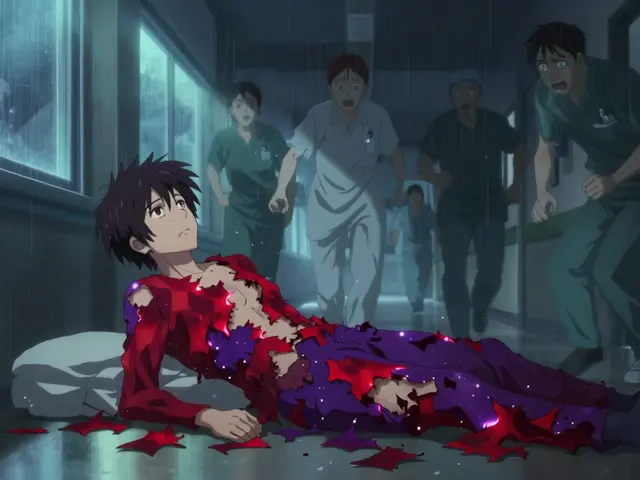
What You’re Seeing: Skin Falling Off
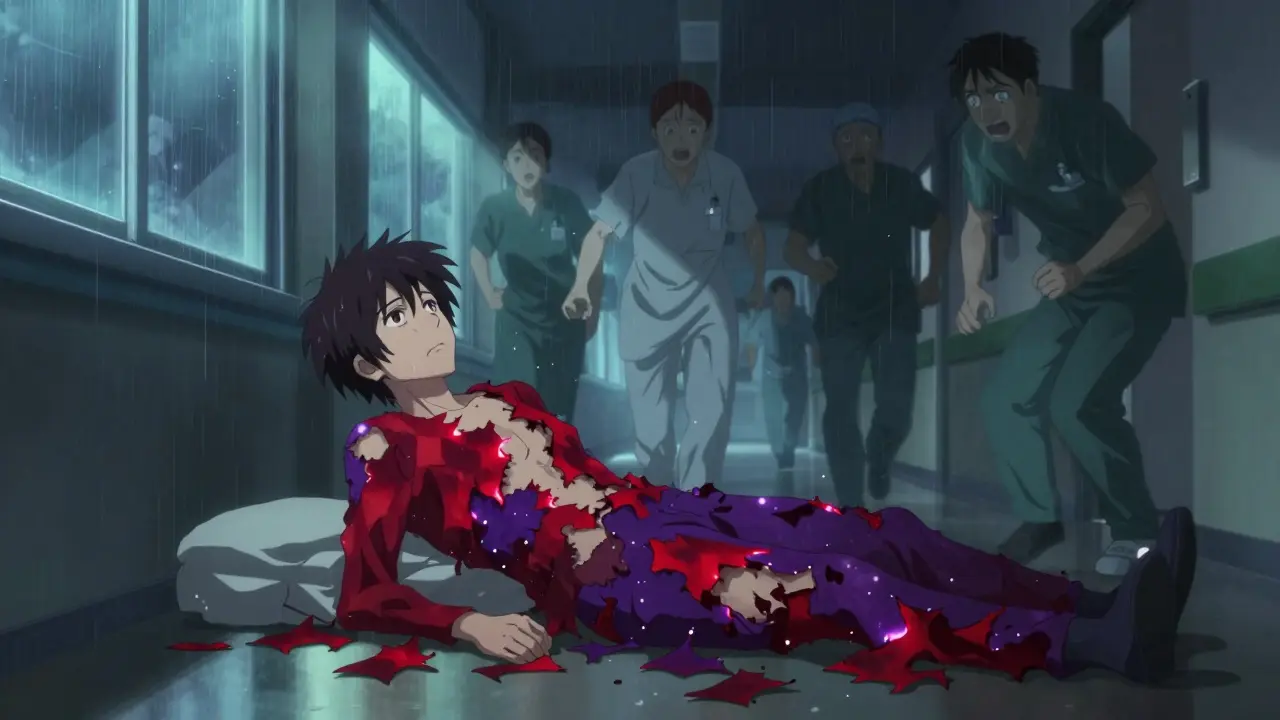
SJS and TEN are two ends of the same dangerous spectrum. They both start with something that feels like the flu-fever, sore throat, fatigue-then suddenly shift into something terrifying. Within a few days, a red or purple rash spreads across the body. Blisters form. The top layer of skin begins to die and peel away, sometimes in sheets. It looks like a severe burn, but it’s not caused by heat. It’s caused by your own immune system attacking your skin and mucous membranes because of a medication. The difference between SJS and TEN is how much skin is affected. If less than 10% of your body surface is involved, it’s classified as SJS. If more than 30% peels off, it’s TEN. Between 10% and 30%? That’s overlap syndrome. The more skin lost, the higher the risk of infection, organ failure, and death. In severe TEN, up to 100% of the skin can detach. This isn’t a rash you can treat with lotion. This is a medical crisis requiring intensive care.Which Medications Trigger This?
Not every drug causes this. But certain ones carry a known, documented risk. The most common culprits include:- Allopurinol - Used for gout, it’s one of the top triggers, especially in people with the HLA-B*58:01 gene variant.
- Lamotrigine - An epilepsy and bipolar medication. Rashes are common with this drug, but most aren’t serious. Still, the risk of SJS/TEN is real, especially if the dose is increased too fast or restarted after a break.
- Carbamazepine, phenytoin, phenobarbital - All anticonvulsants. Cross-reactivity is common. If you had a reaction to one, you’re at high risk for another.
- Nevirapine - An HIV medication linked to early-onset SJS, often within the first six weeks.
- Oxicam NSAIDs - Meloxicam and piroxicam. These are more dangerous than ibuprofen or naproxen when it comes to skin reactions.
- Sulfonamides - Like sulfamethoxazole (in Bactrim). These antibiotics have a long history of causing these reactions.
Who’s at Higher Risk?
Some people are more vulnerable. You’re at higher risk if:- You’ve had SJS or TEN before - Re-exposure to the same drug or even a similar one can trigger it again, often faster and worse.
- You have HIV or are on chemotherapy - A weakened immune system makes reactions more likely and more severe.
- You’re taking sodium valproate with lamotrigine - This combo increases the chance of a dangerous rash.
- You’ve had a rash before with another epilepsy drug - Even if it was mild, it’s a red flag.
- You have a family member who had SJS/TEN - There’s a genetic link, especially with certain HLA gene types.
What Happens After the Skin Peels Off?
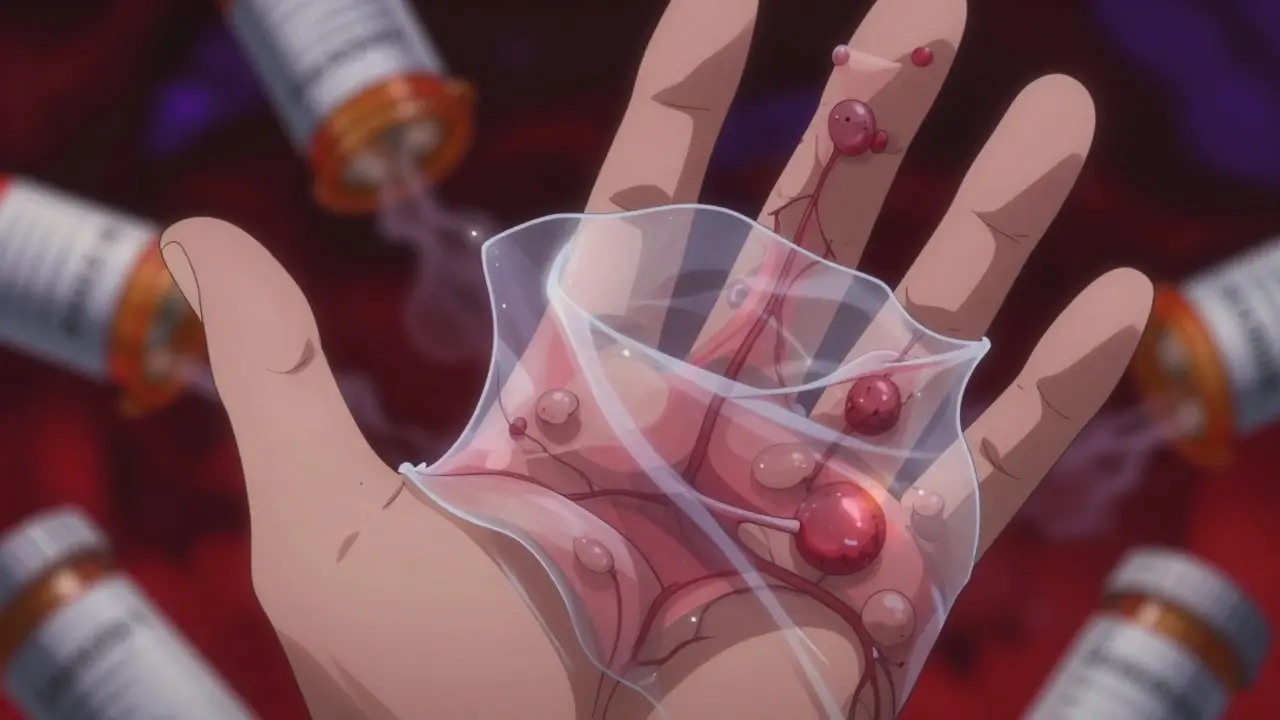
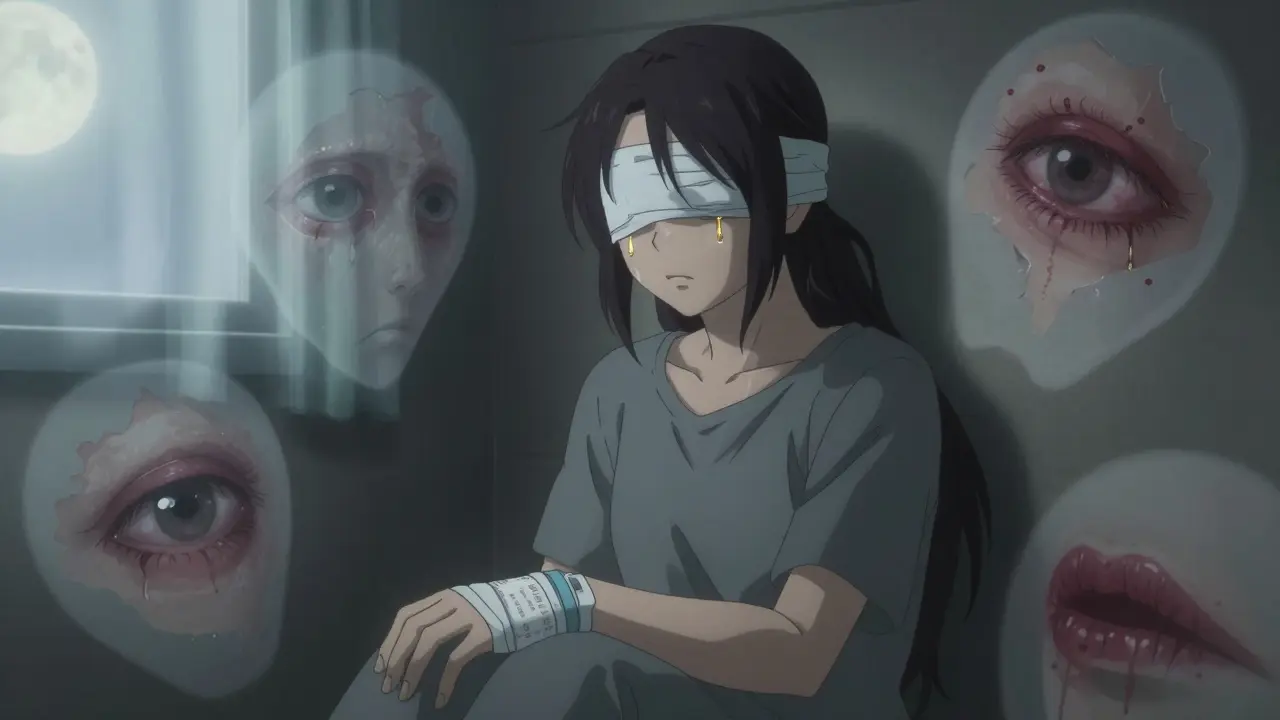
Surviving SJS or TEN doesn’t mean you’re out of the woods. The damage goes far beyond the skin.- Eyes - Up to half of survivors develop serious eye problems: dry eyes, scarring, eyelashes growing inward, corneal damage, and even blindness. This is why every survivor needs an ophthalmologist follow-up for at least a year.
- Mouth and throat - Blisters and sores make eating and swallowing painful. Long-term, you might develop strictures (narrowing) in the esophagus.
- Genitals - Women can develop vaginal scarring and stenosis. Men can get phimosis. These require ongoing care.
- Nails and hair - Nails may fall off or grow back deformed. Hair can thin out across the scalp. Most recover, but it takes months.
- Internal organs - The immune attack doesn’t stop at the skin. Lungs can fill with fluid. Kidneys and liver can fail. Blood clots and infections like sepsis are the leading causes of death.
What Should You Do If You Suspect It?
If you’re on one of these high-risk drugs and you notice:- A sudden fever and flu-like symptoms
- A spreading red or purple rash
- Blisters on your skin or inside your mouth, eyes, or genitals
- Skin that peels easily or feels like it’s sloughing off
How to Prevent This
Prevention starts with awareness.- If you’re prescribed lamotrigine, follow the slow titration schedule exactly. Never restart after a break without medical guidance.
- Don’t start new medications or try new foods during the first 8 weeks of high-risk drugs. This helps doctors tell if a rash is from the drug or something else.
- Know your family history. If someone close had SJS/TEN, tell your doctor before taking any new meds.
- Keep a list of all medications you’ve reacted to - and share it with every provider.
- Never take a drug you’ve had a reaction to before, even if it was “mild.”
Why This Matters More Than You Think
SJS and TEN are rare - maybe five cases per million users per week. But rarity doesn’t mean safety. These reactions are unpredictable. One person gets a rash and recovers. Another, with the same drug, same dose, same age, ends up in intensive care. There’s no sure way to know who’s at risk. That’s why education is the best tool we have. Patients need to know the warning signs. Doctors need to know which drugs are dangerous. And everyone needs to understand: if your skin starts peeling after a new medication, it’s not a coincidence. It’s an emergency.What Happens After Recovery?
Survivors need more than a hospital discharge. Long-term care is essential.- Regular eye exams - every 3 to 6 months for at least a year.
- Dermatology follow-up for scarring, pigmentation changes, and nail health.
- Physical therapy if joints stiffened from scarring.
- Psychological support - many survivors develop PTSD from the trauma.
- A clear, written list of all drugs to avoid forever - including related compounds.
Can Stevens-Johnson Syndrome be caused by anything other than medication?
While medications are the most common cause - accounting for over 80% of cases - SJS can also be triggered by infections like mycoplasma pneumonia or herpes simplex. In rare cases, it’s linked to vaccines or autoimmune conditions. But in nearly all cases, the reaction is immune-mediated and starts with a drug or infection. If you’re unsure what caused it, doctors will investigate both.
Is Stevens-Johnson Syndrome contagious?
No, SJS is not contagious. You can’t catch it from someone else. It’s an individual immune reaction to a medication or infection. However, because it can run in families due to genetic factors, relatives may share the same risk profile - not the disease itself.
How long does it take to recover from SJS or TEN?
Skin healing can take weeks to months. Most people are discharged from the hospital after 2-6 weeks, but full recovery often takes 3-6 months. Long-term complications like eye damage or scarring may persist for years or permanently. Recovery isn’t just about skin regrowing - it’s about managing lasting damage to eyes, mouth, genitals, and other organs.
Can you get SJS from over-the-counter drugs?
Yes. While most cases involve prescription drugs, some OTC medications carry risk. NSAIDs like piroxicam and meloxicam (sometimes sold without a prescription) have been linked to SJS. Even acetaminophen and ibuprofen have rare case reports. Always read labels and be cautious if you’ve had a reaction before.
If I had a mild rash from lamotrigine, am I safe to try it again later?
No. Even a mild rash from lamotrigine increases your risk of a severe reaction if you take it again. Doctors will never recommend restarting it. There are other mood stabilizers and antiseizure drugs available. The risk of recurrence is too high - and the consequences too deadly - to take the chance.

Comments (11)
Paul Mason
January 6, 2026 AT 21:40 PMMan, I never realized how dangerous some of these meds are. I took lamotrigine for a bit and got a tiny rash-thought it was just heat. Turns out I dodged a bullet. Always tell your doc about any rash, no matter how small.
Katrina Morris
January 7, 2026 AT 20:42 PMmy aunt had this after starting allopurinol and it changed her life forever. eyes never recovered, cant swallow normal food anymore. its not just skin its your whole body falling apart. dont ignore a rash please
LALITA KUDIYA
January 7, 2026 AT 21:34 PMthank you for sharing this. i live in india and so many people just pop pills without knowing risks. we need more awareness here. maybe we can start a community campaign?
steve rumsford
January 9, 2026 AT 08:16 AMso like... if your skin starts peeling off like a sunburn but you didn't go to the beach? yeah that's not a joke. that's your body going full meltdown mode. go to er. now. no excuses.
Sai Ganesh
January 9, 2026 AT 11:03 AMin india, many doctors still prescribe allopurinol without checking HLA-B*58:01. it's dangerous. we need mandatory genetic screening before prescribing. lives are being lost because of outdated protocols.
Poppy Newman
January 10, 2026 AT 08:47 AMmy cousin had TEN after taking piroxicam from the pharmacy. she was fine one day, in ICU the next. now she has a medical bracelet. i carry one too. 💔
Aparna karwande
January 12, 2026 AT 04:34 AMhow can we let big pharma sell these death traps over the counter? someone needs to go to jail for this. people die because corporations care more about profits than your skin. shame on them.
Alex Danner
January 12, 2026 AT 10:35 AMthe biggest mistake people make is thinking "it was just a mild rash last time"-that’s like saying "it was just a spark, so I’ll keep lighting the gas leak." once you’ve had SJS/TEN, the risk of recurrence isn’t just higher-it’s a guaranteed disaster. No exceptions. Ever.
Also, even if you think you’re off the drug, the reaction can still show up 2 weeks later. That’s why waiting to see if it "goes away" is playing Russian roulette with your epidermis.
And yes, OTC NSAIDs like meloxicam are on the list. Just because it’s sold without a prescription doesn’t mean it’s safe. Your body doesn’t care if the label says "pharmacy shelf" or "doctor’s script."
Don’t rely on Google. Don’t wait for your doctor to call back. If your skin is peeling, you’re not sick-you’re in a medical emergency. Burn units are the only place that can handle this.
Survivors often need years of follow-up. Eyes, mouth, genitals, nails-all can be permanently damaged. This isn’t a "bad breakout." It’s systemic autoimmunity gone rogue.
And yes, it’s genetic. If your sibling or parent had it, you’re at higher risk. Tell your doctor before taking *any* new drug. Better safe than dead.
Stop normalizing this. A rash isn’t "just an allergy." When it’s from these meds, it’s a death sentence if ignored.
Andrew N
January 14, 2026 AT 10:31 AMthe mortality stats are misleading. most people who die from TEN do so from sepsis or organ failure, not the skin loss itself. the real killer is delayed treatment. if you get to a burn unit within 24 hours, survival jumps to 70%. after 48 hours? down to 30%. time isn't just important-it's the only thing that matters.
Anthony Capunong
January 15, 2026 AT 08:18 AMwhy are we letting foreigners control our meds? america and europe have better testing. we should ban these drugs until we have our own genetic screening programs. this is a national security issue.
Elen Pihlap
January 16, 2026 AT 05:35 AMi just had to watch my best friend die from this. no one warned us. please, if you read one thing today, let it be this: if your skin peels after a new pill, don’t wait. don’t text your mom. don’t google it. just. go. now.