

Medication Guide Distribution Checker
Distribution Decision Matrix
Answer the following clinical scenarios to determine the legal distribution requirement for an FDA-mandated Medication Guide.
Adjust the settings on the left to see the distribution requirement.
Pending
If you've spent any time in a pharmacy or a clinic, you know that hand-off is everything. But when it comes to specific high-risk drugs, just telling a patient "take this once a day" isn't enough. The FDA requires a specific document called a Medication Guide is an FDA-approved patient labeling document designed to communicate serious risks associated with specific prescription drugs. These aren't your typical pharmacy leaflets; they are legally mandated tools to prevent serious adverse reactions. For pharmacists and providers, the challenge isn't just having these guides-it's knowing exactly when the law requires you to hand them over.
What exactly is a Medication Guide?
Think of a Medication Guide (MG) as a highly specialized safety manual. Unlike the generic printouts you get from a pharmacy software system, an MG is developed and approved by the FDA (Food and Drug Administration). This means the language has been scrubbed to ensure a regular person can understand it without a medical degree.
The government doesn't require these for every drug. They only step in when one of three things is true: the drug has a risk of serious adverse reactions that a guide could prevent, the risk-benefit profile is so complex that patients need a guide to make an informed choice, or following the directions exactly is the only way the drug actually works. For example, medications like Isotretinoin (Accutane) or Clozapine (Clozaril) have such high stakes that an MG is non-negotiable.
| Feature | Medication Guide (MG) | Consumer Medication Information (CMI) | Package Insert |
|---|---|---|---|
| FDA Approved? | Yes | No (Usually voluntary) | Yes |
| Target Audience | Patient (Plain language) | Patient | Healthcare Professional |
| Mandatory? | Yes (for specific drugs) | No | Yes |
| Focus | Critical Safety/Risks | General Usage | Clinical Data/Pharmacology |
When must you distribute the guide?
This is where the confusion usually starts. You don't always have to give the guide every single time you dispense the drug, but there are five very specific triggers under 21 CFR 208 that make distribution mandatory:
- Patient Request: If the patient or their caregiver asks for it, you give it. Simple.
- Outpatient Self-Administration: When you dispense a drug in a community pharmacy for the patient to take home, you must provide the guide.
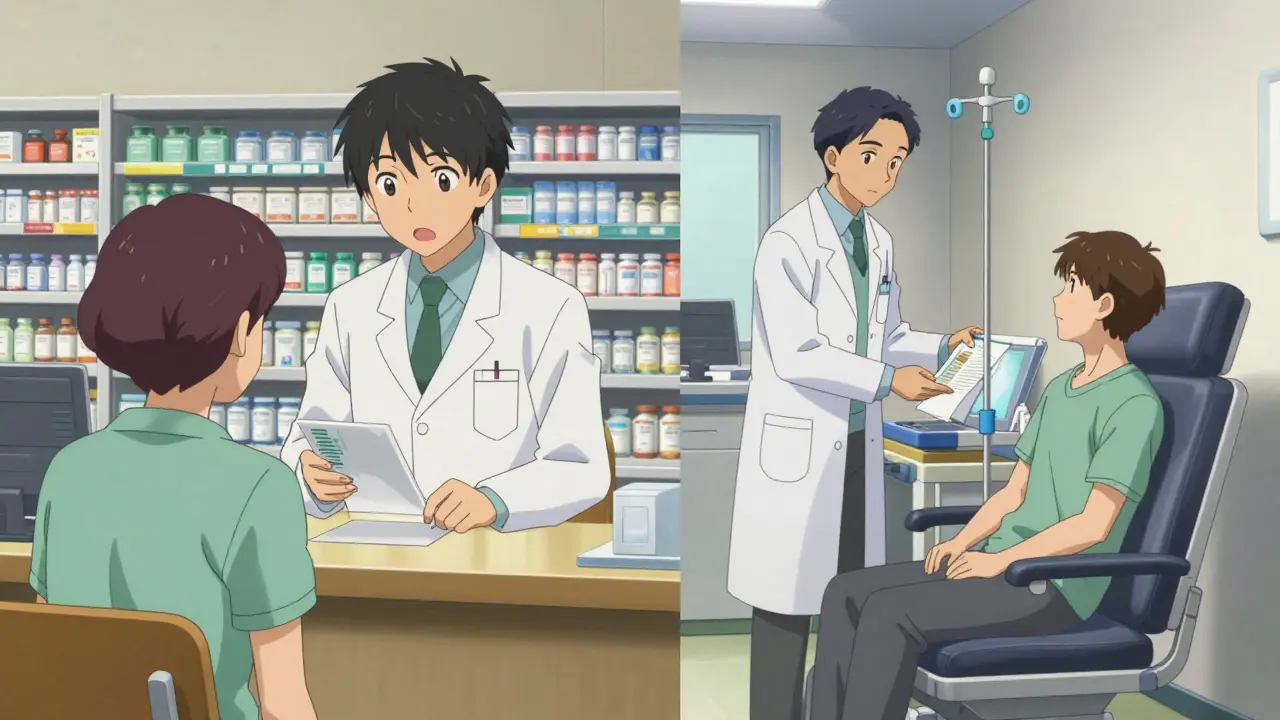
- First-Time Outpatient Administration: If you're in an infusion center or a clinic and you're administering the drug for the first time to that patient, they get the guide.
- Material Changes: When the FDA updates the guide with new, significant safety information, you must distribute the new version the next time the drug is dispensed.
- REMS Programs: If the drug is part of a Risk Evaluation and Mitigation Strategy (REMS), like the iPLEDGE program, the guide is often a core requirement for enrollment.
A common point of friction is the difference between a retail pharmacy and a clinic. In a community pharmacy, you're usually handing it over every time. But in a dialysis center or oncology clinic, you only need to do it the first time-unless the guide itself has changed. This nuance is why some providers feel they are over-distributing, while others risk non-compliance.
The "Safe Zones": Where guides aren't required
It's equally important to know where you don't need to worry about these handouts. Medication Guides are not required in inpatient hospital settings or nursing homes. Why? Because in these environments, the patient is under direct, constant professional supervision.
However, don't mistake "no guide" for "no communication." Even if a paper guide isn't required in a hospital bed, the provider is still legally and ethically obligated to counsel the patient on side effects and how to use the drug. The paper is optional; the education is not.
Real-world challenges and common pitfalls
If you talk to pharmacists on forums like r/pharmacy, the consensus is that tracking these guides is a nightmare. Many struggle with "material changes." How do you know if a guide was updated yesterday? Checking the FDA website for 200+ different drugs isn't a sustainable way to run a business.
Another issue is the "paper vs. digital" debate. While the FDA traditionally required paper, patients can now request electronic versions. But remember: the default is still paper. If the patient doesn't explicitly ask for digital, the paper copy is your legal shield.
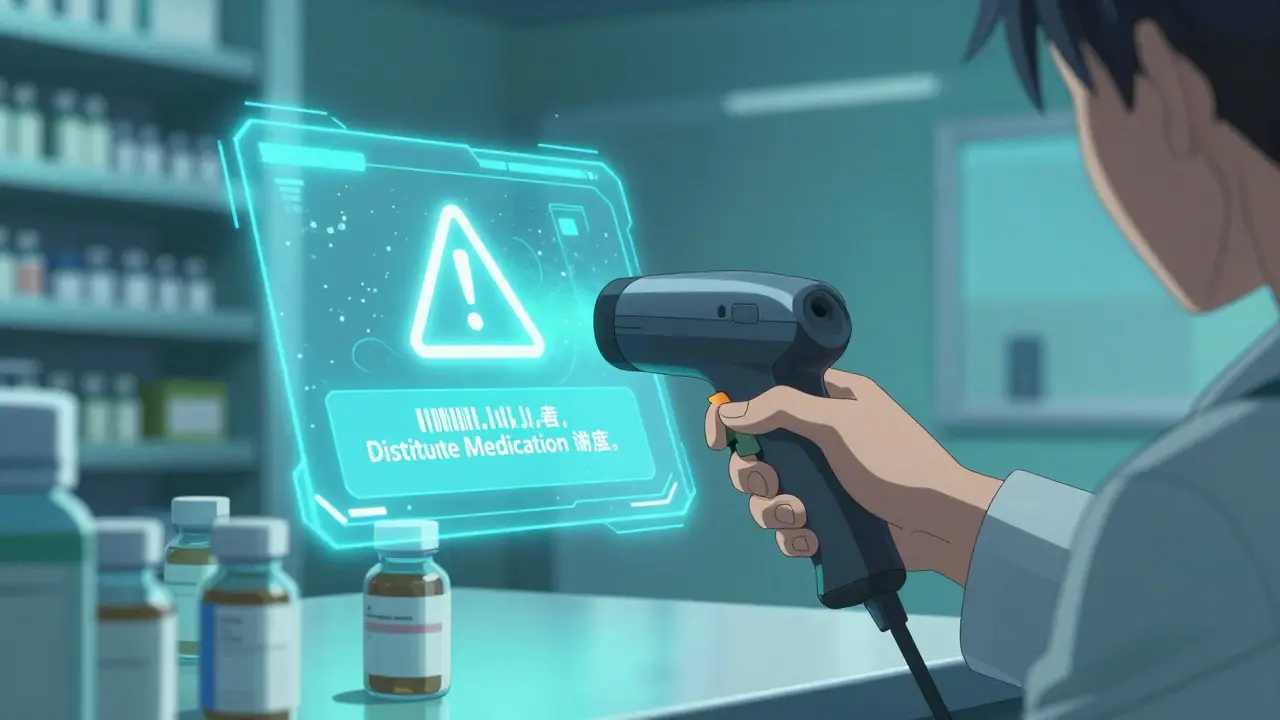
To solve these headaches, some high-performing clinics have moved toward automation. For instance, the University of California San Francisco Medical Center used barcode scanning to trigger alerts. When the scanner hits a drug that requires an MG, the system flags it immediately. This simple tech shift reportedly cut distribution errors by 73%, proving that manual checklists are usually the weak link in the chain.
Regulatory landscape and the future of patient labeling
Right now, about 15% of the U.S. prescription market requires these guides. You'll see them most often in dermatology, psychiatry, and oncology. But this number is expected to grow. As we see more complex specialty drugs and rare disease treatments hit the market, the FDA is likely to mandate more MGs to keep patients safe.
We're also seeing a push toward better readability. A 2022 study in the Journal of Health Communication found that only 37% of patients could actually remember the key safety points a week after getting their guide. Because of this, the FDA is currently drafting new guidelines to standardize formats and make the text even easier to digest. The goal is to move from "compliance by distribution" (just handing over a piece of paper) to "compliance by comprehension" (making sure the patient actually understands the risk).
Do I need to provide a Medication Guide every time I refill a prescription?
In a community pharmacy setting where the patient is self-administering the drug, yes, the guide must be provided each time the drug is dispensed. However, in outpatient clinical settings (like an infusion clinic), it is generally only required the first time the drug is administered to that patient, unless there has been a material change to the guide's content.
Can I just email the Medication Guide to the patient?
You can provide the guide electronically only if the patient or their agent specifically requests it as an alternative to the printed version. If there is no request for a digital copy, the law requires a paper form to be distributed.
What happens if a Medication Guide is updated?
When the FDA approves a "material change" to a guide, it is considered a new version. Pharmacists and providers must distribute the updated version the first time the drug is dispensed after the change occurs to ensure the patient has the most current safety information.
Are Medication Guides required for hospital patients?
No. Distribution of Medication Guides is not required for drugs administered in inpatient hospital or nursing home settings. This is because patients in these settings are under the direct supervision of healthcare professionals who can provide immediate counseling.
How does a REMS program change the distribution rules?
A Risk Evaluation and Mitigation Strategy (REMS) may add additional layers of requirements. For example, under the iPLEDGE program for isotretinoin, providers must actually review the Medication Guide with the patient as part of the enrollment process, making the guide a critical component of the drug's legal distribution chain.
Next Steps for Compliance
If you're managing a pharmacy or clinic, don't leave this to chance. Start by auditing your high-risk inventory and matching it against the latest FDA list of required Medication Guides. If you have a high volume of these drugs, consider integrating a flag in your pharmacy management software that alerts the technician when a guide is mandatory. Finally, train your staff to ask patients if they prefer a digital copy, ensuring you meet the patient's needs while staying strictly within the lines of FDA regulations.




Comments (8)
Lynn Bowen
April 12, 2026 AT 06:21 AMIt's interesting how different countries handle patient safety leaflets, but the US approach with the FDA is pretty rigorous regarding these specific guides.
Simon Stockdale
April 13, 2026 AT 00:28 AMSrsly why do we even need all these stupid papers when we got the best medical system in the world and the docs know what they're doin anyway its just more red tape from the goverment to make us feel like we arent in control of our own health and it’s just plain ridiculous how they think a piece of paper is gonna save someone when the real issue is just common sense!!
Chad Miller
April 13, 2026 AT 00:37 AMtoo much paper waste ths is just a way for pharma to cover thier asses so they dont get sued while we deal with the mess
Julie Bella
April 13, 2026 AT 01:17 AMOmg I can't believe some people think this is optional!! 🙄 If you don't give these guides you are basically risking someone's life and that is just immoral beyond belief!! Like how can you sleep at night knowing you might have missed a matrial change in the safety doc?? Totally unacceptable behavior for a professional!! 😱
Robin Walton
April 15, 2026 AT 00:22 AMI totally get why this feels like a nightmare for the staff. It's a lot of pressure to keep everything updated perfectly while also trying to actually care for the patients.
Suchita Jain
April 16, 2026 AT 03:16 AMIt is profoundly distressing to observe such a lack of professional discipline in these discussions. One must adhere strictly to the regulatory framework established by the FDA, as any deviation is not merely a clerical error but a failure of moral and professional duty to the patient. Your casual disregard for the gravity of pharmaceutical compliance is quite alarming.
Thabo Leshoro
April 17, 2026 AT 16:36 PMThe REMS protocols are just... so heavy... but they save lives!!! I've seen it in my own practice... the titration and the monitoring... it's a lot of work... but the MG is a vital piece of the puzzle!!!
emmanuel okafor
April 19, 2026 AT 09:40 AMmaybe the goal is not just the paper but the moment of connection between the provider and the patient where they talk about the fear and the hope of the medicine because a heart and a mind understand better than a page of text