


Imagine a pharmaceutical company spends a decade and billions of dollars developing a blockbuster drug. The moment the patent expires, they face a cliff: either they watch their revenue plummet as cheap competitors flood the market, or they find a way to stay in the game. This is where authorized generics is a strategic move where a brand-name manufacturer sells the exact same drug as their branded version, but labels it as a generic. Unlike traditional generics, these don't require a new approval process because the drug is already approved. It's a clever way for big pharma to compete against the very generics that are trying to steal their lunch.
The Tactical Game of Market Entry
Why would a company launch a cheaper version of its own product? It seems like they're just cannibalizing their own sales, but it's actually a calculated defensive play. By introducing an authorized generic, the brand manufacturer can capture a slice of the generic market share that would otherwise go to a competitor. They basically say, "If you're going to buy a generic, why not buy ours?"
The timing of these launches is almost like a game of chess. Research from Health Affairs shows that between 2010 and 2019, there were 854 authorized generic launches. Interestingly, about 75% of these didn't hit the market until after the first traditional generic competitor had already arrived. Brand companies wait until the last possible second to avoid killing their own high-profit branded sales too early. However, when a competitor gets a 180-day exclusivity period, brand companies often rush their authorized generics out before or during that window to blunt the impact of that exclusivity.
Where the Growth is Happening
Not all drugs are treated equally in this strategy. You'll see this most often with oral solid drug products, like tablets and capsules. Why? Because these are the easiest for traditional competitors to get approved via the Abbreviated New Drug Application (ANDA) pathway. Since the barrier to entry is lower for pills, brand companies use authorized generics more aggressively here to protect their territory.
Looking ahead, the financial stakes are massive. Between 2025 and 2030, branded drugs that currently make between $217 billion and $236 billion annually are losing their market exclusivity. This opens a huge door for both traditional and authorized generics. The U.S. generic market is projected to hit nearly $197 billion by 2034, creating a fertile ground for these strategic launches to continue.
| Feature | Authorized Generic | Traditional Generic |
|---|---|---|
| Manufacturer | The original brand-name company | Third-party generic manufacturer |
| FDA Approval Path | Uses original brand approval | Requires an ANDA filing |
| Timing | Strategic (often post-patent) | Usually at patent expiration |
| Product Identity | Identical to brand drug | Bioequivalent to brand drug |
The Shift Toward Biosimilars
The next frontier isn't just pills; it's complex biologics. We're seeing a surge in biosimilars, which are essentially the "generics" of the biologic world. While not identical (because biologics are too complex to copy perfectly), they provide the same clinical result. With high-revenue monoclonal antibodies like ustekinumab and vedolizumab losing exclusivity starting in 2025, there is a projected $25 billion opportunity in oncology and immunology by 2029.
Brand companies are likely to apply the authorized generic playbook to biosimilars. By launching their own "authorized biosimilar," they can maintain a grip on the market while offering a lower price point to payers and patients, preventing a total monopoly shift to a new competitor.
New Regulatory Winds and Domestic Production
The rules of the game are changing. In October 2025, the FDA is the federal agency responsible for protecting public health by ensuring the safety and efficacy of drugs launching a pilot program to prioritize ANDA reviews for drugs manufactured and tested entirely within the U.S. This is a big deal. It incentivizes companies to move production away from overseas hubs and back to American soil.
For authorized generics, this could mean brand companies are more likely to keep their production domestic to speed up the process and align with government incentives. We're also seeing a decline in the practice of delaying authorized generic launches, according to reports from RAPS in June 2025. This suggests that brand companies are becoming more proactive-or perhaps they're feeling the heat from regulators who want drugs to be cheaper and available faster.
The Real-World Impact on Patients
Does all this corporate maneuvering actually help the person at the pharmacy counter? It's a mixed bag. On one hand, having more players in the generic space usually drives prices down. The AAM's 2025 Savings Report noted that generics and biosimilars saved the U.S. healthcare system a staggering $467 billion in 2024 alone.
On the other hand, some argue that authorized generics can be used to artificially maintain higher prices. If a brand company launches an authorized generic just to block a traditional generic from gaining a foothold, it can stifle true competition. Analysis from the JAMA Health Forum in 2025 suggested that limiting market exclusivity extensions could save billions for Medicare and commercial plans, implying that some of these strategic maneuvers cost taxpayers and patients dearly.
What exactly is an authorized generic?
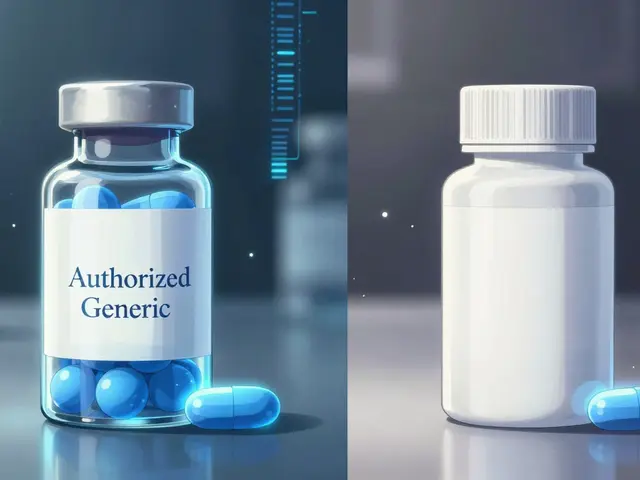
An authorized generic is the brand-name drug sold without the brand label. It is manufactured by the same company that created the original drug, meaning it is identical in every way to the branded version, but it is marketed as a generic to compete on price.
Why do brand companies launch them?
It is primarily a defensive strategy. By launching their own generic version, brand companies can capture market share from third-party generic competitors and keep some of the revenue that would otherwise be lost after a patent expires.
How do they differ from regular generics?
Traditional generics are made by other companies who must file an Abbreviated New Drug Application (ANDA) to prove their version is bioequivalent. Authorized generics don't need this because they are the original product.
Do authorized generics save patients money?
Generally, yes, because they are cheaper than the branded version. However, some experts argue they can slow down the price drops that happen when multiple traditional generic companies compete aggressively.
Will this happen with biologic drugs?
Yes, this is moving into the world of biosimilars. As patents for complex biologic drugs expire, brand companies are expected to use similar strategies to maintain their market presence.
What's Next?
If you're tracking the pharmaceutical market, keep an eye on two things: the FDA's domestic manufacturing pilot and the wave of oncology biosimilar launches. For patients, the best move is to always ask your pharmacist if an authorized or traditional generic is available for your prescription, as this is the simplest way to lower your out-of-pocket costs.





Comments (12)
Michael Deane
April 26, 2026 AT 00:46 AMFinally seeing some movement on bringing the manufacturing back home to the USA where it belongs because we can't keep relying on overseas labs that don't care about our standards and just want our money, so the FDA's pilot program is the only way to actually protect the American worker and ensure our medicine isn't coming from some sketchy factory across the ocean where nobody is watching the quality control!
James Harrison
April 26, 2026 AT 17:30 PMIt's interesting how these corporate games essentially mirror the cycle of value and decay in a capitalist society.
Anand Mehra
April 27, 2026 AT 09:55 AMcorporate greed masquerading as strategy’s just a joke purely a shell game to keep prices high while pretending to help patients basic economics 101
Sharyl Foster
April 27, 2026 AT 22:17 PMEveryone thinks the ANDA pathway is the only thing that matters but the real joke is how the brand companies just manipulate the timing to ensure they bleed every last cent out of the patient before they even think about dropping the price, and honestly, if you think authorized generics are "saving" us, you're just falling for the marketing fluff.
Majestic Blue Band
April 29, 2026 AT 16:42 PMIt is absolutely terrifying that we are trusting these same companies to regulate their own "generics" when it is clear as day that this is all part of a larger, more sinister plot to maintain a stranglehold on human health, probably coordinated by globalists who want to decide who gets the good medicine and who gets the filler, and honestly, the more I read about these "biosimilars" the more I'm convinced they are just testing new ways to alter our chemistry without our consent because why else would they be so secretive about the transition and the timing of these launches unless there was something they didn't want the public to realize about the long-term effects of these manufactured proteins that aren't even identical to the original!
Kristen O'Neal
April 30, 2026 AT 00:52 AMI really appreciate the breakdown of the biosimilar market because that's where the real impact will be for chronic illness patients, and it would be great to see more transparency on how these authorized versions are priced compared to the traditional ones to ensure the savings actually reach the end user.
Jaclyn Vo
April 30, 2026 AT 21:27 PMUgh, as if we didn't already know Big Pharma was just a giant game of Monopoly 🙄 like, imagine thinking a "pilot program" for domestic production actually changes the profit motive! Total joke! 💅
Gauri Parab
May 2, 2026 AT 19:28 PMThe level of intellectual dishonesty in suggesting that authorized generics are a "strategic move" for the benefit of the market is laughable. It is a blatant attempt to preserve a monopoly by pretending to concede to competition. If you actually understood the nuances of patent law and market entry barriers, you'd realize this is just a desperate attempt by legacy firms to avoid the inevitable decline of their rent-seeking behavior, and frankly, anyone who finds this "clever" is simply ignoring the systemic failure of the current pharmaceutical regulatory framework which allows such parasitic behavior to flourish under the guise of "innovation" and "patient access" while the actual cost of healthcare continues to skyrocket beyond the reach of the average citizen.
Daniel Runion
May 2, 2026 AT 21:41 PMOh, please!!! The idea that the FDA can just "incentivize" companies to move back to the US is a total fantasy!!! They'll just move their paperwork and keep the actual vats in India or China!!! What a complete and utter joke this all is!!!
Andre Ojakäär
May 3, 2026 AT 01:40 AMabsolute madness that people think bioequivalence is a gold standard when the brand company is literally just swapping a label and calling it a day... it is the most blatant cash grab in the history of medicine and we just let it happen because the system is rigged
Jon Moss
May 4, 2026 AT 03:53 AMIt's a lot to take in, but at least some people are getting their meds cheaper, even if the corporate side is messy.
suresh kumar
May 5, 2026 AT 03:12 AMThis whole thing smells like a spicy corporate scam, honestly just a fancy way to keep the money flowing into the same old pockets while we play pretend with "generic" labels! Totally wild how they just dance around the law like it's a carnival!