
Tramadol Seizure Risk Estimator
Select the factors that apply to you or your patient profile.
Risk Assessment Result
No risk factors selected. Select options above to see analysis.
Imagine taking a painkiller for a broken bone or chronic back pain, only to end up in the emergency room with a seizure. It sounds like a rare nightmare, but for patients with epilepsy or those prone to seizures, this is a very real danger associated with Tramadol, a synthetic opioid analgesic that lowers the seizure threshold through dual mechanisms of action. Unlike many other opioids, Tramadol doesn't just block pain signals; it actively disrupts brain chemistry in ways that can trigger electrical storms in the brain.
If you have a history of seizures, or if you are taking medications that affect serotonin and norepinephrine, understanding how Tramadol works is not just academic-it’s critical for your safety. This article breaks down why this common prescription carries unique risks, who is most vulnerable, and what alternatives might keep you safe without sacrificing pain relief.
How Tramadol Works Differently Than Other Opioids
To understand the risk, we first need to look at what makes Tramadol unusual. Most opioids, like Morphine, a potent natural opioid used for severe pain management, work primarily by binding to mu-opioid receptors in the brain. At low doses, these traditional opioids often have an anticonvulsant effect, meaning they actually calm brain activity slightly.
Tramadol is different. It has a dual mechanism of action. First, it acts as a weak agonist at the mu-opioid receptor, providing pain relief similar to other opioids. But second-and this is where the trouble starts-it inhibits the reuptake of two key neurotransmitters: Serotonin, a chemical messenger that regulates mood and sleep cycles and Norepinephrine, a hormone involved in the body's fight-or-flight response.
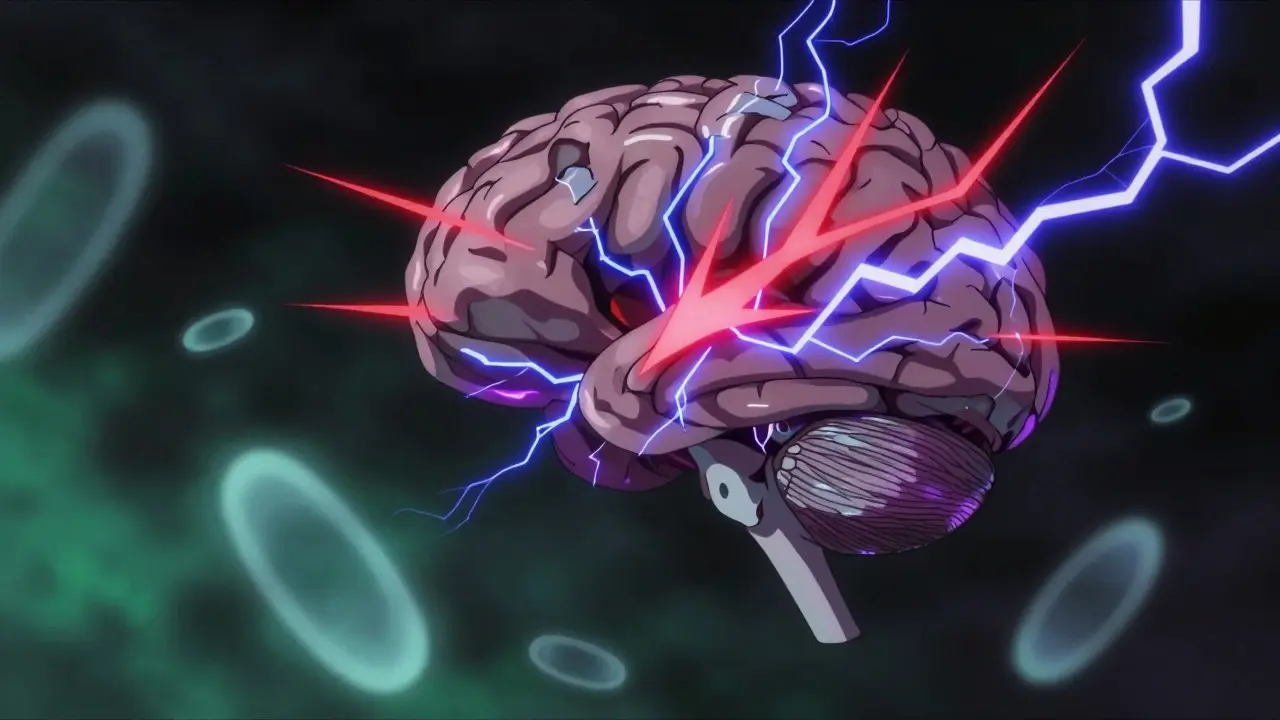
This serotonergic and noradrenergic activity is what gives Tramadol its antidepressant-like properties, but it also destabilizes the brain’s electrical balance. Research published in Neurology.org (2023) suggests that Tramadol and its active metabolite, M1, decrease the seizure threshold by inhibiting gamma-aminobutyric acid (GABA). GABA is the brain’s primary "brake" system. When you inhibit GABA while simultaneously flooding the system with excitatory chemicals like serotonin, you remove the brakes while pressing the gas pedal. The result? A significantly higher chance of a seizure.
The Seizure Threshold: What It Means for You
Your "seizure threshold" is the level of stimulation required to trigger a seizure. In healthy individuals, this threshold is high, making seizures unlikely. However, certain drugs, injuries, or conditions can lower this threshold, making the brain more excitable and prone to firing uncontrollably.
Tramadol is well-documented as a drug that lowers this threshold. The UCSF Pain Management Education program explicitly states that Tramadol should not be used in patients with seizure disorders because it lowers this protective barrier. Even more concerning, seizures have been reported in patients receiving Tramadol at recommended therapeutic doses, not just during overdoses.
A pivotal study published in PMC (2013) examined 28 subjects who experienced Tramadol-associated seizures. The findings were stark:
- Timing: 89.3% of seizures occurred within the first 24 hours of intake.
- Dosing: While 46.4% of patients had abused doses above 400mg/day, seizures still occurred in patients taking normal therapeutic amounts.
- Recovery: EEG abnormalities were present in 42.9% of cases initially but dropped to just 3.6% after one week, indicating the neurological impact is acute but transient.
This data tells us that the highest risk window is immediate. If you are starting Tramadol, the first day is when you need to be most vigilant about symptoms like muscle twitching (myoclonus), confusion, or sudden jerking movements.
Who Is at Highest Risk?
Not everyone who takes Tramadol will have a seizure. However, specific groups face a disproportionately higher risk. Understanding these factors helps you assess your personal vulnerability before starting treatment.
| Risk Factor | Why It Increases Risk | Clinical Evidence |
|---|---|---|
| Pre-existing Seizure Disorder | The brain's electrical stability is already compromised. | Contraindicated by all major clinical guidelines including UCSF. |
| Polypharmacy (Drug Interactions) | Other drugs may further lower the seizure threshold or increase Tramadol levels. | 57.1% of seizure cases in the 2013 study involved concomitant drug use. |
| Renal Impairment | Kidneys clear Tramadol and its metabolites; failure leads to toxic buildup. | Medsafe report documented seizures in patients with renal failure at standard doses. |
| High Dosage (>400mg/day) | Saturation of metabolic pathways increases pro-convulsant metabolite M1. | Seizure risk rises sharply above the maximum recommended daily dose. |
| Age and Gender | Younger adults and males showed higher incidence in some studies. | Mean age of seizure patients was 28.4 years; 92.8% were male in the 2013 cohort. |

Dangerous Drug Interactions to Avoid
One of the biggest dangers with Tramadol isn't the drug itself, but what you take alongside it. Because Tramadol affects serotonin and norepinephrine, combining it with other medications that touch these same systems creates a perfect storm for seizures.
The Medsafe New Zealand report highlighted several dangerous combinations:
- Tricyclic Antidepressants (TCAs): Drugs like Amitriptyline also inhibit serotonin reuptake. Taking them with Tramadol multiplies the risk. The report noted three patients on TCAs who seized, with two experiencing seizures specifically when their Tramadol dose was increased.
- Selective Serotonin Reuptake Inhibitors (SSRIs): Common antidepressants like Fluoxetine or Sertraline add to the serotonergic load, increasing seizure potential.
- Antipsychotics: Many antipsychotics independently lower the seizure threshold. Combining them with Tramadol removes multiple layers of neurological protection.
- Alcohol and Illicit Drugs: The 2013 study found that concurrent consumption of alcohol or illicit drugs made seizures significantly more common.
If you are currently taking any medication for depression, anxiety, or psychosis, you must inform your doctor before starting Tramadol. The interaction isn't always immediate, but the cumulative effect can push your brain past its limit unexpectedly.
Recognizing the Warning Signs
Seizures don't always start with a full-blown convulsion. Often, there are subtle warning signs that indicate your brain is becoming unstable. Being aware of these early indicators can help you seek help before a major event occurs.
- Myoclonus: These are sudden, brief muscle jerks or twitches. They are often the first sign that Tramadol is affecting your motor neurons excessively.
- Confusion or Agitation: Sudden changes in mental status, feeling disoriented, or extreme irritability can signal neurological distress.
- Nausea and Vomiting: While common side effects, severe nausea combined with dizziness can precede a seizure in sensitive individuals.
- Sensory Changes: Some patients report visual disturbances, tingling sensations, or a strange taste in the mouth before losing consciousness.
If you experience any of these symptoms after starting Tramadol, do not wait. Contact your healthcare provider immediately. Do not drive until you are sure your neurological function is stable.

Safer Alternatives for Pain Management
If you have a seizure disorder or are at high risk, Tramadol is generally considered a poor choice. Fortunately, there are other options for managing pain that do not carry the same seizurogenic burden.
Non-Opioid Analgesics: For mild to moderate pain, NSAIDs like Ibuprofen or Naproxen, and Acetaminophen remain the first line of defense. They do not affect the seizure threshold.
Traditional Opioids: If stronger pain relief is needed, traditional opioids like Morphine, Oxycodone, or Hydrocodone are often safer regarding seizure risk. As mentioned earlier, these drugs tend to have anticonvulsant properties at therapeutic doses, provided they are used carefully and monitored for respiratory depression.
Adjuvant Therapies: Depending on the type of pain (neuropathic vs. nociceptive), medications like Gabapentin or Pregabalin might be prescribed. Interestingly, these drugs are themselves anticonvulsants, so they can treat pain while protecting against seizures.
Always discuss your full medical history, including any past episodes of fainting, head trauma, or family history of epilepsy, before accepting a prescription. Your pharmacist is also a valuable resource for checking drug-drug interactions before you leave the pharmacy counter.
Conclusion: Vigilance Is Key
Tramadol occupies a tricky middle ground in pain management. It’s not as strong as Morphine, but it’s not as simple as Tylenol. Its unique dual-action mechanism provides benefits for some patients but introduces a distinct and serious risk for others: the lowering of the seizure threshold.
For the vast majority of people without predisposing factors, Tramadol is safe when taken as directed. But for those with epilepsy, kidney issues, or complex medication regimens, the stakes are much higher. By understanding the mechanism-specifically the inhibition of GABA and the surge in serotonin-you can make informed decisions with your doctor. Never hesitate to ask, "Does this medication interact with my condition?" Your health depends on that question being asked.
Can Tramadol cause seizures in people with no history of epilepsy?
Yes. While the risk is higher in those with pre-existing seizure disorders, Tramadol has caused seizures in patients with no prior history, particularly at high doses, in cases of overdose, or when combined with other medications that lower the seizure threshold such as antidepressants.
How quickly does Tramadol-induced seizure occur?
Most Tramadol-induced seizures occur within the first 24 hours of ingestion. Studies show that nearly 90% of cases happen in this initial window, making the first day of treatment the most critical period for monitoring.
Is Tramadol safer than Codeine regarding seizure risk?
Generally, yes. Codeine is a pure opioid agonist without the significant serotonin and norepinephrine reuptake inhibition seen in Tramadol. Therefore, Codeine lacks the specific dual-mechanism that makes Tramadol uniquely prone to causing seizures.
What should I do if I experience muscle twitching while on Tramadol?
Muscle twitching, or myoclonus, can be a precursor to a seizure. If you notice persistent twitching, confusion, or agitation, contact your healthcare provider immediately. Do not drive, and consider stopping the medication under medical guidance if symptoms worsen.
Are there genetic factors that increase Tramadol seizure risk?
Emerging research suggests that genetic variations in liver enzymes (like CYP2D6) can affect how Tramadol is metabolized into its active form, M1. Poor metabolizers may have less pain relief, while ultra-rapid metabolizers may produce higher levels of M1, potentially increasing seizure risk. Genetic screening is becoming a topic of future research for personalized dosing.