
When your body makes too much of the stress hormone adrenaline, it can trigger sudden, terrifying spikes in blood pressure—that’s often what’s happening with pheochromocytoma, a rare, usually noncancerous tumor that grows on the adrenal glands and overproduces catecholamines. Also known as adrenal chromaffin cell tumor, it doesn’t show up on routine checkups but can cause life-threatening crashes if ignored. You might feel your heart pounding for no reason, break out in cold sweats, or get severe headaches that come and go like clockwork. These aren’t just stress symptoms—they’re red flags.
Pheochromocytoma is linked to other conditions like paraganglioma, a similar tumor that can form outside the adrenal glands, often along nerve pathways. Both are part of a group called neuroendocrine tumors, and they’re often found during tests for unexplained high blood pressure, especially when it’s resistant to multiple medications or comes in sudden, severe episodes. Doctors look for patterns: episodes triggered by stress, physical activity, or even certain foods like aged cheese or chocolate. Blood and urine tests check for excess catecholamines, and imaging like CT or MRI pinpoints the tumor’s location.
Most pheochromocytomas are removed with surgery—often laparoscopically—and recovery is usually quick if caught early. But if left untreated, the constant surge of adrenaline can damage your heart, lead to stroke, or cause organ failure. Even after surgery, some people need ongoing monitoring because these tumors can come back or run in families. Genetic testing is sometimes recommended if you’re under 40 or have other symptoms like vision loss or skin flushing.
What you’ll find here are real, practical guides from people who’ve been there: how to track symptoms before diagnosis, what blood tests actually mean, why some meds make it worse, and how recovery works after surgery. No fluff. Just what you need to understand this rare condition and talk to your doctor with confidence.
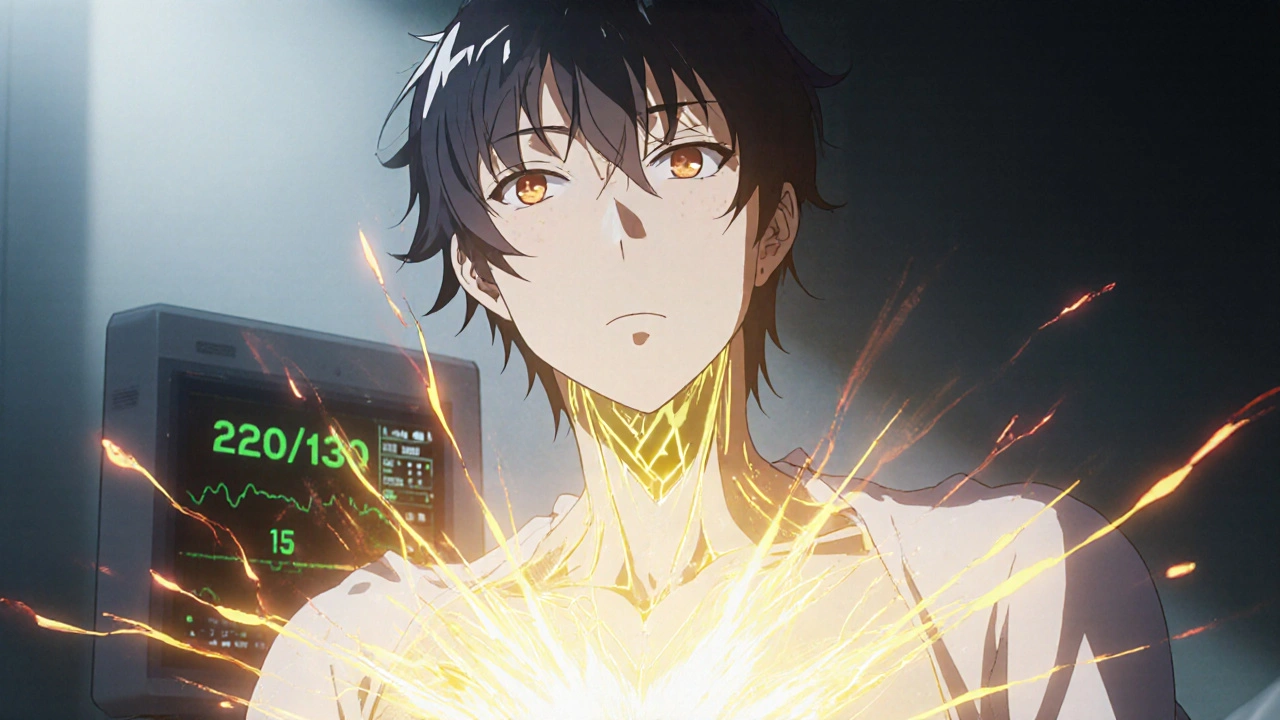
Pheochromocytoma is a rare adrenal tumor that causes dangerous spikes in blood pressure, sweating, and heart palpitations. Unlike common hypertension, it can be cured with surgery-but only if correctly diagnosed. Learn the symptoms, tests, and why pre-op preparation saves lives.