

When your doctor talks about your eGFR, estimated glomerular filtration rate, a calculation used to estimate how well your kidneys filter waste from your blood. Also known as estimated glomerular filtration rate, it’s one of the most important numbers in kidney health. It’s not something you measure directly—it’s figured out using your age, sex, race, and blood creatinine levels. Think of it like a fuel gauge for your kidneys: low eGFR means your kidneys aren’t filtering as well as they should.
eGFR equations are built on formulas like the CKD-EPI, a widely used equation developed by the Chronic Kidney Disease Epidemiology Collaboration to estimate kidney function more accurately than older methods and the older MDRD, the Modification of Diet in Renal Disease study equation, still used in some clinics. These formulas turn a simple blood test into a clear picture of kidney function. Doctors use them to stage chronic kidney disease, decide if you need dialysis, or adjust your medication doses—especially for drugs cleared by the kidneys, like certain antibiotics or painkillers.
Why does this matter to you? If your eGFR drops below 60 for three months or more, it’s a sign of chronic kidney disease. But it’s not just about the number—it’s about trends. A slow decline over time is more telling than a single low reading. People with diabetes, high blood pressure, or heart disease often get their eGFR checked regularly because these conditions slowly damage the kidneys. And if you’re on long-term medications like NSAIDs or certain HIV drugs, your doctor may use eGFR to watch for early signs of kidney stress.
What you won’t find in your eGFR report is the full story. Two people with the same eGFR can have very different kidney health—one might have mild scarring, the other severe damage. That’s why doctors look at other things too: urine protein levels, blood pressure, imaging, and sometimes a biopsy. But eGFR is the starting point. It’s fast, cheap, and tells you more than you think.
In the posts below, you’ll find real-world examples of how eGFR connects to medications, diseases, and treatment decisions. From how toluvaptan affects kidney function in ADPKD patients to why ritonavir needs dose adjustments based on eGFR, these articles show how this single number shapes care across dozens of conditions. Whether you’re managing kidney disease, taking long-term meds, or just trying to understand your lab results, this collection gives you the context you need—not just the numbers, but what they mean for your health.
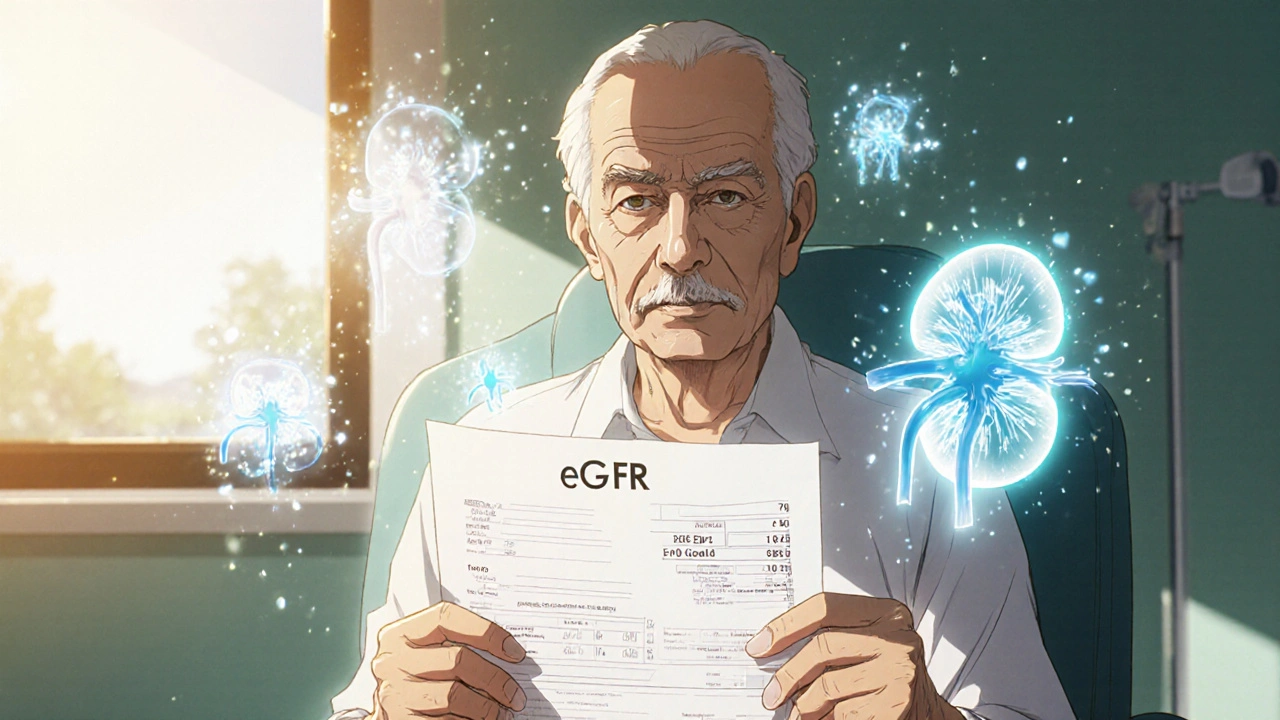
Learn how to accurately monitor kidney function in seniors to prevent dangerous medication overdoses. Discover which eGFR equations work best for older adults and what steps to take for safe dosing.