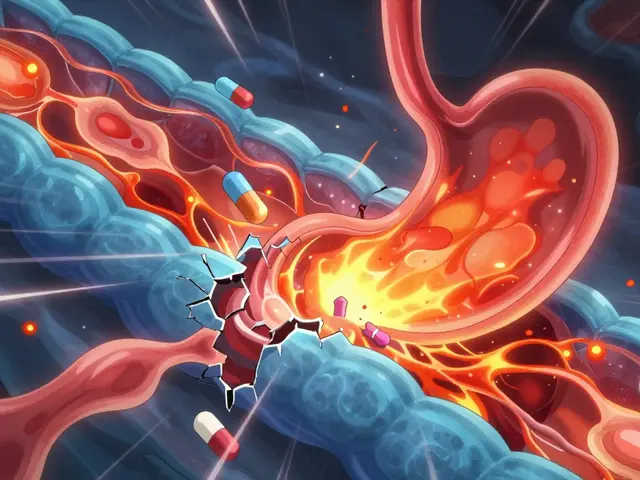

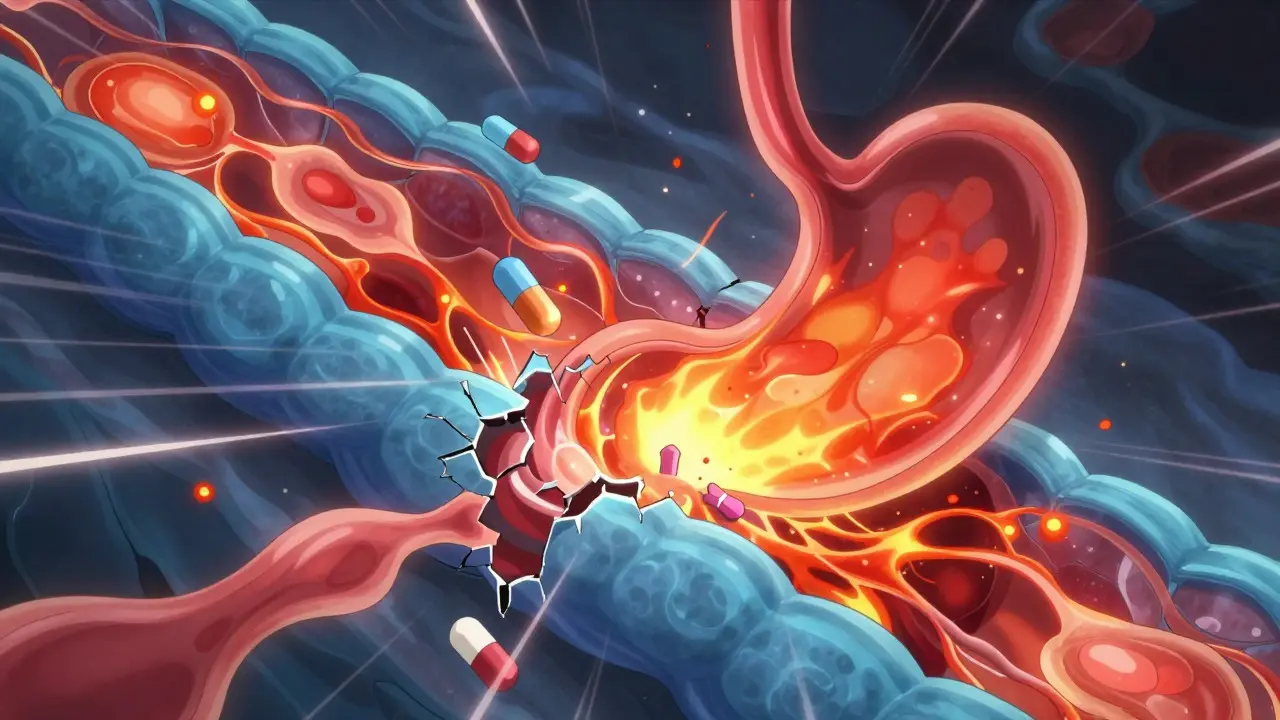
Every year, roughly 30 million people around the world reach for a nonsteroidal anti-inflammatory drug (NSAID) to manage pain. Whether it is ibuprofen for a headache or naproxen for arthritis, these medications are a staple in modern medicine. But while they effectively reduce inflammation and fever, they come with hidden costs that many users overlook until it is too late. The core problem is simple: NSAIDs protect your body from pain by blocking prostaglandins, but those same chemicals keep your stomach lining healthy and your kidneys filtering blood efficiently. When you block them, you trade one problem for another.
This guide breaks down exactly how NSAID safety works in practice. We will look at why your stomach lining is vulnerable, how your kidneys react to long-term use, and the specific monitoring steps you should take to stay safe. You do not need to be a doctor to understand these risks, but you do need to know when to worry and what to ask your healthcare provider.
Why Your Stomach Is Under Attack
To understand the danger, you first have to understand the mechanism. Nonsteroidal anti-inflammatory drugs work by inhibiting cyclooxygenase enzymes, specifically COX-1 and COX-2, which are responsible for producing prostaglandins. Prostaglandins are tiny chemical messengers that cause pain and swelling, yes, but they also produce a protective mucus layer in your stomach and regulate blood flow in your kidneys. Non-selective NSAIDs like ibuprofen and naproxen block both COX-1 and COX-2. This is effective for pain, but it strips away the stomach’s natural defense system.
The damage happens in two ways. First, there is direct irritation of the mucosa, the inner lining of the gut. Second, and more dangerously, there is systemic inhibition of the prostaglandins that keep that lining alive. According to the American College of Gastroenterology, this leads to complications in a significant number of users. About 10% to 50% of people taking NSAIDs develop some form of gastropathy. For long-term users, the risk climbs higher, with roughly 15% developing peptic ulcers. These ulcers can bleed silently, leading to iron deficiency anemia before you ever notice black stools or severe pain.
It is not just the upper gut either. The lower intestines are also affected, a condition known as NSAID-induced enteropathy. A study published in Gut and Liver confirmed that we still lack a perfect strategy to prevent this lower GI injury, making it a critical blind spot in current treatment plans.
The Hidden Toll on Your Kidneys
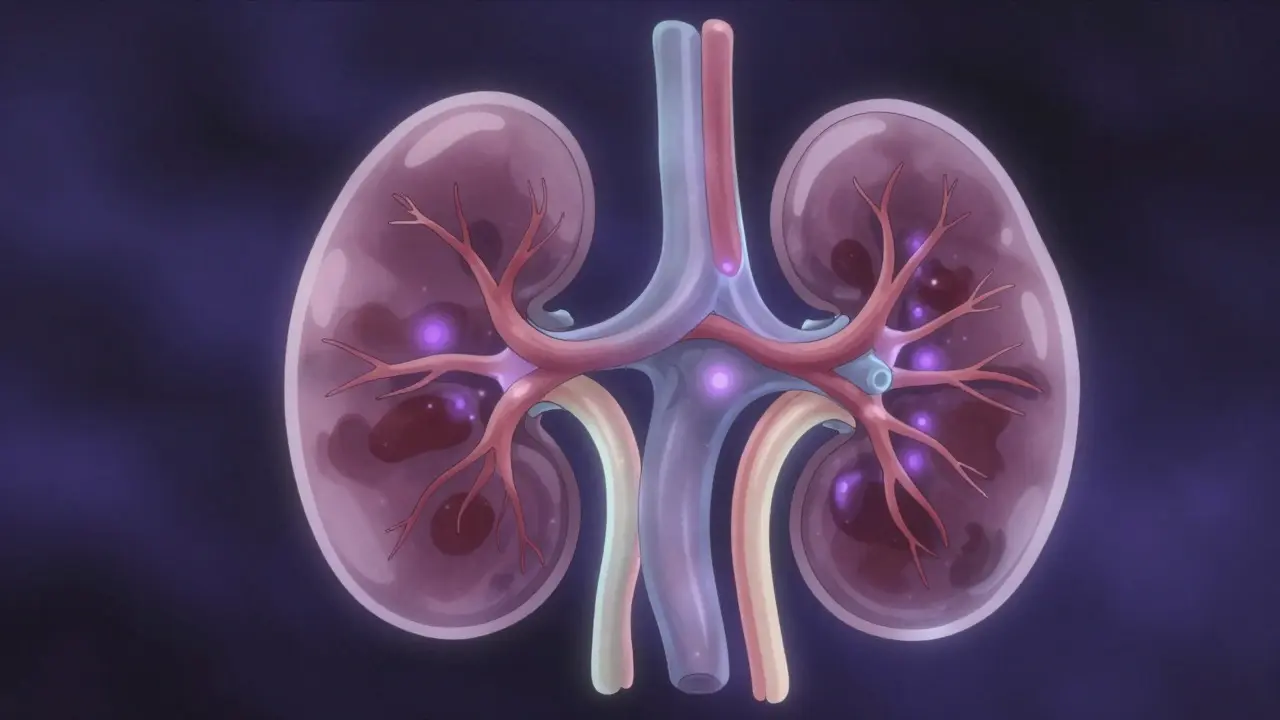
If your stomach is the most visible victim, your kidneys are often the silent ones. Your kidneys rely on prostaglandins to maintain proper blood flow, especially when you are dehydrated or under physical stress. When you take an NSAID, you constrict the blood vessels in the kidneys, reducing their ability to filter waste. This can lead to acute kidney injury, which affects 1% to 5% of users according to recent data from Kidney International Reports.
For most healthy young adults, this might be reversible if you stop taking the medication. However, for older adults or those with pre-existing conditions, the risk is much higher. Chronic use can lead to interstitial nephritis or papillary necrosis, where the tissue in the kidney tips dies off. If you are over 65, the FDA now mandates a boxed warning on prescription NSAIDs specifically highlighting this renal risk. It is a reminder that age changes the equation entirely.
Risk Factors: Who Should Be Most Careful?
Not everyone faces the same level of danger. Risk is cumulative. The American College of Gastroenterology uses a validated calculator to assess patient risk. Here is how the points add up:
- Age over 65: Adds 2 points.
- History of ulcers: Adds 3 points.
- Concomitant anticoagulants: Adds 2 points.
- Corticosteroid use: Adds 1 point.
If you score 4 points or higher, you are considered high-risk. In this group, proactive protection is essential. Dr. John T. Lamont from Harvard Medical School notes that NSAID gastropathy is asymptomatic half the time. You cannot wait for symptoms to appear; you must assess risk before you start the medication. If you are also taking SSRIs for depression, the bleeding risk jumps even higher, increasing by nearly 3.4 times compared to using an NSAID alone.
Comparing Options: Selective vs. Non-Selective
You might think switching to a "safer" NSAID solves the problem. There are COX-2 selective inhibitors, like celecoxib, which target the inflammation pathway while sparing the stomach-protecting COX-1 enzyme. Does this make them safer? Generally, yes, for the stomach. A 2023 meta-analysis showed that non-selective NSAIDs like naproxen carry a 4.2-fold increased risk of upper GI bleeding, whereas celecoxib shows only a 1.9-fold increase. However, it is not a free pass. Ibuprofen, for instance, carries a 2.7 times higher risk of upper GI complications than celecoxib, according to European Medicines Agency data.
| Drug Type | Examples | Upper GI Bleeding Risk | Key Considerations |
|---|---|---|---|
| Non-Selective | Ibuprofen, Naproxen | High (4.2x vs non-users) | Wider range of side effects; cheaper OTC options |
| COX-2 Selective | Celecoxib | Moderate (1.9x vs non-users) | Better stomach profile; requires prescription |
| Nitric Oxide Donating | Naproxcinod | Low (58% lower ulcer rate than naproxen) | Newer option; approved in 2023 |
However, cardiovascular health plays a role here too. If you have had a heart attack, using any NSAID increases your risk of adverse cardiovascular events. The choice between drugs becomes a balancing act between protecting your stomach and protecting your heart.
Monitoring Protocols: What You Actually Need to Do
Knowing the risks is only half the battle. The other half is monitoring. Many patients assume that if they feel fine, they are okay. That is a dangerous assumption. Here is the practical checklist for staying safe:
- Baseline Blood Work: Before starting long-term NSAID therapy, get your serum creatinine and blood urea nitrogen (BUN) checked. This establishes your kidney function baseline.
- Follow-Up Creatinine: Per FDA recommendations, check your creatinine again within 30 days of initiation. If you are high-risk, do this periodically thereafter.
- Complete Blood Count (CBC): Monitor for signs of occult bleeding, such as dropping hemoglobin levels.
- Fecal Occult Blood Testing: For high-risk patients, the American Gastroenterological Association recommends testing every six months. New point-of-care tests launched in 2024 have a 92% sensitivity for detecting this bleeding in NSAID users.
- Review Concomitant Meds: Check with your pharmacist about interactions, especially with SSRIs, anticoagulants, or corticosteroids.
Only 52% of NSAID users actually had their creatinine checked within 90 days of starting treatment, according to a 2023 Medicare claims analysis. This gap is where preventable injuries happen. Automated alerts in electronic health records and pharmacist-led programs have been shown to reduce complications by 31%, proving that systematic monitoring works.

Strategies to Minimize Harm
If you must take an NSAID, how do you minimize the damage? The 2021 American College of Rheumatology guidelines offer a clear hierarchy of actions. First, avoid NSAIDs if possible in high-risk patients. If avoidance isn't an option, use the lowest effective dose for the shortest duration. Every additional week of use increases complication risks by 3-5%, so duration matters as much as dosage.
Many doctors prescribe proton pump inhibitors (PPIs) alongside NSAIDs to protect the stomach. PPIs reduce ulcer complications by 70-90%. But is it perfect? Not quite. Dr. David A. Johnson warns that combining NSAIDs and PPIs for 4-12 months can increase the risk of microscopic colitis by 6.24 times. So while PPIs help the upper GI tract, they don't protect the lower intestine and may introduce new issues. It is a trade-off, not a cure-all.
For those seeking alternatives, newer developments are promising. Naproxcinod, a nitric oxide-donating NSAID approved in 2023, shows a 58% lower endoscopic ulcer rate than standard naproxen. As patents on older drugs expire, access to these safer alternatives may improve, but for now, careful monitoring remains the gold standard.
Frequently Asked Questions
How long can I safely take NSAIDs without checking my kidneys?
You should check your kidney function (creatinine) within 30 days of starting long-term NSAID use. After that, periodic checks are recommended, especially if you are over 65 or have other risk factors. Do not go months without monitoring if you are on daily doses.
Are COX-2 inhibitors like Celecoxib completely safe for the stomach?
They are safer than non-selective NSAIDs like ibuprofen or naproxen, reducing upper GI bleeding risk significantly. However, they are not risk-free. They still affect the lower GI tract and may pose cardiovascular risks for some patients. They are best used in combination with a PPI for moderate-to-high risk individuals.
What are the signs of NSAID-induced kidney damage?
Symptoms are often subtle or absent initially. You might notice swelling in your legs (edema), changes in urine output, or unexplained fatigue. Because symptoms can be mild, regular blood tests for creatinine and BUN are the most reliable way to detect early kidney stress.
Should I take a PPI with my NSAID?
If you are at high risk for stomach ulcers (age >65, history of ulcers, or concurrent steroid use), a PPI is strongly recommended. It reduces ulcer risk by up to 90%. However, discuss this with your doctor, as long-term PPI use has its own set of potential side effects, including a slight increase in risk for microscopic colitis when combined with NSAIDs.
Can I take NSAIDs if I have stage 3 chronic kidney disease?
Generally, no. The American College of Cardiology's 2024 guidance recommends avoiding all NSAIDs in patients with stage 3+ chronic kidney disease (eGFR <60 mL/min/1.73m²). The risk of worsening kidney function outweighs the benefits for most patients in this category. Ask your doctor about alternative pain management strategies.