

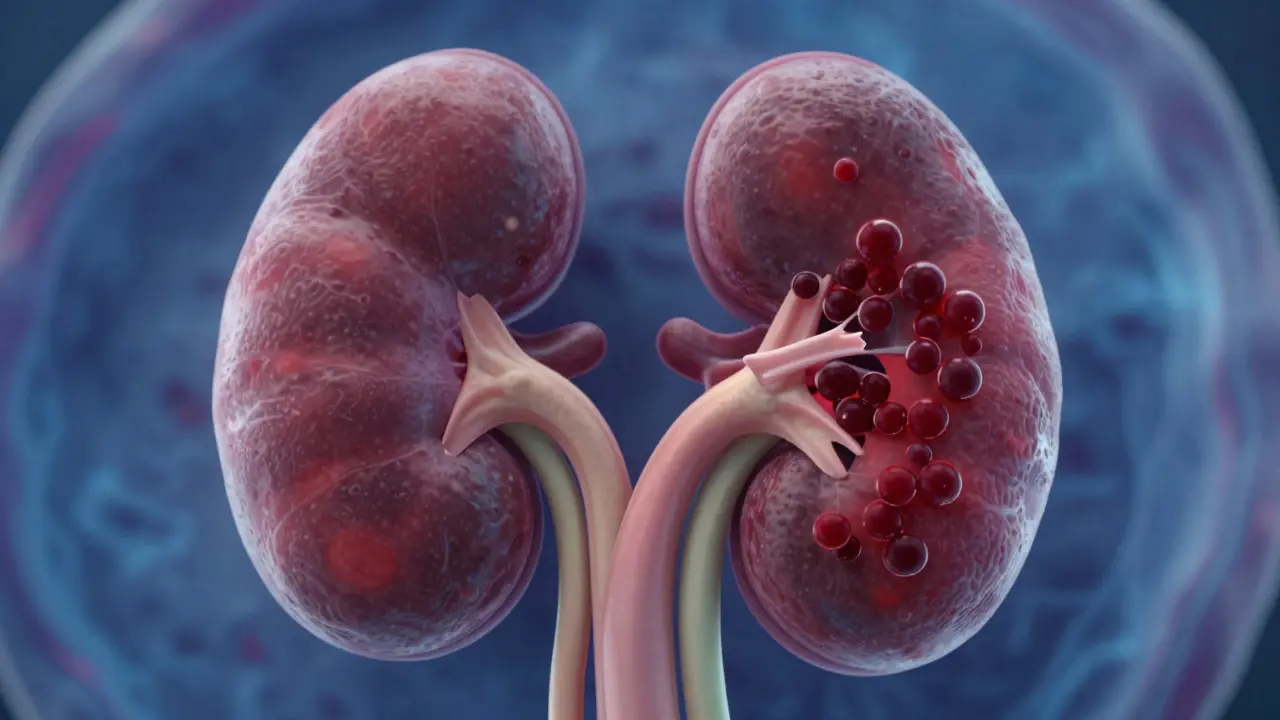
Nearly half of people with advanced kidney disease have a dangerous buildup of acid in their blood - a condition that's often overlooked but can accelerate kidney damage. This is metabolic acidosis, and it's more common than you think.
What is Metabolic Acidosis in CKD?
When your kidneys can't remove enough acid from your blood, metabolic acidosis develops. This happens because healthy kidneys help balance acid and bicarbonate levels. In chronic kidney disease (CKD), especially stages 3-5, this balance gets disrupted. According to the National Kidney Foundation, about 15% of stage 3 CKD patients, 24% of stage 4, and 42% of stage 5 have metabolic acidosis. Without treatment, this condition can speed up kidney damage and lead to serious complications like bone loss and muscle wasting.
Why Bicarbonate Levels Matter in CKD
Your blood needs a certain amount of bicarbonate to stay healthy. Normal levels are between 22-29 mEq/L. When bicarbonate drops below 22, your body can't neutralize acid properly. This acid buildup harms your kidneys, bones, and muscles. A major study in the Journal of the American Society of Nephrology found that patients with CKD who had low bicarbonate levels lost kidney function 3 times faster than those with normal levels. The good news? Correcting bicarbonate can slow this decline.
Treatment Options for Metabolic Acidosis in CKD
Doctors have several ways to treat metabolic acidosis. Sodium bicarbonate is the most common treatment. It comes in tablets (650mg each) or powder form. Each tablet has 7.6 mEq of bicarbonate. A landmark 3-year study showed sodium bicarbonate slowed kidney decline by 5.9 mL/min compared to placebo. But there's a catch: sodium bicarbonate contains sodium. For people with high blood pressure or heart failure, this can worsen fluid buildup. One study found these patients had a 32% higher hospitalization rate for heart failure when using sodium bicarbonate.
Alternative options include potassium citrate and calcium citrate. Potassium citrate helps raise bicarbonate but can cause dangerous high potassium levels (hyperkalemia) in CKD patients. About 22% of stage 4 CKD patients on potassium citrate developed hyperkalemia in a 2009 study. Calcium citrate avoids potassium risks but may increase kidney stones. Studies show a 27% higher risk of calcium stones in CKD patients using calcium-based treatments long-term.
Dietary changes are another approach. Eating more fruits and vegetables (5-9 servings daily) while cutting back on meat, cheese, and processed foods reduces dietary acid load by 40-60 mEq/day. A Cleveland Clinic patient increased their bicarbonate by 3.5 mEq/L after six months of plant-based meals under dietitian supervision. However, this requires consistent effort and nutritional guidance.

Current Guidelines and Recommendations
KDIGO guidelines (Kidney Disease: Improving Global Outcomes) recommend starting treatment when serum bicarbonate falls below 22 mEq/L. They aim for levels between 23-29 mEq/L to protect kidney function. The eGFR (estimated glomerular filtration rate) is a key test to track kidney health. For example, a 2020 study in the American Journal of Kidney Diseases showed CKD patients with bicarbonate ≥22 mEq/L had a 23% lower risk of kidney failure compared to those below 22.
But guidelines aren't one-size-fits-all. Dr. Lee Hamm, a leading nephrologist, says: "Correcting metabolic acidosis to a target bicarbonate of at least 24 mEq/L should be standard care for all CKD stages 3-5." However, some experts warn that very high levels (above 26) might increase mortality in elderly patients. The 2024 KDIGO draft update proposes a broader target range of 22-29 mEq/L based on new evidence.
Real-World Challenges in Treatment
Many patients struggle with treatment adherence. A 2022 National Kidney Foundation survey of 457 CKD patients found 68% had trouble taking pills due to pill burden (average 4.2 tablets daily), 41% hated the taste of liquid formulations, and 29% experienced bloating or nausea. One patient on Reddit shared: "The baking soda powder tastes terrible mixed in water-I have to put it in orange juice which adds sugar I shouldn't have." Another wrote: "Sodium bicarbonate tablets made my blood pressure spike from 130/80 to 160/95 within two weeks, so my nephrologist switched me to calcium citrate, but now I have to take 6 large pills daily and still get occasional leg cramps."
Tracking dietary acid load is also tricky. The PRAL score (Potential Renal Acid Load) measures how acidic foods are. Meat has a PRAL of +9.5 per 100g, cheese +8.0, while fruits average -2.2 and vegetables -2.8. Only 35% of patients following standard dietary counseling achieve a PRAL below 0 mEq/day - meaning most still eat acid-forming foods. This often requires 2-3 sessions with a renal dietitian to learn food swaps.

Emerging Treatments and Future Directions
Research continues to improve treatments. Veverimer (formerly TRC101), a sodium-free acid binder, showed promise in early trials but failed its phase 3 trial in 2021. Despite this, Tricida Inc. plans to resubmit to the FDA in Q2 2024 with new data. Meanwhile, the COMET-CKD trial (NCT04855003) is comparing high-dose vs. low-dose sodium bicarbonate in 1,200 CKD patients. Results are expected in late 2025.
A new citrate-free alkali supplement called TRC001 is also being tested. Preliminary data from the 2023 American Society of Nephrology meeting showed it increased bicarbonate by 4.1 mEq/L in 12 weeks with 50% fewer stomach issues than standard sodium citrate. If approved, this could offer a better option for patients who can't tolerate current treatments.
Practical Advice for Patients
Here's what you can do right now:
- Ask your doctor for a serum bicarbonate test if you have CKD. Levels below 22 need attention.
- For sodium bicarbonate treatment, start with 650mg once daily and monitor blood pressure closely. If you have heart issues, discuss alternatives like calcium citrate.
- Work with a renal dietitian to adjust your diet. Replace one meat meal daily with plant-based options (like beans or tofu) to reduce acid load.
- Get your bicarbonate checked every 3-6 months if stable, or monthly when starting treatment.
- Track your PRAL score using apps like Kidney Food or consulting a dietitian. Aim for a score below 0 daily.
While no perfect treatment exists yet, addressing metabolic acidosis can significantly slow kidney damage. As Dr. Debbie Guder stated at the European Renal Association meeting: "We're moving toward personalized bicarbonate targets based on comorbidities-24-26 mEq/L for heart failure patients, 22-24 mEq/L for malnourished elderly patients."
What is metabolic acidosis in chronic kidney disease?
Metabolic acidosis in CKD occurs when kidneys can't remove enough acid from the blood, causing low bicarbonate levels. It affects 15% of stage 3, 24% of stage 4, and 42% of stage 5 CKD patients. Left untreated, it accelerates kidney damage and increases risks of bone loss, muscle wasting, and heart problems.
How do I know if I have metabolic acidosis?
Your doctor will check your serum bicarbonate levels through a simple blood test. Levels below 22 mEq/L indicate metabolic acidosis. Symptoms like fatigue, shortness of breath, or confusion may occur, but many patients have no obvious signs - making regular blood tests essential for CKD patients.
Is sodium bicarbonate safe for everyone with CKD?
No. Sodium bicarbonate contains sodium, which can worsen high blood pressure, heart failure, or fluid retention. If you have these conditions, your doctor may recommend alternatives like calcium citrate or potassium citrate (if potassium levels are low). Always discuss your full health history before starting treatment.
Can diet alone fix metabolic acidosis in CKD?
Dietary changes help but usually aren't enough alone. Eating more fruits and vegetables (5-9 servings daily) while reducing meat and processed foods can lower acid load by 40-60 mEq/day. However, most CKD patients still need medication like sodium bicarbonate to reach target bicarbonate levels. Combining diet with treatment works best.
What's the ideal bicarbonate target for CKD patients?
KDIGO guidelines recommend 23-29 mEq/L, but this varies by individual. For heart failure patients, targets are often 24-26 mEq/L. Older adults with malnutrition may do better at 22-24 mEq/L. Always follow your nephrologist's personalized advice based on your overall health.
How often should I check my bicarbonate levels?
Check every 3-6 months if stable. If you're starting treatment or adjusting doses, monitor monthly until levels stabilize. Your doctor may adjust frequency based on your kidney function and other health conditions.
Are there new treatments coming for metabolic acidosis?
Yes. The COMET-CKD trial is testing high vs. low-dose sodium bicarbonate (results expected late 2025). A new citrate-free supplement called TRC001 showed 4.1 mEq/L bicarbonate increase in early trials with fewer stomach issues. While veverimer failed phase 3 trials, Tricida Inc. plans to resubmit to the FDA in early 2024 with new data.






Comments (11)
Kieran Griffiths
February 5, 2026 AT 11:41 AMMetabolic acidosis in CKD is a serious condition affecting nearly half of advanced kidney disease patients. It's often overlooked but can accelerate kidney damage. Sodium bicarbonate treatment has been shown to slow kidney decline by 5.9 mL/min compared to placebo in landmark studies. Maintaining bicarbonate levels between 23-29 mEq/L is key per KDIGO guidelines. However, sodium content can be problematic for heart failure patients. Alternative options like potassium citrate or calcium citrate exist but have their own risks. Potassium citrate can cause hyperkalemia in 22% of stage 4 CKD patients. Calcium citrate increases kidney stone risk by 27%. Dietary changes help but require consistent effort. Eating more fruits and vegetables reduces acid load by 40-60 mEq/day. A Cleveland Clinic patient increased bicarbonate by 3.5 mEq/L with plant-based meals. Tracking PRAL scores is essential for dietary management. New treatments like TRC001 show promise with fewer side effects. Personalized treatment plans based on comorbidities are the future. We need more awareness and better patient education on this issue.
Lisa Scott
February 6, 2026 AT 00:04 AMBig Pharma's pushing sodium bicarbonate to sell more meds they know it causes heart issues but they don't care The real solution is fixing kidneys not just covering symptoms This is all about profit
Tehya Wilson
February 6, 2026 AT 10:25 AMSodium bicarbonate treatment presents significant risks for cardiovascular patients yet it remains the standard This is a failure of medical oversight
jan civil
February 6, 2026 AT 16:46 PMValid concern about Big Pharma but sodium bicarbonate remains the most studied option. Alternatives like potassium citrate have risks. Balancing benefits and risks is key.
Kate Gile
February 7, 2026 AT 21:27 PMLet's work together to find the best treatment for each patient. Sodium bicarbonate helps many, but alternatives exist. We need personalized care.
Gregory Rodriguez
February 9, 2026 AT 03:51 AMOh sure, sodium bicarbonate is great! Just what we need - more sodium for people with heart issues. Because nothing says 'I care' like worsening heart failure. /s
Johanna Pan
February 9, 2026 AT 19:32 PMSarcasm aside there's real hope in new treatments like TRC001 Its exciting to see research moving forward for better options
Jenna Elliott
February 10, 2026 AT 19:00 PMThe US has the best kidney care in the world Other countries should follow our lead on bicarbonate treatment Why are we even discussing alternatives
Elliot Alejo
February 11, 2026 AT 10:03 AMWhile US care is advanced global collaboration is key. We need to share best practices worldwide for CKD patients
lance black
February 12, 2026 AT 00:59 AMNew treatments like TRC001 offer hope for CKD patients.
Bella Cullen
February 13, 2026 AT 06:09 AMHeart failure patients need alternative treatments to sodium bicarbonate.