


Why Generic Stocking Is the Backbone of Pharmacy Profitability
Most pharmacies spend 80% of their drug budget on just 20% of their inventory. The good news? That 20% is mostly generics. Generic medications make up 90% of all prescriptions filled in the U.S., but only 20% of total drug spending. That’s not a coincidence-it’s an opportunity. If you’re still stocking generics the same way you did five years ago, you’re leaving money on the table and risking stockouts that drive patients away.
Generic drugs aren’t just cheaper versions of brand-name pills. They’re high-volume, fast-moving products that need their own rules. You can’t treat metformin like a $30,000 hepatitis C drug. One needs constant monitoring, the other doesn’t. The key is building a system that treats generics like the volume drivers they are-not afterthoughts.
The 80/20 Rule in Action: Focus on What Moves
Start by identifying your top 20% of generic products. These are the ones you run out of every week. Think blood pressure meds like lisinopril or amlodipine, diabetes drugs like metformin, cholesterol reducers like atorvastatin, and common pain relievers like ibuprofen or acetaminophen. These aren’t just popular-they’re essential. Patients refill them monthly, often for life.
Track your turnover rate. If a generic moves more than 50 units a month, it’s in the high-priority group. Keep at least a week’s supply on hand. For slower movers-say, a niche thyroid med or rare antibiotic-only order what you’ll use in the next 60 days. Overstocking slow-moving generics ties up cash and risks expiration. One pharmacy in Ohio lost $4,700 last year because they kept six months’ supply of a discontinued generic antifungal. It expired. They couldn’t return it.
How to Set Your Reorder Points (And Why Guessing Doesn’t Work)
Stop using monthly budgets to decide how much to order. That’s how you end up with empty shelves on Tuesday and too much stock by Friday. Instead, use the Reorder Point formula:
Reorder Point = (Average Daily Usage × Lead Time) + Safety Stock
Let’s say you sell 8 bottles of metformin 500mg a day. Your supplier takes 3 days to deliver. Your safety stock (buffer for delays or spikes) is 2 days’ worth. That’s (8 × 3) + 16 = 40 bottles. When you hit 40, you order. Not when your manager says it’s time. Not when you see the shelf looks low. At 40.
Use your pharmacy software to automate this. Most systems let you set minimum and maximum levels. Set the minimum at your reorder point. Set the maximum at 1.5 times your reorder point. That way, you never dip below what you need, and you never overstock. For fast-movers, keep the gap tight. For slow-movers, widen it.
Handling New Generics: The Transition Trap
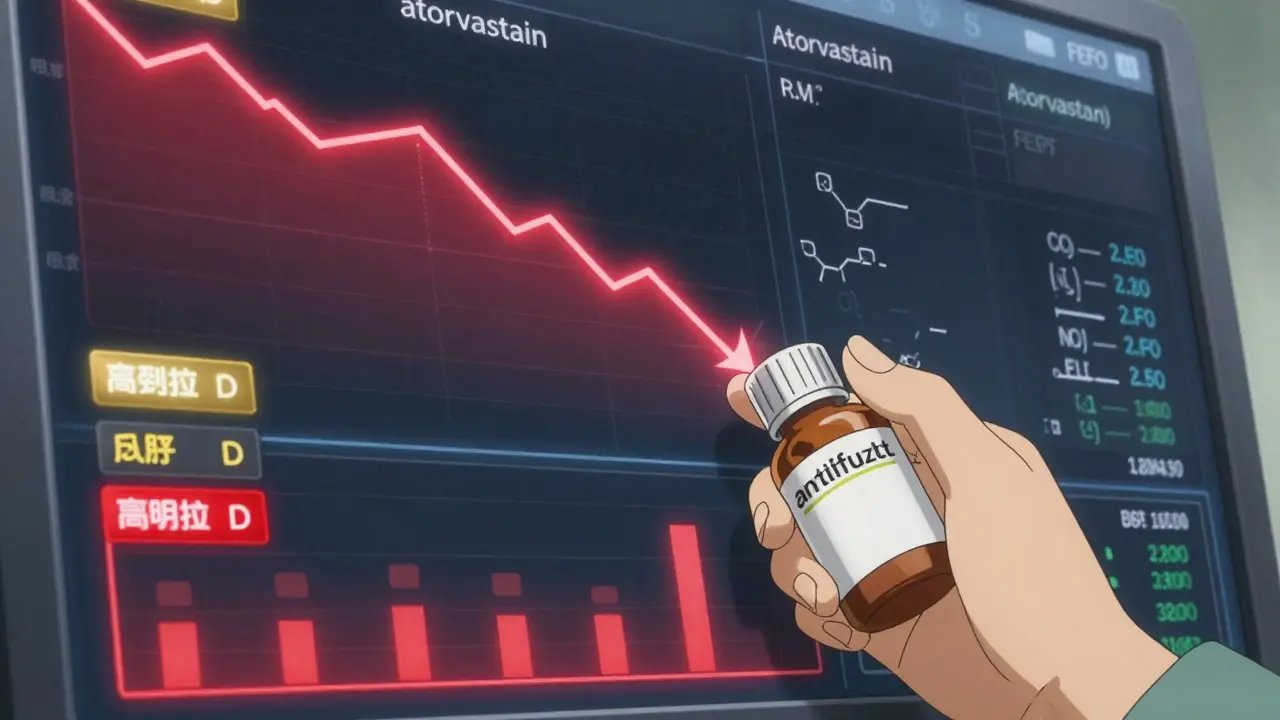
When a new generic hits the market, chaos follows. Brand-name atorvastatin sales drop fast. But your inventory system doesn’t know that-unless you tell it. Many pharmacies wait too long to switch. They keep ordering the brand, then get stuck with expired stock.
Here’s how to handle it:
- As soon as a new generic is approved, check your formulary. Is it preferred by insurers?
- If yes, immediately reduce your brand-name order by 30% and increase the generic order by the same amount.
- Monitor sales daily for the first two weeks. If brand sales drop below 10% of previous levels, stop ordering it.
- Use the open-to-buy formula to adjust your budget: Planned Sales + Planned Markdowns + Planned End Inventory - Planned Beginning Inventory.
One independent pharmacy in Michigan saw brand-name atorvastatin sales drop from 120 units a month to 8 in three weeks. They didn’t adjust their order. They had $3,200 in expired inventory. That’s avoidable.
Software That Works (And What to Avoid)
Not all inventory systems are built for generics. Some treat every drug the same. That’s a problem. You need software that:
- Tracks expiry dates specifically for generics (they often have shorter shelf lives due to lower margins)
- Calculates reorder points automatically using real-time sales data
- Flags products with low turnover so you can reduce orders
- Integrates with your supplier’s API to auto-order when stock hits minimum
Look for systems with generic transition protocols. Pharmacies using these tools report 22% higher satisfaction and 28% fewer stockouts during brand-to-generic switches. Avoid basic systems that only track “quantity on hand.” You need data, not just numbers.
Staff Training: The Hidden Key to Accuracy
Even the best software fails if staff don’t use it right. Common mistakes:
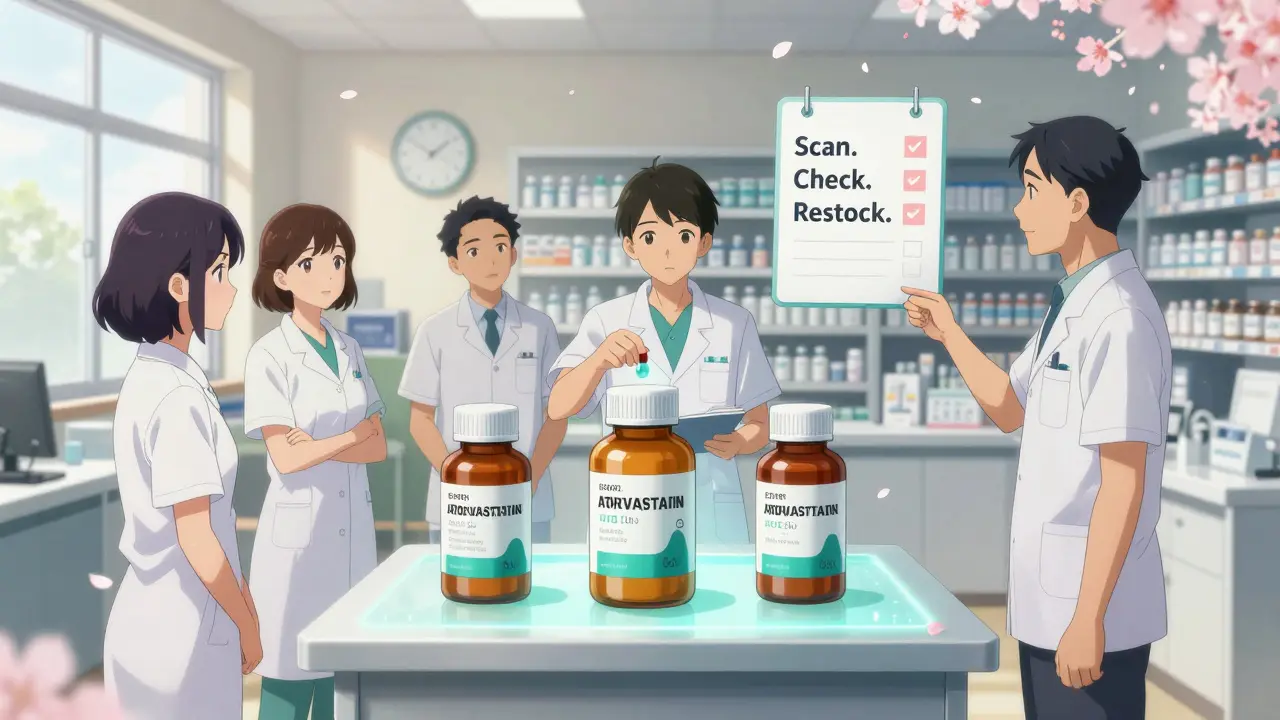
- Not scanning every generic when it arrives
- Leaving returned prescriptions on the shelf instead of restocking them
- Not updating expiry dates when new batches come in
Train your team on three things:
- Restock returned prescriptions within 24 hours. This alone cut inventory errors by 22% in one chain.
- Check expiry dates on every incoming generic batch. Don’t assume the label is right.
- Use medication synchronization for maintenance generics. If a patient gets their blood pressure meds on the 15th every month, your system should predict that demand. It makes ordering predictable.
Start with a two-week training cycle. Then, do weekly 10-minute check-ins for the first month. Keep it simple. Focus on what moves, what expires, and what gets returned.
What to Stock, and How Much
Here’s a practical guide for fast-moving generics:
| Medication | Typical Daily Sales | Reorder Point | Max Stock | Shelf Life Note |
|---|---|---|---|---|
| Metformin 500mg | 12 bottles | 50 bottles | 75 bottles | 24 months |
| Lisinopril 10mg | 8 bottles | 40 bottles | 60 bottles | 36 months |
| Amlodipine 5mg | 10 bottles | 45 bottles | 70 bottles | 36 months |
| Ibuprofen 200mg | 25 bottles | 120 bottles | 180 bottles | 48 months |
| Atorvastatin 10mg | 15 bottles | 70 bottles | 105 bottles | 36 months |
For slower-moving generics-like thyroid meds or rare antibiotics-keep only 2-4 weeks’ supply. Order in smaller batches. Watch for expiration dates. If a product hasn’t moved in 90 days, reduce your max stock by 50%.
How to Avoid Expired Stock
Generics often have shorter shelf lives because manufacturers cut costs. A 36-month shelf life sounds great-until you realize you bought 120 bottles and only sell 8 a month. That’s 15 months of sitting on the shelf. By month 18, you’re risking expiry.
Use the First Expired, First Out (FEFO) method. Always put new stock behind old stock. Train staff to check expiry dates before dispensing. Set up alerts in your system for any generic with less than 6 months left. If it’s not moving, offer it as a discount to patients who need it. Or return it to the supplier-many will take back unopened stock within 30 days of expiry.
The Bottom Line: Profitability Starts With Smart Stocking
Pharmacies that master generic inventory management see 10-15% lower holding costs and 12-18% higher turnover. That’s not magic. It’s math. It’s discipline. It’s using data instead of guesswork.
Start small. Pick three high-volume generics. Set their reorder points. Watch them for a month. Adjust. Then add three more. In six months, you’ll have a system that runs itself. You’ll spend less on stock. You’ll have fewer stockouts. Your patients will trust you more.
And in a market where every penny counts, that’s the difference between surviving-and thriving.






Comments (9)
Himanshu Singh
December 30, 2025 AT 10:02 AMthis is gold! i run a small pharmacy in delhi and we were drowning in expired stock till i tried this. now we cut our waste by half. thanks for the real talk!
ps: i typoed 'reoder' like 3 times while copy pasting lol
Jim Rice
December 31, 2025 AT 13:51 PMYou're all missing the point. This system only works if you're in a wealthy suburb with 24/7 delivery. Try running a pharmacy in rural Alabama where your supplier takes 10 days and your only delivery truck breaks down every other week. This is corporate nonsense dressed up as advice.
Louis Paré
January 2, 2026 AT 09:34 AMThe entire premise is a fallacy. You're assuming perfect data integrity, flawless staff compliance, and zero supply chain disruption. In reality, 68% of pharmacies don't even use barcode scanners. The reorder point formula is mathematically elegant but practically useless without automation. This reads like a consultant's PowerPoint slide deck with zero field experience.
Marie-Pierre Gonzalez
January 3, 2026 AT 22:37 PMThank you so much for sharing this! <3 I've been trying to convince my team to track expiry dates properly, and this gives me the exact language to use. We're starting with metformin and lisinopril next week. I'll send you an update in a month! :)
Janette Martens
January 4, 2026 AT 05:18 AMWhy are we even talking about this? Canada's system is way better. We have centralized bulk purchasing, national formularies, and pharmacists aren't forced to be inventory clerks. This whole '20/80 rule' is just American capitalism pretending to be efficiency.
Greg Quinn
January 5, 2026 AT 23:39 PMI like how this breaks it down. But honestly? The real hero here is the pharmacy tech who scans every bottle, checks expiry dates, and puts the old stock in front. No software replaces human attention. I’ve seen systems run perfectly… until the person who knows how to use them quit.
Lisa Dore
January 6, 2026 AT 20:17 PMThis is exactly what my clinic needed! We just started using FEFO last month and already caught 3 batches about to expire. One patient even came back to say thank you because we gave him a discount on his atorvastatin before it expired. Small wins matter!
Sharleen Luciano
January 8, 2026 AT 09:23 AMThe author clearly has never worked in a real pharmacy. The 'reorder point' formula assumes stationary demand. But in reality, flu season spikes ibuprofen sales by 300%. And let’s not forget that generics often have variable bioavailability-some batches are less effective, so pharmacists sometimes *avoid* stocking them, even if they’re cheap. This isn’t inventory management. It’s wishful thinking wrapped in a spreadsheet.
Henriette Barrows
January 8, 2026 AT 14:31 PMI just wanted to say-this made me cry a little. I’m a pharmacy tech, and no one ever talks about how much we do. We’re the ones catching the expired meds, restocking returns, and explaining to patients why their $4 pill changed shape. Thank you for seeing us.