


When your child has asthma, the right medicine won’t help if it never reaches their lungs. Studies show that without proper technique, less than 20% of the dose from a standard inhaler actually gets where it needs to go. That means your child might be getting only one-fifth of the medication they’re supposed to. But with a spacer and mask - used correctly - that number jumps to over 80%. This isn’t theory. It’s what happens in real homes, hospitals, and clinics across the U.S. every day.
Why Your Child Needs a Spacer and Mask
Most kids under 8 can’t coordinate pressing the inhaler and breathing in at the same time. Even if they try, their small lungs can’t generate enough force to pull the medicine deep down. That’s where the spacer comes in. Think of it like a holding tank. When you press the inhaler, the medicine floats inside the spacer. Then your child breathes in slowly, over several breaths, and gets nearly all of it. No timing needed. No rushing. Just steady, calm breathing.The mask seals over the nose and mouth so no medicine escapes. For babies and toddlers, this is the only way to make sure they get the full dose. Even older kids who can use a mouthpiece often do better with a mask during flare-ups - when they’re coughing, wheezing, or too tired to focus.
According to the National Heart, Lung, and Blood Institute, improper technique is the number one reason asthma stays uncontrolled in kids. Not the wrong medicine. Not the wrong dose. Just the wrong way of using it.
What You Need Before You Start
You don’t need fancy gear. Just three things:- A metered-dose inhaler (MDI) with your child’s asthma medicine
- A valved holding chamber (spacer) that fits your inhaler
- A face mask that fits snugly over your child’s nose and mouth
Mask size matters. Too small? Air leaks. Too big? It won’t seal. For infants under 12 months, use a 150-350 mL mask. Toddlers (1-3 years) need 350-500 mL. Preschoolers (3-8 years) do best with 500-750 mL. Most spacers come with sizing guides - check that the mask covers from the bridge of the nose to the bottom of the chin without squishing the cheeks.
Brand doesn’t matter as much as technique. AeroChamber, Vortex, or even a clean plastic bottle - if used right - works. One pediatric pulmonologist at Washington University told parents, “I’ve seen perfect technique deliver 80% of the dose with a washed plastic bottle.”
Step-by-Step: How to Use an Inhaler with Spacer and Mask
Follow these steps every time. Don’t skip any. Even small mistakes cut the medicine dose in half.- Shake the inhaler for 5-10 seconds. Don’t just give it a quick shake. You need to mix the medicine and propellant thoroughly. Most parents shake for 2-3 seconds. That’s not enough.
- Attach the inhaler to the spacer. Make sure it clicks in snugly. If it wobbles, the medicine won’t deliver properly.
- Place the mask firmly on your child’s face. Press it gently but firmly. Check for gaps around the nose, cheeks, or chin. If you see air leaking, reposition it. A good seal is the #1 thing that makes this work.
- Press the inhaler once. One puff. That’s it. Don’t press again until the next dose.
- Let your child breathe in slowly. For infants and toddlers (under 3), let them take 5-10 normal breaths. Don’t force it. Just hold the mask steady. For older kids (3-8), 6 slow breaths works best. You can count out loud: “Breathe in… breathe out… breathe in…”
- Wait 30-60 seconds. Don’t remove the mask right away. Let the medicine settle. If your child coughs, that’s okay - keep the mask on.
- If a second puff is needed, wait 1-3 minutes. Never give two puffs back-to-back. The spacer needs time to refill with medicine. Most guidelines say 1 minute is enough, but 3 minutes is safer.
- Remove the mask and clean your child’s face. Wash off any medicine residue, especially around the mouth. This prevents thrush (a fungal infection) and reduces taste irritation.
For kids over 5 who can cooperate, you can switch to a mouthpiece instead of a mask. Have them seal their lips around the mouthpiece, take one deep breath, hold it for 5-10 seconds, then breathe out. But if they’re sick, scared, or tired - go back to the mask.
Common Mistakes (And How to Fix Them)
Most parents make at least one error. Here are the big ones:- Not shaking long enough. 43% of parents shake for less than 5 seconds. Fix: Count “1-Mississippi, 2-Mississippi…” up to 10.
- Mask not sealed. 63% of attempts have leaks. Fix: Use two fingers to press the mask around the nose and chin. Watch for air puffing out.
- Too many puffs at once. 31% give two puffs back-to-back. Fix: Wait 1-3 minutes. Set a timer if you need to.
- Washing the spacer wrong. Some parents scrub it daily. Others never wash it. Fix: Wash once a week with mild soap and water. Let it air-dry - never towel dry. Towels create static that traps medicine.
- Using expired inhalers. Most MDIs expire after 200 puffs. Write the start date on the canister. If it’s been over a year or you’ve used more than 200 puffs, replace it.
How to Get Your Child to Cooperate
The hardest part isn’t the technique - it’s getting your child to sit still.On Reddit, parents share tricks that work:
- Use a favorite toy. Let your child’s stuffed animal “take medicine” first. Make it a game.
- Use a mask with a character. Masks with Spider-Man, Elsa, or dinosaurs increase compliance by 57%, according to parent surveys.
- Make it part of a routine. Do it at the same time every day - like after brushing teeth. Familiarity reduces fear.
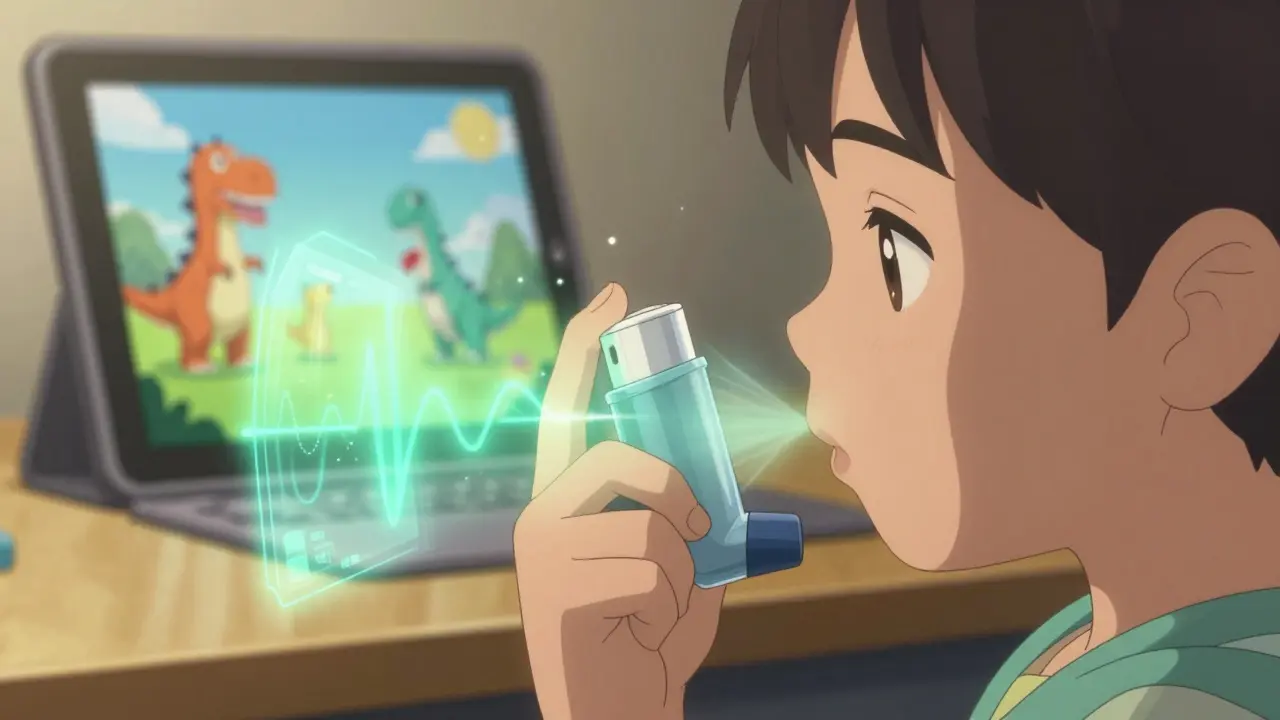
- Use distraction. Play a short video on a tablet, sing a song, or count stars on the ceiling while they breathe.
- Practice breathing exercises. Tell them to “blow out birthday candles” before you start. It teaches them how to exhale fully - which makes inhalation easier.
One mom on Asthma.com said: “I used to cry every time. Now we do ‘blow out candles’ and she laughs. We do it 3 times a day - and she asks for it.”
When to Call the Doctor
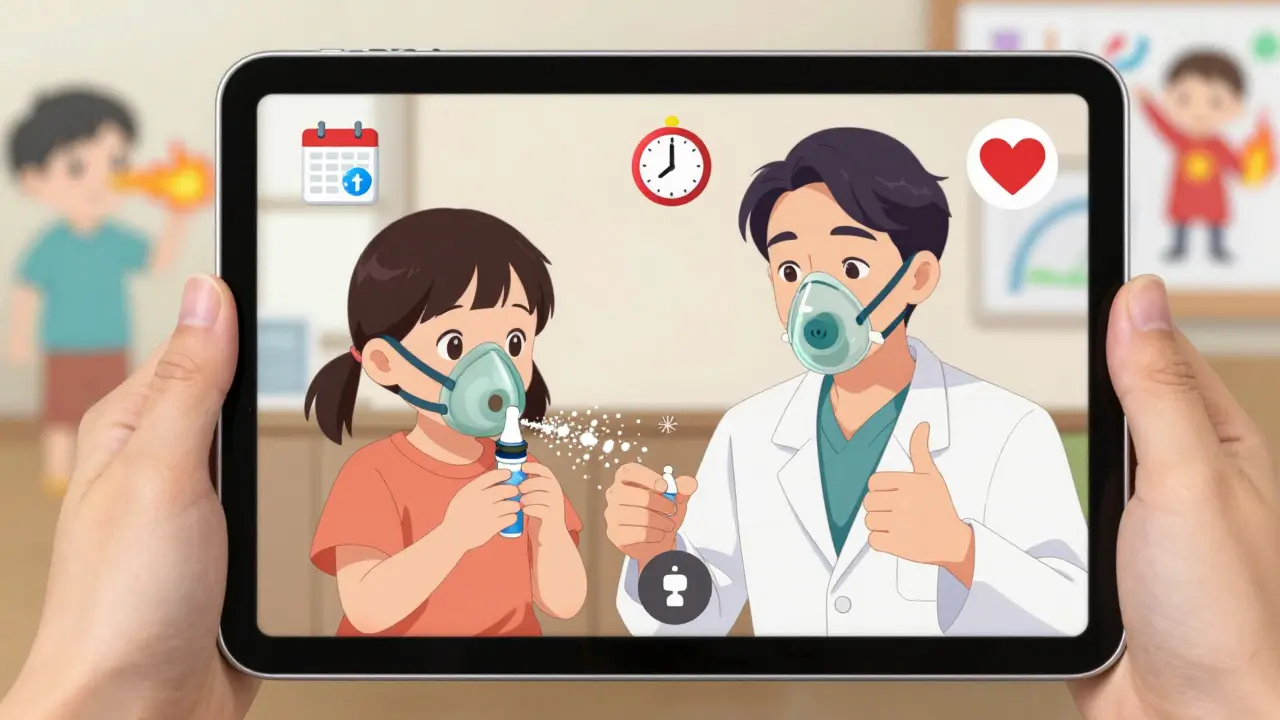
If your child’s asthma isn’t improving - even with perfect technique - talk to their provider. But before you assume the medicine isn’t working, ask for a video review.A 2023 study found that 68% of kids labeled “steroid-resistant” actually just had bad technique. A simple video of you giving the dose can reveal what’s wrong. Many clinics now offer telehealth visits where you upload a video. The doctor watches, gives feedback, and adjusts the plan.
Also call if:
- Your child is using the rescue inhaler more than twice a week (not counting exercise)
- They wake up at night with coughing or wheezing
- The spacer feels sticky or has a weird smell
- You’re not sure if the mask fits or the inhaler is empty
What’s New in 2026
The field is changing fast. In May 2023, the FDA cleared the first smart spacer - the Halo nebulizer system - that gives audio feedback when your child breathes too fast or too slow. Early results show a 32.7% improvement in technique accuracy.By 2025, most pediatric pulmonologists plan to require video verification of technique before refilling prescriptions. The National Heart, Lung, and Blood Institute’s new 2024 guidelines will push this even further. In trials, families who submitted technique videos had 47% fewer ER visits.
It’s not about surveillance. It’s about support. The goal is to make sure every child gets every bit of medicine they need - every single time.
Final Tip: Practice Makes Perfect
Don’t wait for an asthma attack to teach this. Practice when your child is calm. Do it once a day for a week - even if they don’t need the inhaler. Turn it into a routine. Watch a video from Johns Hopkins Medicine or the American Lung Association together. Let your child hold the spacer. Let them press the inhaler (with no medicine) to get used to the sound.Most parents need 3 practice sessions to get it right. That’s normal. You’re not failing. You’re learning.
And remember: this isn’t about perfection. It’s about progress. Even getting 70% of the dose right is better than 10%. Keep going. Your child’s lungs will thank you.
Can I use a spacer without a mask for my toddler?
No. For children under age 3, a mask is required. Toddlers can’t seal their lips around a mouthpiece, and even if they could, they won’t take a deep, single breath consistently. A mask ensures the medicine stays in the system and gets inhaled over multiple breaths. Without a mask, most of the dose escapes.
How often should I wash the spacer?
Wash it once a week with mild soap and water. Let it air-dry completely - don’t use a towel. Towels create static, which causes medicine to stick to the inside. Some guidelines say washing isn’t necessary, but research shows unwashed spacers can lose up to 29% of the dose due to static buildup. Weekly washing is the safest bet.
Is it okay to use an inhaler without a spacer?
For children under 8, no. Without a spacer, less than 20% of the medicine reaches the lungs. The rest sticks in the mouth and throat. Even if your child seems fine, they’re not getting the full benefit. For older kids who can coordinate breathing, a mouthpiece with spacer may work - but only if they can hold their breath for 5-10 seconds after inhaling.
How do I know if the inhaler is empty?
Most inhalers have a counter that shows how many doses are left. If yours doesn’t, write the start date on the canister. Most contain 200 puffs. If it’s been over a year or you’ve used more than 200 puffs, replace it. Don’t rely on shaking or spraying - those are unreliable. When in doubt, get a new one.
My child hates the mask. What can I do?
Try a mask with their favorite character - it helps. Let them pick it out. Practice with the mask on during playtime - no medicine, just wearing it while watching a cartoon. Use distraction: play a favorite song, blow bubbles, or count animals on the wall. One parent said turning it into a “superhero breathing mission” made all the difference.
Can I reuse a spacer for multiple children?
Yes, as long as it’s cleaned properly after each use. Wash the spacer and mask with soap and water after each child. Don’t share masks - they’re personal items. Spacers can be shared if cleaned thoroughly. Always check for cracks or damage before reuse.
What if my child has autism or sensory issues?
It’s harder, but still possible. Start slow. Let them touch the spacer and mask without using it. Use visual schedules or social stories to show the steps. Try a mask with soft edges or a different texture. Some families use weighted blankets or calming music before administration. Work with your child’s therapist or asthma educator - they can help design a sensory-friendly routine.
Do I need to clean the inhaler too?
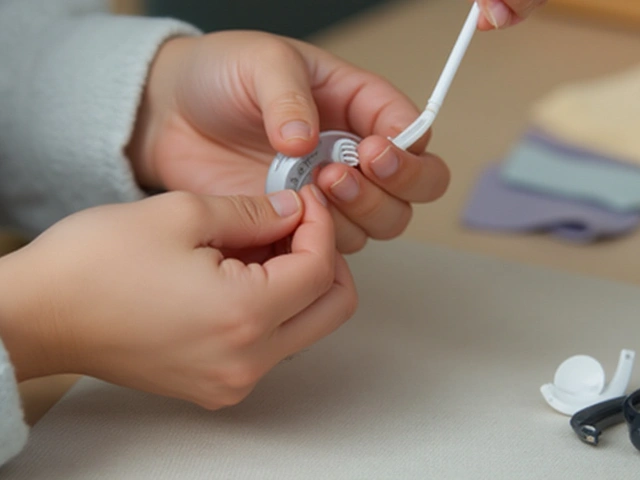
Yes. Remove the metal canister from the plastic mouthpiece once a week. Rinse the plastic part with warm water - don’t soak the metal. Let it air-dry completely before reassembling. This prevents medicine buildup that can clog the nozzle. Don’t use soap on the metal part - it can damage the valve.





Comments (9)
Dana Termini
January 5, 2026 AT 23:01 PMMy 4-year-old used to cry every time we tried the inhaler. We started using a Spider-Man mask and now she asks for it. No joke. We do it after brushing teeth, same time every day. She even reminds me if I forget. It’s not magic - just consistency and a little character magic.
Also, we let her press the inhaler with no medicine first. Gets her used to the sound. Little wins matter.
Wesley Pereira
January 6, 2026 AT 21:35 PMLet me guess - you’re one of those parents who thinks ‘shake it for 5 seconds’ is a suggestion, not a goddamn requirement. 43% of you shake for 2 seconds and wonder why the kid’s still wheezing. You’re not saving time. You’re wasting $120/month on ineffective meds.
And yes, the plastic bottle trick works. I’ve seen it. Washed it once a week. No towel. Static kills dose. If you’re still using a spacer with a cracked seal or a mask that looks like it survived a toddler tornado, stop. Go buy a new one. Your kid’s lungs aren’t a suggestion box.
Isaac Jules
January 8, 2026 AT 04:53 AMWow. Another feel-good guide from the asthma-industrial complex. Let me break this down for you: 80% delivery with a spacer? Where’s the peer-reviewed data? The NHLBI guidelines? Show me the RCTs with control groups.
And don’t even get me started on the ‘character mask’ nonsense. You’re turning a medical device into a Disney merchandising opportunity. This isn’t parenting - it’s performative compliance wrapped in glitter.
Also, ‘wash once a week’? That’s just lazy hygiene. Sterilize it daily or don’t bother. And why no mention of nebulizers? You’re gaslighting parents into thinking spacers are the only option. This post is dangerously oversimplified.
Amy Le
January 8, 2026 AT 16:54 PMThis is why America’s healthcare system is broken. 🇺🇸 We’re outsourcing medical literacy to TikTok influencers and pediatric spacers. You think a Spider-Man mask is a solution? No. It’s a Band-Aid on a gunshot wound. The real issue? Lack of universal access to pulmonologists. We’re teaching parents to be nurses while cutting Medicaid. 🤦♀️ Also, ‘200 puffs’? My cousin’s inhaler lasted 3 years. You think that’s normal? It’s not. It’s corporate greed. 📉 And why is this even in English? My niece in Puerto Rico uses the same device. No one taught her. No one cared. This post is performative allyship with a side of capitalism.
Pavan Vora
January 9, 2026 AT 17:40 PMThank you for this, really. In India, many parents don’t even know what a spacer is. We use inhalers directly - and children suffer. I shared this with my aunt in Kerala. She cried. She said her grandson had wheezing for 2 years, and now she’s using the mask. Small change, big difference.
One thing - in our village, we wash the spacer with ash-water, then dry in sun. Is that okay? Or should we use soap? I’m confused. Thank you again. 🙏
Indra Triawan
January 11, 2026 AT 01:05 AMI just read this and I feel so... seen. I’ve been doing this wrong for two years. My daughter has asthma, and I thought I was doing everything right. But I was shaking for 3 seconds. I never washed the spacer. I used the same mask until it cracked.
I’m not mad. I’m just... heartbroken. Why didn’t anyone tell me? Why did I have to learn this from a Reddit post? I wish I’d known sooner. I wish I’d been told when she was first diagnosed.
Thank you for writing this. It’s the first time I’ve felt like someone understood how hard this is.
Lily Lilyy
January 11, 2026 AT 08:37 AMYou’ve got this. Seriously.
One step at a time. One breath at a time.
It’s okay if it’s messy. It’s okay if your child cries. It’s okay if you mess up. What matters is that you’re trying.
Your child knows you’re there. That’s the medicine too.
Keep going. You’re doing better than you think.
And if you need a break? Take one. You’re not failing. You’re parenting.
Love you. You’re not alone.
Susan Arlene
January 12, 2026 AT 11:00 AMlol i just realized i’ve been washing my spacer with a towel. for 3 years. no wonder my kid still wheezes. thanks for the reminder. gonna go rinse it now. also, the plastic bottle trick? genius. my cousin did that and saved 80 bucks. lowkey wish i’d known this before i bought 3 fancy spacers.
Mukesh Pareek
January 12, 2026 AT 13:24 PMLet’s be clear: this is not ‘technique.’ This is pharmacological compliance theater. You’ve reduced pediatric asthma management to a procedural checklist, ignoring the biopsychosocial determinants - caregiver stress, environmental triggers, socioeconomic access to clean air, and the epigenetic burden of chronic inflammation.
The spacer is a band-aid on a systemic failure. The real solution? Universal healthcare, indoor air quality regulation, and dismantling the pharmaceutical monopolies that price out generics.
Meanwhile, you’re teaching parents to be respiratory technicians while the EPA ignores diesel emissions near schools. This post is technically accurate but morally bankrupt.
And yes - I’ve published in JAMA Pediatrics. I know what I’m talking about.